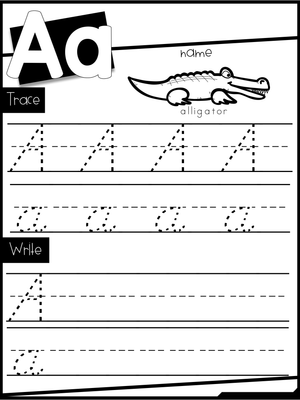
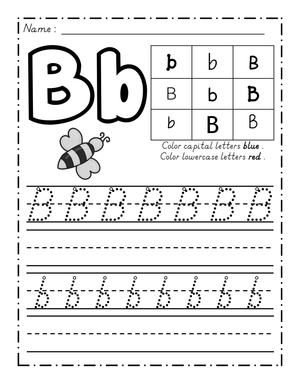
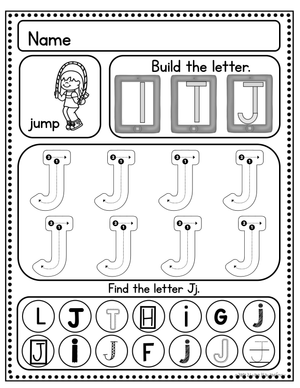
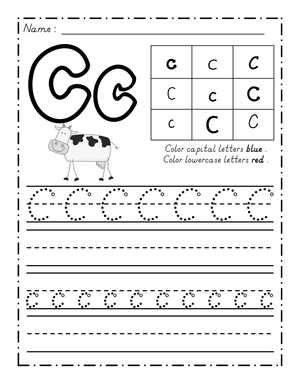
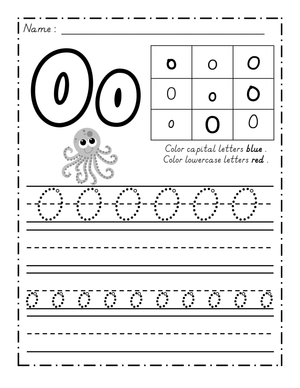
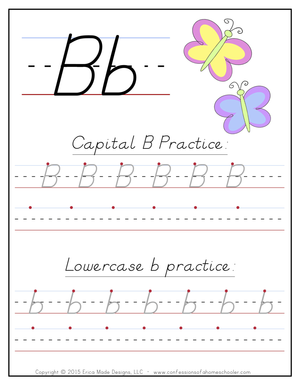
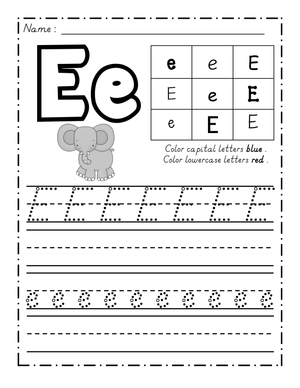
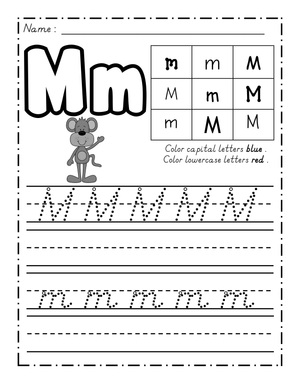
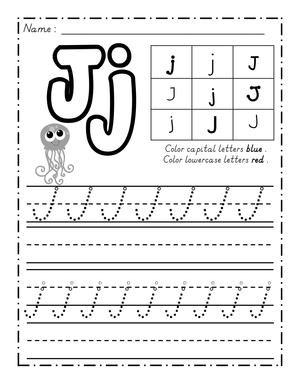
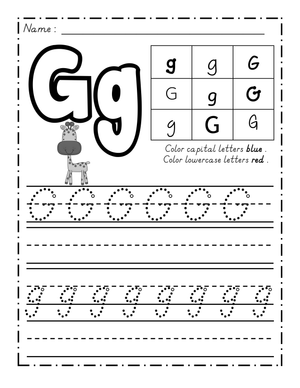
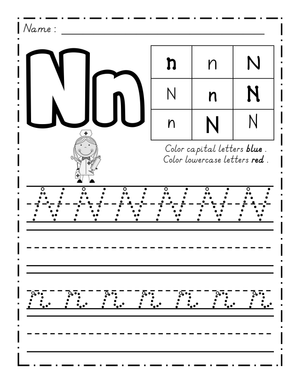
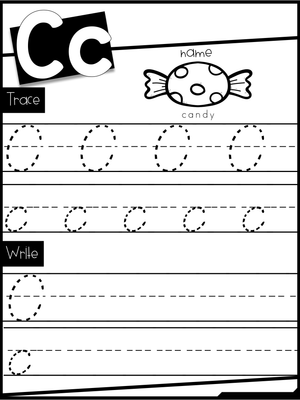
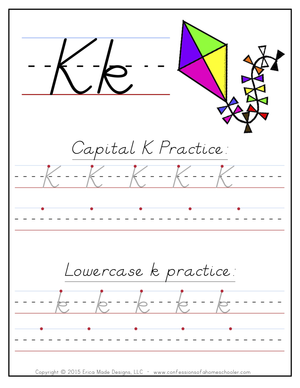
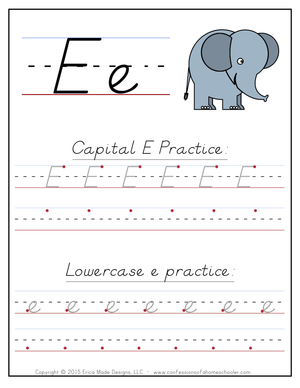
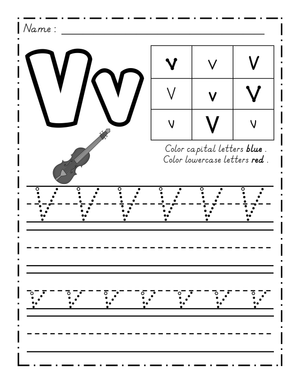
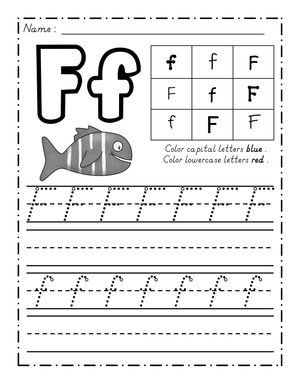
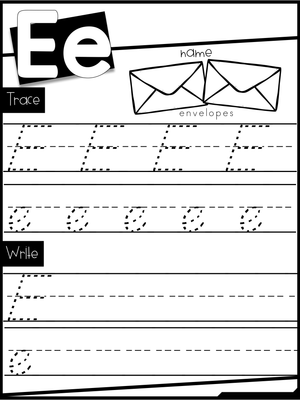
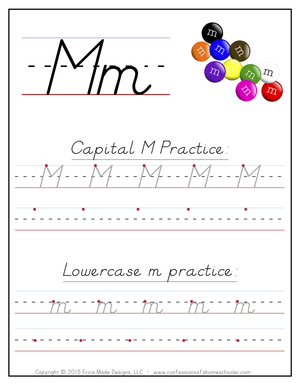
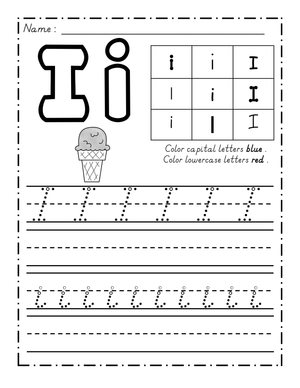
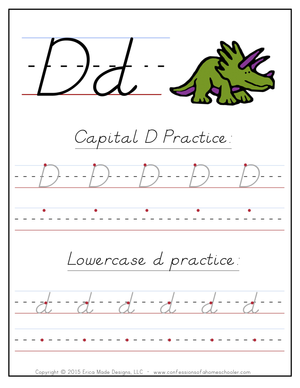
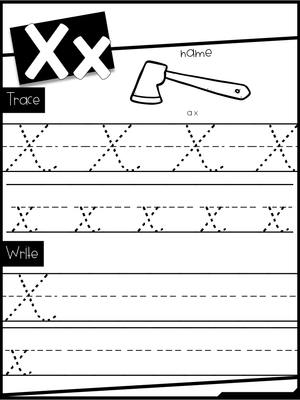
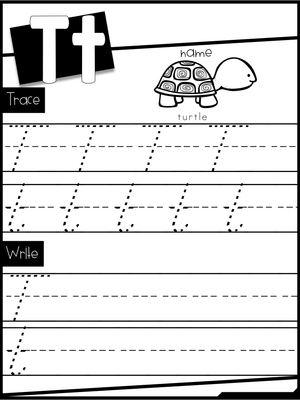
These kindergarten dnealian handwriting worksheets give teachers a printable, daily-use resource built around Donald Thurber's 1978 manuscript system — the style that slants letters roughly 10 to 15 degrees rightward and leaves characteristic tails on most lowercase letters. The set addresses letter formation, stroke sequence, paper positioning, and consistent slant, covering the mechanics kindergarteners need before any connected writing becomes realistic.
What Sets D'Nealian Apart From Other Manuscript Styles
Teachers switching from Zaner-Bloser sometimes need a moment to recalibrate. In Zaner-Bloser, letters sit upright and are formed with separate, distinct strokes — a circle, a line, a curve, each lifted and restarted. D'Nealian letters lean slightly to the right and favor continuous strokes. The tail on a lowercase a, for instance, doesn't just ornament the letter; it is the exit stroke that, during cursive instruction, becomes a connector to the next letter. Students who spend kindergarten with this system are not learning a temporary skill they'll unlearn in second grade. They're building motor habits that carry forward.
The continuous stroke method also addresses letter reversals. Because b and d each have a distinct starting position and directional sequence — b pulls down first, d curves counterclockwise from the top — students have a motor-based cue to distinguish them, not just a visual one. Reversals still happen, but students have a movement anchor to return to when they second-guess themselves.
Skills Covered Across the Worksheets
The set moves through uppercase and lowercase letter formation using two organizational approaches. Some worksheets follow alphabetical order, which suits teachers who introduce one letter per week and want a direct match to their pacing guide. Others group letters by stroke family: the counterclockwise curve letters (a, c, d, g, o, q), the tall downstroke letters (l, t, k, b), and the hump-and-bridge letters (m, n, h). Grouping by stroke family means students practice the same foundational movement across multiple letters before moving on, which builds muscle memory more efficiently than alphabetical rotation alone.
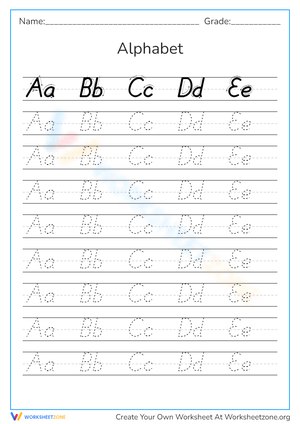
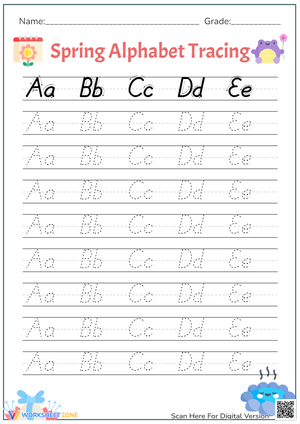
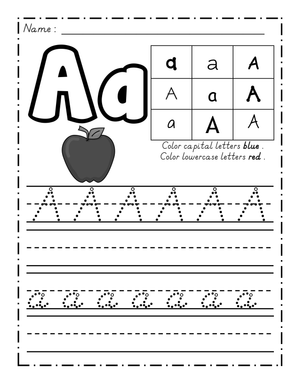
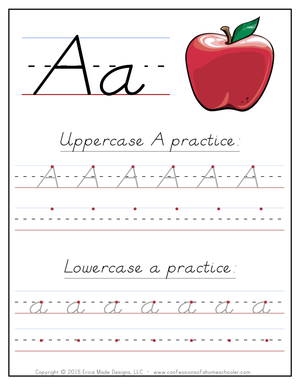
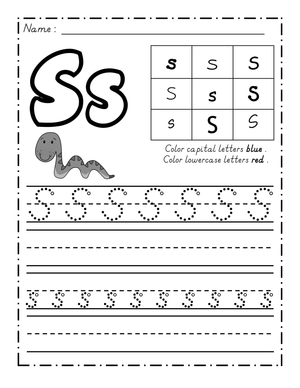
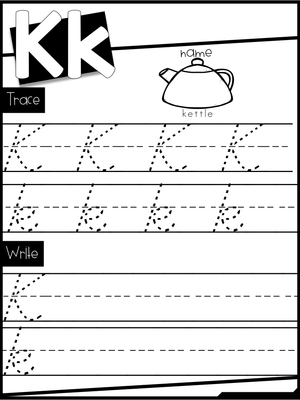
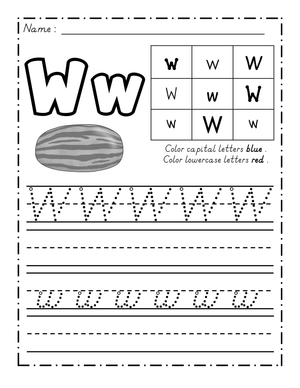
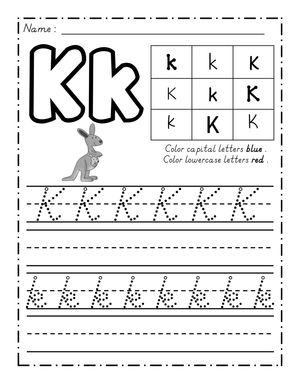
Each worksheet leads students through three stages: a large model letter with numbered stroke-direction arrows, dotted tracing rows for guided practice, and blank lines for independent writing. Sight word tracing worksheets extend this into word-level work, asking students to maintain letter spacing and consistent slant across full words — a different cognitive and motor demand than forming isolated letters.
Errors Students Make That These Worksheets Help Surface
The most persistent issue in early D'Nealian instruction is students defaulting to prior print habits on letters they already "know." A student who has practiced writing f as two separate strokes — a curve and a crossbar, no tail — resists the D'Nealian version that ends with a small leftward tail. The tail feels wrong because it is new motor territory. Watching for this on the practice lines of each worksheet tells a teacher immediately which students need a re-demonstration of the stroke rather than more tracing repetitions.
A subtler error appears in slant consistency. Students often form the first two or three letters on a line with the correct rightward lean, then gradually drift upright as pencil fatigue sets in. By the end of a practice row, their letters look like Zaner-Bloser. This is a grip and posture issue as much as a motor-skill issue — worth checking with a look at paper tilt and hand tension before sending a student back to redo the line.
Fitting These Worksheets Into Your Weekly Lesson Plan
A 10 to 15 minute daily block outperforms longer, infrequent sessions for handwriting at this age. Kindergarteners' pencil endurance makes anything beyond that counterproductive, and distributed practice is how motor learning actually sticks. A workable Monday rhythm: introduce the target letter on a document camera, have students trace the stroke in the air with two fingers, then distribute the corresponding worksheet for guided practice. Tuesday and Wednesday use the same worksheet as a warm-up before literacy centers. Thursday introduces the sight word tracing worksheet that features the letter. Friday's brief review asks students to write the letter from memory on a blank line — no model, no dots, just recall.
The sensory warm-up that experienced kindergarten teachers return to — tracing the target letter in a shallow tray of sand or salt before touching paper — works especially well with D'Nealian because the continuous strokes translate naturally into a loose, fluid medium. Students who struggle to feel where a letter starts and ends get clear tactile feedback in the sand that paper alone doesn't provide. Kindergarten dnealian handwriting worksheets work best as the structured follow-up to that tactile step, not the opening move of the lesson.
Adjusting the Worksheets for Mixed-Ability Classrooms
Students who need more support work best with worksheets that use larger letter models and wider line spacing — the physical size of the tracing gives less-controlled hand movements a bigger target. For these students, allow pencil grips or triangular pencils and confirm that paper is tilted correctly: top-left for right-handed writers, top-right for left-handed writers. The paper tilt aligns the writing hand's natural arc with D'Nealian's characteristic slant, making it physically easier to maintain consistent letter angles across a full line.
Students ready to move ahead get more benefit from worksheets with smaller letter models and fewer guided dots, or from mixed-letter worksheets that ask them to write a full row from memory. For these students, the kindergarten dnealian handwriting worksheets serve more as a fluency check than a formation lesson — the goal shifts from accuracy to automaticity, and the evaluation shifts from "did they form it correctly?" to "how consistent was the slant across the whole line?"
Standard Alignment
These worksheets address CCSS L.K.1.a, which requires kindergarteners to print many upper- and lowercase letters. The standard doesn't specify a manuscript style, but D'Nealian meets it directly: the worksheets move students from traced letter formation to independent production across the full alphabet, and the student practice lines create a visible record of progress teachers can use for formative documentation. Teachers in districts that have adopted D'Nealian as their official manuscript program will find these worksheets slot directly into their existing scope and sequence. Those in districts using other programs can pull individual worksheets for letter-of-the-week supplementation or targeted formation review. Kindergarten dnealian handwriting worksheets are particularly useful when districts require documented evidence of handwriting instruction, because the printed practice lines show exactly what the student produced — not a checkbox, an actual writing sample.
Frequently Asked Questions
Is D'Nealian appropriate for kindergarteners who have already been practicing a different print style?
Yes, though expect an adjustment period of several weeks. Students who have practiced upright manuscript will need explicit re-instruction on the slant and on the letters where D'Nealian's stroke pattern differs most visibly — f, q, and z are the ones that tend to cause the most confusion. Plan to re-introduce those letters specifically rather than assuming transfer from one style to the other will happen on its own.
How does D'Nealian manuscript actually connect to cursive instruction later?
The core principle is that D'Nealian manuscript letters are already cursive letters with the connectors removed. The tail on a lowercase a is where the connector to the next letter will attach; the slant already matches cursive slant. When cursive instruction begins — typically in second or third grade — students who learned D'Nealian manuscript only need to add the connecting strokes. The letterforms themselves don't need to be relearned.
What pencil grip and paper position support D'Nealian handwriting in kindergarten?
The tripod grip — pencil resting between thumb and index finger, supported from below by the middle finger — is the standard starting point. Paper tilt matters as much as grip: right-handed students angle the top of the paper to the left; left-handed students angle it to the right. Both positions put the writing surface at an angle that complements D'Nealian's rightward slant, making it physically easier to maintain consistent letter angles across a full line of practice.
How often should kindergarteners practice D'Nealian handwriting?
Ten to fifteen minutes of daily practice is more effective than one long weekly session. Motor skill acquisition in young children responds to repetition over time, not extended duration in a single sitting. Using each worksheet for letter introduction, then returning to it as a two-minute warm-up over the following days, provides the spaced repetition that makes letter formation automatic rather than labored.












 Interactive Worksheet Maker
 Quiz Maker
 Word Search Maker
 Crossword Puzzle Maker
 Word Scramble Generator
 Sentence Scramble Generator
 Handwriting Worksheet Generator
 Name Tracing Generator
 Fill In The Blank Generator