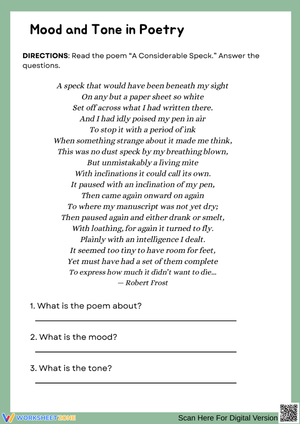
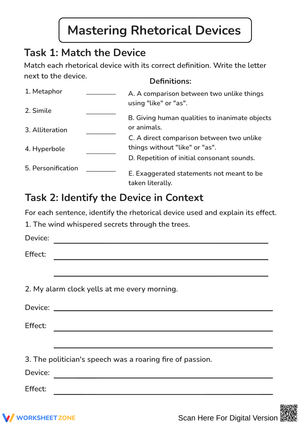
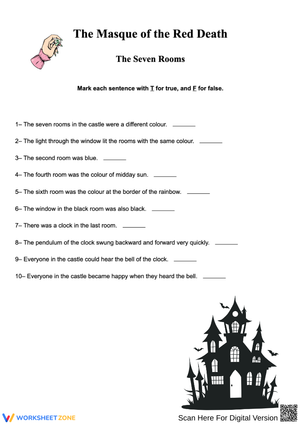
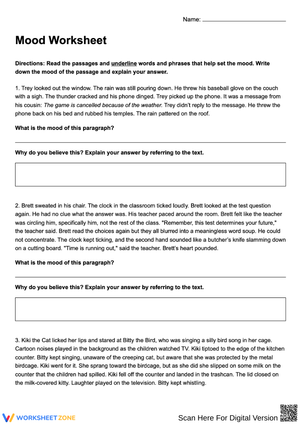
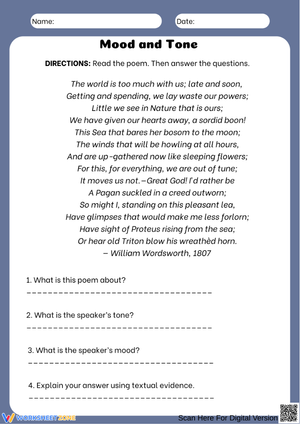
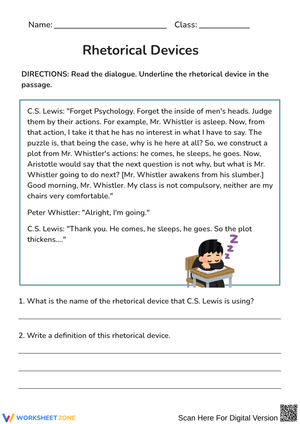
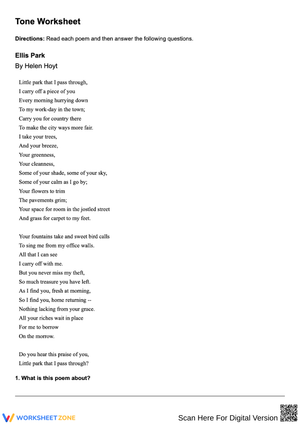
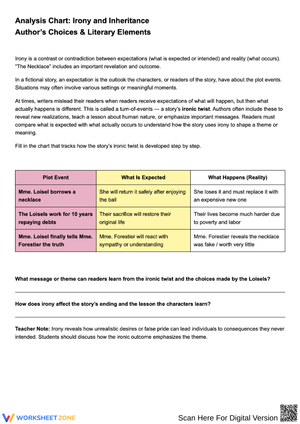
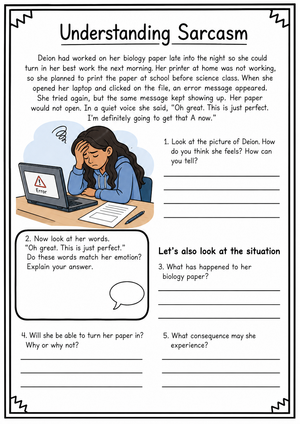
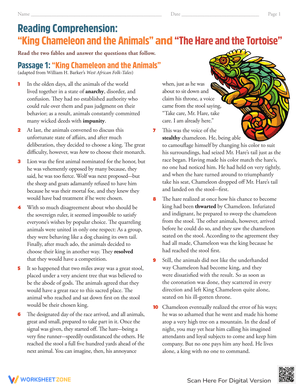
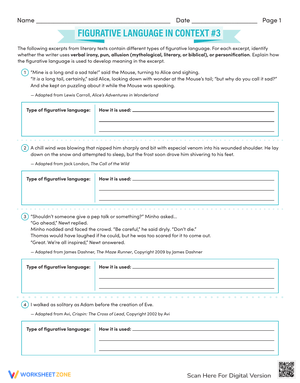
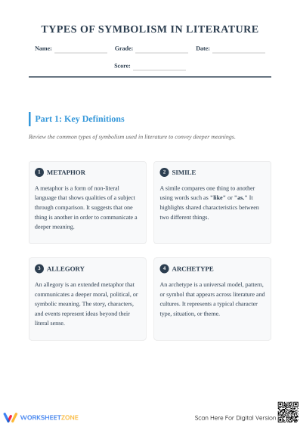
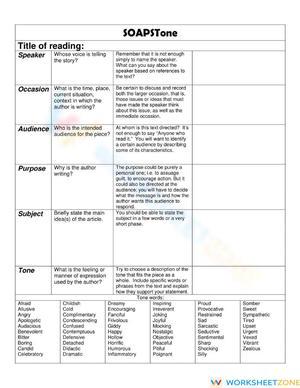
These 9th grade literary devices pdf worksheets give teachers a practical tool for the hardest transition in freshman ELA: moving students from labeling devices to actually analyzing what those devices do. Each worksheet isolates one technique, anchors it in a short passage, and requires students to explain effect in writing — not fill in a blank or circle an answer. The set builds directly toward the analytical reading skills RL.9-10.4 demands and fits inside daily classroom routines without requiring a full lesson block to deploy.
The Specific Techniques These Worksheets Target
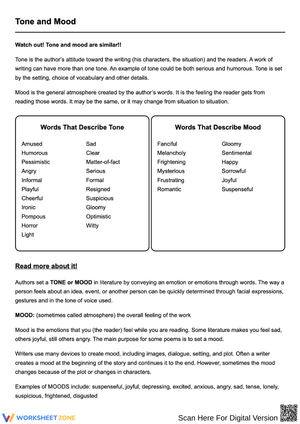
Each worksheet covers a single device rather than grouping several together, which keeps the analytical focus tight for students still learning to distinguish between techniques. The devices selected appear consistently across the anchor texts most Grade 9 ELA classes use — Romeo and Juliet, The Odyssey, Of Mice and Men — rather than representing an abstract taxonomy of rhetorical terms.
Students work with six core techniques across the set:
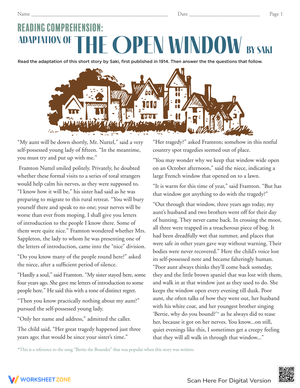
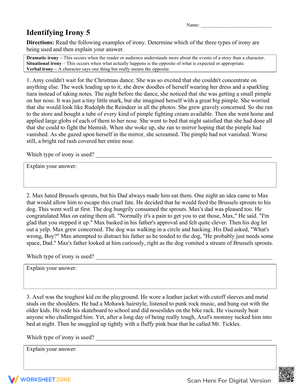
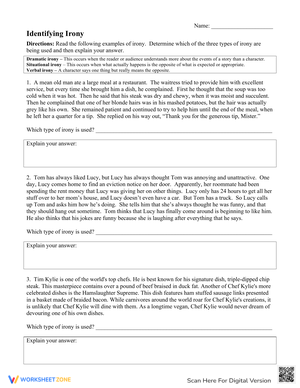
- Dramatic irony — passages where the reader holds information a character lacks, with questions that ask students to explain how that knowledge gap shapes tension
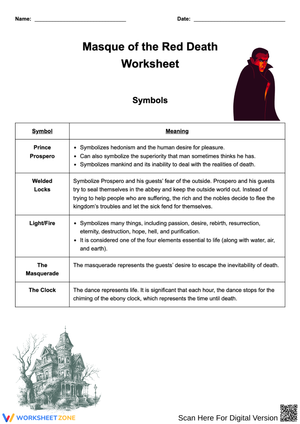
- Symbolism — short excerpts requiring students to identify a recurring image and trace what it represents, not just name the object
- Foreshadowing — students mark the specific textual detail that hints at a later event, then explain how it shapes the reader's expectations before that event arrives
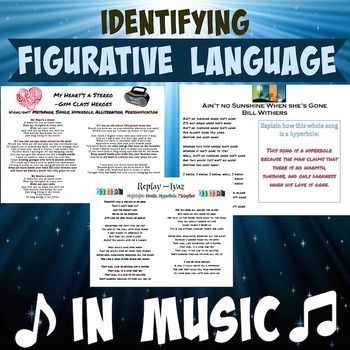
- Extended metaphor — students map how a comparison develops across multiple lines or paragraphs rather than resolving in a single image
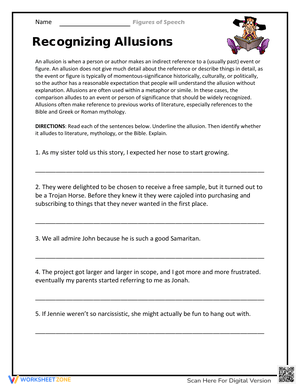
- Allusion — passages containing biblical, mythological, or historical references, with questions requiring students to identify the source and explain what it adds to meaning
- Juxtaposition — students identify contrasting elements and explain what the contrast reveals about character, setting, or theme
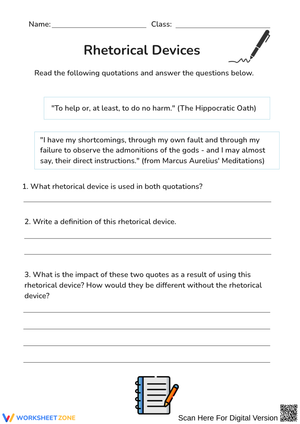
The short-answer format is deliberate. A multiple-choice question on dramatic irony tells the teacher only whether a student can recognize the label. A short-answer question — "What does the audience know that Juliet doesn't in this scene, and how does that change the way you read her lines?" — shows whether the student actually understands what the device does.
Patterns of Error Worth Catching Early
The most predictable failure in freshman literary analysis is the non-explanation: "The author uses foreshadowing to create suspense." The student names the device, assigns it a generic emotional effect, and stops. That sentence never identifies which specific detail constitutes the foreshadowing, never points to the later event it anticipates, and never explains the mechanism by which anticipation becomes tension. 9th grade literary devices pdf worksheets that include passage-specific follow-up questions break this habit, because a generic response does not actually answer "What specific detail in line 4 hints at what happens later?"
Two other error patterns surface repeatedly in freshman work. Students routinely confuse foreshadowing and flashback — both involve the relationship between present and other moments in time, and the confusion tends to run in both directions. Separately, when asked what a symbol represents, students answer with a single noun: "death," "hope," "freedom." That answer names a topic, not a thematic statement. The white whale in Moby Dick represents obsession — but what does Melville argue about obsession? Moving students from the noun to the claim is slow work, and these worksheets make that gap visible in the written responses.
Building These Worksheets Into Your Weekly ELA Rhythm
Bell-ringers are the most common entry point, and they work. Put one worksheet in students' hands as they walk in, give them five to seven minutes, then use two or three responses to open discussion. Exit tickets operate the same way — collect responses at the door. What comes back at the end of a Friday period tells you more about where the class actually stands than most verbal comprehension checks do.
One approach that transfers well across the week: assign a worksheet on a device the Monday before a scene that depends heavily on it. When students have already worked through a foreshadowing exercise, they arrive at Juliet's ominous vision of Romeo lying dead in a tomb at the end of Act III with enough context to stop and ask what that image is doing there, rather than reading past it. The worksheet practice doesn't do the reading for them — it gives them the vocabulary and the analytical habit so the text isn't opaque. 9th grade literary devices pdf worksheets also run cleanly in small-group rotations, particularly when some students need more time on the written response while others are ready to move to independent work.
Standard Alignment
RL.9-10.4 is the primary standard these worksheets address. It requires students to determine the figurative and connotative meanings of words and phrases as used in a text and to analyze the cumulative impact of specific word choices on meaning and tone. That phrase — cumulative impact — is what separates 9th-grade analysis from middle school identification. Students aren't just defining a metaphor; they're explaining what the author gains by using it repeatedly, or by placing it at a particular moment in the text.
Several worksheets also connect to RL.9-10.1, which requires students to cite strong and thorough textual evidence to support analysis. When a student underlines the specific line that constitutes an allusion, quotes it, and then explains what it adds, that student is practicing RL.9-10.1 alongside RL.9-10.4. Using 9th grade literary devices pdf worksheets this way positions them as formative tools tied to two intersecting standards rather than isolated vocabulary exercises.
Differentiating These Worksheets Across a Range of Learners
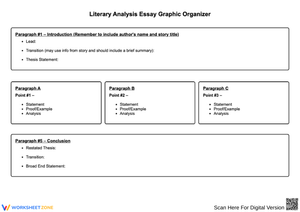
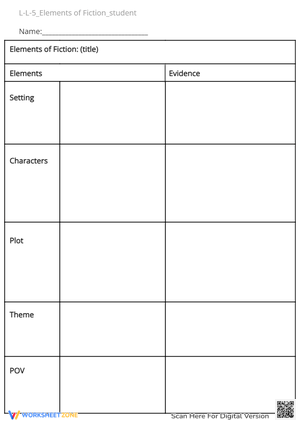
Students who read below grade level often stall not on the analytical question but on the passage itself. If a student spent most of their reading energy on unfamiliar vocabulary, little capacity remains for interpretation. Adding a brief word gloss — three or four terms defined at the bottom of each worksheet — makes the passage accessible without simplifying the analytical demand. A graphic organizer that asks students to name the device, quote the relevant line, and draw an arrow to the effect before writing anything also reduces the intimidation of a blank response field.
For students reading well above grade level, the standard worksheet question is a floor, not a ceiling. Extending the task — asking them to locate a second example of the same device in a text of their own choosing and write a parallel explanation — keeps them working analytically without requiring a separate set of materials. Students who will take AP Language the following year benefit specifically from being asked to connect the device to the author's tone: "What does this choice reveal about how the narrator feels toward the subject?" That question pushes beyond what the core worksheet asks, and it's exactly the analytical move those students are ready to practice.
Frequently Asked Questions
Which literary devices are included in the set?
The worksheets cover dramatic irony, symbolism, foreshadowing, extended metaphor, allusion, and juxtaposition — six devices that appear consistently in the anchor texts most Grade 9 ELA curricula use. Each worksheet focuses on one device.
Do the worksheets use excerpts from specific novels or plays, or do they include their own passages?
Each worksheet includes its own short passage, so teachers do not need to be reading a particular anchor text to assign them. The devices covered appear frequently in Romeo and Juliet, The Odyssey, and Of Mice and Men, so the worksheets pair naturally with those titles when teachers want to connect the practice to their core reading.
Can these worksheets function as formative assessments?
Yes. The short-answer format produces written responses that reveal whether a student understands a device conceptually or just recognizes the label. Teachers use individual worksheets as exit tickets, collect responses after bell-ringers, or assign one worksheet mid-unit to check understanding before moving to longer analytical writing. The responses also surface specific misconceptions — like the foreshadowing/flashback confusion — that need direct correction before students attempt an essay.
Are these appropriate for both on-level and honors sections?
Both. On-level classes use the core worksheet question as written. Honors classes take the same exercise further with an extension prompt — asking students to explain how the device connects to the author's tone, or to compare its use across two passages. The base worksheet stays the same; the extension increases the analytical demand for students who are ready for it.












 Interactive Worksheet Maker
 Quiz Maker
 Word Search Maker
 Crossword Puzzle Maker
 Word Scramble Generator
 Sentence Scramble Generator
 Handwriting Worksheet Generator
 Name Tracing Generator
 Fill In The Blank Generator