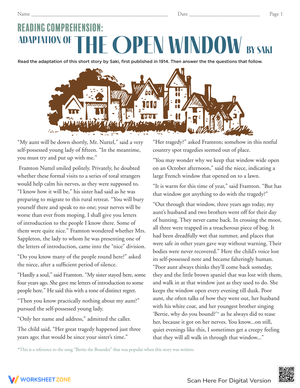
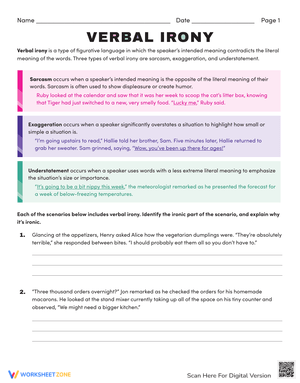
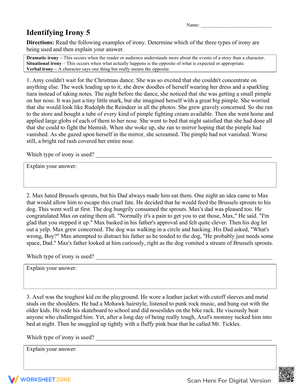
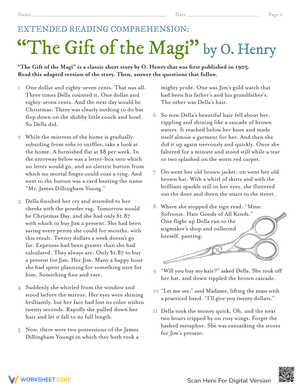
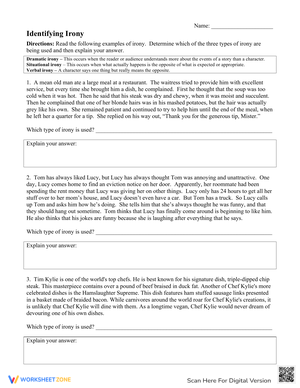
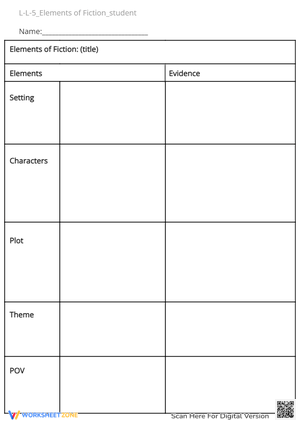
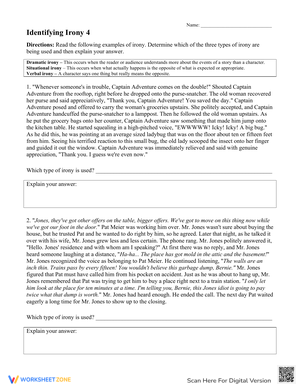
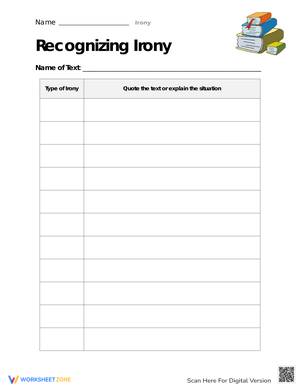
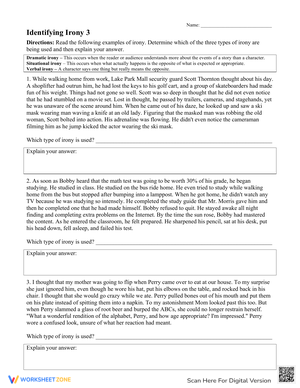
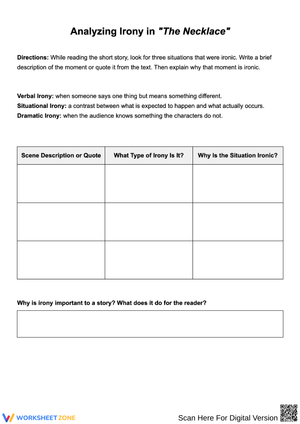
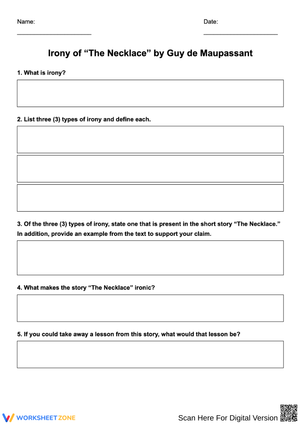
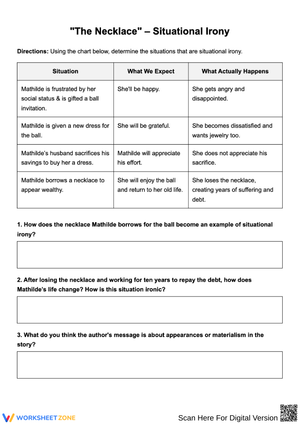
These irony pdf worksheets for 9th grade give English teachers a set of targeted exercises that move students past surface-level labeling — identifying which type of irony is at work, explaining the expectation that gets reversed or undercut, and connecting that device to what the author is actually doing with tone or theme. The set covers verbal, situational, and dramatic irony through a mix of short excerpts, dialogue snippets, and original scenarios, with prompts that require genuine analytical sentences rather than one-word answers.
The Specific Skills Each Worksheet Targets
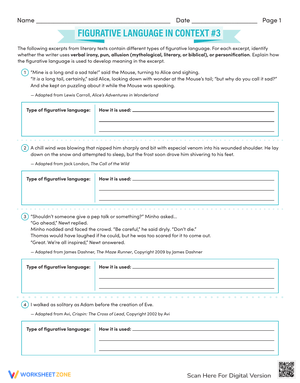
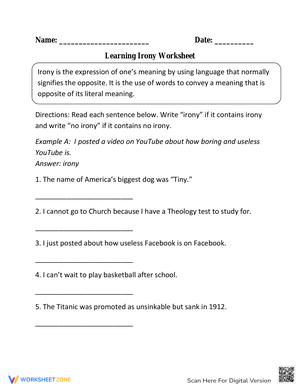
Students who can define verbal irony in the abstract often fall apart when they encounter it in a real sentence — so the verbal irony worksheets anchor the skill in context. Each item gives a short dialogue exchange or narrative line and asks students to underline what the speaker says, then write what the speaker actually means. A follow-up prompt asks whether the irony creates humor, bitterness, or emphasis — a distinction that forces students to think about the function of the device, not just its label.
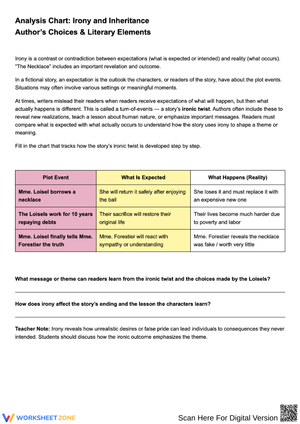
The situational irony worksheets are built around a two-column format: expected outcome on one side, actual outcome on the other. Students fill in both columns and then write a sentence explaining why the gap between them qualifies as irony rather than simple bad luck. That format choice directly addresses the most persistent confusion in freshman-year irony instruction — a confusion detailed below — rather than leaving it for classroom discussion to resolve.
Dramatic irony worksheets use a graphic organizer that tracks the knowledge gap between reader and character. Students mark what the audience knows, what the character believes, and the moment in the text where that gap begins to close. Several worksheets use excerpts from Poe's "The Cask of Amontillado," where Montresor toasts Fortunato's long life while guiding him deeper into the catacombs — a passage where students can see the two knowledge columns visibly diverging line by line.
Mistakes Students Make That These Worksheets Help You Catch
The most stubborn error in 9th-grade irony work is treating situational irony and coincidence as the same thing. A student who writes "it's ironic that it rained on their picnic" is responding to the bad timing — but there is no irony unless there was a strong, established expectation that gets flipped. The worksheets push back on this by requiring the expected-outcome column to be filled in before a student can label anything ironic. That sequence forces the student to commit to what the setup promised before they evaluate the result.
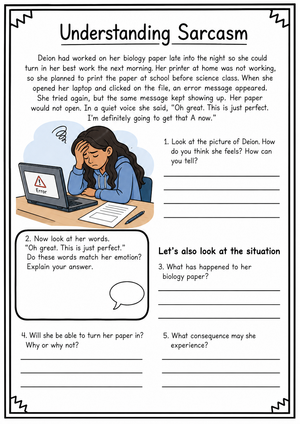
With verbal irony, the error runs the other direction: students use "sarcasm" to answer every item. Sarcasm is a subset of verbal irony, but verbal irony covers far more ground. A narrator who describes a brutal scene as "perfectly charming" may be grimly ironic without any mocking intent at all. The worksheets place both types side by side within the same exercise, which requires students to make that distinction rather than defaulting to a single label.
Dramatic irony surfaces a different problem — students who understand the concept but attribute the irony to the character rather than to the author's construction. They write "Fortunato is being ironic" when Fortunato has no idea what is coming. This shows partial understanding, which makes it harder to correct than plain ignorance. The graphic organizer format helps here: separating "what the character knows" from "what the reader knows" makes clear that the irony lives in the gap between those columns, not in any character's words or intentions.
Building These Worksheets Into a Literature Unit
The strongest placement for these worksheets is as a pre-reading activity before a story that hinges on irony. Before assigning "The Gift of the Magi," running the situational irony worksheet — specifically the items that ask students to explain what separates an ironic outcome from a merely surprising one — primes students to track the sacrifices of Jim and Della with analytical attention rather than pure emotional response. The irony is no longer something the teacher names after; students arrive at it on their own terms.
The dramatic irony worksheets slot in particularly well during a Shakespeare unit. Freshmen reading Romeo and Juliet already know the ending; the knowledge gap is built into every scene of Act V. A worksheet completed before Act V, Scene III — asking students to articulate exactly what the reader knows that Romeo does not — generates the kind of dread that makes the tomb scene land. That 10-minute pre-reading activity produces more analytical engagement than a comprehension quiz after the fact.
For daily practice, individual worksheets make effective exit tickets. A paragraph-length passage with a single ironic moment — students identify the type, explain the violated expectation, write one sentence on the effect — takes six to eight minutes and gives immediate data on whether the class is ready to apply the concept to a full anchor text. The irony pdf worksheets for 9th grade in this set are formatted to make that kind of quick-turnaround assessment straightforward to collect and scan at a glance.
Standard Alignment
These irony pdf worksheets for 9th grade address L.9-10.5, which requires students to demonstrate understanding of figurative language, word relationships, and nuances in word meaning — irony listed explicitly as a category within that standard. They also support RL.9-10.4, which asks students to determine the meaning of words and phrases in a text, including figurative and connotative meanings and the effect of word choices on tone. In practice, L.9-10.5 appears on district benchmarks as multiple-choice identification items, but the standard's full depth — analyzing the role a figure of speech plays in context — demands the kind of written explanation these worksheets practice. Students who have only matched labels to definitions consistently underperform on that analytical component, which is where this set does the most instructional work.
Adjusting the Set for a Range of Learners
The irony pdf worksheets for 9th grade come in formats that suit different starting points. For students still building reading stamina or working below grade level, some worksheets include a word bank of irony types and a sentence frame for the explanation prompt — enough support to make the task accessible without removing the analytical demand. The goal is to lower the barrier for the writing portion, not to simplify what students are being asked to think about.
Students who move quickly through the standard items have open-ended extension prompts waiting on several worksheets. These ask students to write an original scenario demonstrating one type of irony, then explain in a paragraph how an author could use it to develop a theme. That task requires thinking like a writer rather than like a reader — a meaningful shift in perspective that signals real internalization of the concept. Advanced students who finish the base exercise in under 10 minutes have a substantive next step rather than dead time.
Frequently Asked Questions
Which texts pair most naturally with these worksheets?
The set pairs well with standard 9th-grade fiction: "The Cask of Amontillado" and "The Gift of the Magi" are the most direct matches, and the situational irony worksheets also work with "The Necklace" by Guy de Maupassant. The dramatic irony worksheets transfer cleanly to Romeo and Juliet. Several worksheets use original short passages so teachers can assign them before introducing any anchor text, without students already knowing the ending.
Can these worksheets work as a pre-assessment before starting an irony unit?
Yes, and that is one of the stronger uses for the mixed-review worksheet. Assign it before any direct instruction and look at where students confuse types or leave the explanation prompt blank. The pattern in those blanks tells you where to focus — on the vocabulary distinctions, on the concept of violated expectation, or on the author-versus-character confusion that usually plagues dramatic irony first.
How do I help students who freeze when asked to write an explanation?
The sentence-frame versions remove the blank-page problem without lowering the cognitive bar. If a student fills in "I expected _____ but instead _____," they have produced the core of a correct analytical sentence. Over time, students who start with frames write the explanation independently once they have internalized the structure — the frame is a temporary support structure, not a permanent crutch.
How many worksheets are in the set, and are they editable?
File count and editability details are listed on the product page. Most sets at this level include a separate worksheet for each irony type plus at least one mixed-review exercise — check the product preview before purchasing to confirm exactly what is included.












 Interactive Worksheet Maker
 Quiz Maker
 Word Search Maker
 Crossword Puzzle Maker
 Word Scramble Generator
 Sentence Scramble Generator
 Handwriting Worksheet Generator
 Name Tracing Generator
 Fill In The Blank Generator