


























1 / 2
0
Views
0
Downloads


0.0
0
Save
0 Likes
Share
Figurative Language in Context Worksheet
0 Views
0 Downloads
Paste this activity's link or code into your existing LMS (Google Classroom, Canvas, Teams, Schoology, Moodle, etc.).
Students can open and work on the activity right away, with no student login required.
You'll still be able to track student progress and results from your teacher account.
Information
Description
What It Is:
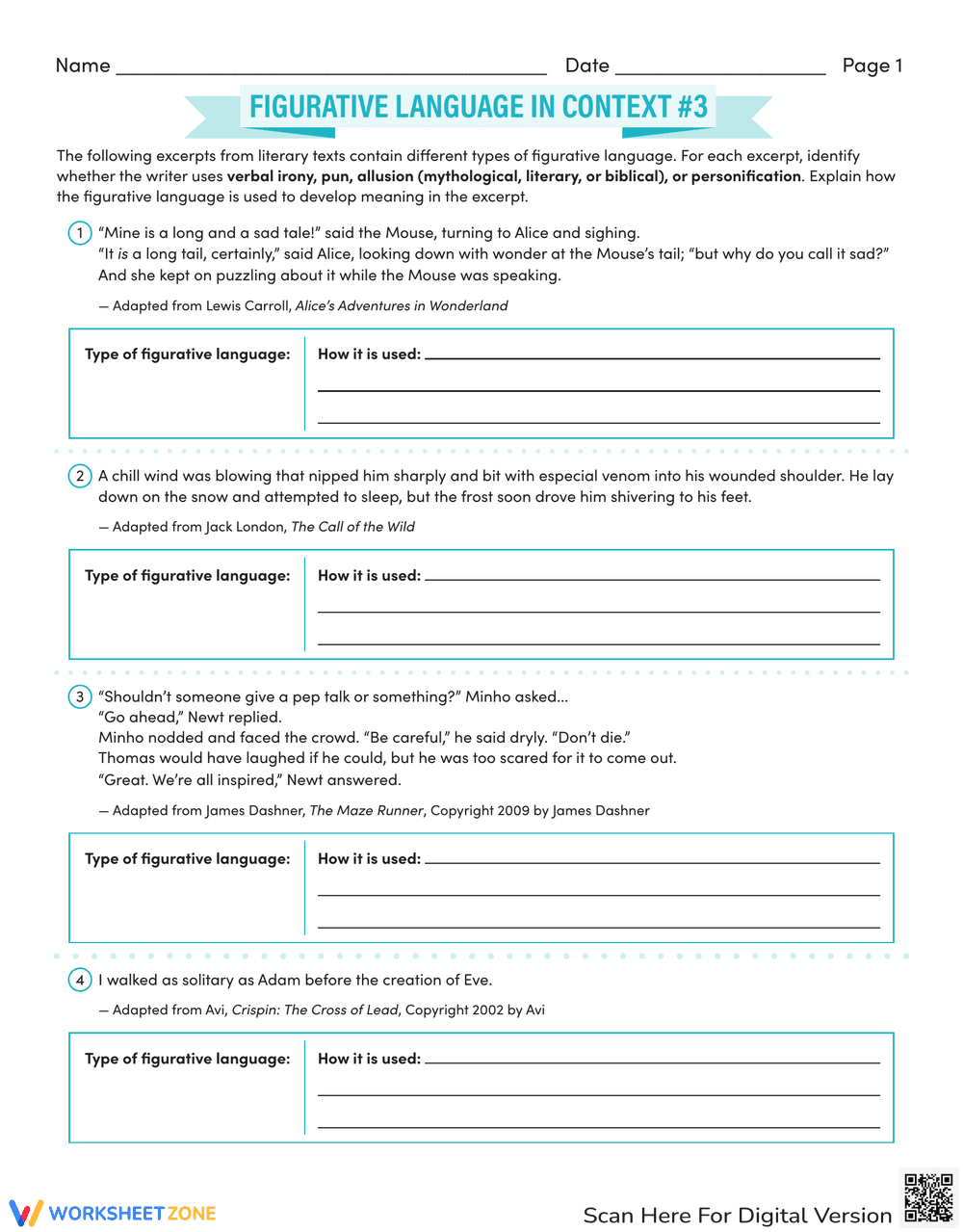
This is an educational worksheet titled 'Figurative Language in Context #3.' It presents four excerpts from literature and asks students to identify the type of figurative language used in each excerpt (e.g., irony, allusion, personification) and explain how it contributes to the meaning of the passage. The excerpts are taken from works such as 'Alice's Adventures in Wonderland,' 'The Call of the Wild,' and 'The Maze Runner.' Each excerpt is followed by two blank lines labeled 'Type of figurative language:' and 'How it is used:'.
Grade Level Suitability:
This worksheet is suitable for grades 7-10. The literary excerpts require a good understanding of reading comprehension and the ability to analyze text for deeper meaning. Identifying and explaining the use of figurative language necessitates a solid foundation in literary terms and analysis, typically developed in middle and high school.
Why Use It:
This worksheet helps students develop critical reading and analytical skills. It reinforces their understanding of different types of figurative language and encourages them to think about how these devices contribute to the overall meaning and impact of a text. It also improves their ability to identify and interpret literary techniques within the context of a passage.
How to Use It:
Students should read each excerpt carefully. They should then identify the primary type of figurative language used in the passage and write it on the line labeled 'Type of figurative language:'. Next, they should explain how that figurative language is used to create meaning or impact in the excerpt on the line labeled 'How it is used:'.
Target Users:
The target users are middle and high school students learning about figurative language and literary analysis. It's also useful for English teachers looking for engaging activities to reinforce these concepts. Homeschooling parents can also utilize this worksheet for language arts instruction.
This is an educational worksheet titled 'Figurative Language in Context #3.' It presents four excerpts from literature and asks students to identify the type of figurative language used in each excerpt (e.g., irony, allusion, personification) and explain how it contributes to the meaning of the passage. The excerpts are taken from works such as 'Alice's Adventures in Wonderland,' 'The Call of the Wild,' and 'The Maze Runner.' Each excerpt is followed by two blank lines labeled 'Type of figurative language:' and 'How it is used:'.
Grade Level Suitability:
This worksheet is suitable for grades 7-10. The literary excerpts require a good understanding of reading comprehension and the ability to analyze text for deeper meaning. Identifying and explaining the use of figurative language necessitates a solid foundation in literary terms and analysis, typically developed in middle and high school.
Why Use It:
This worksheet helps students develop critical reading and analytical skills. It reinforces their understanding of different types of figurative language and encourages them to think about how these devices contribute to the overall meaning and impact of a text. It also improves their ability to identify and interpret literary techniques within the context of a passage.
How to Use It:
Students should read each excerpt carefully. They should then identify the primary type of figurative language used in the passage and write it on the line labeled 'Type of figurative language:'. Next, they should explain how that figurative language is used to create meaning or impact in the excerpt on the line labeled 'How it is used:'.
Target Users:
The target users are middle and high school students learning about figurative language and literary analysis. It's also useful for English teachers looking for engaging activities to reinforce these concepts. Homeschooling parents can also utilize this worksheet for language arts instruction.


