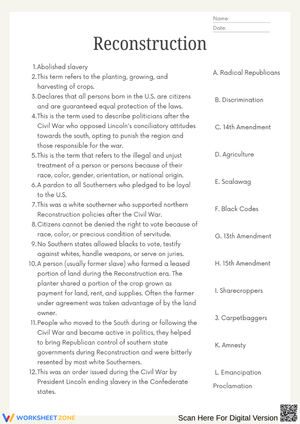
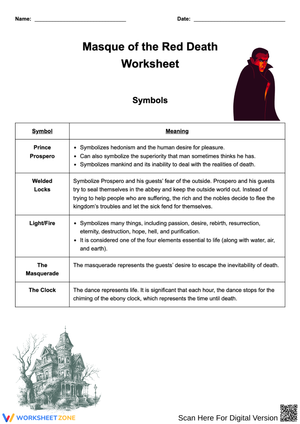
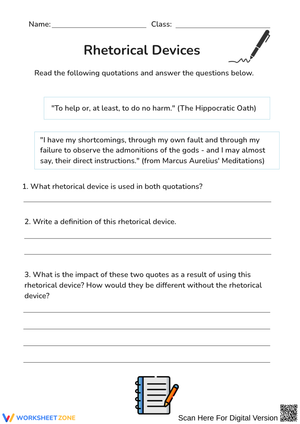
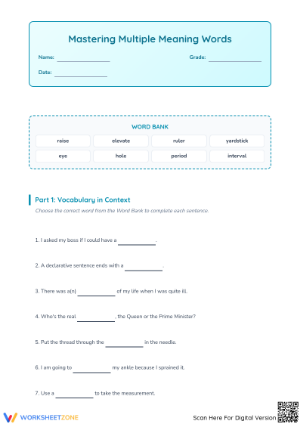
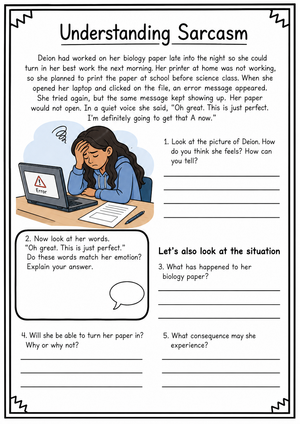
These 9th grade language and vocabulary worksheets resources give ELA teachers targeted, printable practice that addresses the vocabulary gap students hit at the start of high school — the moment when reading lists shift from accessible middle school novels to Hemingway, historical documents, and argumentative essays that assume a working academic vocabulary. Each worksheet isolates a specific skill so teachers can use it exactly where instruction needs reinforcing, rather than assigning vague vocabulary lists and hoping words stick.
The Specific Skills Each Worksheet Targets
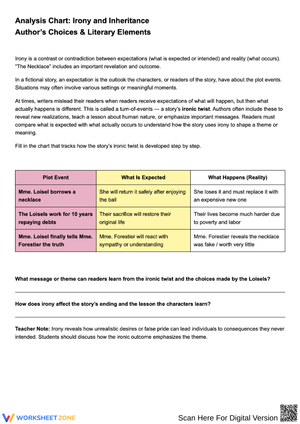
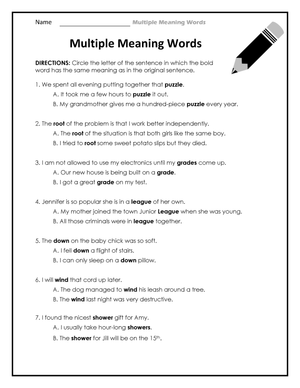
The set covers four interconnected areas of word study, each grounded in what students actually need to do in 9th grade reading and writing tasks.
- Latin and Greek roots, prefixes, and suffixes. When students learn that dict means "to speak," they stop treating "contradict," "dictate," and "malediction" as unrelated terms to memorize and start seeing a pattern they can apply forward. Each worksheet in this strand presents a root with multiple derivatives and asks students to generate and analyze new words built on the same base.
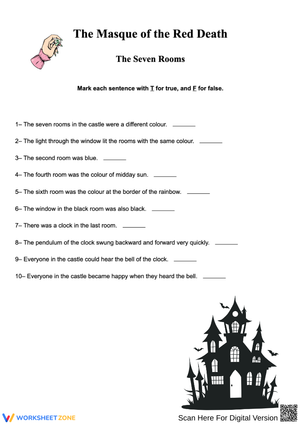
- Context clue identification and application. These exercises use authentic paragraph-length passages — not stripped-down vocabulary sentences — so students practice the way context clues actually appear in text. They mark the clue type present (definition, contrast, synonym, inference) before writing a meaning in their own words.
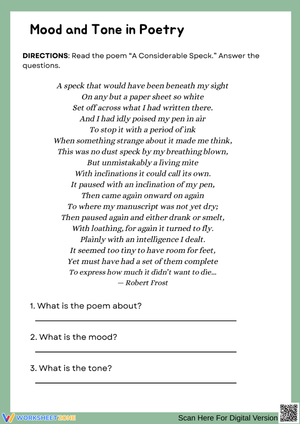
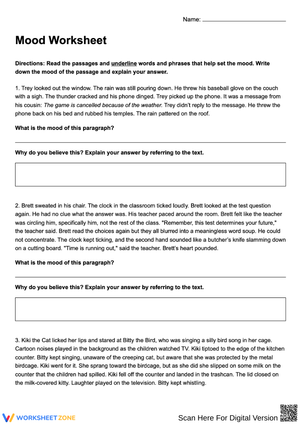
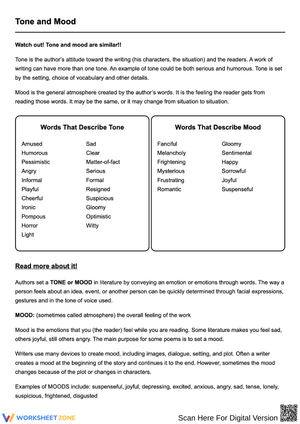
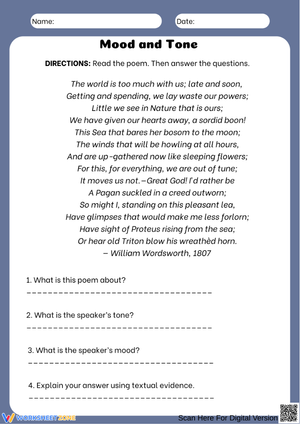
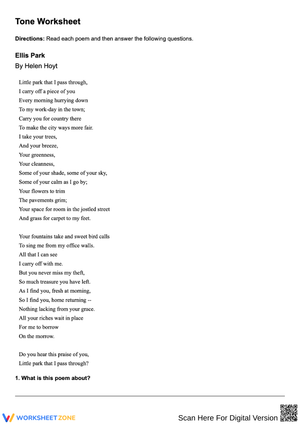
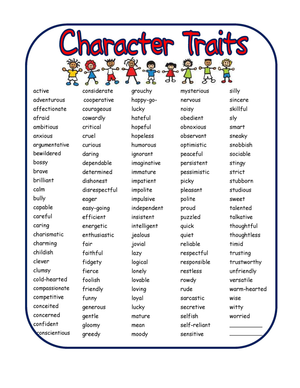
- Connotation, denotation, and diction. Students analyze how word choice shapes tone by working with near-synonym sets — distinguishing "confident" from "arrogant," or "determined" from "stubborn" — and then revise a passage's emotional register by substituting words from opposite ends of the connotative spectrum.
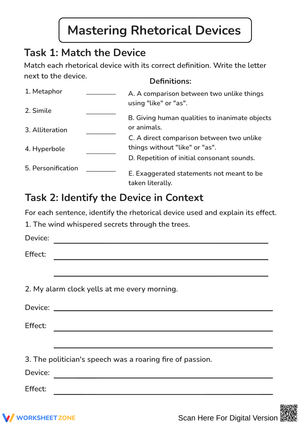
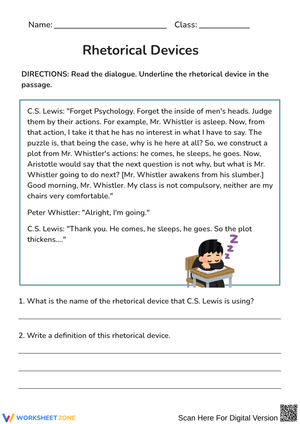
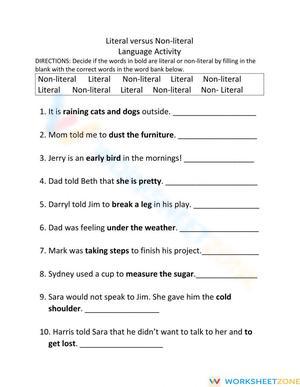
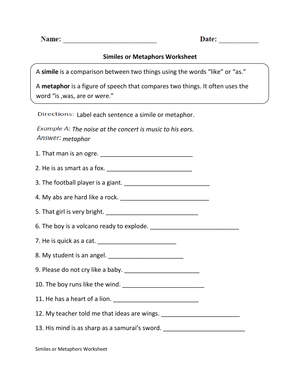
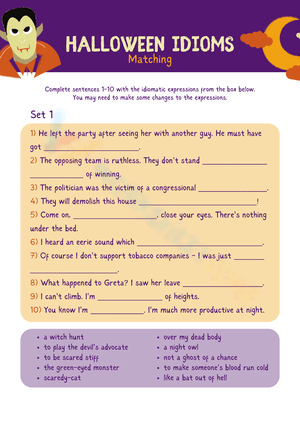
- Figurative language in context. Rather than identifying devices in isolation, students encounter figurative language inside longer prose and poetry excerpts, explain what the figure means, and evaluate whether it fits the author's apparent purpose.
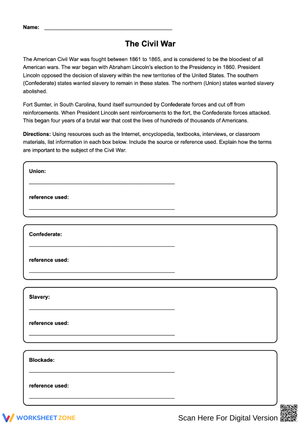
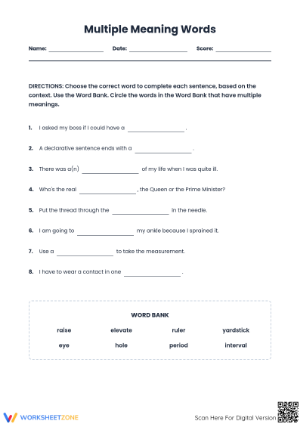
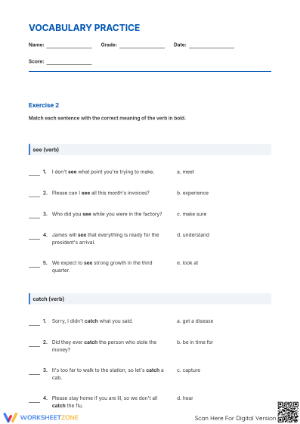
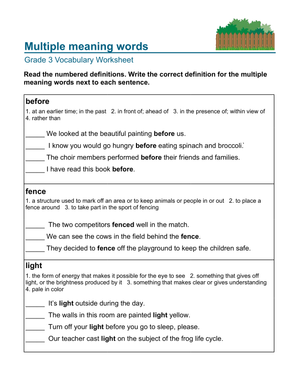
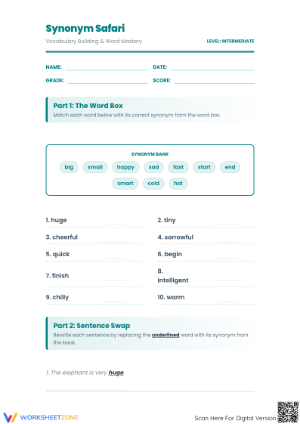
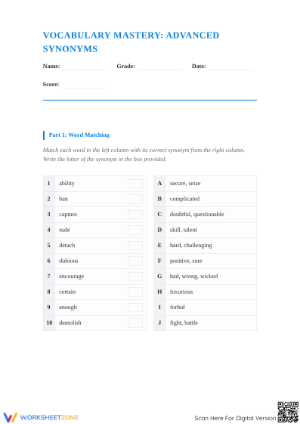
- Tier 2 academic vocabulary. Words like "synthesize," "delineate," "corroborate," and "infer" appear across disciplines and on standardized assessments. These exercises put Tier 2 terms into multiple sentence contexts so students develop a feel for proper usage, not just a memorized definition.
Student Errors These Worksheets Help You Catch Early
The most persistent error in 9th grade word work is context clue overcorrection: students find a familiar word near the unknown term and treat it as a definition rather than a hint. A student who reads "the profligate spending and reckless behavior" will often write "profligate means reckless" — missing that the conjunction signals addition, not restatement, and that the two phrases modify a situation rather than define each other. The context clue worksheets build in explicit instruction on clue types precisely because students need a classification framework before they read context clues reliably.
A second pattern shows up in the connotation exercises. Students frequently conflate denotative accuracy with communicative precision: they know "inquisitive" and "nosy" both mean curious, but they default to "curious" in every sentence because it feels neutral and safe. The temperature-scale activity — placing near-synonyms on a spectrum from positive to negative — forces students to commit to a position about word tone rather than hedge. When they have to defend in writing why "nosy" sits at the negative end while "inquisitive" sits near the positive, that reasoning starts showing up in their literary analysis essays in concrete ways.
How to Work These Worksheets Into Your Weekly Instruction
The bell-ringer slot is the highest-value placement for most of these exercises. Three to five minutes at the start of the period — before the day's main text goes up — lets word study happen consistently without consuming reading or discussion time. A single root-word exercise works well here: students have enough time to analyze three or four derivatives, and the work primes them for morphologically demanding vocabulary that may appear in the day's reading.
For station rotation days, grouping the connotation and figurative language worksheets at one station and the root-word exercises at another gives students meaningful variation without requiring entirely different activity structures. The PDF format means printing a class set the night before is a reasonable task; teachers don't need a cart of devices or a lab reservation.
Interactive notebooks work especially well with the context clue exercises. Students tape a completed worksheet into their notebooks and return to it when they encounter an unfamiliar word in an essay or exam passage — the marked-up clue types become a reference strategy rather than a past assignment filed away and forgotten.
The 9th grade language and vocabulary worksheets set also fills homework nights effectively, particularly between major reading assignments. Because each worksheet carries explicit instructions, students complete the work without needing mid-task teacher support — which cuts down on the "I didn't know what to do" conversations the following morning.
Standard Alignment
These worksheets address CCSS.ELA-LITERACY.L.9-10.4, L.9-10.5, and L.9-10.6. Standard L.9-10.4 — using context clues, analyzing word parts, and consulting reference materials to determine word meaning — is the one most teachers return to most often in day-to-day instruction, and the context clue and etymology exercises in this set map directly to its sub-standards. L.9-10.5 covers figurative language, word relationships, and nuances in word meaning; the connotation spectrum activities and figurative language analysis worksheets address it by design. L.9-10.6 asks students to acquire and use Tier 2 academic and domain-specific vocabulary, and the academic word list exercises close that loop by requiring students to demonstrate word usage across multiple sentence contexts, not just match a word to its definition. The 9th grade language and vocabulary worksheets materials also reflect the underlying logic the standards articulate: students need to develop vocabulary acquisition habits, not just master a fixed list of words.
Adapting the Set for a Range of Learners
For students who arrive at 9th grade with weaker decoding fluency, the root-word worksheets still function well — but those students benefit from completing the morphology exercises with a reference list of common roots available rather than working from memory. That adjustment redirects cognitive load from recall toward application, which is the actual target skill, without removing the analytical challenge.
Students working well above grade level on vocabulary can extend the connotation exercises by writing original passages that deliberately manipulate word tone — selecting near-synonyms to make a neutral event sound menacing or admirable, then swapping the words to reverse the effect. The figurative language worksheets support extension work too: asking advanced students to evaluate whether a figure of speech is effective or clichéd in context requires interpretive judgment that goes meaningfully beyond identification.
For English Language Learners, the etymology strand tends to be the most immediately productive entry point, particularly for students whose first language is Romance-based. Recognizing that the prefix bene- in "benevolent" connects to the same root as Spanish bien gives students a real pathway into Latin-root vocabulary without requiring them to treat every word as brand new.
Frequently Asked Questions
Do the worksheets come with answer keys?
Yes. Each worksheet includes an answer key. For exercises that involve interpretation — explaining the effect of a metaphor or justifying a word's placement on a connotation spectrum — the key provides a model response and the criteria students should meet, rather than a single correct answer, since those questions genuinely have more than one defensible response.
Can a worksheet function as a formative assessment?
Several teachers use them that way. A root-word exercise completed at the start of a morphology unit gives quick, usable data on what students already know about prefixes and suffixes before direct instruction begins. Exit-ticket use — one context clue paragraph at the final five minutes of class — shows clearly which students are applying the strategy independently and which need another pass at the instruction the following day.
How do these align with standardized test preparation?
The 9th grade language and vocabulary worksheets exercises build the same habits of close word attention that state assessments and the SAT demand: reading carefully for context, reasoning about word meaning from surrounding text, and articulating word relationships precisely. Context clue analysis, Tier 2 academic vocabulary, and figurative language interpretation appear directly in the reading and language sections of most major assessments, so regular use of these worksheets is test preparation that also serves daily instruction.












 Interactive Worksheet Maker
 Quiz Maker
 Word Search Maker
 Crossword Puzzle Maker
 Word Scramble Generator
 Sentence Scramble Generator
 Handwriting Worksheet Generator
 Name Tracing Generator
 Fill In The Blank Generator