These 9th grade language worksheets resources target the mechanical and rhetorical shifts that hit students hardest in the first weeks of freshman ELA — parallel structure in formal sentences, the deliberate use of semicolons and colons, and vocabulary built through morphological analysis rather than flash cards. The set is organized around the specific error patterns that show up in actual 9th-grade drafts, not a general tour of grammar rules.
What the Set Covers
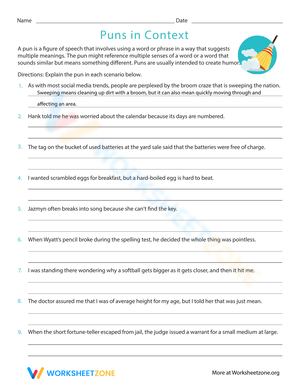
Three skill clusters run across the worksheets. The first is parallel structure at the word, phrase, and clause level — including the correlative conjunction cases ("either/or," "neither/nor") that students rarely encounter until high school. The second is advanced punctuation: semicolons between related independent clauses and colons before lists, explanations, and long quotations. The third is vocabulary development through Greek and Latin roots, prefixes, and suffixes, paired with context-clue strategies for reading dense literary and informational texts.
- Parallel structure: rewriting faulty lists, fixing correlative pairs, and maintaining grammatical balance across full sentences in student writing
- Semicolons and colons: distinguishing these marks from each other and from the period and comma; recognizing when a complete independent clause must precede a colon
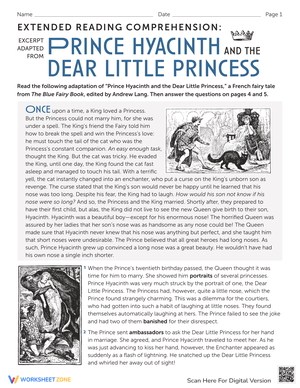
- Etymology and context clues: decoding unfamiliar terms using roots such as chron, bene, and port, and reading surrounding text for synonyms, antonyms, and clarifying examples
Error Patterns Worth Anticipating Before You Hand These Out
Parallel structure errors fall into two predictable categories. The first is the obvious mixed-form list — "She likes hiking, to swim, and the mountains" — which most freshmen can spot and fix once the rule is named. The harder category is parallelism failure inside correlative constructions. A sentence like "Either she will study tonight or going to the library" reads fine to most 9th graders because the meaning comes through, even though the grammatical forms don't match. That's the version worth writing on the board during whole-class review.
Colon errors follow their own reliable pattern. Students know colons introduce lists, but they consistently place them after incomplete clauses — "The three causes were: inflation, drought, and debt" — where no colon belongs. After drilling the rule abstractly, many students still revert to this construction the moment they write under pressure. The most efficient correction is asking them to read aloud the clause before the colon and decide whether it can stand on its own as a sentence. If it can't, the colon comes out.
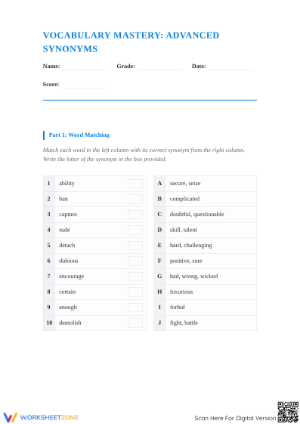
The vocabulary exercises surface a different trap. A student who knows that bene means good will often mark "benevolent" as simply meaning "good" and miss the sense of active, warm generosity that the word actually carries. Students need to read the surrounding sentences before committing to a definition — the context-clue exercises in this set push them to do exactly that, rather than stopping at the root.
Folding These Resources Into Your Instructional Week
Bell-ringers are the most efficient slot. Two or three parallel structure problems projected on the board as students enter take about five minutes and settle the room before the main lesson. When you run a focused bell-ringer four days a week, the grammar coverage compounds quickly — by the time students reach a formal essay, the rule has appeared often enough that it no longer needs sustained reteaching.
Learning stations work especially well with this set. Set up four corners: one for parallel structure, one for semicolons, one for colons, and one for etymology. Students rotate in small groups, spending around eight minutes at each station completing a portion of the corresponding worksheet. The movement helps students stay with the material, and they tend to talk through problems with each other in ways they won't during silent seat work. It also makes it easy to park yourself at whichever station needs live support most that day.
One classroom adaptation worth trying with these 9th grade language worksheets resources is a grammar gallery walk. Print segments with intentional errors embedded, post them around the room, and ask students to circulate, find mistakes, and annotate corrections on a response sheet. It reframes grammar as puzzle-solving rather than rule-memorization, which tends to bring in students who shut down during traditional drill work.
Standard Alignment
These worksheets address three Language strand standards from the Common Core State Standards for grades 9–10. L.9-10.1 covers the conventions of standard English grammar, with parallel structure named explicitly at this grade band. L.9-10.2 addresses semicolons linking related independent clauses and colons introducing lists, quotations, and explanations. L.9-10.4 and L.9-10.5 cover vocabulary acquisition through morphological analysis and interpretation of words in context, including connotation and figurative language. In most district pacing calendars, L.9-10.1 and L.9-10.2 appear in the first unit alongside argumentative writing — when parallelism and precise punctuation show up immediately in thesis statements and body paragraph transitions. The vocabulary standards run across the full year and pair naturally with whatever texts the class is reading.
Adjusting the Set for a Range of Learners
For students who are still working through basic comma rules and subject-verb agreement, the parallel structure and colon exercises can feel like a larger jump than they're ready for. A practical approach is to give those students a reference card — the rule stated simply, one clear example, one non-example — and ask them to complete the first three items before continuing independently. Breaking the task into a smaller entry point prevents the paralysis that hits struggling writers when they see every item on the worksheet at once.
Students who have already absorbed the mechanics need something beyond identification tasks. Have them take a paragraph from a class text and rewrite it — replacing periods with semicolons where the logic supports it, or converting flat lists into tight parallel series — then justify each change in a sentence. These 9th grade language worksheets exercises also double as revision tools for advanced writers: ask them to run the checklist against a draft essay and annotate every place where a grammar or punctuation decision applies. That moves the work from drill into something that looks like real editing.
Frequently Asked Questions
Which standard specifically covers parallel structure at this grade level?
Parallel structure falls under L.9-10.1, which requires students to use the conventions of standard English grammar and usage when writing or speaking. The standard names parallel structure explicitly as a 9th–10th grade expectation. Most teachers address it early in the year during argumentative writing, because balanced lists and paired constructions appear immediately in thesis sentences and topic sentence transitions — exactly where freshmen writers feel the difference.
Can these worksheets serve as formative assessments rather than practice exercises?
Yes, and this is one of the more practical uses. Assign four or five items from a colon or semicolon worksheet as an exit ticket after a mini-lesson, then scan the responses before the next class. You'll know immediately who grasped the clause-boundary rule and who still needs a follow-up conversation. That's faster than a quiz and gives you the same diagnostic picture without eating into instructional time.
Do these resources come with answer keys?
Yes — each worksheet includes an answer key. This is useful for two practical reasons. First, it makes these 9th grade language worksheets resources fully usable during coverage days when a substitute may not have an ELA background. Second, it lets students self-check during station rotations or at-home work without waiting for teacher feedback. On grammar exercises especially, immediate correction matters — students who sit with a wrong answer for two days tend to reinforce the error rather than fix it.
How should these worksheets be sequenced across a unit?
Start with parallel structure before moving to semicolons and colons. Students find it easier to identify and fix faulty parallelism first — the error is audible when a sentence is read aloud — before they tackle punctuation rules that require them to parse clause boundaries accurately. Vocabulary exercises can run alongside either skill cluster since they draw on different cognitive processes and don't compete for the same working-memory load during the same lesson.












 Interactive Worksheet Maker
 Quiz Maker
 Word Search Maker
 Crossword Puzzle Maker
 Word Scramble Generator
 Sentence Scramble Generator
 Handwriting Worksheet Generator
 Name Tracing Generator
 Fill In The Blank Generator