




























1 / 4
0
Views
0
Downloads

0.0
0
Save
0 Likes
Share
Types of Symbolism in Literature – Definition Guide for Students
0 Views
0 Downloads

Paste this activity's link or code into your existing LMS (Google Classroom, Canvas, Teams, Schoology, Moodle, etc.).
Students can open and work on the activity right away, with no student login required.
You'll still be able to track student progress and results from your teacher account.
Information
Description
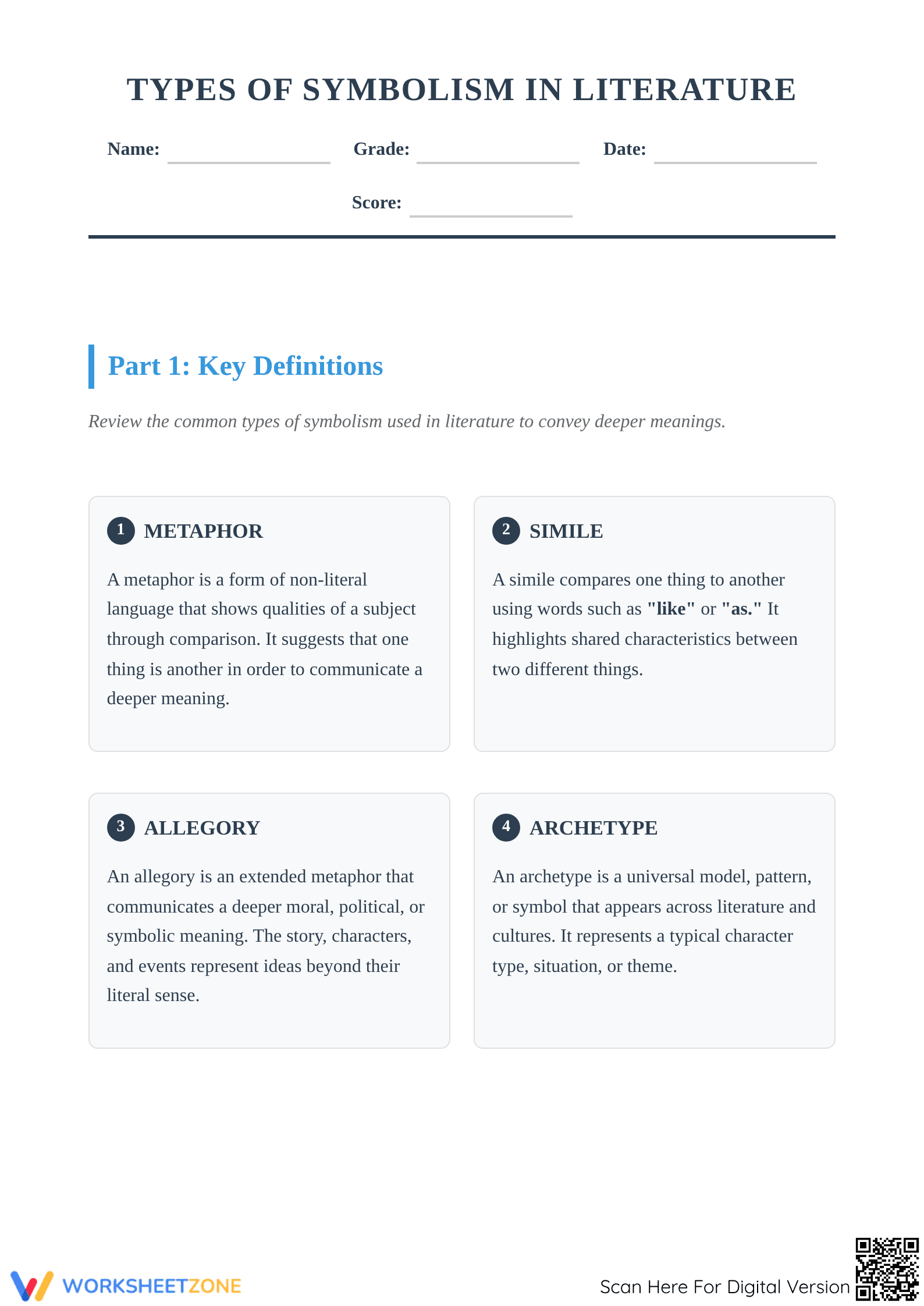
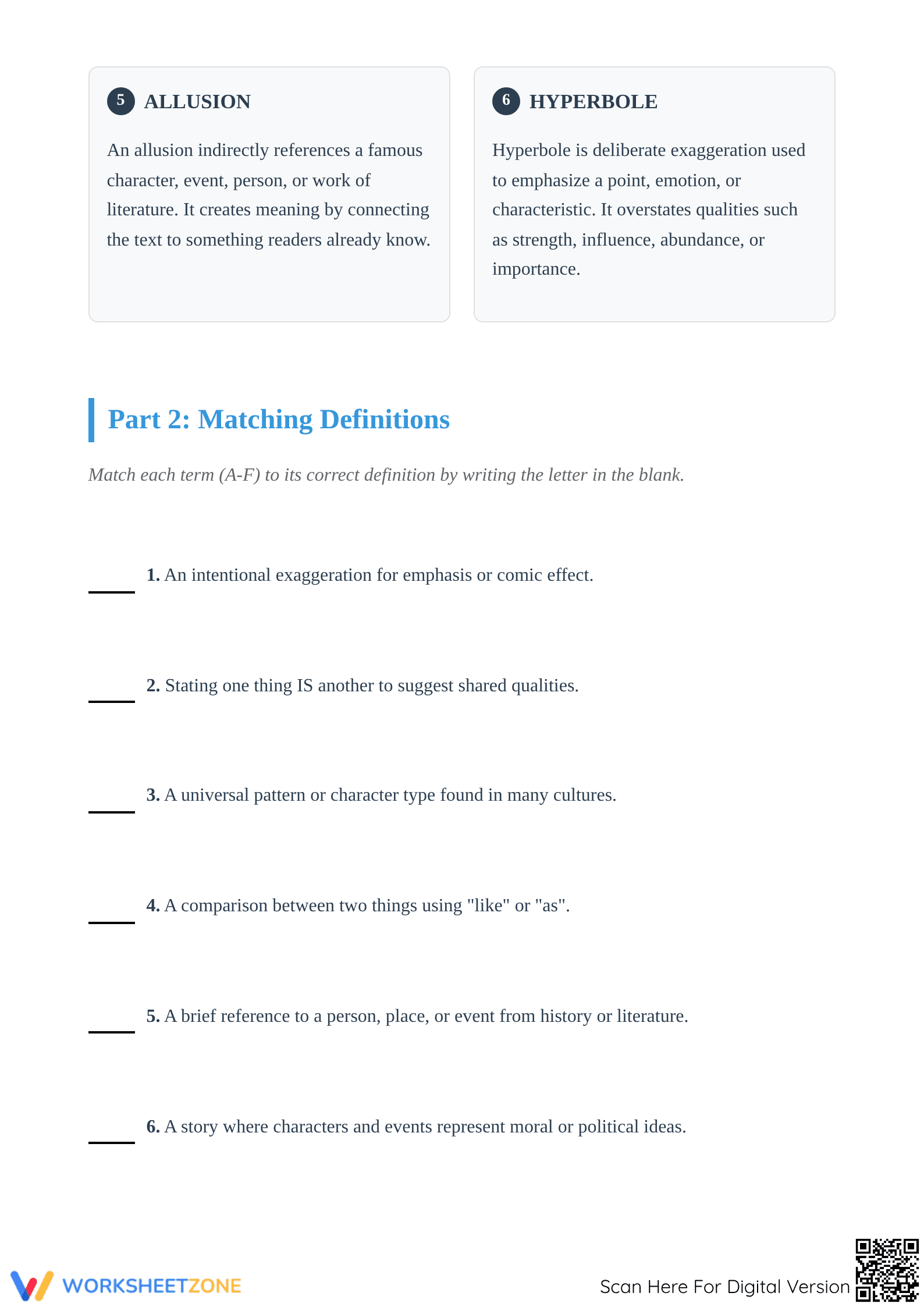
A clear, student-friendly reference worksheet that explains six major types of symbolism used in literature: metaphor, simile, allegory, archetype, allusion, and hyperbole. Each term includes a concise definition written for easy classroom comprehension. This guide serves as an anchor chart or quick-reference tool for reading and writing lessons.
Why Use It:
Symbolism can be difficult for students to understand, especially when analyzing deeper meaning in texts. This worksheet breaks down each symbolic device into simple explanations, helping learners identify figurative language, interpret symbolism, and strengthen literary analysis skills. It is ideal for supporting reading comprehension, essay writing, and standardized test preparation.
How to Use It:
• Introduce each literary term before reading a story, poem, or novel.
• Use as a reference sheet during annotation, group discussions, or close reading activities.
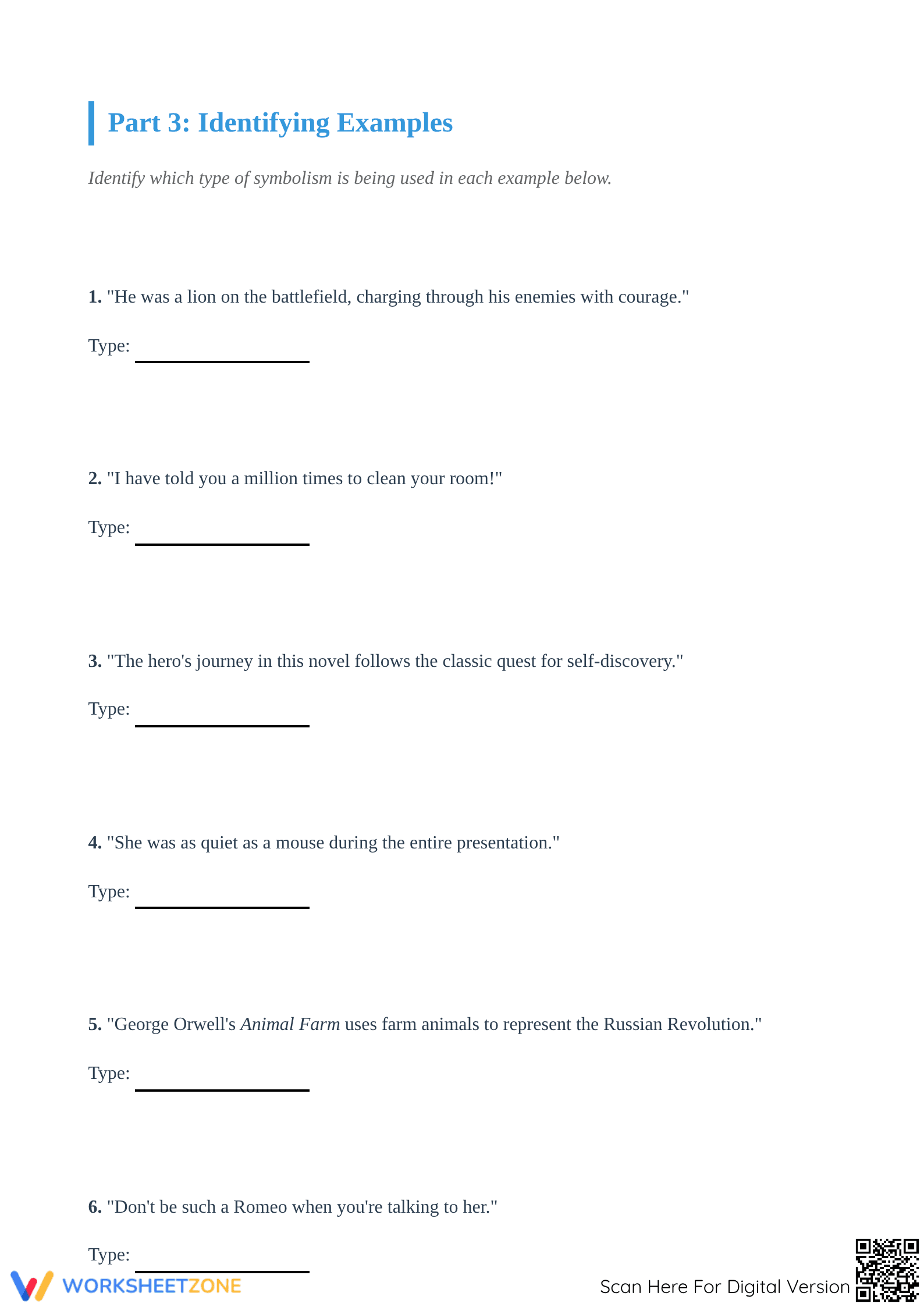
• Pair with practice worksheets where students identify examples of symbolism in texts.
• Display as an anchor chart or glue into interactive notebooks for ongoing use.
• Assign as a study guide for quizzes on figurative language or literary devices.
Grade Suitability:
Best for Grades 6–12.
• Middle school readers learning foundational figurative language.
• High school students practicing deeper literary analysis and writing.
Target Users:
Designed for ELA teachers, reading specialists, tutors, and homeschool educators teaching figurative language, symbolism, and literary interpretation.
Why Use It:
Symbolism can be difficult for students to understand, especially when analyzing deeper meaning in texts. This worksheet breaks down each symbolic device into simple explanations, helping learners identify figurative language, interpret symbolism, and strengthen literary analysis skills. It is ideal for supporting reading comprehension, essay writing, and standardized test preparation.
How to Use It:
• Introduce each literary term before reading a story, poem, or novel.
• Use as a reference sheet during annotation, group discussions, or close reading activities.
• Pair with practice worksheets where students identify examples of symbolism in texts.
• Display as an anchor chart or glue into interactive notebooks for ongoing use.
• Assign as a study guide for quizzes on figurative language or literary devices.
Grade Suitability:
Best for Grades 6–12.
• Middle school readers learning foundational figurative language.
• High school students practicing deeper literary analysis and writing.
Target Users:
Designed for ELA teachers, reading specialists, tutors, and homeschool educators teaching figurative language, symbolism, and literary interpretation.


