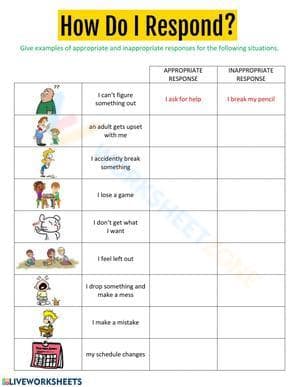
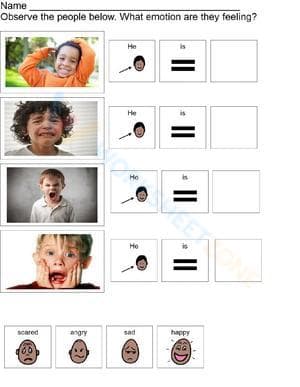
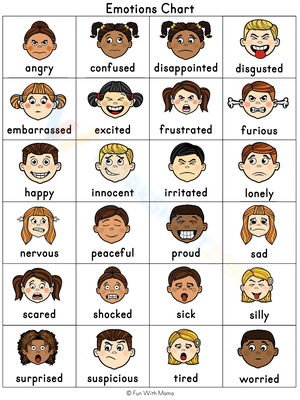
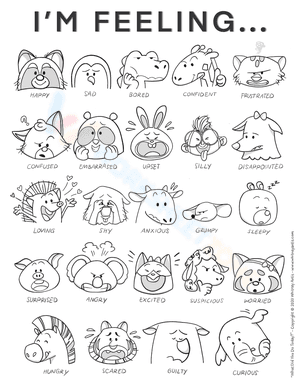
Emotions and feelings pdf worksheets for 9th grade work best when the materials treat students as young adults — the language sounds like something a real person would say, the scenarios reflect situations they actually navigate, and nothing on the worksheet signals that it was pulled from an elementary SEL folder. These resources give teachers a practical, low-prep tool for building emotional vocabulary and self-reflection into advisory, health class, or ELA without turning a class period into open-ended group disclosure.
What Ninth Graders Notice Before They Read the First Prompt
Ninth graders make fast judgments about instructional materials. A worksheet with cartoon illustrations, oversized fonts, or a scenario about playground conflict loses them before the first prompt is read. Clean design, neutral language, and realistic scenarios — deadline stress before a test, friction with a friend over something said online, a family expectation that feels unreasonable — all signal that the material respects where students actually are. Teachers who have used these worksheets in advisory consistently find that the less the design resembles something from an elementary counselor's folder, the more students write.
Emotional safety is also built into how prompts are worded. What kind of situation tends to raise your stress level at school? generates usable, honest writing across an entire class. A prompt asking students to narrate a painful personal event freezes anyone carrying real weight they are not ready to put on paper. Useful reflection needs enough specificity to guide thinking — not enough pressure to feel like forced vulnerability.
Skills These Worksheets Build
The work moves well past happy-sad-mad identification. At 9th grade, basic emotion matching lands badly — students disengage fast. What holds attention is vocabulary that names nuanced states: apprehension, resentment, deflation, ambivalence. Prompts that connect a feeling to its trigger, its physical signal in the body, and a possible next-step response. That four-part chain — name, trigger, body cue, strategy — is what separates useful self-awareness work from a mood chart students fill in and forget.
- Extended emotion vocabulary that draws distinctions between similar states (frustrated vs. defeated, nervous vs. anxious, disappointed vs. hurt)
- Scenario-based prompts grounded in ninth-grade life: group project friction, social comparison pressure, academic stress in the first high school semester, family expectations that conflict with peer norms
- Private written reflection sections students complete before any discussion happens
- Coping strategy selection — students identify options and choose among them rather than being told what to do
- Short check-in formats that take under five minutes for days when class time is compressed
Planning With These Worksheets Across Advisory, Health, and ELA
The most sustainable way to use emotions and feelings pdf worksheets for 9th grade is as a repeatable routine rather than a one-time activity. Advisory teachers who open Monday with a two-minute "name your feeling and its trigger" check consistently find that students move into the first real task more readily than on days with no transition ritual. Health teachers can use a worksheet to launch a stress and coping unit, then return to the same format at the unit's end so students can see whether the strategies they initially listed actually matched what helped them. ELA teachers have found these useful before character analysis discussions — asking students to apply the same four-part framework to a character's emotional state that they used for their own reflection, then compare the two.
A few placements that work well in practice:
- Bell ringer before a discussion-heavy lesson — students arrive with thinking already on paper instead of starting cold
- Sub plan when the regular lesson requires teacher facilitation — directions are self-contained and tasks are independent
- Re-entry tool after a conflict or a student returning from an absence
- Advisory calendar anchor — one each week builds vocabulary and reflection habits across the semester
- Counselor referral support — a completed worksheet gives the counselor a concrete starting point rather than a cold open
One habit worth establishing early: end each worksheet with a forward-looking prompt. Something like "What is one thing you can do differently tomorrow based on what you noticed today?" keeps the activity aimed at self-management rather than leaving students sitting with identified feelings and no next step.
Patterns We See in Student Work — and What Teachers Should Anticipate
The most consistent error is vocabulary collapse under cognitive load. A student who correctly matches apprehension to a definition in a vocabulary exercise will still write "I felt bad" when completing a personal reflection prompt. That gap between knowing a word and reaching for it under emotional pressure shows up constantly in 9th grade SEL work. A brief vocabulary read-through before students begin — even just reading five emotion words aloud together — produces noticeably richer written responses than jumping straight into the reflection task.
A second pattern: students regularly conflate the trigger with the feeling. Asked to describe what triggered their frustration before a test, many write "I was frustrated because the test was hard." That restates the feeling rather than identifying the trigger. The actual trigger is usually something upstream — the review session that did not cover what appeared on the assessment, anxiety about a grade affecting athletic eligibility, or the group member who did not contribute. Worksheets that provide separate, labeled spaces for "what happened" and "how I felt about it" do the most to interrupt this pattern and build the habit of distinguishing events from emotional responses to them.
Standard Alignment
These worksheets align with the CASEL SEL Framework across two competency clusters. Self-Awareness at the high school level includes accurately identifying emotions, recognizing connections between feelings and behaviors, and honestly assessing one's own responses to specific situations. Self-Management extends that into impulse regulation, stress response, and planning a constructive next step. The four-part prompt structure addresses both competencies inside a single short activity — which is why the format holds up across advisory, health, and ELA contexts rather than belonging to just one subject.
For health educators, these resources also support National Health Education Standard 7, which at the secondary level includes the ability to practice health-enhancing behaviors and develop personal strategies for managing emotional stress. States with formal SEL standards — Illinois, California, and Washington among them — tie directly to CASEL language, and completed worksheets serve as practical supporting documentation for SEL implementation at the classroom level.
Adapting the Set for a Mixed-Ability Classroom
For students who need more support accessing open-ended writing, the most useful adjustment is reducing composition demand without reducing thinking demand. Providing a word bank printed at the top of the worksheet — or offering pre-filled trigger categories to circle rather than generate from scratch — keeps the activity accessible. The cognitive work of connecting feeling to trigger to strategy stays intact; only the entry point changes.
For students who complete reflection tasks quickly and accurately, the extension is analytical rather than more of the same. Ask them to write a second response from a different perspective: what might a classmate in the same situation feel, and why might that feeling differ? That push into perspective-taking moves toward CASEL's Social Awareness competency — just past Self-Management. A student who finishes emotions and feelings pdf worksheets for 9th grade in three minutes has room to do something that actually challenges them, rather than sitting idle or being handed a second identical task.
For English language learners, the primary adjustment is vocabulary access. A bilingual word bank or a short glossary of emotion terms in the student's first language removes a language processing barrier without removing the SEL content. A student reflecting on their own emotional experience in their first language and then naming it in English is doing more sophisticated cognitive work than most English-dominant students filling in a word from the top of the page.
Frequently Asked Questions
Can these worksheets substitute for a formal SEL curriculum?
No, and they work better when they do not try to. A formal curriculum includes sequenced lessons, community-building activities, and skill development arcs that span weeks. These resources build vocabulary and reflection habits most effectively when they reinforce what a full curriculum introduces — or when a school needs a practical SEL entry point while a full program is still being selected or funded.
How do I handle a student who discloses something serious on a completed worksheet?
Follow your school's mandatory reporting and counselor referral procedures exactly as you would with any written disclosure. Before distributing any emotions and feelings pdf worksheets for 9th grade, it is worth setting an explicit class norm: students write for themselves, some answers stay private, and if something comes up that needs adult support, students know the path for asking. That framing does not replace legal obligations, but it gives students a clear direction before they start writing.
Do these work for substitute-led classes?
Yes. Each worksheet carries self-contained directions that do not require teacher facilitation. A substitute distributes the worksheet, allows independent work time, and collects responses at the end of class. If the regular teacher wants to review student work, collecting responses to one selected prompt — rather than the full reflection — keeps privacy intact while still providing a read on the room.
How often should these appear across a semester?
Weekly use builds the most durable reflection habits. Returning to the same four-part format across multiple weeks moves students from effortful self-analysis toward something more automatic — which is exactly what spaced repetition does in any skill area. Monthly use still adds value but tends to feel like a discrete event rather than a classroom norm. The format is low-burden enough that weekly use does not crowd out content instruction in any of the subjects where these fit.
















 Interactive Worksheet Maker
 Quiz Maker
 Word Search Maker
 Crossword Puzzle Maker
 Word Scramble Generator
 Sentence Scramble Generator
 Handwriting Worksheet Generator
 Name Tracing Generator
 Fill In The Blank Generator