


























1 / 2
0
Views
0
Downloads

0.0
0
Save
0 Likes
Share
Emotion Regulation Skills Practice Worksheet
0 Views
0 Downloads
Paste this activity's link or code into your existing LMS (Google Classroom, Canvas, Teams, Schoology, Moodle, etc.).
Students can open and work on the activity right away, with no student login required.
You'll still be able to track student progress and results from your teacher account.
Information
Description
What It Is:
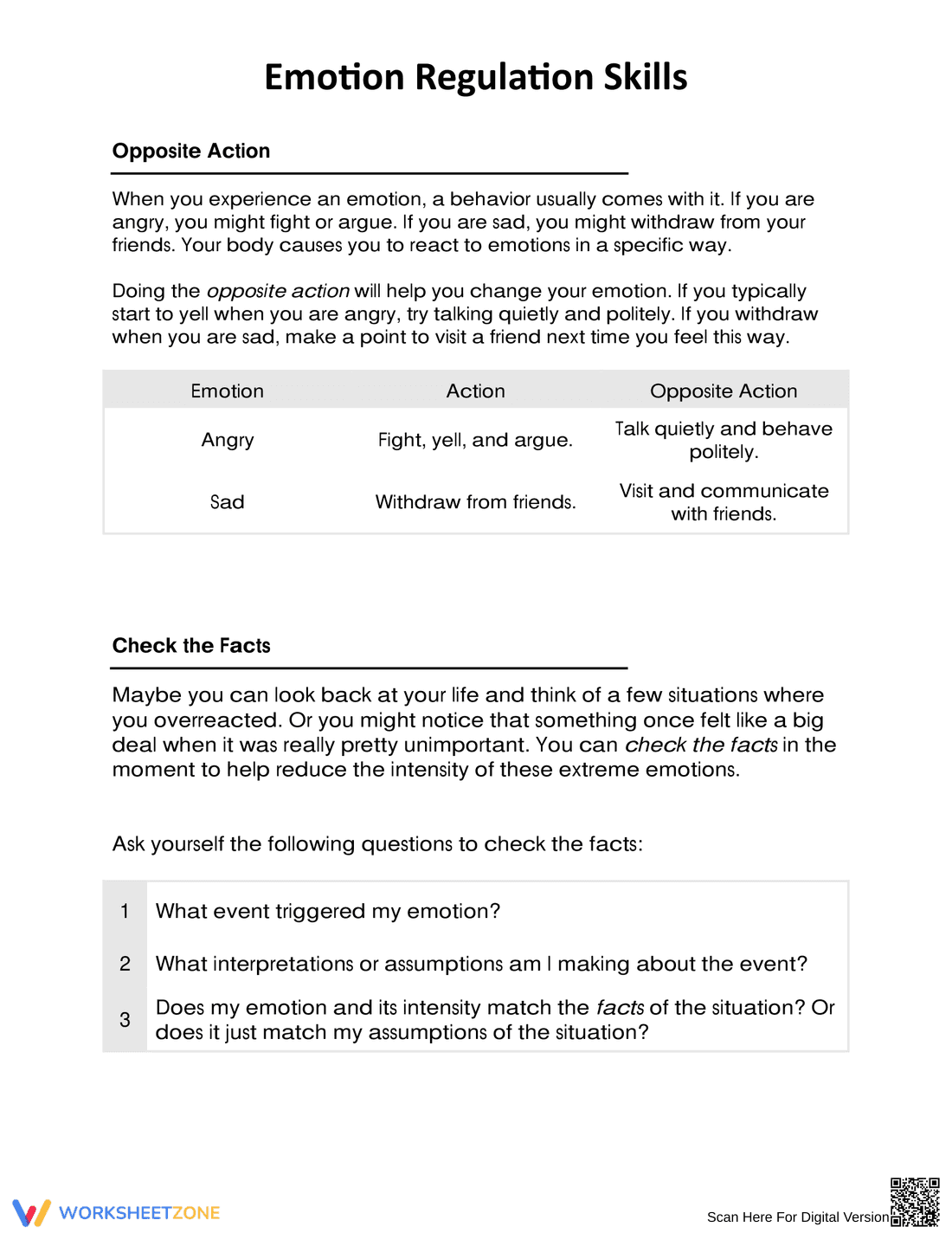
This is an educational worksheet focused on emotion regulation skills. It includes sections on 'Opposite Action' where students learn to identify typical reactions to emotions like anger and sadness, and then identify opposite actions. It also includes a 'Check the Facts' section with questions designed to help students analyze and understand the triggers and interpretations of their emotions.
Grade Level Suitability:
This worksheet is suitable for upper elementary (grades 4-5) through middle school (grades 6-8). The concepts are relatively straightforward, but require a level of self-awareness and critical thinking that typically develops in these grades. The questions in the 'Check the Facts' section require some introspection.
Why Use It:
This worksheet helps students develop emotional intelligence and self-regulation skills. It teaches them to recognize their emotional responses, consider alternative actions, and analyze the validity of their emotional reactions, promoting healthier coping mechanisms.
How to Use It:
Students can use this worksheet individually or in a group setting. First, review the 'Opposite Action' section and brainstorm examples of typical and opposite reactions. Then, guide students to reflect on past situations and answer the questions in the 'Check the Facts' section to understand their emotional triggers.
Target Users:
This worksheet is beneficial for students struggling with emotional regulation, impulse control, or anger management. It can also be used as a preventative tool for all students to develop emotional awareness and coping strategies. School counselors, therapists, and teachers can use this as a resource.
This is an educational worksheet focused on emotion regulation skills. It includes sections on 'Opposite Action' where students learn to identify typical reactions to emotions like anger and sadness, and then identify opposite actions. It also includes a 'Check the Facts' section with questions designed to help students analyze and understand the triggers and interpretations of their emotions.
Grade Level Suitability:
This worksheet is suitable for upper elementary (grades 4-5) through middle school (grades 6-8). The concepts are relatively straightforward, but require a level of self-awareness and critical thinking that typically develops in these grades. The questions in the 'Check the Facts' section require some introspection.
Why Use It:
This worksheet helps students develop emotional intelligence and self-regulation skills. It teaches them to recognize their emotional responses, consider alternative actions, and analyze the validity of their emotional reactions, promoting healthier coping mechanisms.
How to Use It:
Students can use this worksheet individually or in a group setting. First, review the 'Opposite Action' section and brainstorm examples of typical and opposite reactions. Then, guide students to reflect on past situations and answer the questions in the 'Check the Facts' section to understand their emotional triggers.
Target Users:
This worksheet is beneficial for students struggling with emotional regulation, impulse control, or anger management. It can also be used as a preventative tool for all students to develop emotional awareness and coping strategies. School counselors, therapists, and teachers can use this as a resource.


