


























Views
Downloads

Grades 7-9 Fear Assessment — Printable No-Prep Worksheet
Paste this activity's link or code into your existing LMS (Google Classroom, Canvas, Teams, Schoology, Moodle, etc.).
Students can open and work on the activity right away, with no student login required.
You'll still be able to track student progress and results from your teacher account.
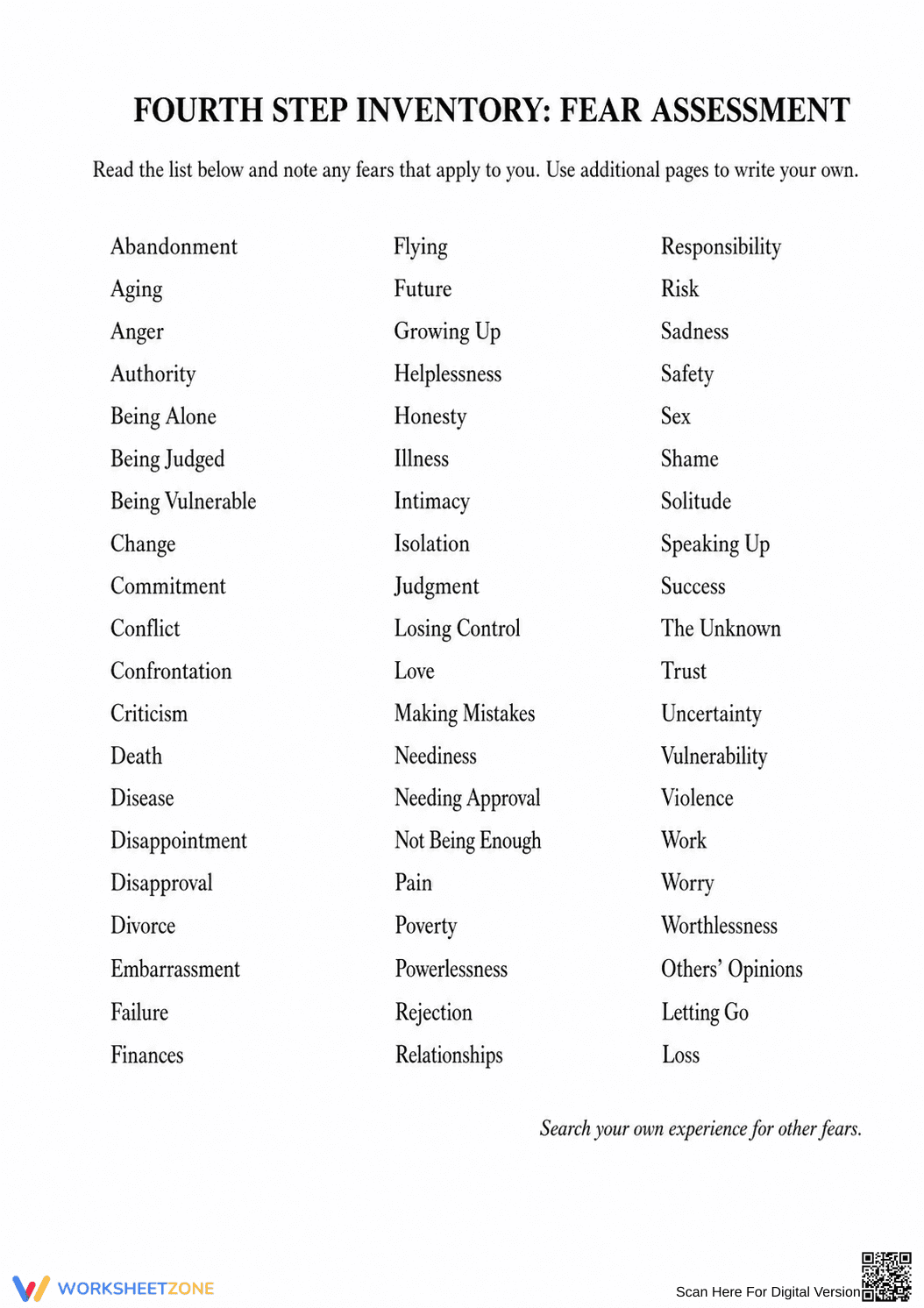
This fear assessment inventory worksheet helps students identify and analyze their personal anxieties to build critical self-awareness skills. By reviewing a comprehensive list of common fears and reflecting on their root causes, learners develop emotional intelligence and establish a foundation for healthy coping mechanisms in a structured format.
At a Glance
- Grade: 7–9 · Subject: Social Emotional Learning
- Standard:
CCSS.ELA-LITERACY.W.8.4— Produce clear writing appropriate to the task and purpose- Skill Focus: Self-awareness and emotional reflection
- Format: 3 pages · 12 problems · No answer key · PDF
- Best For: Independent reflection and counseling
- Time: 20–30 minutes
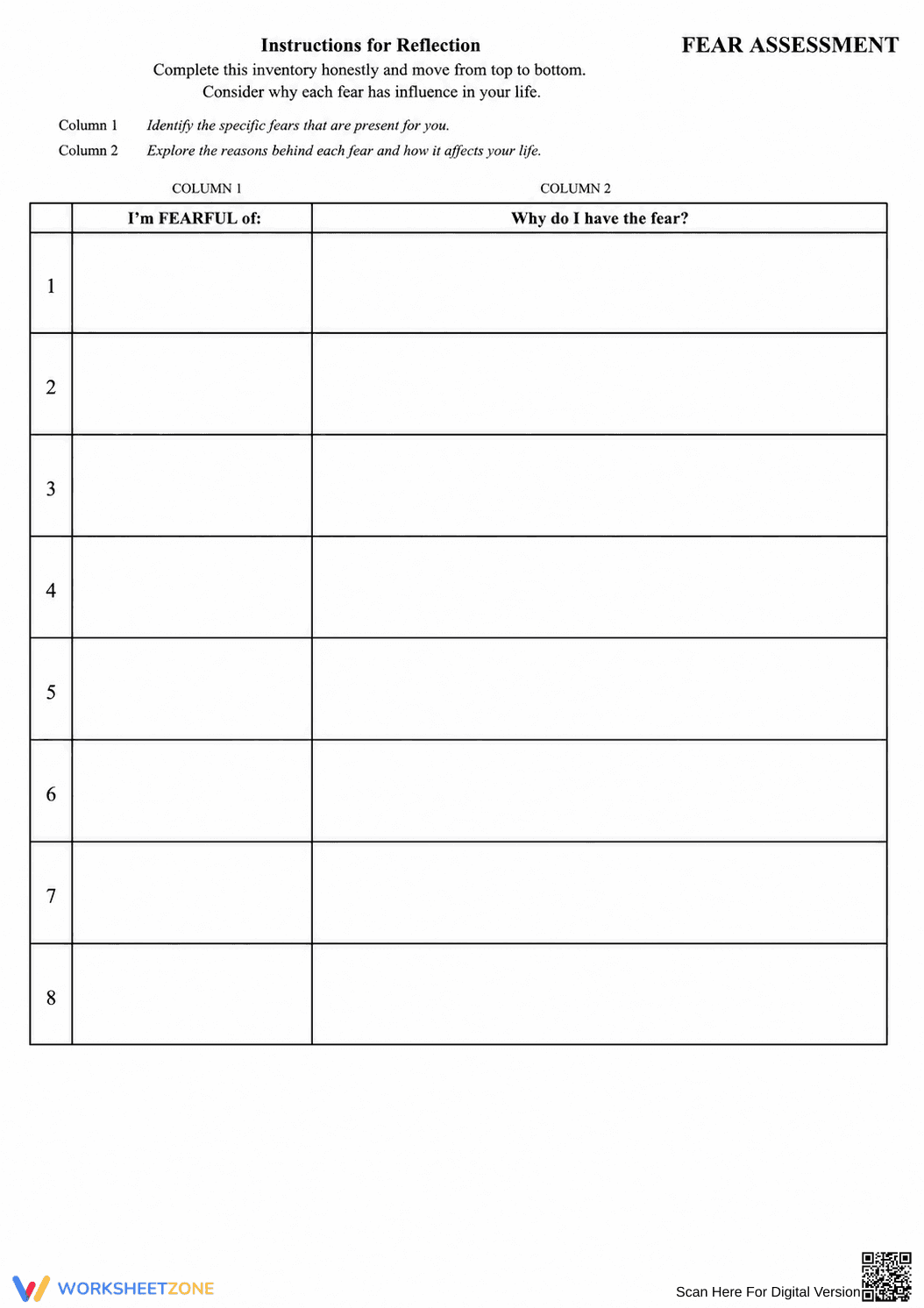
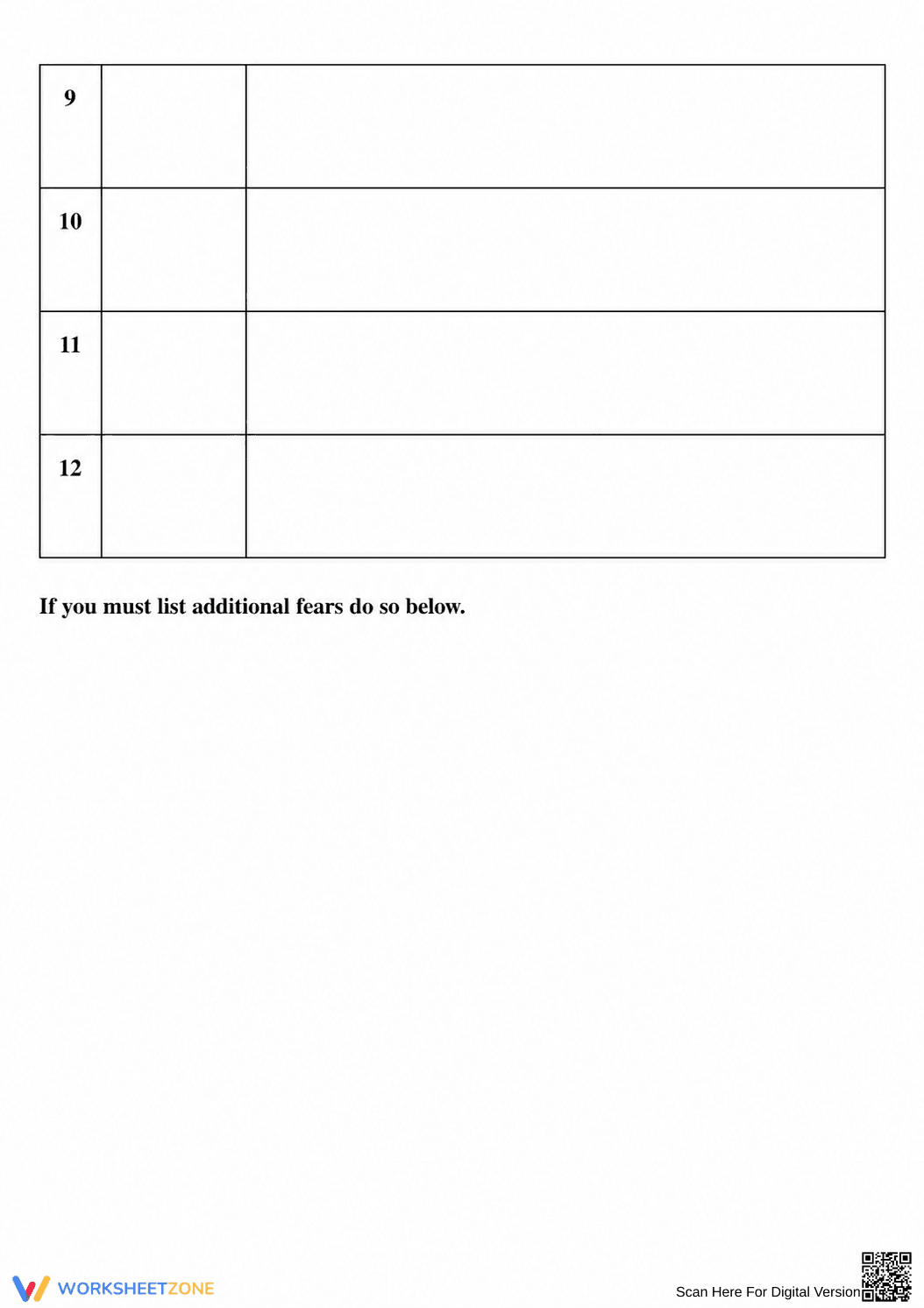
This three-page resource begins with a comprehensive reference list of over 40 common fears, ranging from abandonment and failure to vulnerability and the unknown. Students then complete a two-column reflection table with 12 structured rows, identifying specific fears and articulating their underlying reasons. The open-ended format provides additional space for students to document highly personalized anxieties not covered in the initial prompt list.
Designed for immediate implementation:
- Print (1 minute): Generate the three-page PDF packet for each student. No special formatting or color ink is required.
- Distribute (1 minute): Hand out the packets during homeroom, advisory periods, or dedicated counseling sessions. The instructions are entirely self-explanatory.
- Review (0 minutes): As a personal reflection inventory, no grading is required. Simply monitor for completion.
With under two minutes of total teacher prep time, this worksheet serves as an excellent standalone activity or a reliable component for a substitute teacher's lesson plan.
This activity aligns with CCSS.ELA-LITERACY.W.8.4: Produce clear and coherent writing in which the development, organization, and style are appropriate to task, purpose, and audience. By requiring students to articulate complex internal emotions into structured written responses, the exercise reinforces essential expressive writing skills. Both standard codes can be copied directly into lesson plans, IEP goals, or district curriculum mapping tools.
Educators and counselors can utilize this inventory during dedicated advisory periods to introduce units on mental health and emotional regulation. Alternatively, it functions effectively as a private, independent reflection assignment before initiating group discussions on overcoming personal obstacles. During the activity, observe students formatively to identify those needing additional emotional support. Expected completion time ranges from 20 to 30 minutes.
This assessment is primarily designed for middle and high school students in grades 7 through 9 who are developing their emotional intelligence. The straightforward vocabulary and structured tables provide built-in differentiation for learners who struggle with blank-page journaling, offering them concrete starting points. It pairs naturally with direct instruction lessons on the CASEL core competency of self-awareness or alongside literature units featuring characters overcoming significant personal phobias.
Integrating structured emotional reflection tools like this inventory directly supports adolescent development and academic readiness. Aligned with CCSS.ELA-LITERACY.W.8.4, this activity requires students to produce clear writing appropriate to the task and purpose by articulating their internal anxieties. According to a comprehensive EdReports 2024 analysis, embedding self-awareness exercises into routine classroom practice significantly improves students' ability to self-regulate and engage with rigorous academic content. When learners can accurately identify and document their fears, they reduce cognitive load and minimize behavioral disruptions. This specific assessment bridges the gap between abstract emotional concepts and concrete written expression, providing a vital framework for students to process their experiences. By utilizing this targeted reflection strategy, educators foster a more supportive learning environment that prioritizes both mental well-being and foundational literacy skills.


