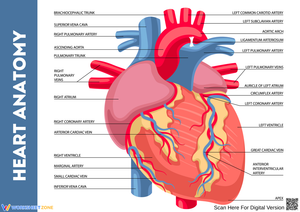
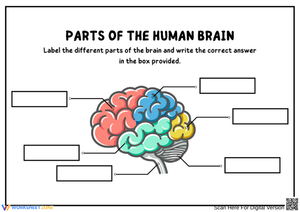
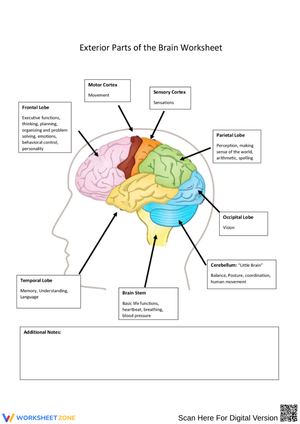
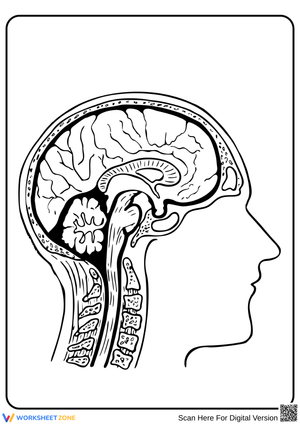
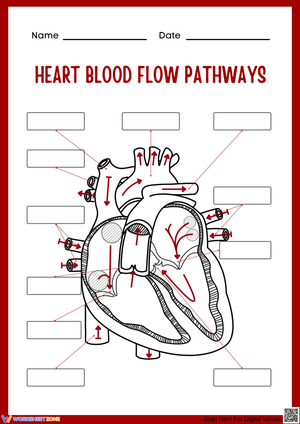
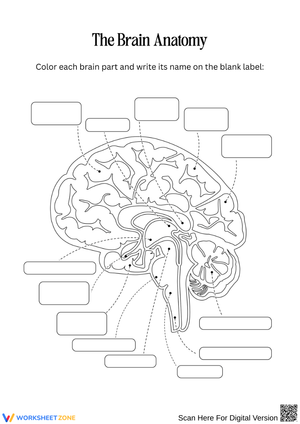
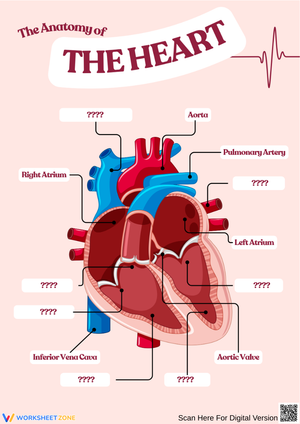
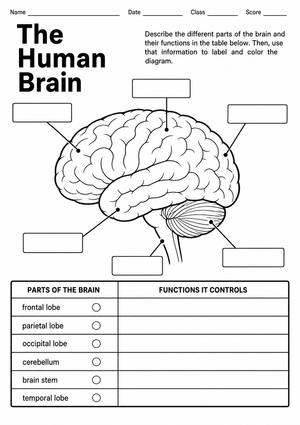
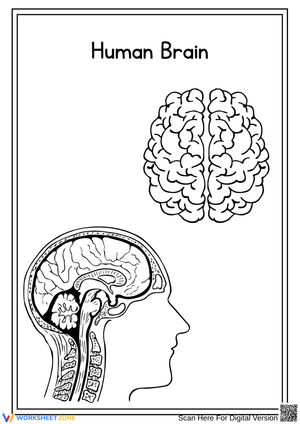
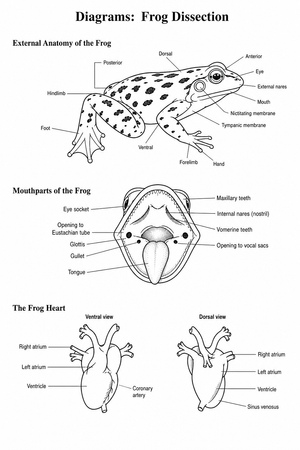
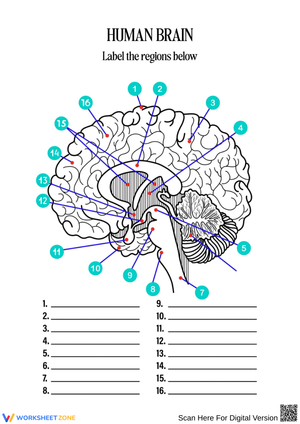
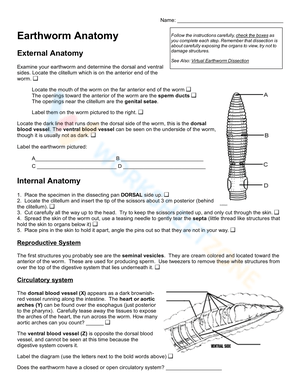
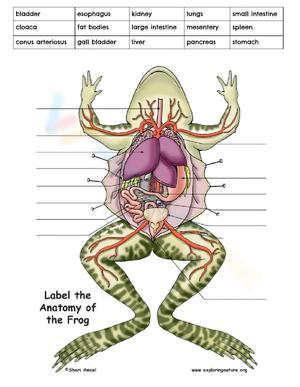
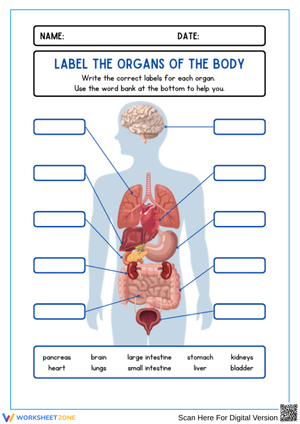
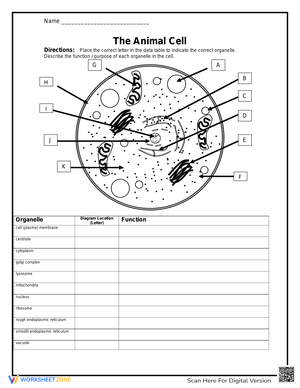
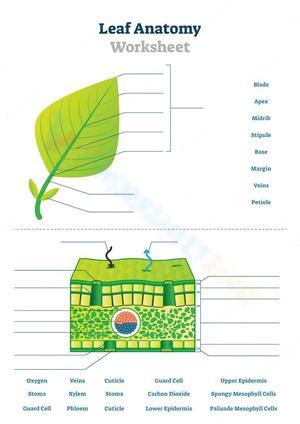
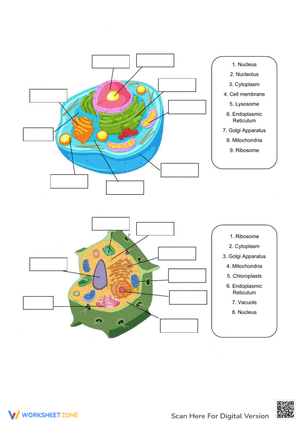
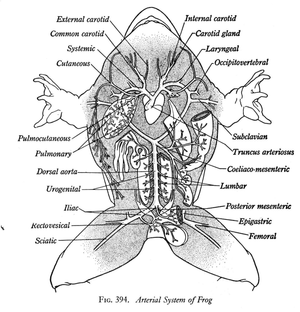
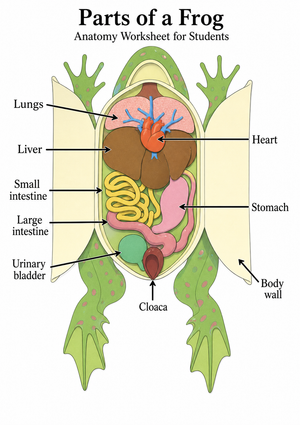
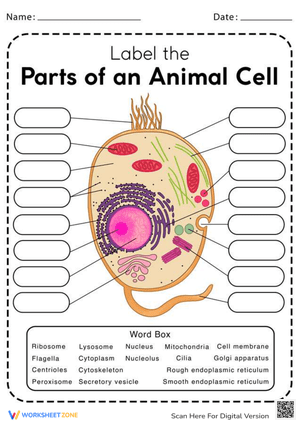
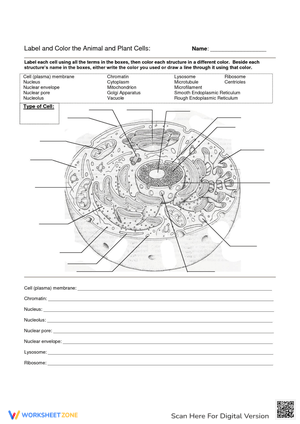
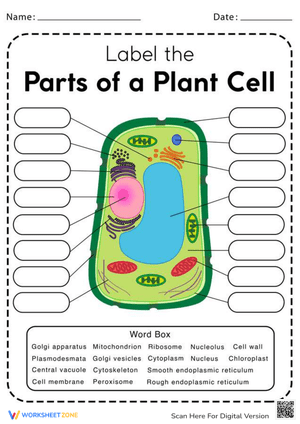
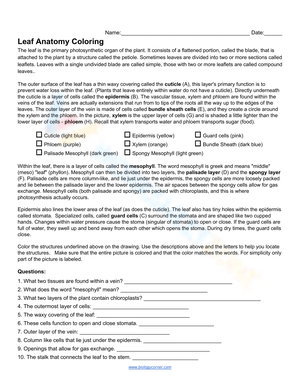
These anatomy worksheets for 8th grade give life science teachers printable practice organized around structure-and-function relationships — the central idea that runs through nearly every middle school body systems unit. The set moves from cell parts and tissue organization through the major human body systems, so there is material for early instruction, targeted reteaching, and cumulative review before assessment. Each worksheet focuses on one concept, which makes them easy to slot into any part of the week without rearranging the rest of a lesson.
Anatomy Concepts Covered Across the Set
Grade 8 life science pacing guides almost always follow the same progression: cells first, then tissues, then organs, then body systems. These worksheets track that sequence, which means teachers can pull individual resources at the right moment in the unit rather than handing out everything at once.
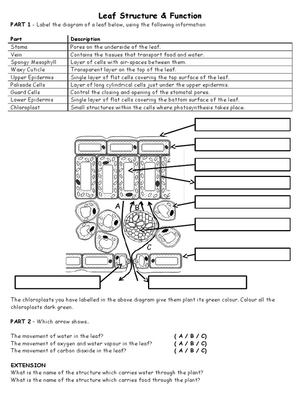
- Cell structure and function: identifying organelles and explaining what each one does, not just what it is called
- Tissue types: distinguishing epithelial, muscle, connective, and nervous tissue by their jobs
- Organ organization: tracing how multiple tissue types combine to form organs with specific roles
- Skeletal and muscular systems: support, protection, movement, and coordination between the two
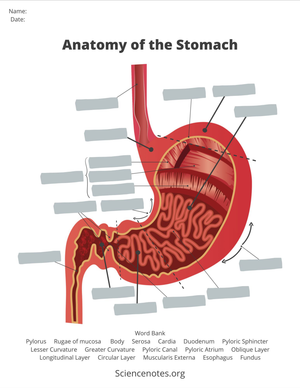
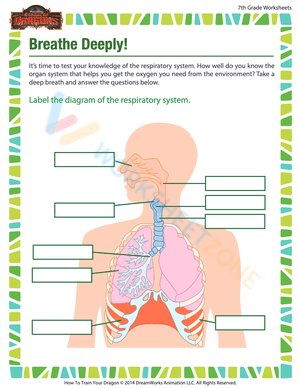
- Digestive and respiratory systems: following matter through each system and identifying where energy exchange occurs
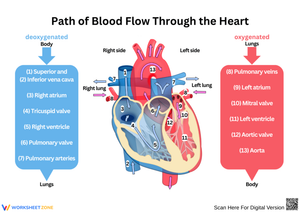
- Circulatory system: the path of blood, the role of the heart, and how this system connects to nearly everything else
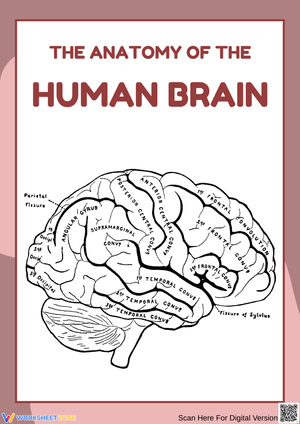
- Nervous system: stimulus-response pathways and how signaling coordinates other system activity
- System interactions: what happens when two or more systems respond together during exercise, digestion, or stress
That last category is where Grade 8 thinking tends to deepen most. Students who can describe individual systems in isolation often struggle to explain what happens when those systems respond together. Worksheets that push students past single-system recall into cross-system comparison do the heaviest instructional work in the unit.
Misconceptions Students Carry Into Body Systems Units
Two errors show up persistently in Grade 8 anatomy work. The first is conflating levels of organization. Students who can accurately draw and label a neuron will still describe the brain as "a tissue" in a written response — they know the word "organ" but have not solidified the rule that an organ is built from multiple tissue types working together. Worksheets that ask students to sort examples across all four levels of organization, rather than label one level at a time, correct this faster than reteaching definitions does.
The second error is more conceptual: students separate structure from function even after instruction has repeatedly linked them. A student who correctly labels the alveoli on a respiratory diagram may still write "the lungs pump blood to the body" on a short-answer question — borrowing language from the circulatory system because both involve movement through the body. Asking students to answer a consistent three-part prompt — what is the structure, what job does it do, and what would change if it were damaged — builds the structure-function connection more reliably than labeling alone. Several worksheets in the set use that format explicitly.
Where These Worksheets Fit in the School Week
The most common use is bell ringer and guided practice in the same class period. A teacher opens with one worksheet as a five-minute retrieval prompt — students label from memory, then check — and uses a second worksheet for partner or small-group work during the main lesson. That two-worksheet sequence takes roughly twenty minutes and covers both review and new application without requiring slides or device access.
Substitute plans are another strong use case. Because each worksheet carries a clear task, readable diagrams, and answer key support, a substitute can run the lesson without science content knowledge. The anatomy worksheets for 8th grade format also handles disrupted weeks well: when block days, assemblies, or standardized testing breaks the pacing guide rhythm, a single targeted worksheet keeps students engaged with the unit without forcing the teacher to rebuild the whole lesson plan.
Station rotations work especially well for system-interaction topics. Separate worksheets on the respiratory, circulatory, and digestive systems become three stations, with a fourth station using a cross-system prompt — "during a sprint, what is each system doing and why?" Students rotate through all four, building a fuller picture before whole-class discussion closes the lesson. That structure works in a fifty-minute period if the rotations run ten minutes each.
Standard Alignment
These worksheets align to NGSS MS-LS1: From Molecules to Organisms: Structures and Processes, which asks middle school students to explain the relationship between the structure of cells, tissues, organs, and organ systems and their functions in maintaining life processes. In classroom terms, that standard tells teachers to start small — with cell organelles — and work outward toward whole-body function across the unit. The worksheet sequence follows the same direction: cell structure resources come first, system-interaction resources come last, and each step builds on what students have already named and explained. When anatomy worksheets for 8th grade are organized to match that standard's progression, they serve as formative checkpoints — teachers can see exactly where a student's understanding breaks down before the unit summative arrives.
Adjusting the Worksheets for a Range of Learners
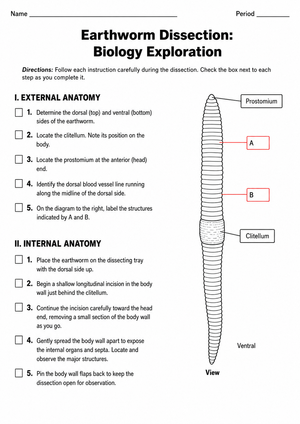
Because each worksheet is a separate resource, teachers can assign different worksheets to different students without making the differentiation obvious to the class. Students still working on foundational vocabulary receive labeling worksheets with a word bank and are asked to match terms to diagram features. Students ready for deeper work receive open-response worksheets that ask them to compare two systems or explain what would happen to digestion if the circulatory system stopped delivering oxygen to the intestinal walls.
For students who need more processing time, the word-bank labeling format lowers the barrier enough that they can participate in the same whole-class discussion — they have done the naming work, even if the explanation layer still needs more guided support. For students moving quickly through the unit, pairing a system worksheet with a cross-system interaction prompt gives them something genuinely harder to do, not just more of the same task at higher volume. The anatomy worksheets for 8th grade format makes that kind of selective assignment practical because printing individual resources takes seconds and leaves no visible gap between what one student receives and what another does.
Standard Alignment
Frequently Asked Questions
What anatomy topics are appropriate for 8th grade science worksheets?
Grade 8 life science typically covers cells, tissues, organs, and major body systems — skeletal, muscular, digestive, respiratory, circulatory, and nervous. Those topics match NGSS MS-LS1 expectations for middle school and sit at the right depth for students who are building toward high school biology without yet needing the cellular-molecular detail that comes in later coursework.
Can these worksheets be used for a substitute day?
Yes, and that is one of the most practical uses. A substitute plan built around anatomy worksheets works best when the resources have clear directions, a manageable reading load, and a labeling or short-response format that does not require knowledge of what was taught the day before. Answer keys make the whole package easier to run without the regular teacher present.
How do these resources support students who are struggling with body system concepts?
Struggling students most often need a clear visual paired with a focused task. Worksheets that combine a labeled diagram with one or two targeted questions — rather than six different question types on the same resource — let students process one idea before moving to the next. For reteaching, pulling a single worksheet on tissue organization or on one body system is faster and more targeted than reworking an entire lesson from scratch.
Do anatomy worksheet sets at this level usually include answer keys?
Many teacher-facing collections do, and answer key availability matters more than it might appear at first. Answer keys support student self-checks during guided practice, reduce grading time on homework sets, and make substitute plans reliable. When evaluating any set of printable resources, checking for answer keys before the materials go into a unit plan saves time later.












 Interactive Worksheet Maker
 Quiz Maker
 Word Search Maker
 Crossword Puzzle Maker
 Word Scramble Generator
 Sentence Scramble Generator
 Handwriting Worksheet Generator
 Name Tracing Generator
 Fill In The Blank Generator