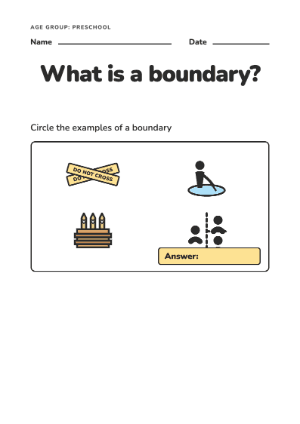
These behavior printable worksheets for 8th grade move the conversation away from compliance checklists and toward the kind of structured self-reflection that actually fits where 8th graders are developmentally. Each worksheet targets a specific skill — decision-making, self-monitoring, peer conflict, or responsibility planning — rather than relying on one catch-all template that students can rush through without real thinking. That specificity makes the follow-up conversation with a student more concrete and more useful.
What the Set Covers
Five skill areas show up across the worksheets, each matched to situations middle school teachers deal with throughout the year.
- Self-reflection: Students describe a classroom incident, name what they were thinking in the moment, and identify a different choice. Prompts stay matter-of-fact — no apology script, no shaming language, which matters when 8th graders are already defensive.
- Decision-making: A cause-and-effect format traces a choice to its immediate outcome and its longer-term impact on class standing and peer relationships — directly applicable to recurring issues like talking back, impulsive reactions during group work, or technology misuse.
- Self-monitoring: Students rate their focus, participation, and emotional control at set intervals and mark whether the strategy they chose held up. Over time, this builds genuine metacognitive awareness rather than surface compliance.
- Peer conflict and communication: Structured prompts help each person name what they needed from the interaction rather than assigning blame — more productive for 8th graders than open-ended journaling about feelings.
- Goal-setting and responsibility planning: Scope is kept deliberately small: one target behavior, one concrete strategy, one observable sign of progress. That specificity is what makes the goal usable rather than aspirational.
How to Work These Worksheets Into Your Lesson Plans
The most effective pattern is to treat each worksheet as part of a predictable routine rather than a surprise consequence. Students who have completed a self-monitoring worksheet before move through it faster and more honestly when it matters than students who encounter the format for the first time during a conflict. Running a few of these during advisory or in the first weeks of school cuts friction later.
Specific moments where these worksheets do the most work: re-entry after a hallway conversation when returning a student mid-period, the 8 to 10 minutes before end-of-day pickup when redirecting a student who had a rough afternoon, post-incident reflection before any conversation about consequences begins, and weekly counselor check-ins using the self-monitoring tracker. For substitute plans, the responsibility worksheet gives structured independent work that does not require the sub to manage a behavior conversation they were not briefed on.
Keeping a short version and a longer version of each type ready also helps. A 3-minute quick reflection handles in-class moments without escalating attention. A fuller version — closer to 10 minutes — works better for advisory, lunch reflection, or a counseling follow-up. Using the longer worksheet with a student who is still activated tends to produce one-word answers or outright refusal. Used consistently, behavior printable worksheets for 8th grade create a shared language for behavior conversations across classrooms, support staff, and intervention settings — which matters when six different teachers are seeing the same student every day.
Mistakes Students Make That Teachers Need to Anticipate
The most consistent problem with behavior reflection tasks at this grade is surface-level compliance: students write what they think the teacher wants to read rather than engaging honestly. A student who disrupted a group activity might write "I should have stayed focused and not bothered anyone" — the response looks complete, but it tells you nothing about what actually happened or what the student is likely to do next time. One follow-up question during the debrief — "What specifically were you doing when I redirected you?" — forces a real answer rather than a stock one. The worksheet does not prevent this pattern on its own; the debrief does.
A second recurring pattern is vague goal-setting. When a worksheet asks "What will you do differently?" many students write "try harder" or "be more respectful." These answers are not wrong so much as unusable for planning. Worksheets that ask for a specific strategy — "What is one thing you will do in the first five minutes of class to stay on track?" — produce answers that actually function as plans. Still, some students need the teacher to name two concrete options before they can pick one, especially students who struggle with executive function.
There is also a distinct group of students who shut down entirely when handed any written reflection task during or immediately after a conflict. Forcing completion in that moment usually produces refusal. Waiting 20 minutes, or saving the worksheet for a calm follow-up period, gets substantially better results and avoids the power struggle that undermines the entire purpose.
Adjusting the Set for a Range of Learners
Students who are confident writers can move through these worksheets quickly and benefit from the extended goal-setting version — particularly the section where they explain how they will handle the same situation differently and what support they plan to ask for. That level of detail is useful for parent conferences and IEP progress notes, since it documents student reasoning in the student's own words.
For students with limited writing stamina or students who are English language learners, the same reflection tasks work with a few adjustments: replacing open-ended lines with sentence frames ("I chose to ___ because ___"), allowing verbal responses that the teacher records directly on the worksheet, or reducing the task to two or three prompts instead of five. The core structure — what happened, what I was thinking, what I will do differently — holds for every learner even when the surface format shifts.
Behavior printable worksheets for 8th grade also adapt well for small-group advisory work when the scenario is a common classroom situation rather than a personal incident. A peer conflict worksheet functions as a discussion starter when the teacher presents a fictional scenario and the group works through it together — this removes the self-disclosure pressure while still building the reasoning skills these worksheets target.
Frequently Asked Questions
Can these worksheets be used with students who have IEPs or behavior intervention plans?
Yes, and they often align directly with BIP goals around self-monitoring, self-regulation, and replacement behavior. Coordinate with the case manager about which worksheet types match the documented behavior targets and whether completed worksheets can contribute to progress monitoring data.
How long does it take a student to complete one of these worksheets?
The short reflection format takes most 8th graders between 3 and 6 minutes. The deeper versions — those that include self-monitoring ratings, goal-setting, and a written plan — run closer to 10 to 15 minutes. Neither version should be handed to a student who is still actively dysregulated; the task requires enough calm to think in sequence.
What should I do if a student refuses to complete a worksheet?
Do not push for completion during an acute conflict moment. Set the worksheet aside, give the student a neutral task or quiet time, and return to it once things are calm. Behavior printable worksheets for 8th grade are reflection tools, not disciplinary forms — framing them that way from the start, before any incident occurs, reduces refusal rates significantly.
Do these worksheets work for whole-class use, or only for individual students?
Several types work well with the whole class — decision-making and peer conflict worksheets both function as discussion starters when the scenario is fictional or drawn from a common classroom situation. Self-reflection worksheets tied to a specific incident stay individual. Self-monitoring trackers work in both settings depending on whether the teacher is tracking a group participation goal or an individual behavior target.
















 Interactive Worksheet Maker
 Quiz Maker
 Word Search Maker
 Crossword Puzzle Maker
 Word Scramble Generator
 Sentence Scramble Generator
 Handwriting Worksheet Generator
 Name Tracing Generator
 Fill In The Blank Generator