


























0
Views
0
Downloads

0.0
0
Save
0 Likes
Share
Personal Boundaries Worksheet: Your Circles
0 Views
0 Downloads
Paste this activity's link or code into your existing LMS (Google Classroom, Canvas, Teams, Schoology, Moodle, etc.).
Students can open and work on the activity right away, with no student login required.
You'll still be able to track student progress and results from your teacher account.
Information
Description
What It Is:
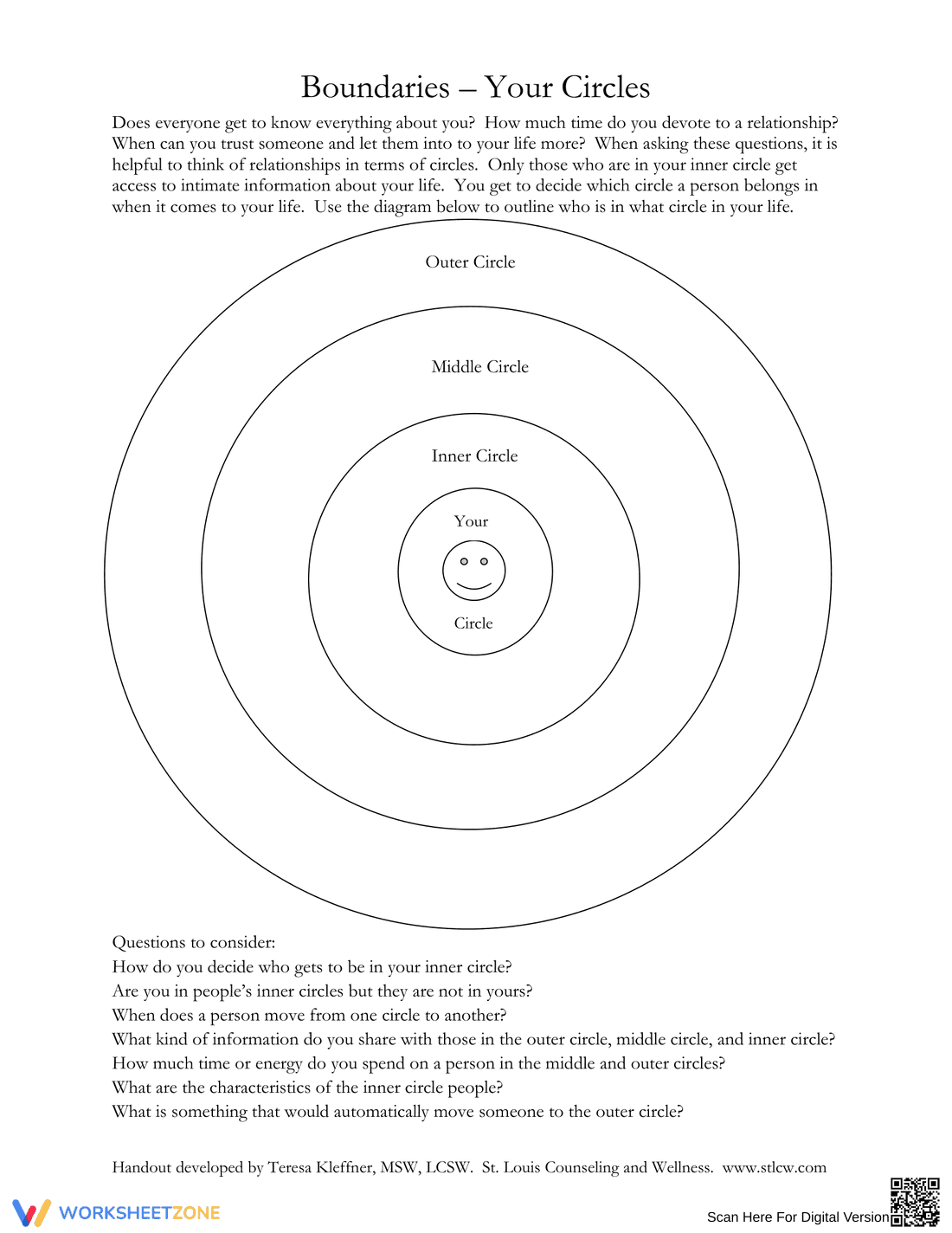
This worksheet helps students explore personal boundaries by organizing relationships into inner, middle, and outer circles.
Students reflect on who belongs in each circle and how trust, time, and emotional energy differ across relationships.
Why Use It:
Understanding personal boundaries supports healthy relationships, self-awareness, and emotional safety.
This worksheet encourages thoughtful reflection about trust, privacy, and decision-making in social interactions.
How to Use It:
• Ask students to label people in their lives within the inner, middle, and outer circles
• Use the reflection questions to guide discussion or journaling
• Discuss how and why people may move between circles over time
• Use in counseling sessions, SEL lessons, or personal growth activities
Grade Suitability:
Best suited for Grade 5–8.
• Appropriate for upper elementary and middle school SEL instruction
• Supports lessons on relationships, trust, and emotional boundaries
Target Users:
Teachers, school counselors, therapists, and students working on social-emotional learning and personal development.
This worksheet helps students explore personal boundaries by organizing relationships into inner, middle, and outer circles.
Students reflect on who belongs in each circle and how trust, time, and emotional energy differ across relationships.
Why Use It:
Understanding personal boundaries supports healthy relationships, self-awareness, and emotional safety.
This worksheet encourages thoughtful reflection about trust, privacy, and decision-making in social interactions.
How to Use It:
• Ask students to label people in their lives within the inner, middle, and outer circles
• Use the reflection questions to guide discussion or journaling
• Discuss how and why people may move between circles over time
• Use in counseling sessions, SEL lessons, or personal growth activities
Grade Suitability:
Best suited for Grade 5–8.
• Appropriate for upper elementary and middle school SEL instruction
• Supports lessons on relationships, trust, and emotional boundaries
Target Users:
Teachers, school counselors, therapists, and students working on social-emotional learning and personal development.


