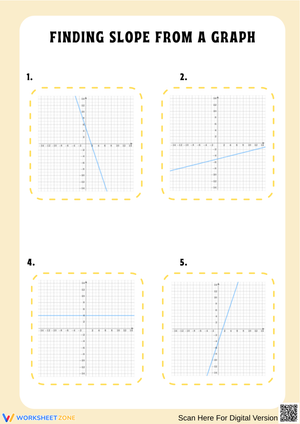
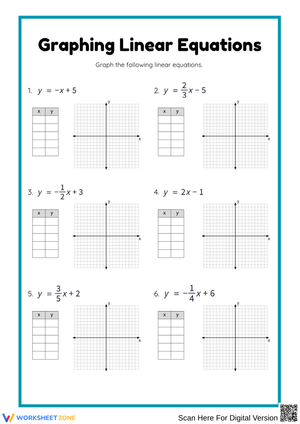
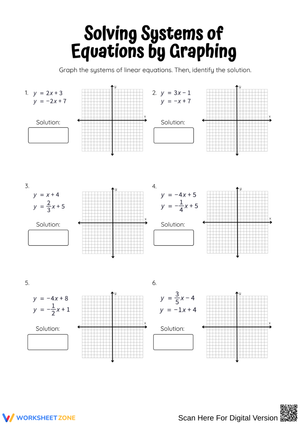
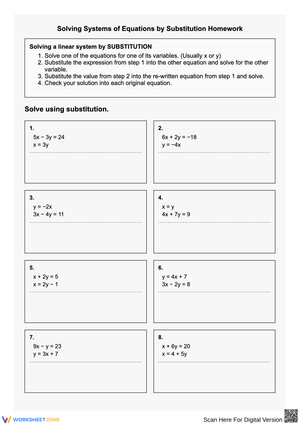
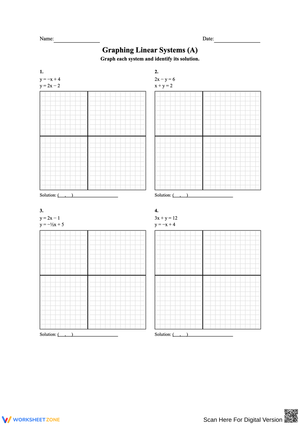
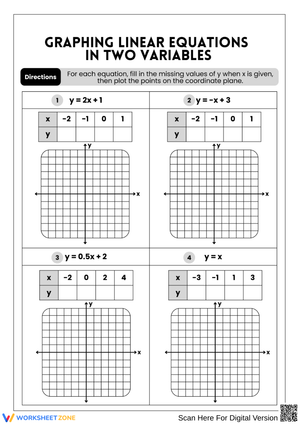
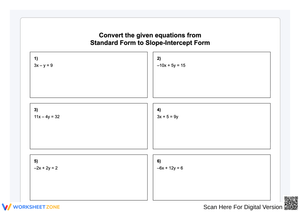
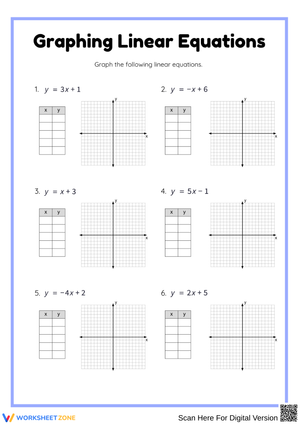
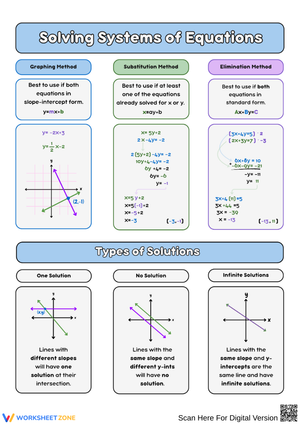
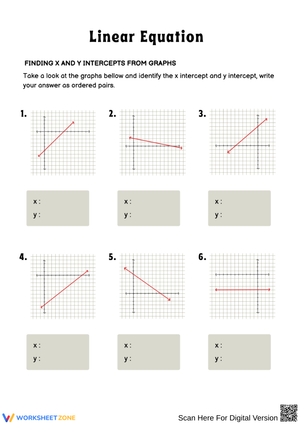
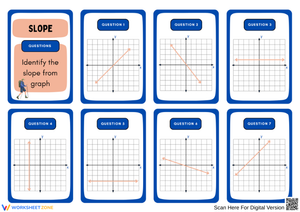
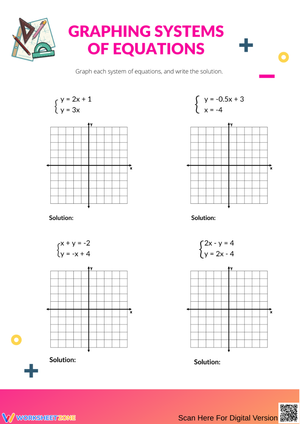
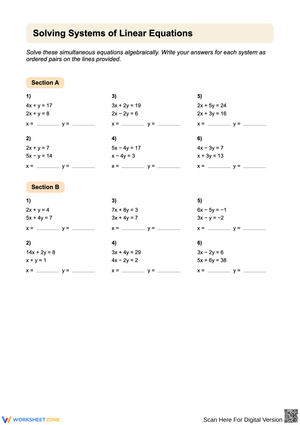
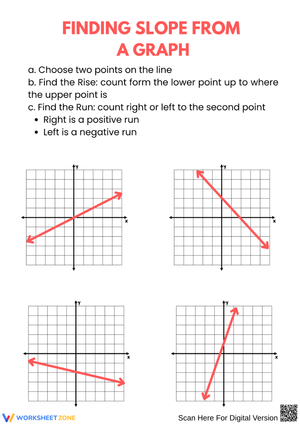
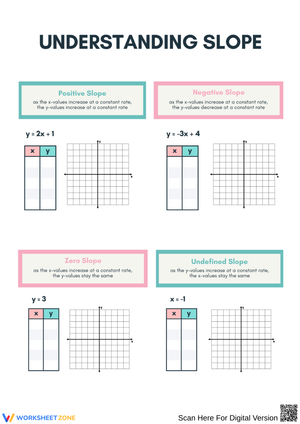
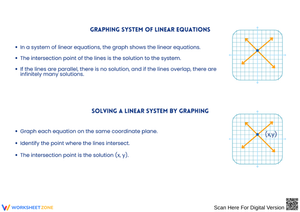
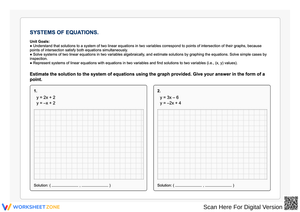
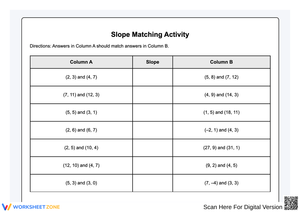
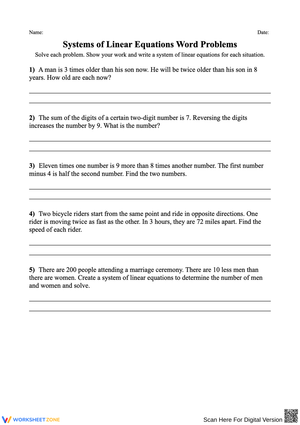
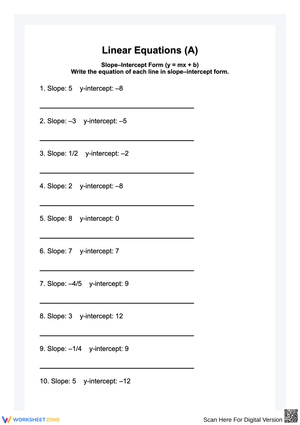
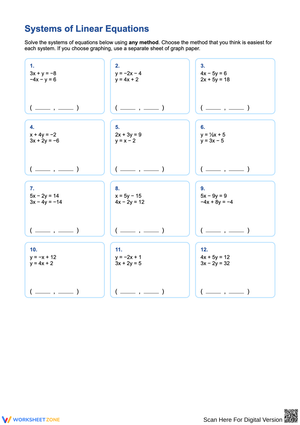
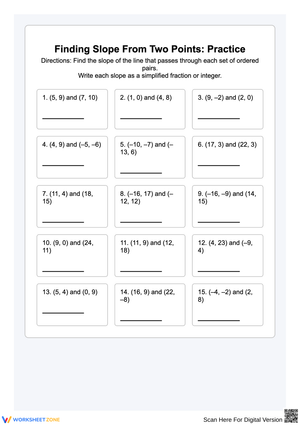
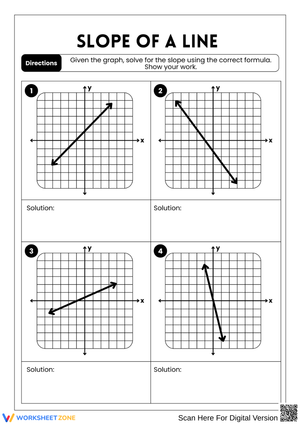
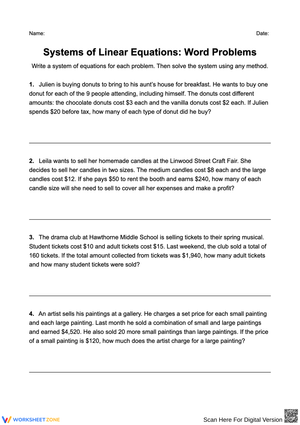
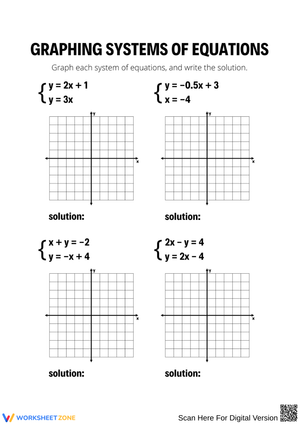
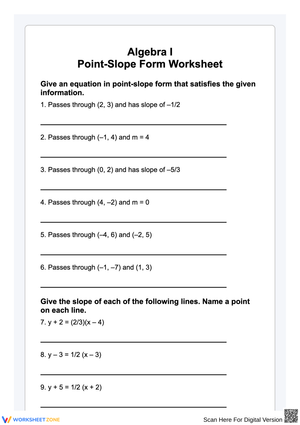
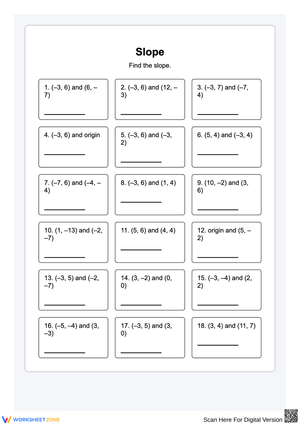
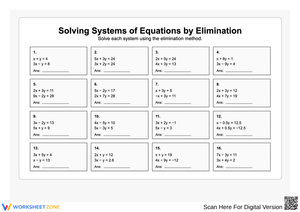
These equations pdf worksheets for 7th grade target the moment in a math sequence when students first have to treat a letter as an unknown quantity to solve for — not just a pattern placeholder. The set covers one-step and two-step linear equations, including problems with integers, fractions, and short word-problem contexts, all ready to print and assign without modification.
The Skills Each Worksheet Targets
Each worksheet concentrates on one focused skill group rather than mixing everything into a single long assignment. That structure matters because a student who solves one-step equations with ease may fall apart on two-step problems — and an undifferentiated worksheet hides that gap rather than surfacing it. The skills addressed across the set include:
- One-step equations using all four operations with whole numbers, building fluency with inverse operation logic before complexity increases
- Two-step equations with integers, where students must identify which operation to undo first
- Equations with rational numbers — fraction and decimal coefficients that test whether algebraic steps hold up under additional computational demand
- Equation-writing tasks in word problem form, where students define a variable and construct an equation before solving
- Mixed review across all problem types for pre-assessment practice or end-of-unit spiral review
Keeping equation-solving and equation-writing on separate worksheets is one structural choice worth noting. Some students can execute inverse operations on a given equation but freeze when handed a verbal situation with no equation yet. Separate worksheets for each skill make reteaching more precise and reveal exactly where a student's understanding breaks down.
Student Mistakes Worth Catching Early
Two error patterns dominate equation work at this grade level, and both are predictable enough to plan instruction around. The first is order-of-operations reversal on two-step equations. When students see 3x + 7 = 22, a notable number subtract 3 from 22 in the first step rather than subtracting 7. They are applying a PEMDAS mental model — multiplication before addition — without grasping that solving reverses that priority. The second pattern is sign loss with negative coefficients. A student who solves 4x = 28 without hesitation will often produce x = 7 from −4x = 28, stripping the negative during division in a way they cannot explain or catch on a self-check.
These are structural misunderstandings, not random slips. A worksheet that holds variable position constant and varies only the coefficient sign exposes both errors more cleanly than one that simultaneously rotates variable placement, operation type, and number domain. Formatting in each worksheet keeps visual clutter low and provides consistent workspace for showing full steps — which makes these errors easier to identify on collected work.
How to Build These Worksheets Into Your Lesson Plans
The ten minutes between the end of direct instruction and the bell are where focused equation worksheets do real work. Four to six problems that match the day's modeled example give teachers a fast read on who absorbed the inverse-operation sequence and who needs the same concept reframed tomorrow. That is not review — it is the first data point on whether the lesson landed.
For homework, one focused worksheet that mirrors what students just practiced in class works better than a long mixed assignment. When families look at the work at home, the structure matches what students already attempted together, which makes independent practice feel approachable rather than foreign. These equations pdf worksheets for 7th grade are organized so that skill-specific sets follow a lesson and mixed-review sets serve the days before a unit test — two different instructional purposes that call for different resources.
Word-problem worksheets belong near the end of the instructional sequence, not the middle. If students are still using working memory to track the inverse-operation steps themselves, adding the layer of reading and interpreting a verbal context produces cognitive overload, not learning. Once the solving routine is stable, word problems add exactly the right additional demand — students can focus on what the equation represents rather than how to solve it.
Adjusting the Worksheets for Students at Different Readiness Levels
Grade 7 classes rarely have uniform readiness for formal algebraic reasoning. Some students arrive uncertain about integer operations; others completed two-step equation work in a 6th grade accelerated track. These worksheets address that range without requiring teachers to write separate resources from scratch.
- Students needing foundational support start with one-step equations using positive whole numbers. This confirms whether the variable concept is solid before introducing negative integers or fractions as additional demands.
- Grade-level students move directly to two-step equations with integers — the core of the 7th grade standard — and work through two or three worksheets at this level before rational numbers are introduced.
- Students ready for extension tackle mixed worksheets that include fraction coefficients, decimal solutions, and word problems requiring them to define a variable before writing an equation.
One practical adaptation: cut each worksheet in half horizontally for intervention groups. On most worksheets in the set, the top problems are more accessible. That gives a shorter, lower-stakes version without printing anything new — hand the full worksheet to grade-level students and the top portion to students who need the same skill with less volume.
Standard Alignment
These worksheets align to CCSS 7.EE.B.4, which calls for students to use variables to represent quantities and construct simple equations to solve problems by reasoning about the quantities. In instructional terms, that standard has two distinct demands. The procedural side — isolating a variable using inverse operations — is what most equation worksheets address. The conceptual side — reading a situation, deciding what the variable represents, and writing an equation before solving — is what word-problem worksheets directly target.
State assessment items drawn from 7.EE.B.4 consistently test both demands. Students who only practice solving given equations underperform on items that ask them to construct the equation first. The full set of equations pdf worksheets for 7th grade addresses both sides of that standard — procedural worksheets for inverse-operation fluency, and word-problem worksheets for equation construction — so teachers are not leaving half the standard uncovered.
Frequently Asked Questions
What equation types should 7th graders practice most?
Two-step linear equations with integers get the most instructional time at this grade. Students need enough repetition — especially with negative coefficients — that the inverse-operation sequence becomes automatic. Fraction and decimal coefficients and word problems then add the appropriate depth once procedural fluency is established.
Do these worksheets come with answer keys?
Yes. Each worksheet includes a complete answer key, which makes them practical for homework, partner-check activities, small-group intervention, and substitute coverage. Teachers running station rotations can check student work between groups without sitting with each student individually.
Can these worksheets be used at other grade levels?
Sixth graders in an accelerated math track use the one-step and basic two-step worksheets regularly. For 8th grade intervention, the simpler worksheets hold up well at the start of the year before students move into multi-step and systems content. Teachers at both grade levels who want printable practice with clean formatting often pull from sources that offer equations pdf worksheets for 7th grade content, such as Kuta Software Infinite Pre-Algebra Worksheets, Math-Drills Algebra Worksheets, EffortlessMath 7th Grade Mathematics Worksheets, and Common Core Sheets 7th Grade Math Worksheets.
How do I help students who consistently lose the negative sign?
Assign a targeted worksheet where every problem includes a negative coefficient or a negative constant on the right side. Add one instruction at the top: Circle every negative sign before writing your first step. That single checkpoint slows students down at the exact moment they tend to rush. It also reveals who understands why the sign matters versus who is just circling symbols without tracking meaning — useful information for deciding who needs a reteach group and who needs only a reminder.













 Interactive Worksheet Maker
 Quiz Maker
 Word Search Maker
 Crossword Puzzle Maker
 Word Scramble Generator
 Sentence Scramble Generator
 Handwriting Worksheet Generator
 Name Tracing Generator
 Fill In The Blank Generator