These research strategies worksheets for 7th grade give ELA teachers a print-ready way to teach the full research process in targeted, manageable pieces rather than front-loading every concept before a single project begins. Each worksheet focuses on one skill — forming a focused question, developing search terms, evaluating a source, taking organized notes, or paraphrasing accurately — so students build habits through repeated, low-stakes practice. The set works inside informational writing units, argument research blocks, or any lesson sequence where students need to move past copying facts and start building ideas with evidence.
The Specific Skills Targeted
Research instruction at seventh grade often collapses into one big assignment rather than a sequence of practiced moves. These worksheets treat research as a process with distinct, learnable steps.
- Question formation: Students narrow a broad subject into a focused, answerable question — the kind that actually requires more than one source to address.
- Search term development: Students generate keywords, synonyms, and specific phrases for a given topic, then rank which terms would return the most useful results.
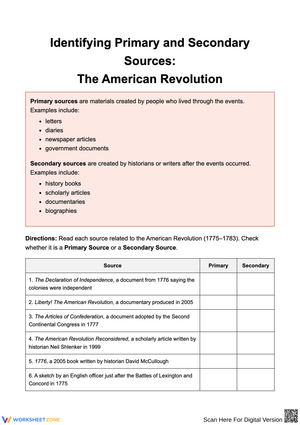
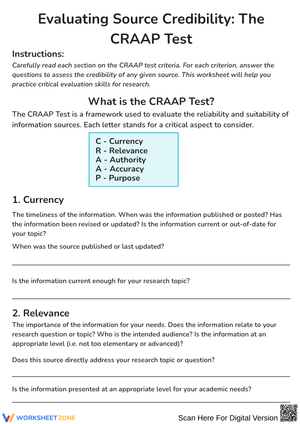
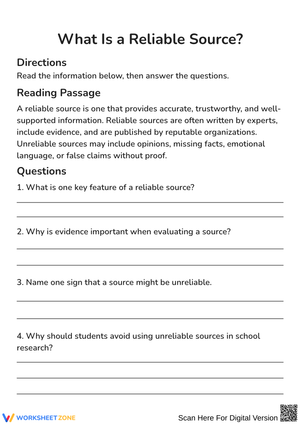
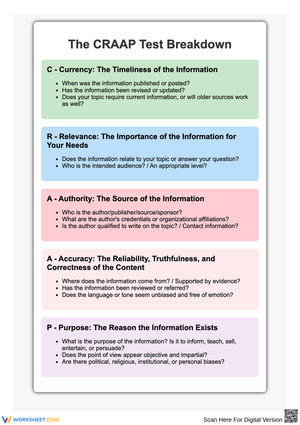
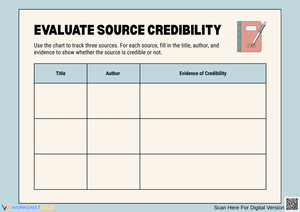
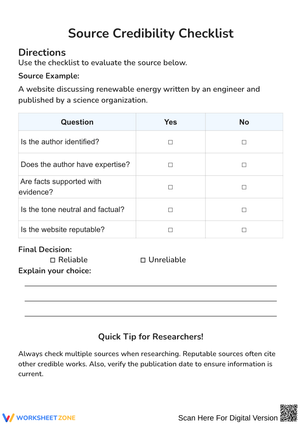
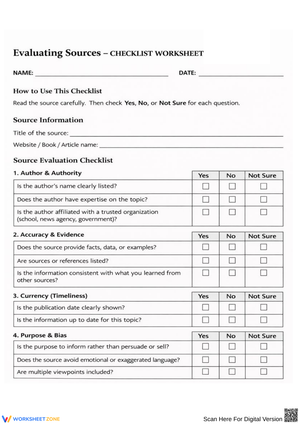
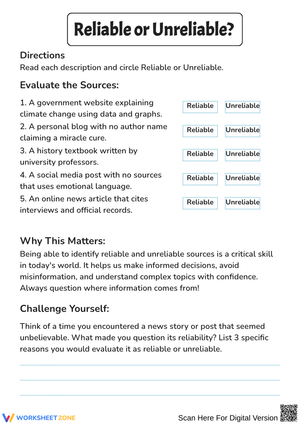
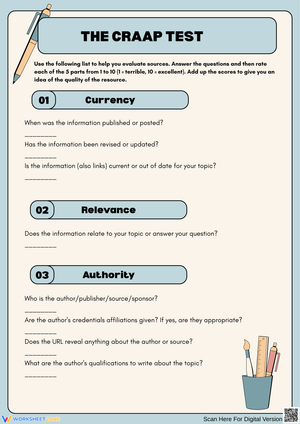
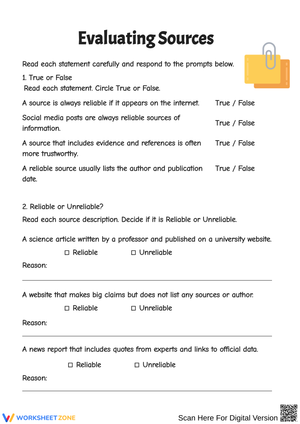
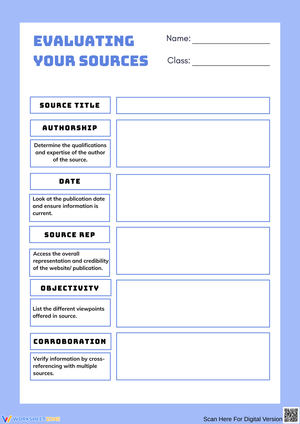
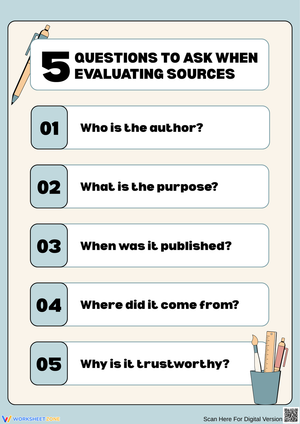
- Source evaluation: Students examine author credentials, publication date, stated purpose, and evidence quality in short source samples, then write out their credibility reasoning rather than just checking a box.
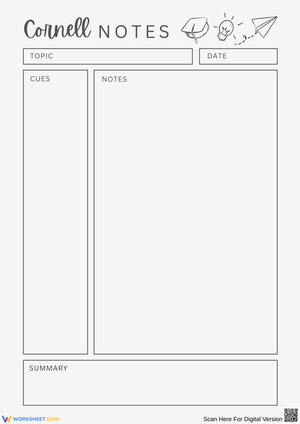
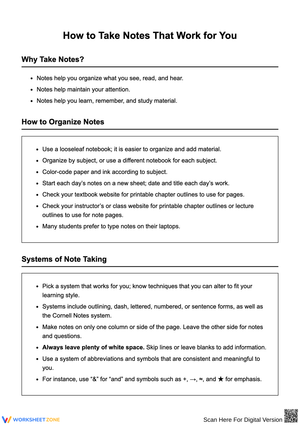
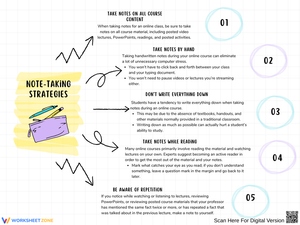
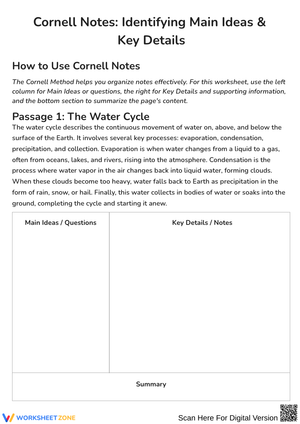
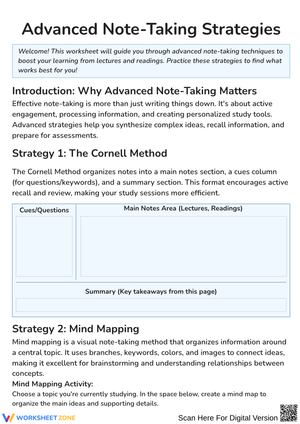
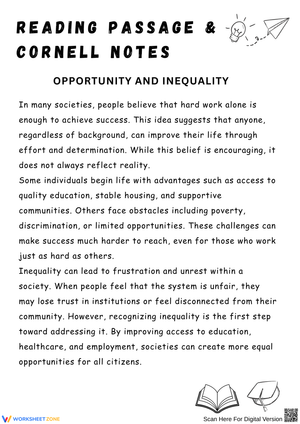
- Note-taking: Students pull key details from a passage without recopying long sentences and label where each note came from.
- Paraphrasing and quoting: Students rewrite original text in their own words, then identify the cases where an exact quote is the stronger choice.
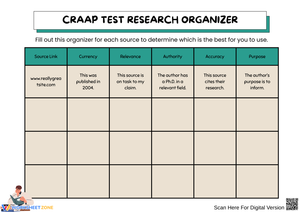
- Evidence organization: Students sort a collection of notes under claim headings or subtopic categories rather than leaving them as a random list.
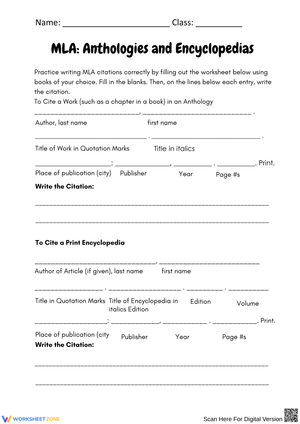
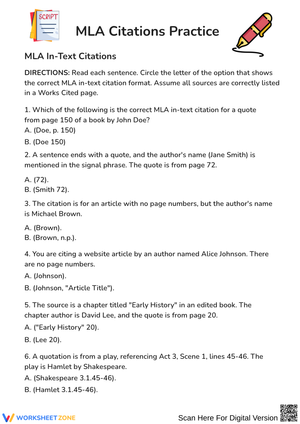
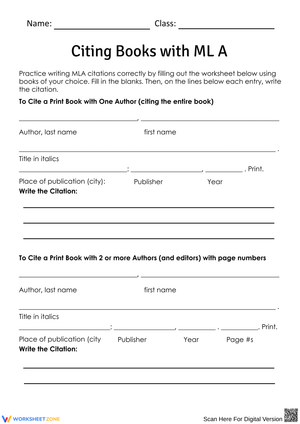
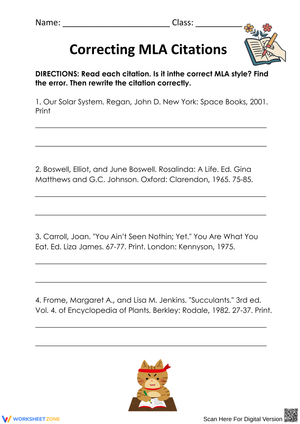
- Citation basics: Students record author, title, publication, and date for sources they actually used — not from a template in the abstract.
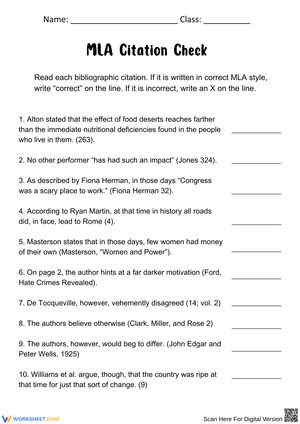
That last point matters more than it sounds. Students who practice citation on real source samples are far less likely to guess at MLA format when it counts on a graded draft.
Common Misconceptions and Errors Worth Catching Early
Seventh graders make predictable research mistakes, and these worksheets surface them before the final draft stage. The most frequent one is search term scope. A student researching ocean pollution will type "ocean" into a search bar and feel frustrated when the results are useless. Keyword worksheets push students to think in specifics — "microplastics in Pacific currents" versus "ocean problems" — before they ever open a browser tab. That distinction sounds obvious to teachers, but students have to be shown the contrast directly and asked to explain it before it sticks.
Note-taking is the other major breakdown point. Students copy a source sentence word for word into their notes, reread it weeks later, and genuinely believe it is their own phrasing. A paraphrasing worksheet that places an original sentence next to a closely copied version and a successful rewrite makes the distinction visible in a way a lecture rarely does. Students mark what changed, explain the difference, and then produce their own paraphrase from a new passage. When they complete that same task a second time with different text, the habit begins to transfer.
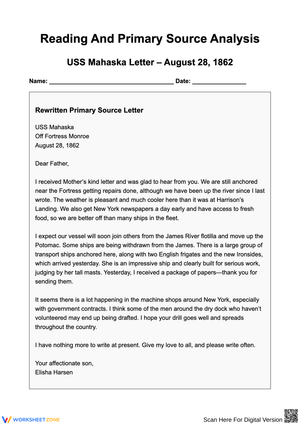
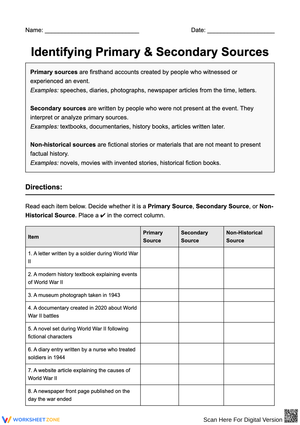
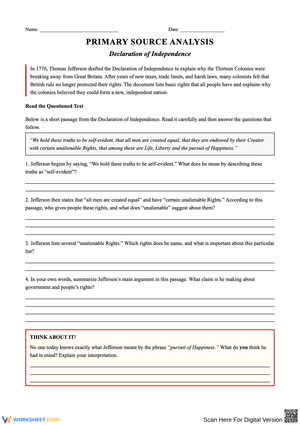
Source evaluation is harder to practice without actual text. Abstract lessons about "checking the author" do not transfer well until students compare two real short sources and argue in writing which one they would trust and why. That decision-making task is what reveals whether students understand credibility or are just repeating a definition back.
Building These Worksheets Into Your Lesson Sequence
The most productive uses of these resources share one feature: they produce a checkable student product in 15 to 30 minutes. A teacher can review a completed keyword worksheet at the end of a Tuesday class and immediately see who is still thinking in vague category terms rather than targeted phrases — before those same students waste 40 minutes of Thursday's library time on unproductive searches.
A five-day sequence that works in practice: Monday, students turn a broad topic into a focused research question and discuss what makes a question too vague or too narrow to research. Tuesday, they build and revise search terms using a keyword worksheet as a warm-up before Chromebooks open. Wednesday, they compare two short sources for credibility using a source evaluation worksheet and write a brief explanation of their reasoning. Thursday, they practice note-taking from a passage and sort those notes under two subtopic headings. Friday, they paraphrase each note in their own words and add a short citation entry at the bottom. Each worksheet in that sequence doubles as a formative check — there is no need to wait for a finished essay to find out where instruction should go next.
Standard Alignment
W.7.7 asks students to conduct short research projects that draw on several sources and generate additional questions for further research. The question-formation and source-gathering worksheets target that standard directly, giving students structured practice with the moves that make multi-source research workable in the first place. W.7.8 requires students to assess the credibility and accuracy of each source and to quote or paraphrase data while avoiding plagiarism — the source evaluation and paraphrasing worksheets address exactly that standard, and the citation practice worksheet reinforces the traceable sourcing that W.7.8 expects. RI.7.6, which asks students to analyze an author's point of view or purpose in a text, supports the source evaluation work as well: when students examine who wrote a source and why, they are doing the critical reading that standard targets.
In most grade 7 pacing guides, research instruction is embedded inside informational or argument writing units rather than taught as a separate course. These worksheets fit that structure — they reinforce what students are already doing with sources in reading class while building the specific skills writing instruction demands.
Adjusting the Set for a Range of Learners
Research strategies worksheets for 7th grade can serve the full ability range in a class if teachers adjust a few variables without changing the core task. For students who struggle, adding a sentence-starter frame to a paraphrasing task — "In other words, the author is saying that..." — removes the blank-response freeze without removing the cognitive work. A color-coded note-sorting organizer, where each subtopic has its own labeled box, gives students a physical structure for a task that otherwise requires holding several categories in mind at once.
For students who move through the material quickly, the adjustment goes in the other direction: remove the provided source sample and ask them to locate their own credible source on the topic, evaluate it using the same criteria from the worksheet, and take notes on it independently. That open-ended version of the same skill requires judgment rather than just correct execution of a provided example.
One honest limitation: every worksheet in this set relies on students engaging with the provided text. Students who have already done substantial independent research on the exact topic being modeled sometimes find the samples too narrow. When that happens, swapping in a more complex or genuinely ambiguous source — one where credibility is debatable rather than obvious — tends to restore the challenge and make the evaluation task worth doing again.
Frequently Asked Questions
Do these worksheets work as standalone practice or only inside a full research project?
Each worksheet functions as a standalone task. A source evaluation worksheet makes complete sense in the middle of a media literacy lesson even when no research paper is on the horizon. The paraphrasing worksheet integrates naturally into any close-reading lesson where students are working with informational text. Teachers do not need a formal research assignment upcoming to justify using these.
How do these worksheets teach plagiarism without turning into a lecture?
The paraphrasing worksheets put that instruction into applied form. Students see an original sentence, a closely copied version, and a successful rewrite. They identify what makes each version distinct and then produce their own paraphrase from a new passage. That direct comparison — original, problematic, strong — teaches the concept through judgment rather than memorization of rules. Research strategies worksheets for 7th grade that include this side-by-side format give teachers a concrete tool that supports the academic integrity conversation without reducing it to a list of consequences.
Are these worksheets usable with eighth graders or strong sixth graders?
The source evaluation and evidence organization worksheets translate well to eighth grade, particularly for students moving into longer argument essays who still need practice sorting evidence by claim. Advanced sixth graders can handle the keyword-building and note-taking worksheets, but citation format tends to land more naturally after students have completed at least one multi-source writing task — that context gives the citation conventions something to attach to. The paraphrasing worksheets are effective at both grade levels; the skill does not expire at the end of seventh grade, and the need for practice does not disappear in eighth.
What works for students who shut down during research tasks?
Short, low-stakes tasks change the dynamic. Students who go quiet during a full research project often engage differently when the task is just: rank these three search terms from least useful to most useful and write one sentence explaining your top choice. Research strategies worksheets for 7th grade work best with reluctant researchers when teachers frame them as rehearsal rather than assessment — the same way an athlete runs drills without treating every drill as the game. One worksheet, one move, no grade attached, then a brief partner conversation about what they noticed. That structure builds tolerance for the research process before students face a full project.












 Interactive Worksheet Maker
 Quiz Maker
 Word Search Maker
 Crossword Puzzle Maker
 Word Scramble Generator
 Sentence Scramble Generator
 Handwriting Worksheet Generator
 Name Tracing Generator
 Fill In The Blank Generator