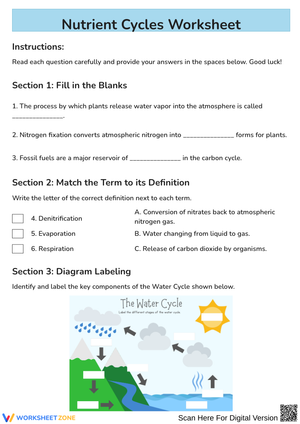
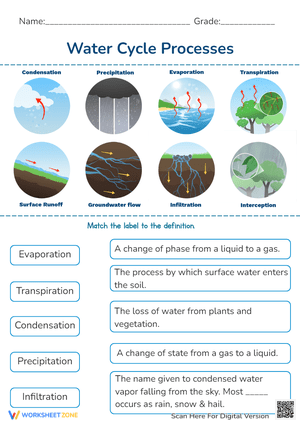
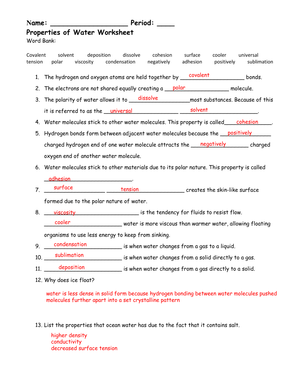
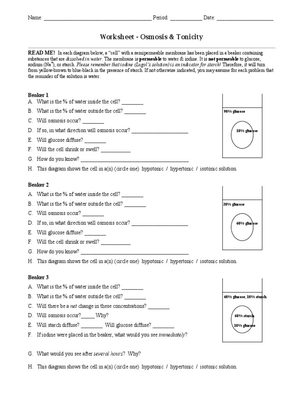
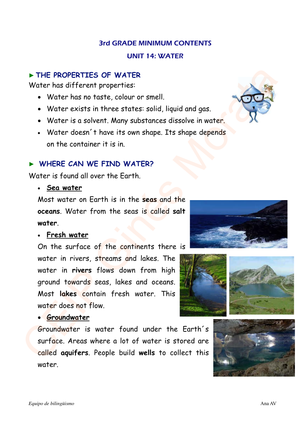
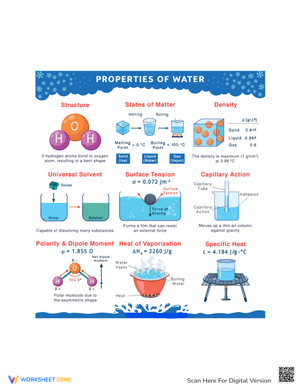
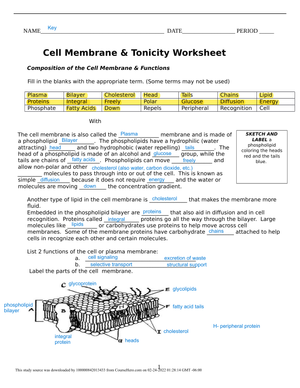
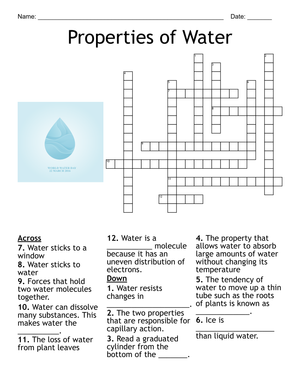
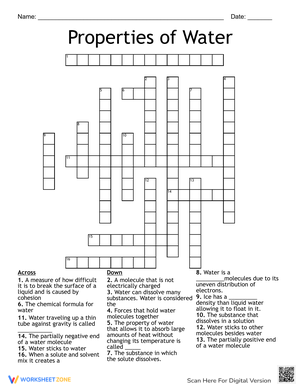
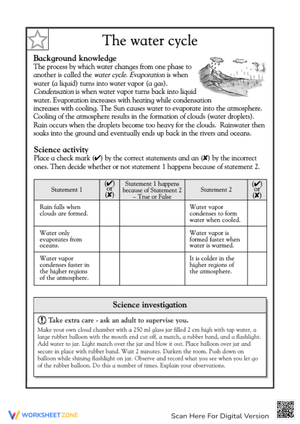
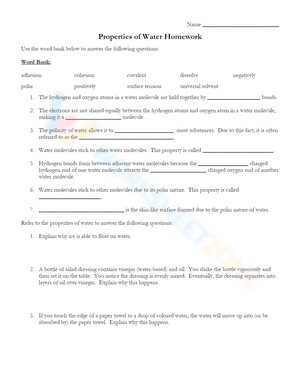
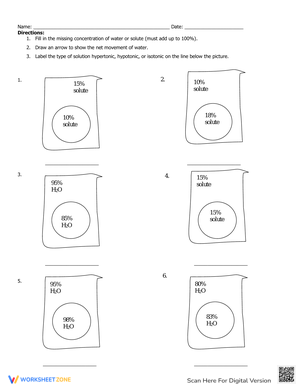
These 6th grade water printable worksheets cover the water cycle, state changes, Earth's water distribution, freshwater availability, and human impact — giving teachers focused practice that fits almost any part of a middle school Earth science unit. Each worksheet pairs visual content with written tasks so students shift from labeling stages to explaining why they happen.
Common Student Misconceptions Worth Catching Early
Water is one of those topics where students arrive with partial mental models that feel correct to them. The most persistent one: students treat evaporation as water "disappearing" rather than water molecules moving into the air as vapor. On a diagram, a student will correctly label the arrow "evaporation," then write "the water went away" in the short-answer section — which tells you the vocabulary is surface-level. Worksheets that require cause-and-effect explanations surface that gap in a way a fill-in diagram alone won't.
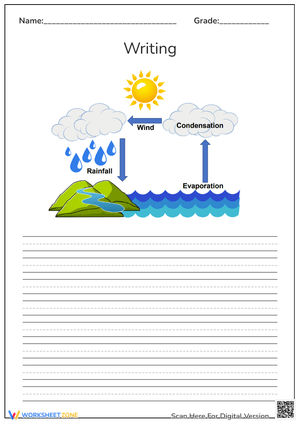
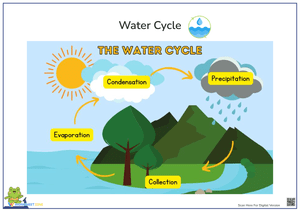
Condensation trips students up in the opposite direction. Many 6th graders think clouds release water downward, not that water vapor rises and condenses to form clouds in the first place. They read the water cycle bottom-up — starting at the cloud — rather than tracing the energy-driven path from the surface upward. A worksheet that asks students to follow a single water molecule through each stage and name the energy input at each transition exposes that reversal quickly and gives you something concrete to address.
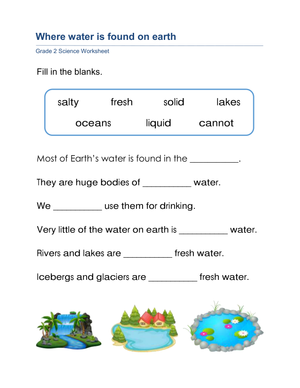
The freshwater percentage catches nearly every class off guard. Most students assume Earth's water is roughly half salty, half fresh. When they encounter the actual figures — more than 97% saltwater, with less than 1% accessible as freshwater — a worksheet with a percentage bar or a two-column comparison chart makes that gap concrete in a way a lecture note rarely does. The surprise is productive: students start asking why that matters before you've even introduced the conservation discussion.
Skills These Worksheets Build
The 6th grade water printable worksheets in this set target one or two skills per worksheet rather than surveying every water concept at once. Across the set, students:
- Label and annotate water cycle diagrams, marking energy inputs at each stage rather than just writing stage names
- Compare the three states of water and connect each to a specific temperature change, not just a label
- Interpret charts showing Earth's water distribution and write answers that reference the actual figures
- Construct short explanations using cause-and-effect structures — Condensation occurs when... rather than a one-word answer
- Analyze short scenarios about runoff, drought, or pollution and identify which part of the water cycle is disrupted
- Distinguish between the water cycle as a self-sustaining system and the ways human activity interferes with it
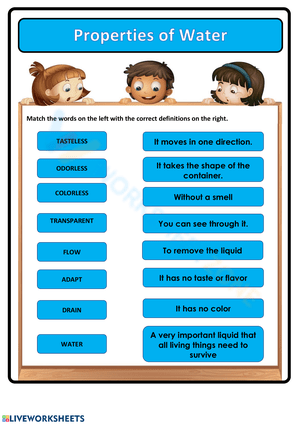
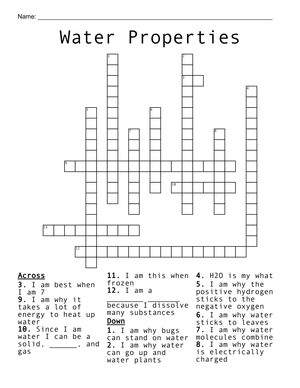
The sequence across the set moves from identification tasks toward explanation tasks. Early worksheets build vocabulary through labeling and matching. Later worksheets ask students to apply that vocabulary to interpret a situation or evaluate a claim about water use. That order reflects how 6th graders actually build science understanding — naming before explaining, describing before analyzing — and gives teachers a natural structure for pacing the unit.
How to Work These Worksheets Into Your Lesson Plans
The most effective use pattern treats each worksheet as a three-pass activity instead of one sitting. Students complete the diagram or vocabulary section first. After 5 to 7 minutes of class discussion — enough to surface the most common confusion — they return to the same worksheet for the application questions. A final pass in a different-colored pen asks them to revise or add to their earlier answers. Teachers get visible evidence of what shifted during the lesson; students get a built-in review cycle without extra printing.
For a standard 50-minute period, a reliable structure looks like this: 5 minutes reviewing prior content, 10 minutes of direct instruction or a brief demonstration (a cold can sweating with condensation works especially well here), 15 to 20 minutes on the worksheet, and 5 to 10 minutes for partner discussion or whole-class share. When the period runs short, the application section moves to homework. When it runs long, a second worksheet from the set — on a related topic like freshwater distribution or runoff — extends the lesson without repeating the same skill.
These worksheets also hold up as sub plans. A self-contained worksheet with a short reading passage, a labeled diagram, and three to four written-response questions gives a substitute enough structure to run the class without needing science background. The directions are clear, the task is bounded, and the work is substantive. That matters more than it might seem on a day when follow-through isn't guaranteed.
Standard Alignment
These worksheets align most directly to NGSS MS-ESS2-4, which expects students to develop a model of Earth's systems showing how water cycles among land, ocean, and atmosphere through evaporation, condensation, precipitation, and surface flow. The water cycle and state-change worksheets address that standard at the practice level — students aren't just reading about the process; they're drawing it, labeling it, and writing explanations of the energy input driving each transition.
Several worksheets also support MS-ESS3-1, which asks students to construct explanations about how Earth's resources — including freshwater — are distributed and limited. The freshwater distribution and human impact worksheets fit there, especially those requiring students to interpret charts and build claims about conservation. The reading-passage worksheets connect to RST.6-8.7, which asks students to integrate information from text and visual formats — a standard that appears on both science and ELA assessments in 6th grade and benefits from the diagram-plus-paragraph format these worksheets use.
Adjusting the Set for a Range of Learners
Most 6th grade science classes include students at very different vocabulary levels and reading levels. The 6th grade water printable worksheets in this set handle that range without requiring separate materials for each group. The most common modification is adding a word bank to the labeling and vocabulary sections — this keeps the science task intact while reducing the memory demand for students who need it. For multilingual learners, the diagram-heavy worksheets often need the least adjustment because visual content carries meaning that dense text can't.
Students who are ready to go deeper don't need an entirely different worksheet. They can work with the same content at a higher level: instead of identifying where evaporation occurs on a diagram, they explain what would happen to precipitation patterns if average surface temperatures rose. Instead of naming a pollutant in a scenario, they trace it through the full water cycle and identify where intervention would have the most impact. That kind of extension requires no extra printing and keeps class discussion anchored to one shared topic.
For students who need reteaching, the internal structure of each worksheet — identification first, application second, explanation third — makes it straightforward to break the work into checkpoints. Completing one section, getting brief feedback, then moving to the next prevents errors from compounding across the whole worksheet. That structure also makes it easier to identify exactly where understanding breaks down rather than marking the final response wrong without knowing why.
Frequently Asked Questions
What topics do these worksheets cover?
The set addresses the water cycle (evaporation, condensation, precipitation, and collection), states of matter as they apply to water, Earth's water distribution and freshwater availability, and human impact including runoff and pollution. Each worksheet focuses on one area, so teachers can assign individual worksheets for targeted practice or use the full set across a unit.
Can these work for test review or state assessment prep?
Yes, particularly the worksheets that ask students to interpret diagrams and write short explanations. Both formats appear on NGSS-aligned middle school science assessments. The freshwater distribution worksheet, which asks students to read a chart and construct a claim using the data, mirrors the kind of evidence-based reasoning those assessments require at this grade level.
How do I handle students at different reading levels using the same worksheet?
For students reading below grade level, sentence frames in the written-response sections lower the language barrier without reducing the science demand — a student still explains the concept, they just start with Condensation forms when... rather than a blank line. For strong readers, removing the frame and requiring a two- to three-sentence response increases the rigor without changing the task itself. Teachers using these 6th grade water printable worksheets for differentiation often make this one adjustment and keep everything else the same across the class.
Are these worksheets usable as homework?
Labeling and vocabulary worksheets translate well to homework because students can complete them independently with reasonable accuracy. Application and scenario worksheets work better as classwork, where misconceptions can be caught before students practice them at home. When time is short, split the work: diagram section in class, written response at home.












 Interactive Worksheet Maker
 Quiz Maker
 Word Search Maker
 Crossword Puzzle Maker
 Word Scramble Generator
 Sentence Scramble Generator
 Handwriting Worksheet Generator
 Name Tracing Generator
 Fill In The Blank Generator