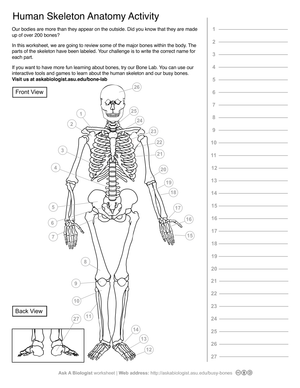
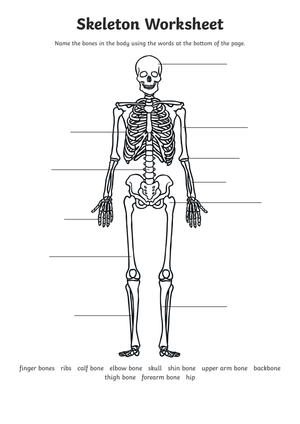
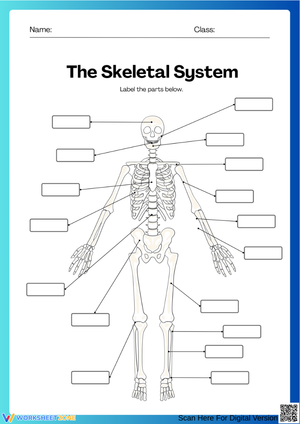
These body and health printable worksheets for 6th grade give teachers a set of focused resources that move between diagram labeling, vocabulary work, short reading passages, and health-choice scenarios — covering both body systems and wellness topics the way most middle school life science units actually need them covered. The formats stay consistent enough that students know what to expect but varied enough to prevent the work from feeling like repetition. Teachers can pull a single worksheet on the respiratory system for Monday review, grab the nutrition task for Thursday centers, and have something ready for the sub by Friday without having to build materials from scratch.
The Specific Skills Targeted
The set addresses two overlapping domains that 6th grade teachers are often handling at the same time: the structure and function of body systems, and the health behaviors that support those systems. Treating them as connected — rather than splitting them into science content and health class content — is what makes the set genuinely useful for middle school rather than just elementary wellness topics.
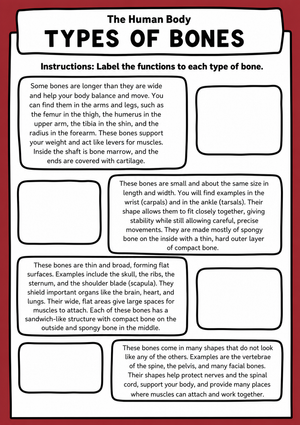
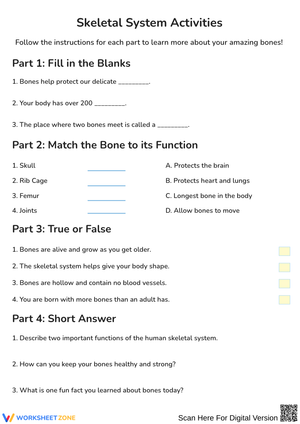
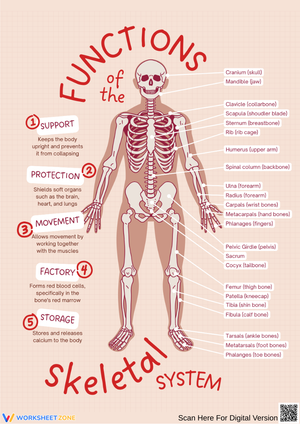
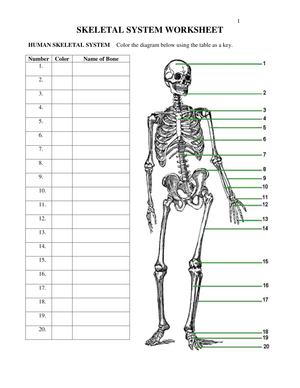
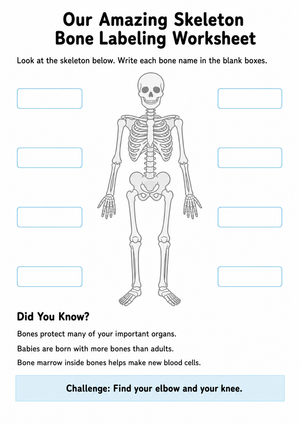
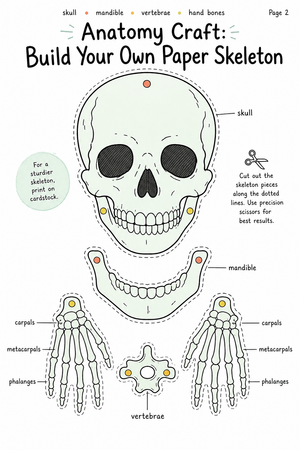
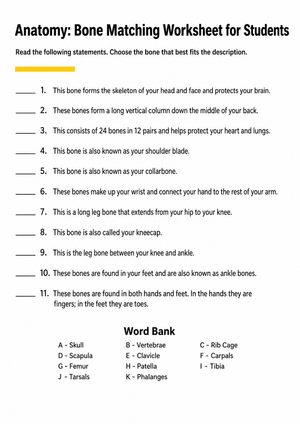
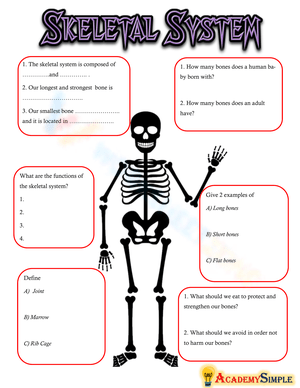
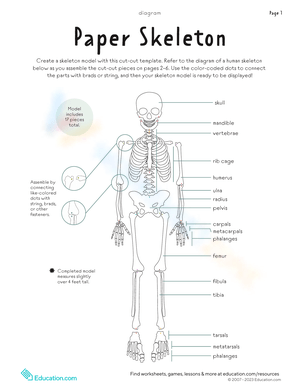
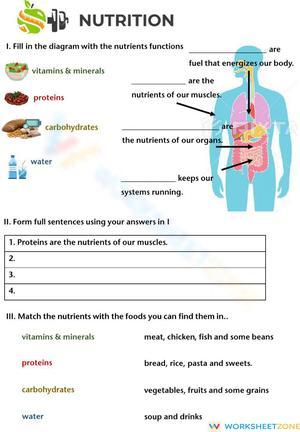
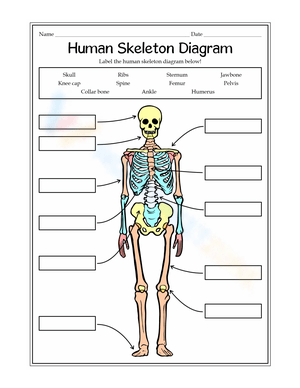
- Diagram labeling: students mark and identify organs and structures across the skeletal, muscular, digestive, circulatory, respiratory, nervous, and immune systems
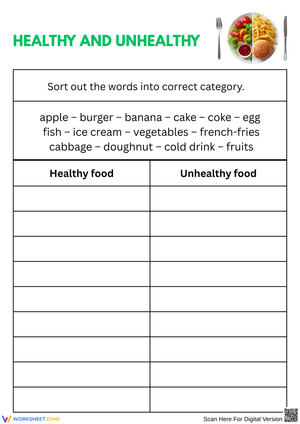
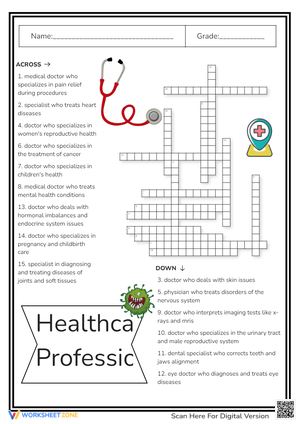
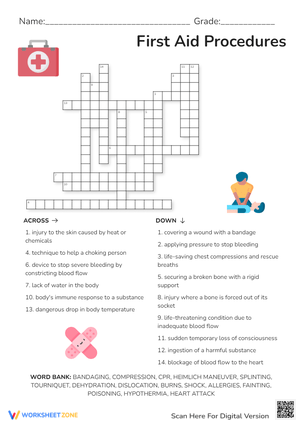
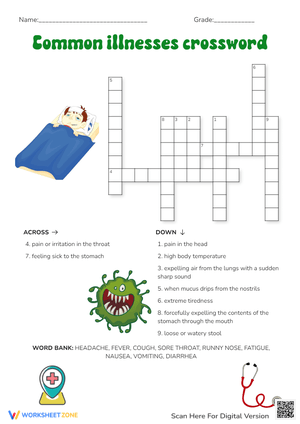
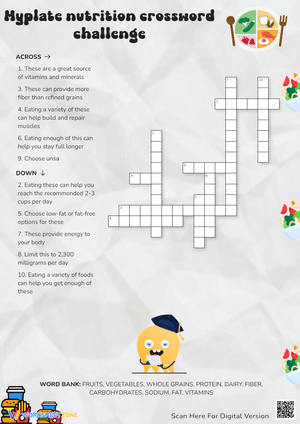
- Vocabulary matching and sorting: key terms such as tissue, pulse, nutrients, reflex, pathogen, and absorption practiced in context rather than in isolation
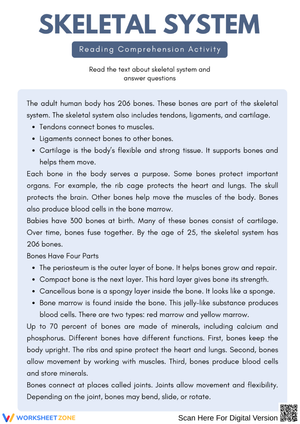
- Short reading comprehension: passages pair science explanation with practical health application, followed by constructed-response questions students answer in complete sentences
- Compare-and-contrast tasks: students identify how systems depend on each other instead of treating each one as a standalone unit
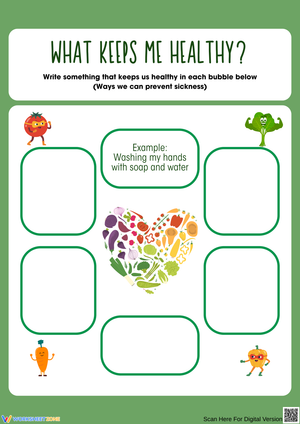
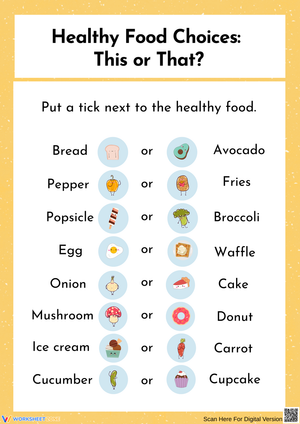
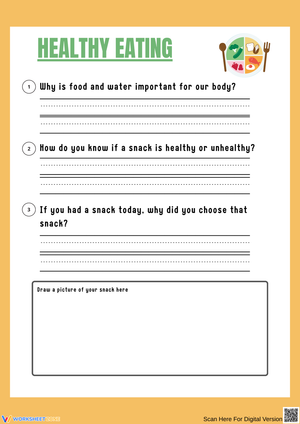
- Health-choice scenarios: brief situations ask students to connect a symptom or outcome — skipping breakfast, sleeping five hours before a test, exercising in intense heat — to a specific body system and explain why
- Written explanations: short constructed-response prompts ask students to explain function in their own words, not just circle or match
Labeling diagrams has its place, especially when students first encounter a system. But 6th graders are ready to go further. When a worksheet asks a student to explain why the small intestine is longer than the large intestine, or describe how an increased heart rate during a sprint reflects two systems working in coordination, the thinking deepens without the assignment becoming unmanageable to grade.
Frequent Student Errors Worth Watching For
Most 6th graders can correctly name the heart as part of the circulatory system. Ask them to explain the difference between arteries and veins on the spot, and a large number will reverse the direction of blood flow — writing that veins carry oxygenated blood from the heart out to the body. The confusion sticks partly because "vein" feels more central in everyday speech. Diagram tasks that have students annotate blood flow direction with arrows, rather than just labeling vessel names, surface this error quickly and give teachers something concrete to address before it shows up on a unit test.
The nervous system brings a different set of problems. Students routinely collapse it into "the brain controls everything" and leave the spinal cord and peripheral nerves functionally invisible in their explanations. Worksheets that ask students to trace a reflex arc — foot touches a hot surface, signal travels to the spinal cord, leg lifts before the brain registers pain — force them to account for the full pathway rather than anchoring everything in the brain alone.
Health-choice scenarios surface their own misconceptions. Many students hold a firm belief that the immune system only activates when a person is visibly sick, so a prompt asking them to explain why consistent sleep or adequate hydration supports immune function requires revising a stubborn prior assumption. That kind of prompt lands better after direct instruction than as a first-exposure task — worth noting when planning the order of assignments within a unit.
Smart Ways to Work These Worksheets Into Your Week
The most reliable use of these resources is as a follow-up tool rather than an introduction. Open the unit with direct instruction, a short video, or a lab activity, then assign the worksheet as the practice that cements what students just encountered. A labeling task on the digestive system lands differently after students have watched an animation of peristalsis than it does cold. The body and health printable worksheets for 6th grade in this set are formatted to slot cleanly into that second step without requiring additional teacher explanation beforehand.
For bell ringers, three to five vocabulary questions drawn from the previous day's worksheet take about six minutes and give a reliable read on who retained what overnight. The same retrieval logic works on Mondays — not a new quiz, just the consistent two-part prompt "What does this system do, and how do healthy habits support it?" applied to the week's topic. Running that question across multiple systems over several weeks builds a repeatable thinking routine rather than treating each worksheet as its own isolated event.
These worksheets also hold up as sub-plan materials because the directions are self-contained and the task formats become familiar once students have worked through two or three. A worksheet on the respiratory system does not require a substitute to pre-teach how to complete it — students who have already done the labeling and matching format for the skeletal system know what to do.
Standard Alignment
The body system content in this set connects to NGSS MS-LS1-3, which asks students to use evidence to construct an argument that the body's systems work together to maintain normal function. The worksheets build toward that standard by requiring students to explain how systems coordinate — not just identify parts — which is the distinction that matters when students move from recall tasks to the evidence-based reasoning the standard actually targets. For health content, the set aligns with National Health Education Standard 1 (NHES 1), which focuses on students comprehending concepts related to health promotion and disease prevention. Teachers in states that use NHES benchmarks for grades 6 through 8 will find the nutrition, sleep, hygiene, and disease-prevention worksheets fit naturally alongside their existing wellness scope and sequence.
Adjusting the Worksheets for a Range of Learners
Among body and health printable worksheets for 6th grade, those that pair a completed reference diagram alongside the blank labeling version give students who need extra support a visual anchor without removing the task entirely. Word banks help with vocabulary matching and labeling, but they work better when the bank includes two or three distractor terms — students are still reading and evaluating, not just transferring words from one column to another.
Students who move through the core task quickly respond well to extension prompts that push toward analysis. After labeling the digestive organs, a prompt like "Explain what would happen to nutrient absorption if the small intestine were significantly shorter" shifts the work from identification toward reasoning. Adding that kind of question to the bottom of an existing worksheet accomplishes the extension without requiring a completely separate resource for every ability level in the room.
For students developing English proficiency, including the academic term alongside a brief definition or a cognate note inside the worksheet itself reduces the language decoding load before the science can be accessed. Terms like circulación for circulation or nutrientes for nutrients transfer from Spanish, and flagging those connections inside the task keeps student attention on the science content rather than vocabulary barriers.
Frequently Asked Questions
What body systems do these worksheets cover?
The set covers the skeletal, muscular, digestive, circulatory, respiratory, nervous, and immune systems. Each worksheet addresses one system so teachers can assign exactly what fits the current lesson without distributing the full set at once.
Do these worksheets work for homework or quick assessment?
Both. A labeling or vocabulary worksheet travels home cleanly because students can complete it without additional instruction. For assessment purposes, the short written-response tasks are more informative — they reveal whether a student can explain function or only identify parts, which gives teachers more useful formative data than a matching task alone.
How do these fit into a unit that already uses a textbook?
Teachers typically assign a worksheet after the relevant textbook section, not in place of it. Using body and health printable worksheets for 6th grade immediately after a textbook reading or class discussion — rather than before — is the pattern that generates the strongest student work, because students are reinforcing content they have already encountered rather than meeting it for the first time on the worksheet itself.












 Interactive Worksheet Maker
 Quiz Maker
 Word Search Maker
 Crossword Puzzle Maker
 Word Scramble Generator
 Sentence Scramble Generator
 Handwriting Worksheet Generator
 Name Tracing Generator
 Fill In The Blank Generator




 BACK TOSCHOOL