


























Views
Downloads

Printable Paper Skeleton Anatomy Craft | Grade 4-7
Paste this activity's link or code into your existing LMS (Google Classroom, Canvas, Teams, Schoology, Moodle, etc.).
Students can open and work on the activity right away, with no student login required.
You'll still be able to track student progress and results from your teacher account.
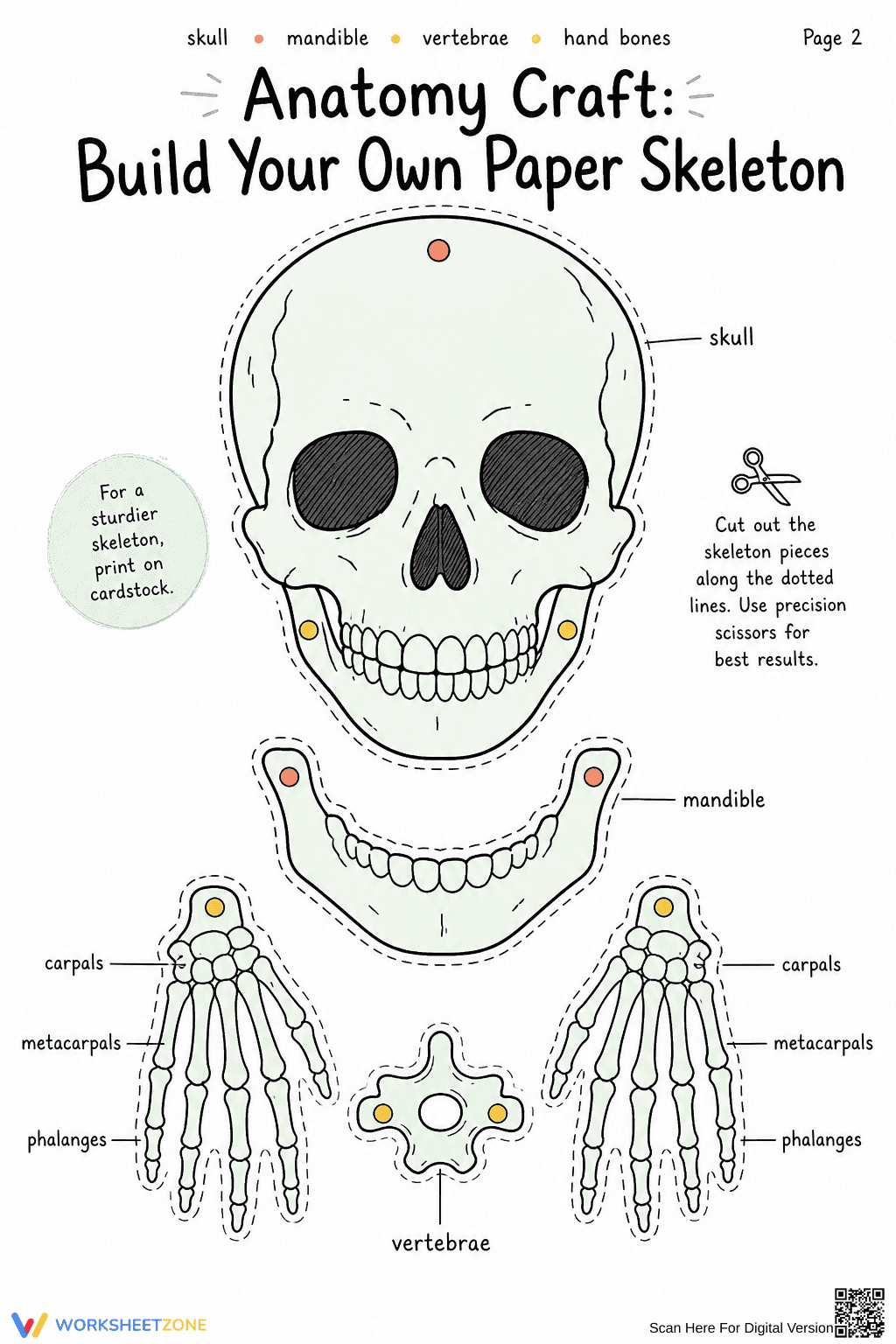
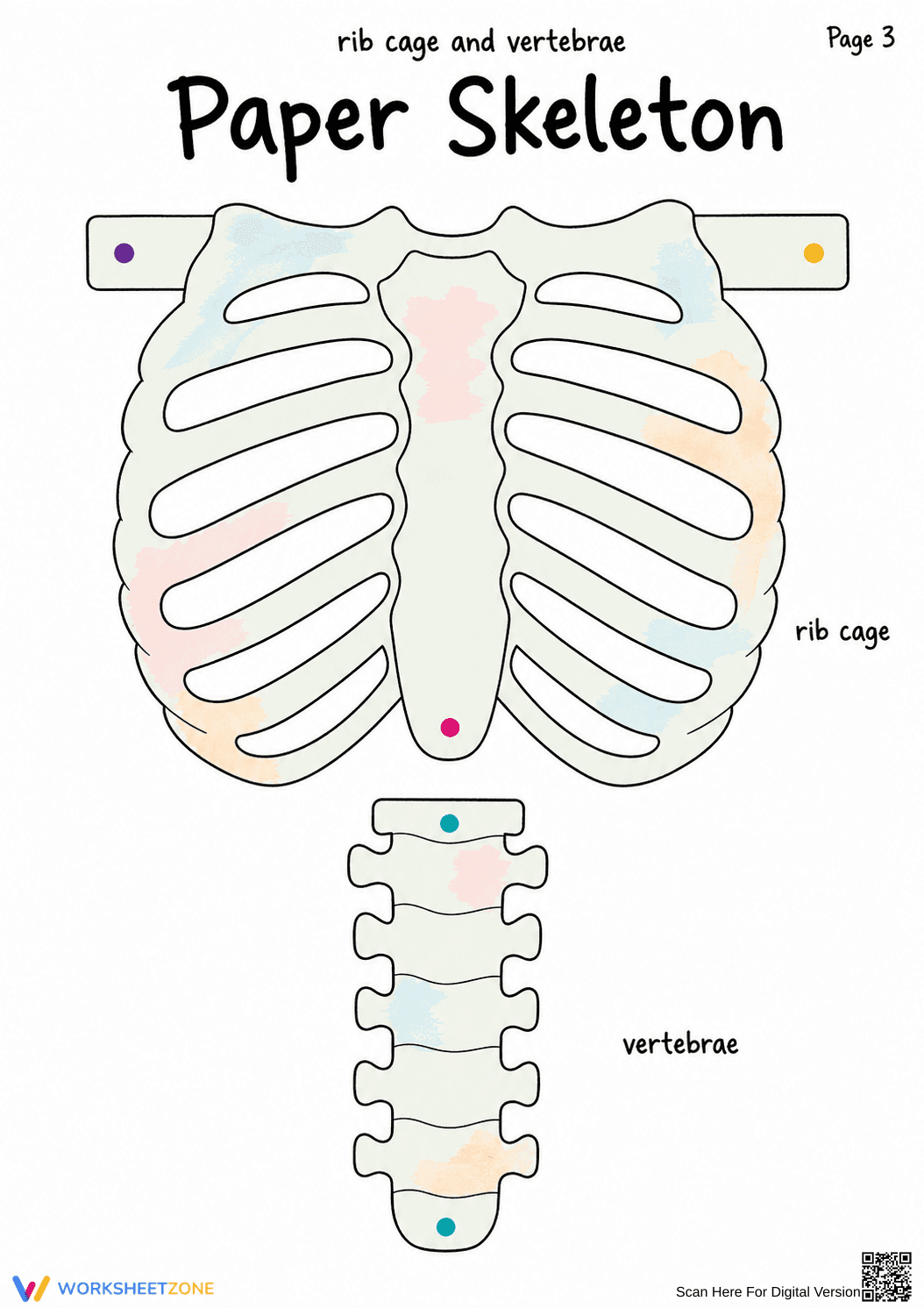
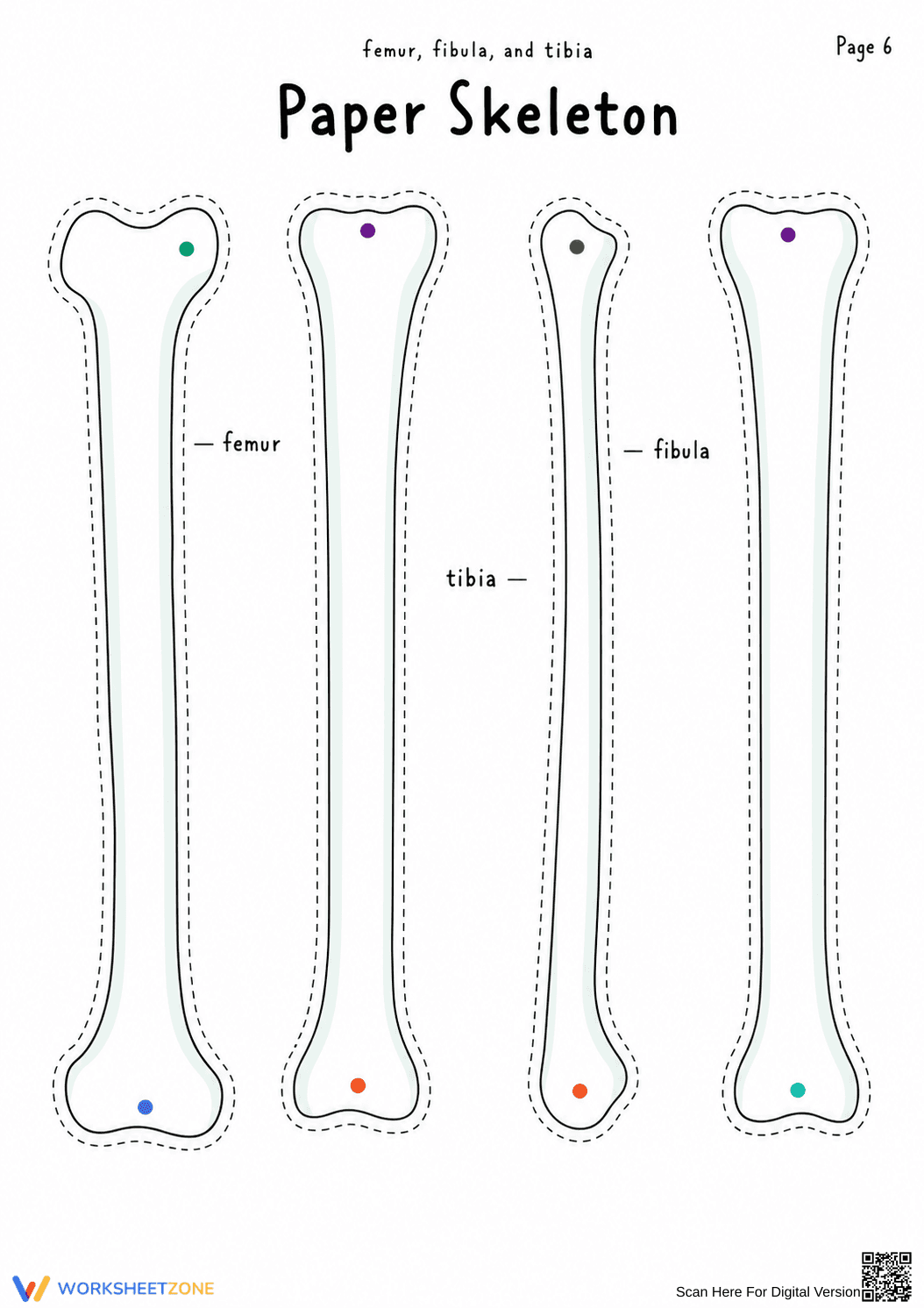
This interactive anatomy craft allows students to construct a life-sized paper skeleton while mastering the names and locations of major human bones. By physically assembling the 17 distinct pieces, learners gain a concrete understanding of how the skeletal system provides structure and protection for the body.
At a Glance
- Grade: 4-7 · Subject: Science
- Standard:
4-LS1-1— Construct an argument that animals have internal structures that support survival- Skill Focus: Skeletal system anatomy and bone identification
- Format: 6 pages · 17 pieces · Visual guide included · PDF
- Best For: Hands-on science centers and anatomy units
- Time: 45–60 minutes
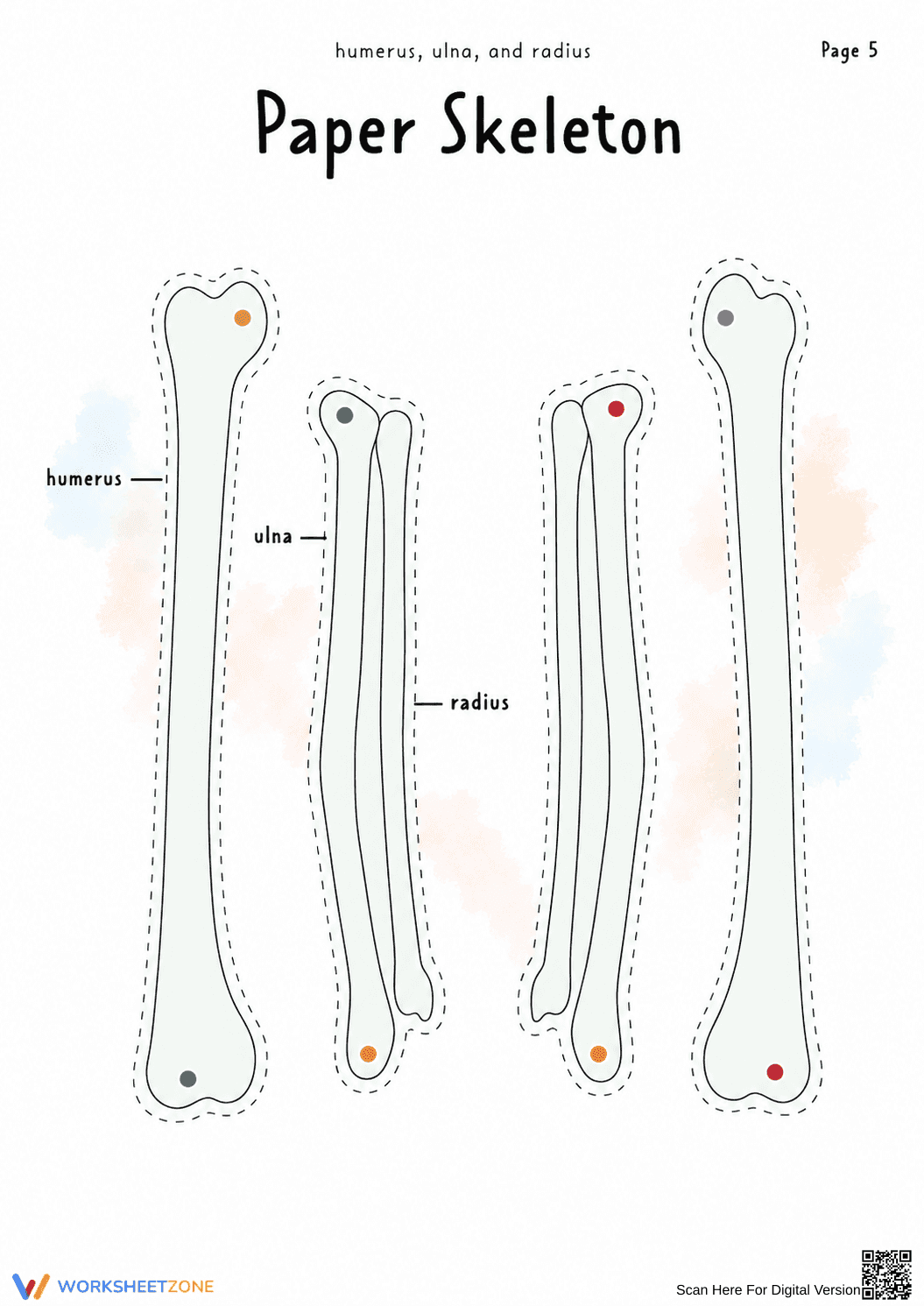
Inside this 6-page PDF, you will find high-quality illustrations of the human skull, rib cage, vertebrae, and limb bones. Each piece features color-coded dots to indicate connection points for fasteners or string. The set includes labels for the humerus, radius, ulna, femur, tibia, and fibula, ensuring students use correct anatomical terminology during the build. A visual assembly guide is provided on the first page to ensure accuracy.
Zero-Prep Workflow
The zero-prep workflow is designed for immediate classroom implementation. First, print the 6-page document on cardstock (1 minute). Second, distribute the sheets and fasteners to students for independent or paired cutting and assembly (40 minutes). Third, review the completed 4-foot models to verify bone placement and label accuracy (5 minutes). This activity requires no teacher setup beyond providing basic supplies like scissors and brads.
Standards Alignment
This resource aligns with `4-LS1-1`, focusing on internal structures that support survival and growth. By building the model, students visualize how the rib cage protects organs and how the spine provides central support. This standard code can be copied directly into lesson plans, IEP goals, or district curriculum mapping tools.
How to Use It
Use this craft as a culminating project after a lecture on the human body to reinforce vocabulary. Alternatively, use it as a collaborative station where students work in pairs to assemble the skeleton. Observe if students can correctly identify the difference between the radius and ulna during the construction process. The completed model measures over 4 feet tall, making it an excellent classroom decoration.
Who It's For
This worksheet is ideal for upper elementary and middle school students, particularly kinesthetic learners who benefit from tactile models. It pairs perfectly with an anatomy anchor chart or a video lesson on the musculoskeletal system. It is also an excellent resource for homeschool science portfolios or as a high-engagement sub plan.
The use of physical models in science education is a proven method for increasing long-term retention of complex anatomical structures. According to Fisher & Frey (2014), hands-on tasks that require students to manipulate components help bridge the gap between abstract concepts and concrete understanding. This 4-LS1-1 aligned activity provides a tactile experience that reinforces the spatial relationships between bones, such as the connection of the carpals to the phalanges. By engaging in the assembly process, students are more likely to recall specific bone names compared to passive labeling exercises. This resource serves as a comprehensive tool for meeting NGSS requirements while developing fine motor skills and spatial reasoning. Educators can utilize this standalone project to provide evidence of student mastery regarding internal body systems and their functional roles in biological support and protection. The 17-piece construction ensures a detailed yet accessible challenge for the target age group.


