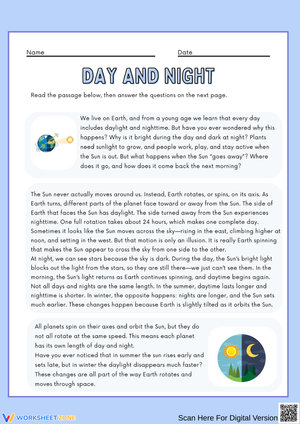
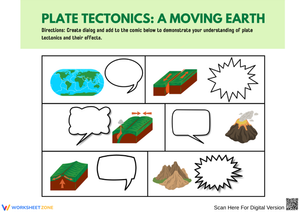
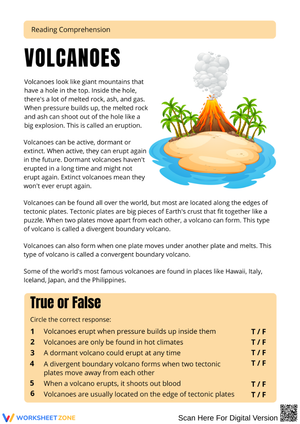
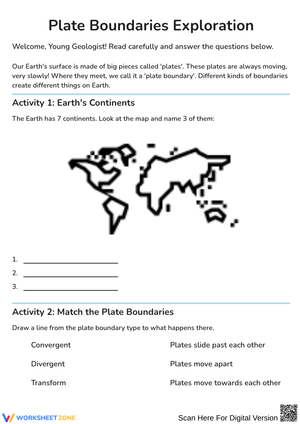
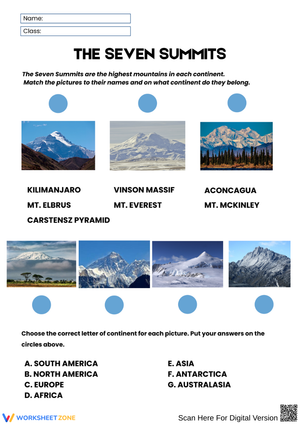
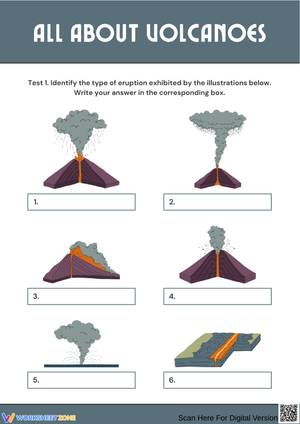
These 5th grade earth science worksheets resources give teachers ready-to-use practice across every major concept in a grade 5 Earth and space science unit — Earth's spheres, the water cycle, water distribution, landforms, weather and climate, and human impact on natural resources. The set works across bell ringers, station rotations, independent practice blocks, and homework without requiring extra materials or complicated setup. That range of use is what makes a printable collection worth keeping in the unit folder year after year.
The Specific Concepts Covered Across the Set
Grade 5 Earth science is typically taught as a system, and the strongest worksheet sets reflect that by covering all six major content areas rather than over-weighting the water cycle while shortchanging landforms or resource use.
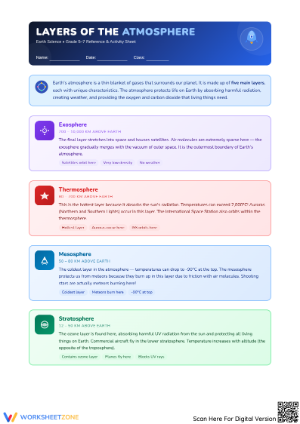
- Earth's spheres: the geosphere, hydrosphere, atmosphere, and biosphere, with classification tasks that ask students to sort real-world examples — not just match a term to a definition.
- The water cycle: evaporation, condensation, precipitation, collection, infiltration, and runoff, with diagram labeling and process-sequencing tasks.
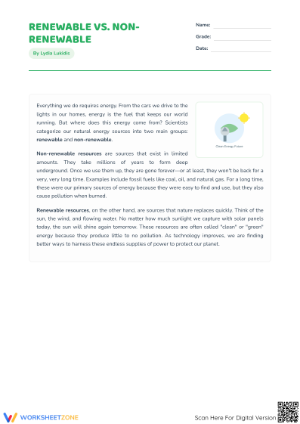
- Water distribution on Earth: comparing ocean water, glacial ice, groundwater, and surface water — including where usable water is actually found and why most of Earth's water is not available for drinking.
- Weather and climate: distinguishing short-term atmospheric conditions from long-term regional patterns, using chart reading and scenario analysis tasks.
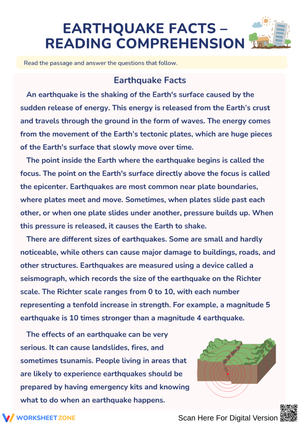
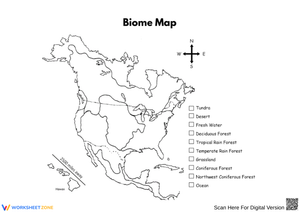
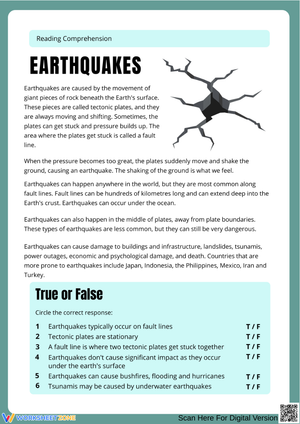
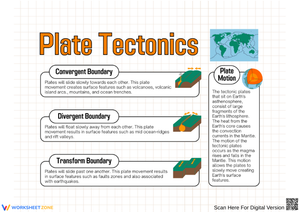
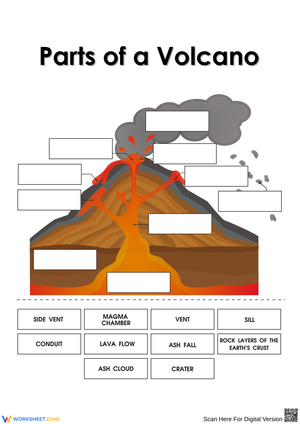
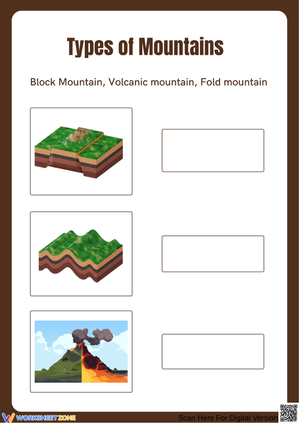
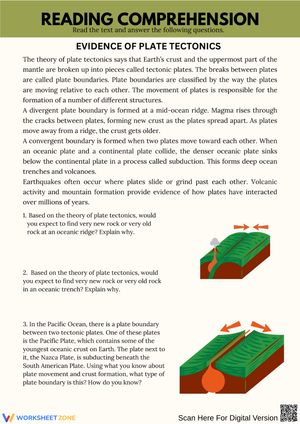
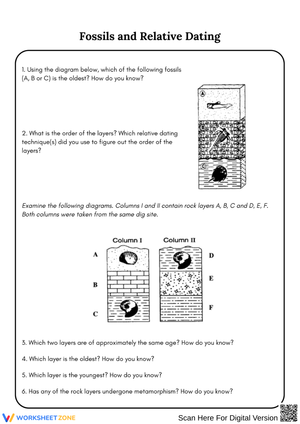
- Landforms and surface change: mountains, valleys, plains, river systems, erosion, and deposition, including the forces that reshape Earth's surface over time.
- Natural resources and human impact: conservation, pollution, land use decisions, and the consequences of how communities draw on Earth's materials.
A worksheet on the water cycle becomes more instructionally useful when students can also trace how water interacts with land surfaces, the atmosphere, and living things. Treating topics in isolation produces surface-level vocabulary recall rather than the systems thinking 5-ESS2 and 5-ESS3 actually require.
Common Misconceptions to Watch For and Correct
The most persistent error in this content area involves freshwater availability. Students who correctly label evaporation and condensation on a diagram still often assume that all precipitation becomes drinkable freshwater. That assumption holds up until you show them the data: roughly 96.5 percent of Earth's water is saltwater in the oceans, and most of the remaining freshwater is locked in glaciers and ice sheets. A worksheet that stops at "precipitation falls and collects" without asking students to sort ocean water, glacial ice, groundwater, and surface water misses the moment to surface that misconception. The sorting task is the instructional work — the labeling diagram alone is not enough.
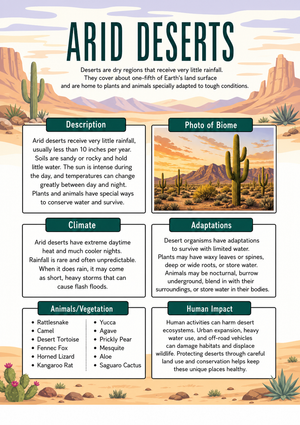
The weather-versus-climate distinction produces a different but equally predictable error. Students often treat "weather" as precipitation and "climate" as temperature, missing the essential difference: time scale. A student who writes that Arizona has "hot weather" when asked to describe Arizona's climate reveals that the distinction hasn't landed. Short scenario tasks — read a description, decide whether it's weather or climate, explain your reasoning — do more to fix this than vocabulary matching does, because they force students to apply the criterion rather than recall a definition.
A third error appears in the spheres unit. Students frequently picture the biosphere as a separate physical layer sitting above the other three spheres rather than as the zone where living things exist across and within all four systems. Sorting tasks that include a deep-sea fish, a mountain pine tree, and a soil-dwelling earthworm challenge that layered mental model in a way that a diagram of concentric rings does not.
Standard Alignment
These worksheets align to two NGSS disciplinary core ideas central to grade 5 Earth and space science. The first, 5-ESS2 Earth's Systems, asks students to describe Earth's major systems and explain patterns in the distribution of water across those systems. In classroom terms, that means students need practice interpreting data about where Earth's water is located — not only labeling cycle stages. The second, 5-ESS3 Earth and Human Activity, asks students to consider how communities use natural resources and how individual and group choices can reduce negative environmental effects. Worksheets targeting 5-ESS3 include scenario analysis tasks where students read about a land use or resource decision and explain its consequences. A well-organized set of 5th grade earth science worksheets resources will address both standards with tasks that ask students to explain and compare, not only recall terms.
Lesson-Planning Strategies to Get the Most From These Worksheets
The most effective pattern is a before-during-after sequence rather than using each worksheet as a standalone review item. Before a water cycle lesson, a quick labeling task surfaces prior knowledge — within five minutes you can see who already places condensation correctly on the diagram and who still draws precipitation arrows pointed upward. During instruction, the same diagram gives students something concrete to annotate as you model. After, a short explanation task — ask students to trace a single water molecule through the complete cycle — produces real formative data about who understood the sequence and who memorized only the labels.
Bell ringers work especially well for the weather-versus-climate content because that distinction builds through repeated low-stakes contact across several days, not a single concentrated lesson. Three or four short scenario prompts spread across a week, each asking students to identify weather versus climate and justify their answer, build that distinction more durably than one longer session does. The same logic applies to Earth's spheres: brief daily sorting practice during the first ten minutes of class outperforms one worksheet assigned and collected once.
For station rotations, diagram-completion and sorting tasks are the strongest choices. Keep directions minimal and the task visually clear. Students working independently in a rotation don't have time to parse dense instructions before starting — each worksheet should communicate the task within the first two lines.
Differentiating the Work Across Ability Levels
When differentiating within a set of 5th grade earth science worksheets resources, the most practical approach is to hold the science thinking constant while varying the entry point. Students who need more support complete a word bank version of the same labeling task; students working at or above grade level write their explanations without vocabulary prompts. Both groups are doing the same intellectual work — tracing how water moves through Earth's systems — but the structure of the task shifts. This consistency also makes regrouping for reteaching straightforward, because the content stays the same across versions and you're not managing two separate lessons.
For students who freeze on diagram tasks, pair the worksheet with a brief physical demonstration before asking for independent work. Watching a teacher demonstrate evaporation from a shallow dish while students annotate the diagram in real time reduces the cognitive load of tracking an abstract process on paper. That combination — concrete model followed by printed task — often moves students past the initial stall that blank diagrams with no visual anchor produce.
Students who move through grade-level work quickly benefit most from the natural resources and human impact worksheets. Those tasks ask students to weigh competing considerations — water access, land use tradeoffs, pollution — and write a reasoned position. There is no term to match or sequence to complete, which raises the demand considerably. Assigning those worksheets as extension to students who have already demonstrated mastery on the water cycle and spheres content gives them meaningful work without requiring separate materials.
Frequently Asked Questions
What topics should these worksheets cover to be useful for a full grade 5 Earth science unit?
Look for coverage across all six main areas: Earth's spheres, the water cycle, water distribution, weather versus climate, landforms and surface change, and human impact on natural resources. A set that only covers the water cycle will leave visible gaps when you move into landforms or resource use content.
Are the worksheets aligned to NGSS expectations for grade 5?
Yes, when the tasks ask students to explain, classify, and compare rather than only recall definitions. Strong alignment to 5-ESS2 and 5-ESS3 comes from worksheets that include diagram interpretation, scenario analysis, and short constructed responses — the same kinds of thinking those standards assess on end-of-unit tasks.
Can these be used for homework or left as sub plans?
The best 5th grade earth science worksheets downloads don't require teacher setup or verbal explanation to launch — students should be able to read the prompt and begin working independently. That quality makes them reliable for both homework and sub day materials. Each worksheet in this set meets that standard.
How do these worksheets fit alongside hands-on science lessons?
They work best as the before and after components of a sequence that includes a model, demonstration, or lab in the middle. Printable tasks are especially useful for surfacing prior knowledge before hands-on work and for checking conceptual understanding after it — two functions that are harder to accomplish efficiently through discussion alone.












 Interactive Worksheet Maker
 Quiz Maker
 Word Search Maker
 Crossword Puzzle Maker
 Word Scramble Generator
 Sentence Scramble Generator
 Handwriting Worksheet Generator
 Name Tracing Generator
 Fill In The Blank Generator