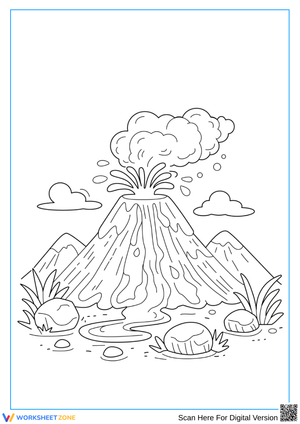
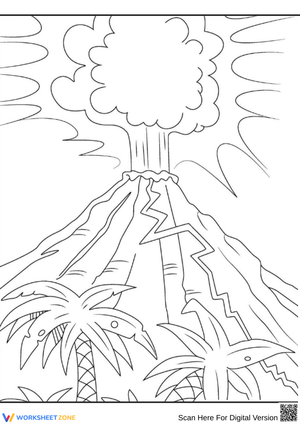
These volcano worksheets for 5th grade give teachers a set of standalone, printable resources that move students from basic diagram recognition through written cause-and-effect explanation — all within the kind of Earth science unit that shows up in the second half of most 5th grade science sequences. Each worksheet handles one focused task: labeling the internal structure of a volcano, reading a short nonfiction passage about eruption products, comparing three volcano types on a structured chart, or tracing what happens to Earth's surface after an eruption. That range lets teachers use the set across multiple lesson slots rather than exhaust it in a single class period.
The Specific Skills Each Worksheet Targets
The content priorities map directly to what grade 5 Earth science expects students to explain. Students need to know that magma is molten rock stored beneath Earth's surface, that it becomes lava when it exits through a vent, and that eruptions release not just lava but also ash, gases, and fragmented rock. Those distinctions anchor the cause-and-effect reasoning that written assessments demand — students cannot explain how volcanic activity reshapes a landform if they can only recall the term "lava."
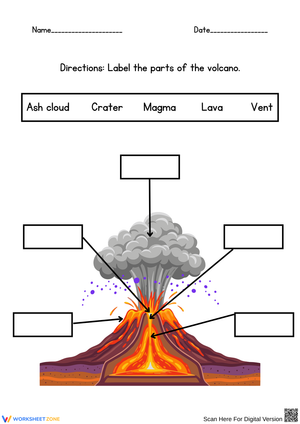
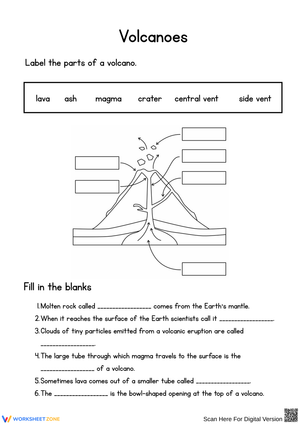
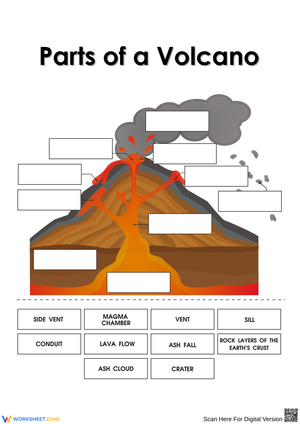
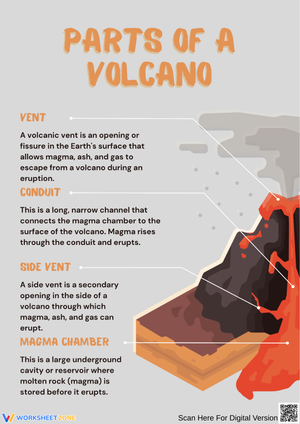
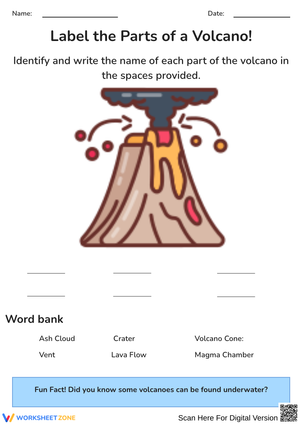
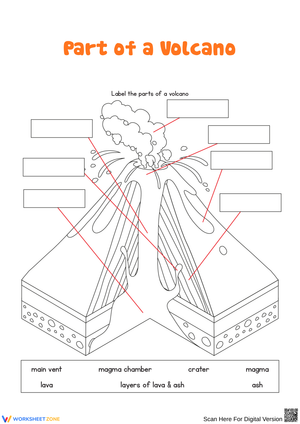
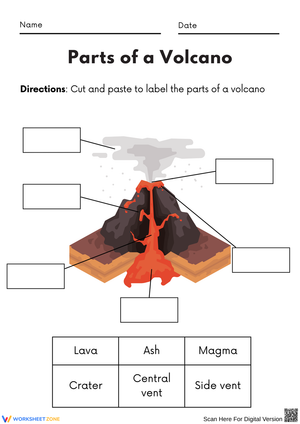
Diagram literacy gets structured practice here. The labeling worksheet asks students to identify the magma chamber, conduit, vent, crater, and active lava flow on a cross-section drawing. This is not a vocabulary exercise in isolation. When students correctly place the magma chamber below the conduit and trace the path of material toward the vent, they are building the mental model required to explain eruptions in writing — which is the actual cognitive demand grade 5 standards set, not just term recognition. Once that structural picture is established, the remaining worksheets in the set reference it rather than re-teach it.
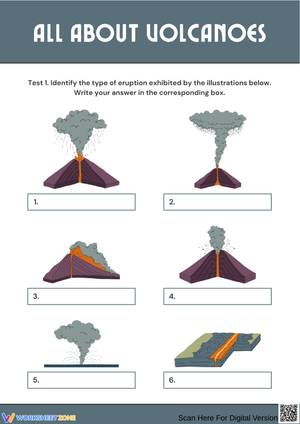
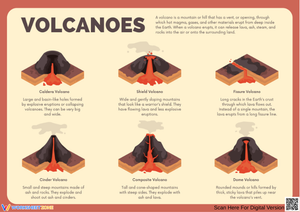
Volcano type comparison also receives consistent attention because categorical thinking is within reach for grade 5 students when they have concrete criteria to apply. Shield, composite, and cinder cone volcanoes each carry enough structural and eruption-style differences that students can build real comparisons. The set asks students to sort by shape, lava viscosity, and eruption pattern, then write a sentence explaining one key difference — a meaningful step up from matching terms to definitions.
Error Patterns That Show Up in Grade 5 Volcano Writing
The magma-lava distinction produces the most consistent confusion. Students read the definitions, repeat them accurately on a vocabulary check, and then write sentences like "lava collects under the crust and builds pressure before erupting." That error is not careless — it reflects a mental model in which the hot liquid underground and the hot liquid at the surface are the same substance with a different name. Catching this before students complete any written response prevents the mistake from spreading through their cause-and-effect explanations.
Eruption products are the second persistent gap. When asked to describe what a volcano releases, most students write about lava and stop. In student work, responses frequently end with "lava flows down the mountain" with no mention of the ash plume, gas release, or pyroclastic material that drive most of the hazard effects 5th graders are expected to explain. The cause-and-effect organizer in this set requires students to fill in a row for each type of eruption output, which makes omitting ash or gases structurally difficult.
Volcano type comparisons produce a third predictable problem. Students anchor on shape alone — they learn "shield volcanoes are wide and flat" and correctly identify the silhouette, but then pair that flat profile with explosive, viscous lava, which reverses the actual relationship. The compare-and-contrast worksheet addresses this by asking students to identify eruption style and lava viscosity alongside external appearance, so shape becomes one criterion among several rather than the only one.
How to Work These Worksheets Into Your Unit Planning
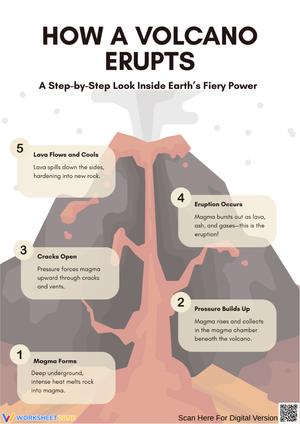
A three-day arc fits cleanly inside a standard grade 5 Earth science unit. On the first day, students complete the labeling worksheet during or immediately after direct instruction on volcano structure — the diagram functions as a note-taking anchor, and the exit prompt asks students to write one sentence explaining how material moves from the magma chamber to the vent. On the second day, the reading passage and text-dependent questions work well in a 20-minute independent work block, with the compare-and-contrast chart available for students who finish early. Day three is when the cause-and-effect organizer fits best: by that point, students have enough vocabulary and content grounding to trace eruption products to their surface effects without step-by-step modeling.
These volcano worksheets for 5th grade also hold up in the less structured slots of a teaching week. The labeling worksheet works as a Monday warm-up — about 10 minutes — to pull prior learning back to the surface before new instruction begins. The reading passage requires no setup and produces a written response the returning teacher can review, making it a reliable sub plan. Worth noting: the labeling worksheet loses most of its value if students already know the diagram cold. In that situation, move directly to the cause-and-effect organizer and reserve the labeling task for students who still need the structural vocabulary.
Adapting These Worksheets When Student Readiness Varies
The most practical adjustment is keeping the science concept constant while changing the output format. Every student can work on the same content — how eruptions change Earth's surface — while the response demand differs. Students who need more support label the diagram using a word bank and complete a sentence frame: "Magma is called lava when it ___." Students ready for more work label without support and write a short paragraph tracing the full path from magma chamber to surface landform change. Because everyone is addressing the same concept, the teacher's formative data stays comparable across the class.
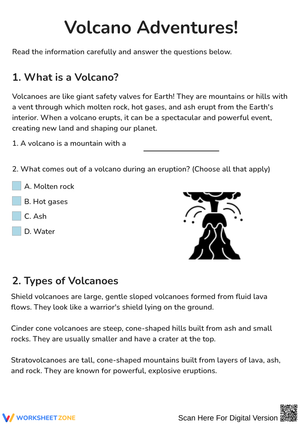
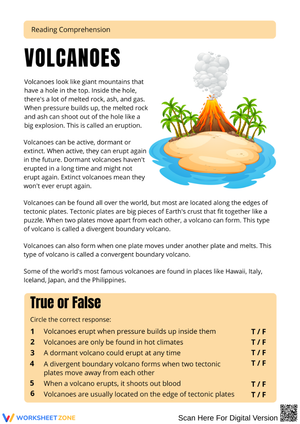
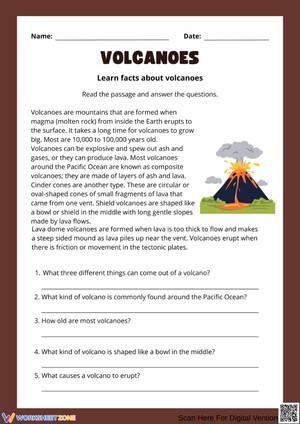
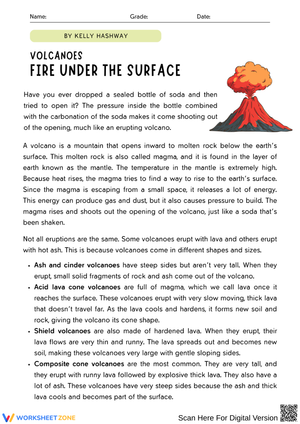
On the reading passage, pre-teaching five key terms — magma, lava, vent, eruption, conduit — before students read reduces the cognitive load of processing unfamiliar vocabulary and a new concept at the same time. Having students underline sentences that show a cause-and-effect relationship before answering comprehension questions slows down impulsive readers who skip directly to guessing. For students who move through the passage quickly, the extension prompt asks why the same eruption can produce both new land and a significant natural hazard — that is a genuine reasoning task, not extra writing appended to keep fast finishers busy.
Standard Alignment
These volcano worksheets for 5th grade align directly with NGSS 5-ESS2-1, which calls on students to describe how Earth's surface processes — including volcanic activity — add and remove material from the landscape over time. The labeling and sequencing tasks address the specific expectation that students understand how material moves from Earth's interior to the surface, not simply that volcanoes exist as a landform type. The cause-and-effect organizer connects to the crosscutting concept of cause and effect at the disciplinary level: students explain what each eruption product does to the surrounding environment rather than listing products in isolation.
The written response prompts across the set also support NGSS Science and Engineering Practice 6, constructing explanations. On the compare-and-contrast worksheet, students draw on sorted data to explain one structural or behavioral difference between volcano types — that sequence mirrors the evidence-to-explanation pattern SEP 6 targets. Teachers who need to document science writing practice will find those prompts usable as performance indicators alongside their role as practice tasks.
Frequently Asked Questions
What grade level are these worksheets written for?
The reading passages sit at a late-fourth to mid-fifth grade level, and the written response prompts ask for one to three sentences of explanation — an appropriate range for most 5th graders working with Earth science content. Teachers who use these volcano worksheets for 5th grade with advanced 4th graders or for early review in 6th grade find the content works well with minor adjustments to written response expectations.
Do these worksheets require special materials or advance preparation?
No. Each worksheet is a standalone, printable resource. Teachers need only copies — no lab equipment, colored pencils, or supplementary materials. Some teachers pair the labeling worksheet with a short video clip before students annotate the diagram, but that is an optional teaching choice, not a requirement built into the task.
How long does each worksheet take to complete?
The labeling and vocabulary worksheets typically take 10 to 15 minutes during independent work. The reading passage with comprehension questions runs 20 to 25 minutes for most students. The cause-and-effect organizer, which includes a written explanation prompt, usually takes 25 to 30 minutes depending on how much teacher modeling precedes it. These estimates reflect independent work — partner tasks tend to run shorter.
Are answer keys included?
Yes. Each worksheet comes with a corresponding answer key. For written response prompts, the key provides a model answer and a brief note identifying the core ideas students should address, which speeds up scoring without locking teachers into a single acceptable phrasing.












 Interactive Worksheet Maker
 Quiz Maker
 Word Search Maker
 Crossword Puzzle Maker
 Word Scramble Generator
 Sentence Scramble Generator
 Handwriting Worksheet Generator
 Name Tracing Generator
 Fill In The Blank Generator