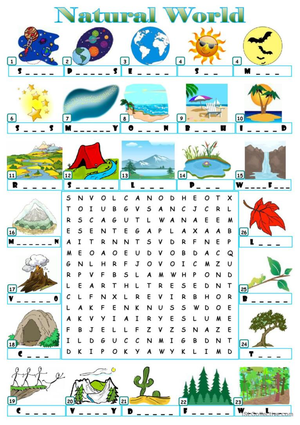
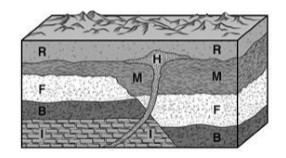
5th grade natural resources worksheets give teachers a direct path from vocabulary introduction to applied science reasoning — students move from identifying what counts as a natural resource to classifying examples by replacement rate, writing evidence-based explanations, and connecting specific resources to conservation choices. The set covers identification, the renewable versus nonrenewable distinction, and the time-scale reasoning that separates genuine understanding from surface memorization. Every worksheet fits into a standard instructional cycle without requiring lab materials or extended setup time.
What Students Practice Across the Set
Students work through three connected skill layers. The first is identification: given a mixed list that includes water, coal, sunlight, soil, natural gas, wind, and forests, students decide what qualifies as a natural resource and mark or label each example. The second layer is classification — sorting those resources into renewable and nonrenewable columns and recording a brief reason for each placement. The third layer, found in written response worksheets later in the set, asks students to name a resource, describe how people use it, and explain one conservation action connected to that use.
That ordering reflects a teaching principle worth naming: identification before classification. When students jump straight into a renewable versus nonrenewable sort, errors often trace back to shaky background knowledge rather than weak reasoning. A student who isn't certain whether natural gas counts as a resource at all can't sort it accurately — not because the thinking fails, but because the necessary vocabulary isn't in place yet. Running identification first turns the later sorting task into a science thinking exercise instead of a vocabulary guessing game.
Where Students' Thinking Breaks Down — and What the Worksheets Surface
Two errors show up consistently in 5th grade work on this topic. The first: students classify oil or natural gas as renewable because "there is more underground." They are reasoning from availability, not formation rate. The second: students mark trees as nonrenewable because they can be cut down and destroyed. Both errors reveal the same gap — students are sorting by how people treat a resource rather than by how nature replaces it. Until that distinction is directly addressed, the renewable column fills up with whatever feels abundant and the nonrenewable column fills up with whatever feels fragile.
Each worksheet that asks students to explain their sorting decision catches these errors in a way a simple sort cannot. A student who writes "coal is nonrenewable because we use a lot of it" has the right label with incorrect reasoning. A student who writes "coal takes millions of years to form and we burn it much faster than the earth can replace it" has understood the concept. Those two answers look identical on a sort worksheet and completely different on a written response worksheet — which is exactly why mixing formats across the unit gives more useful information than repeating the same task type.
How to Work These Worksheets Into Your Weekly Lesson Plans
A reliable three-day instructional sequence: on day one, use an identification and labeling worksheet to anchor what a natural resource is. On day two, shift to a sorting worksheet — a two-column renewable versus nonrenewable format, ideally cut-and-paste, works well in pairs or small groups. On day three, use a written response worksheet where students choose one resource, describe how people use it, and explain one conservation choice tied to that resource. That arc moves students from recall to analysis without asking for abstract reasoning before the vocabulary is secure. Used this way, 5th grade natural resources worksheets serve as both instructional tools and formative checks throughout the unit rather than just end-of-unit review.
Outside a three-day block, individual worksheets fit into smaller instructional windows. Matching and labeling worksheets pull prior knowledge back into working memory on Monday mornings after a weekend break — the retrieval demand is low enough to feel accessible but high enough to matter. A brief sort paired with one explanation sentence at the end of class tells you before the next lesson which students still confuse resource type with resource availability.
Taking the Content Beyond Sorting Into Conservation Reasoning
After students can classify examples accurately, the conservation prompts in the set push toward the more analytical thinking 5th grade Earth science standards expect. The strongest prompts are concrete: students name a resource, describe one way people use it, and identify one action that reduces demand for it — not broad environmental statements, but decisions a student can actually picture, like reducing household water use during a drought or switching from coal-fired electricity to wind energy. Water, soil, and forests are the most effective choices here because students can draw on direct experience rather than abstract scenarios.
This is also where the renewable versus nonrenewable distinction becomes worth discussing beyond the sort. Two resources can both be renewable and still carry different conservation urgency — a freshwater source that is technically renewable but locally scarce demands the same careful use as a nonrenewable fuel. That nuance doesn't fit neatly on a sort worksheet, but it fits exactly on a short written response prompt, and it's the kind of thinking that distinguishes a student who has genuinely engaged with the content from one who has memorized category labels.
Adjusting Each Worksheet for a Range of Student Readiness
For students who need additional support, reduce the field of examples on sorting worksheets to the most familiar ones — water, sunlight, and coal cover the core concept — and provide a reference card with definitions available while they work. The goal at that tier is accurate classification with support, not unaided recall. For students ready for more challenge, add a column that asks "how do people use this resource?" alongside the renewable or nonrenewable label, which pushes them beyond category knowledge into application.
Response mode is another lever that doesn't require preparing an entirely different worksheet. Some students highlight or circle; others write complete sentences with evidence. In small groups, ask students to state their placement and explain their reasoning aloud before writing — the verbal defense often reveals whether the written answer reflects solid thinking or educated guessing. 5th grade natural resources worksheets work across all three response modes without any changes to the core content, which makes differentiated instruction manageable rather than a full redesign each time.
Frequently Asked Questions
What should 5th graders know about natural resources before moving to renewable and nonrenewable classification?
Students need a working definition first: natural resources are materials from nature that people use. They should be able to identify clear examples — water, air, soil, plants, animals, minerals, and fossil fuels — before being asked to sort those examples by replacement rate. Moving to classification before that foundation is solid produces sorting errors that reflect vocabulary gaps rather than reasoning gaps, and on a simple sort worksheet the two look exactly the same without a follow-up explanation prompt to distinguish them.
How do you teach the time-scale difference between renewable and nonrenewable resources at this grade level?
Anchor it in contrast. Sunlight is available every day; natural gas took millions of years to form underground. That side-by-side comparison works better than a definition alone because students can visualize the difference in timescales. Worksheet prompts that require students to write why a resource belongs in a category — not just which category — push them to internalize that reasoning rather than memorize two lists.
Where do these worksheets fit inside a 45-minute science block?
Labeling and matching worksheets work at the start of a lesson as a five-minute vocabulary activator. Sorting worksheets fit during the guided or independent practice portion once instruction is complete. Written response worksheets work as a formative exit check in the last several minutes of class. 5th grade natural resources worksheets are short enough to slot into any of those positions without cutting into direct instruction time.
What is the most useful formative assessment format for this topic?
A brief sort paired with one written explanation sentence gives the clearest picture of student understanding. The sort shows whether students can classify examples correctly; the explanation reveals whether they know why. If students place coal in the nonrenewable column but write "because we use a lot of it" as their reason, the time-scale reasoning needs another pass before moving on to energy sources or conservation discussions.












 Interactive Worksheet Maker
 Quiz Maker
 Word Search Maker
 Crossword Puzzle Maker
 Word Scramble Generator
 Sentence Scramble Generator
 Handwriting Worksheet Generator
 Name Tracing Generator
 Fill In The Blank Generator