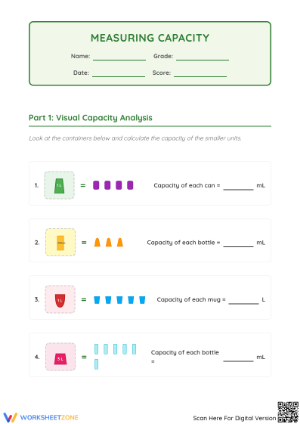
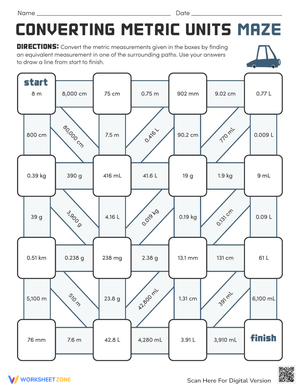
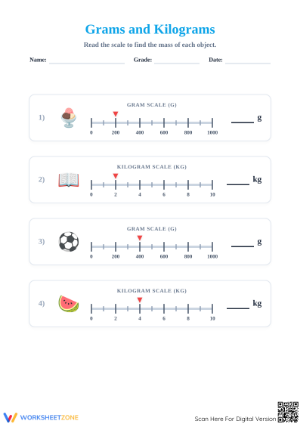
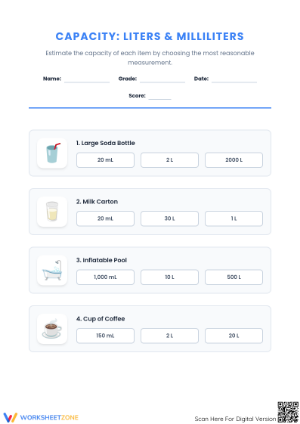
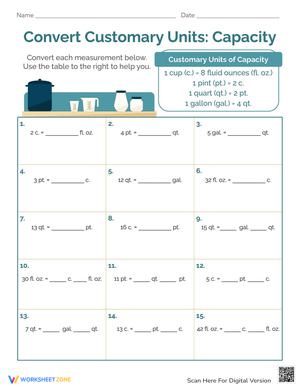
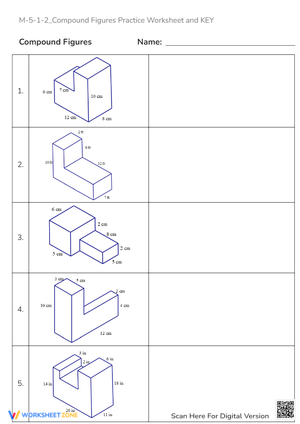
5th grade measurement worksheets give teachers a practical way to address three distinct skill strands — unit conversion, volume, and applied problem solving — without trying to cover all three in the same lesson. Each worksheet in this set stands alone, so a teacher can pull a conversion worksheet for Monday's warm-up, a volume diagram worksheet for Wednesday's center rotation, and a mixed word problem worksheet for the Friday formative check. That flexibility matters in a measurement unit, where students often master one strand before they're ready to link it to another.
What Each Worksheet Covers
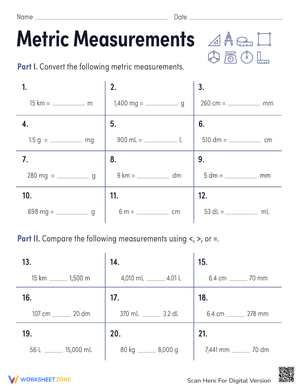
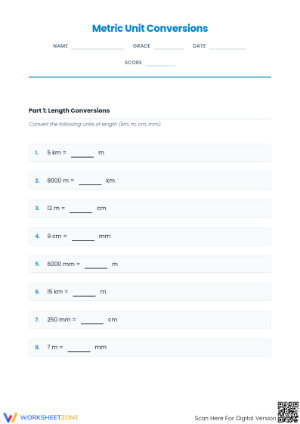
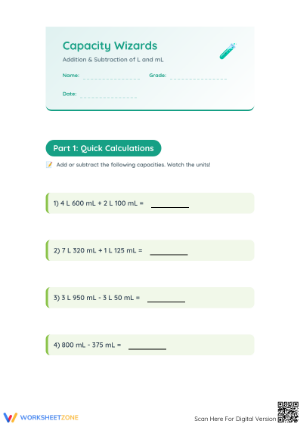
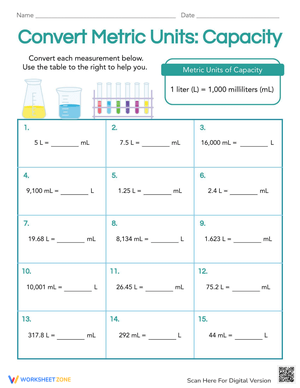
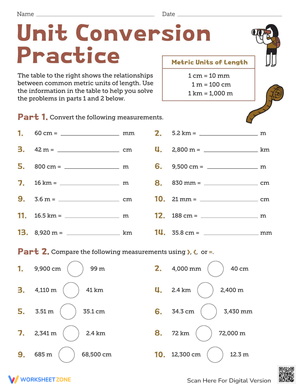
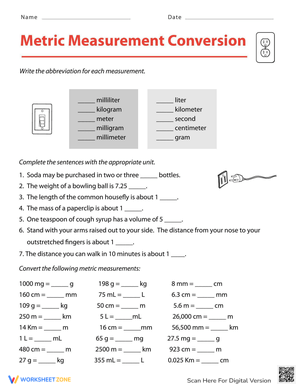
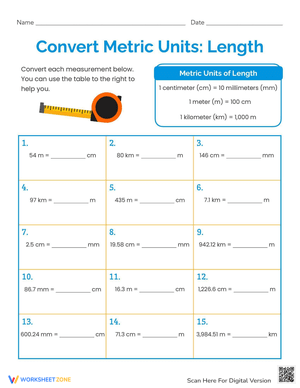
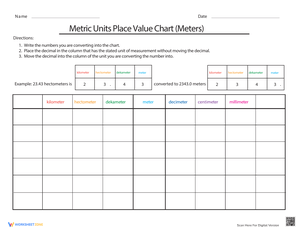
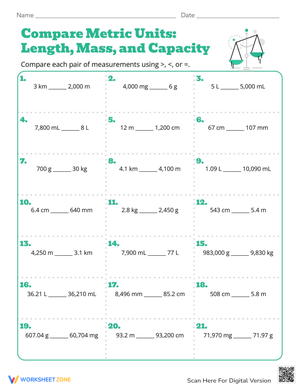
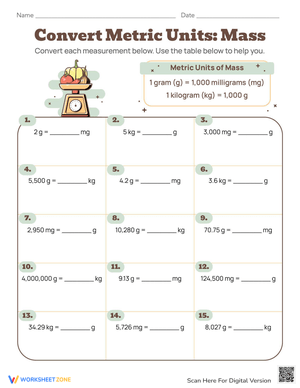
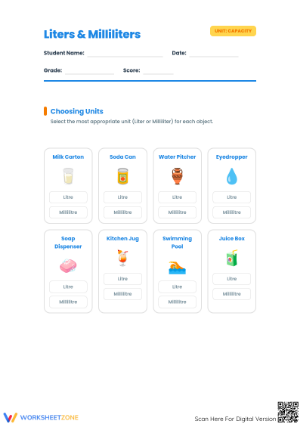
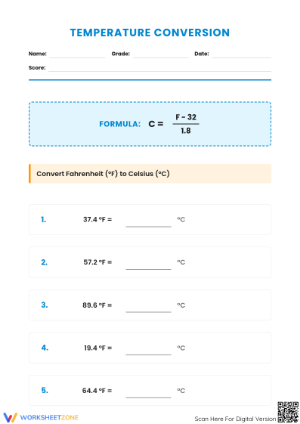
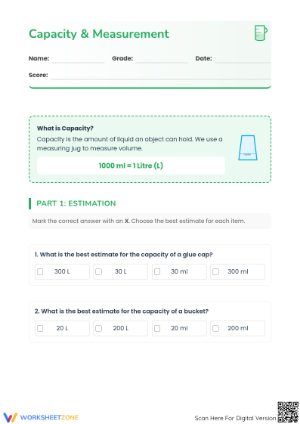
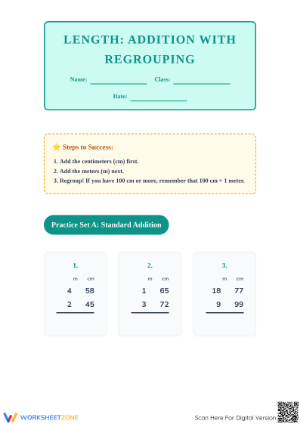
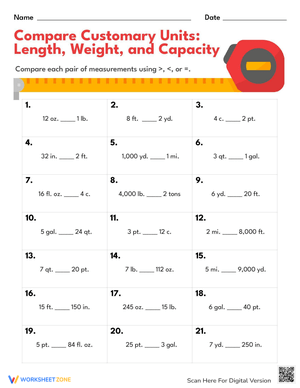
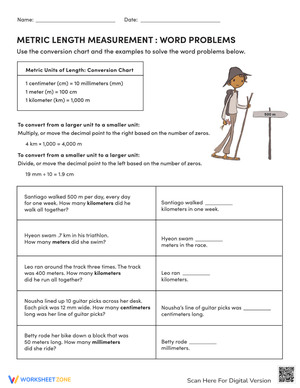
The conversion worksheets separate metric and U.S. customary practice. Students working on kilometers-to-meters or liters-to-milliliters conversions don't also have to manage cups-to-pints relationships on the same set of problems. The worksheets keep each system distinct until students show accuracy within it, then bring both into mixed-review practice that includes elapsed-time tasks and unit-choice reasoning.
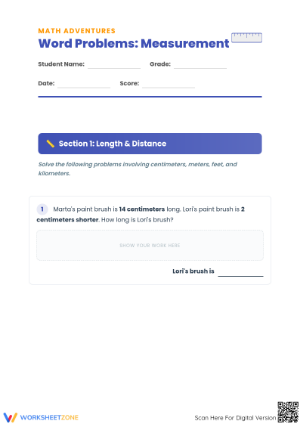
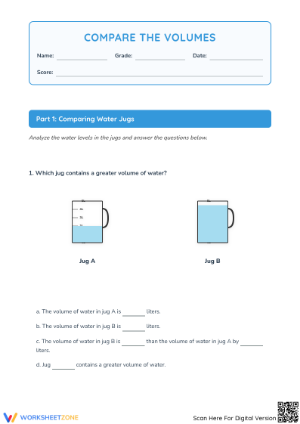
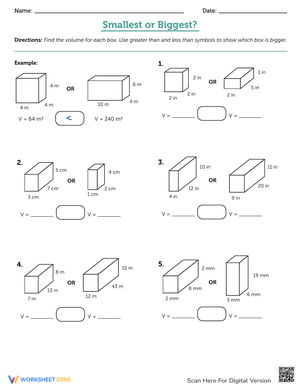
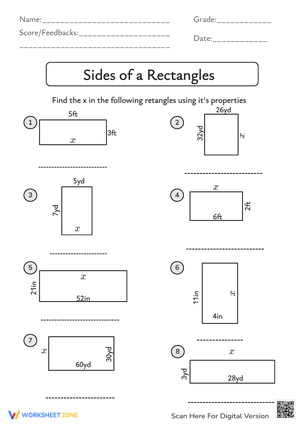
Volume worksheets follow a deliberate arc. Early worksheets in the volume strand use diagrams of unit cubes — students count, label, and write multiplication expressions before any formula appears. Later worksheets introduce right rectangular prisms with labeled side lengths, missing dimensions, and short contextual problems about containers or packing situations. Word problem worksheets close the set by combining all three strands: a student might convert a measurement, use it to find a volume, and then interpret the result in a real scenario involving one- and two-step arithmetic.
Taken together, the 5th grade measurement worksheets in this collection give teachers a worksheet for each phase of a unit: building the concept, practicing the procedure, and applying both in context. That range makes it possible to match the task to exactly where students are rather than defaulting to the same level of practice across the whole class.
Common Misconceptions to Watch For and Correct
Conversion work reveals two consistent error patterns in Grade 5. The first is system confusion — a student who converts meters to centimeters without hesitation will sometimes reach for pounds when the problem shifts to fluid ounces, conflating mass and capacity because both involve "big unit to small unit" logic. The second is operation reversal: the student knows that a meter is greater than a centimeter but still divides when converting from meters to centimeters, because "dividing makes the number... wait, smaller" — the reasoning collapses mid-problem. Worksheets that ask students to write one sentence explaining whether they multiplied or divided, and why, surface both errors quickly during a whole-class debrief or a circulating check.
Volume errors follow a different pattern. Students who count unit cubes accurately often stall when a worksheet shows a prism with labeled side lengths but no drawn cubes. They've internalized counting as the volume strategy and haven't yet made the leap to layers multiplied by rows multiplied by columns. A useful marker: ask a student why a 3 by 4 by 5 prism has a volume of 60 cubic units. If they describe it as 12-cube layers stacked five times, the understanding is there. If they say "you just multiply the three numbers," another round with cube diagrams alongside the labeled dimensions is the right next move — not more formula practice.
How to Build These Worksheets Into Your Weekly Lesson Plans
Each worksheet works best when it has a defined role in the lesson sequence rather than serving as generic review. The narrow focus of individual worksheets — one strand per worksheet — makes them easy to assign with purpose:
- Conversion worksheets with 8 to 12 problems fit the first 10 minutes of a math block as a warm-up or bell ringer, focused enough to flag exactly who needs a reteach pass.
- Volume diagram worksheets belong in center rotations right after students work with centimeter cubes or snap cubes — the worksheet extends that hands-on thinking into symbolic form.
- Mixed measurement worksheets — those that blend conversions, volume, and word problems — hold up as pre-assessment review or a Friday formative check.
- Single-skill worksheets work for intervention pull-out groups without requiring a new context explanation for students who are already a step behind.
These 5th grade measurement worksheets also work as reliable emergency sub plans. The directions are self-contained, the problems don't depend on a previous lesson's notes, and the difficulty range is wide enough that most students find a starting point without guidance. Teachers who keep two or three in a sub folder generally skip writing separate instructions for the guest teacher altogether.
Adapting the Set for Students at Different Readiness Levels
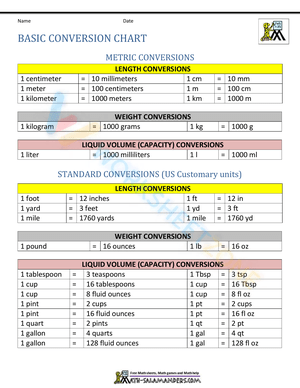
Most worksheets in the set can be adjusted without rebuilding them. For students who need more support, trimming a 20-problem conversion worksheet to 10 carefully chosen items reduces cognitive load without changing the standard. Clipping a conversion reference chart to the worksheet keeps attention on the reasoning rather than on recall. For students working ahead, adding an "estimate first" step before each volume problem deepens the thinking; asking them to write a second multiplication equation that models the same prism from a different orientation pushes further still.
Center-based differentiation is practical with this kind of set. One group works a single-skill metric conversion worksheet; a second group practices volume using a prism diagram worksheet; a third group tackles a mixed word problem worksheet that requires choosing between conversion and volume reasoning without being told which applies. All three groups address the same Grade 5 measurement cluster, but the level of integration differs — the teacher can address specific gaps by group rather than by whole class.
Standard Alignment
The resources align to the Common Core State Standards for Mathematics, Grade 5 Measurement and Data cluster. 5.MD.A.1 anchors the conversion worksheets: students convert among different-sized units within a single measurement system and apply those conversions in multi-step real-world problems. That standard is the direct rationale for keeping metric and customary practice separate early in the unit — mixing systems too soon adds a second decision layer before the first is stable.
The volume worksheets address 5.MD.C.3, 5.MD.C.4, and 5.MD.C.5, which define volume as an attribute of solid figures, establish unit cube measurement, and connect volume to multiplication and addition through right rectangular prisms. In most Grade 5 sequences, these standards arrive after students have built solid multiplicative thinking with whole numbers — which is exactly why the layer-by-layer model of volume lands when it does. Worksheets that start with cube diagrams and move toward labeled dimensions reflect that instructional placement rather than skipping past it.
Frequently Asked Questions
Should students practice metric and customary conversions on the same worksheet?
Not until each system is solid on its own. Mixing metric and customary conversions too early forces students to track two sets of unit relationships at once, which increases the chance they apply the wrong scale factor. Once students convert within each system accurately, a combined review worksheet makes sense — and it's a useful check on whether they can tell the systems apart under mild pressure rather than when the problem type signals the answer.
How do the volume worksheets connect to hands-on manipulative work?
Each volume worksheet opens with unit cube diagrams before asking students to work from labeled dimensions alone. That ordering mirrors the concrete-to-symbolic sequence most Grade 5 teachers use with centimeter cubes in class. Students who've physically built a prism and counted its cubes are ready to make sense of a diagram — the worksheet extends that experience rather than replacing it.
What's the best approach for students who are behind in measurement?
Start by identifying whether the gap is conceptual or procedural. A student who conflates volume and area needs diagram-based practice with explicit labeling and sentence completion tasks. A student who understands volume conceptually but makes calculation errors benefits from fewer problems with more workspace and a built-in answer check step. Selecting the right 5th grade measurement worksheets for targeted support is more straightforward when each worksheet addresses a single standard rather than combining several.
Do these worksheets work for review before a state assessment?
The mixed problem worksheets work well in the two weeks before assessment. When students have only practiced conversion in isolation, they sometimes hesitate when a word problem requires conversion as an intermediate step rather than the final answer. Mixed worksheets surface that gap — students have to decide which tool applies rather than following a predictable problem type. That kind of exposure before test day is more useful than another round of single-skill practice.














 Interactive Worksheet Maker
 Quiz Maker
 Word Search Maker
 Crossword Puzzle Maker
 Word Scramble Generator
 Sentence Scramble Generator
 Handwriting Worksheet Generator
 Name Tracing Generator
 Fill In The Blank Generator




 BACK TOSCHOOL