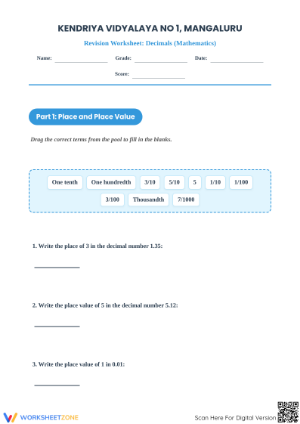
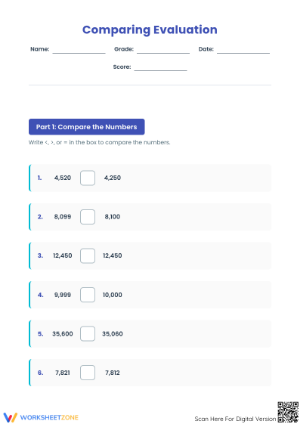
These 5th grade comparing decimals worksheets resources give teachers immediately usable practice that holds up across whole-group instruction, small-group reteaching, and independent work. The set targets a skill that sits at the center of fifth-grade number sense: reading decimals with precision and applying place value logic to determine which of two quantities is greater than, less than, or equal to another. What makes or breaks a worksheet here is whether it pushes students to reason about place value or simply invites digit-counting shortcuts.
What's Inside the Set
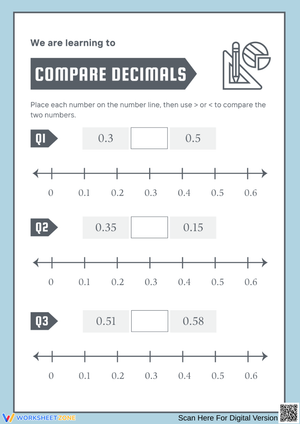
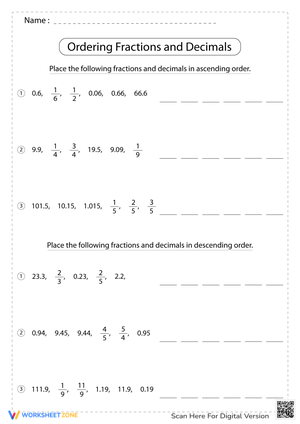
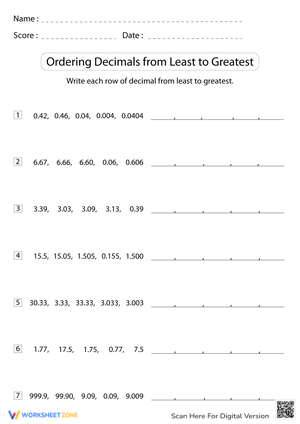
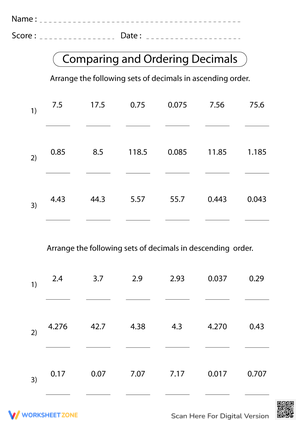
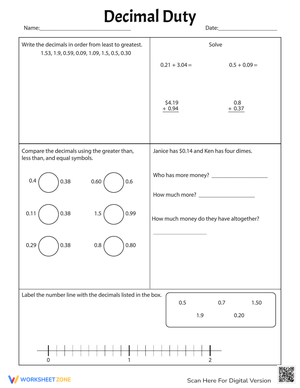
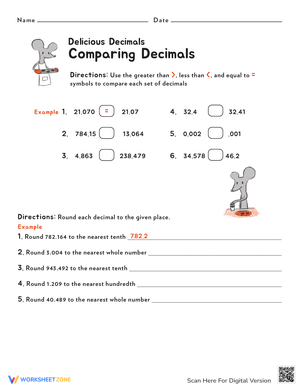
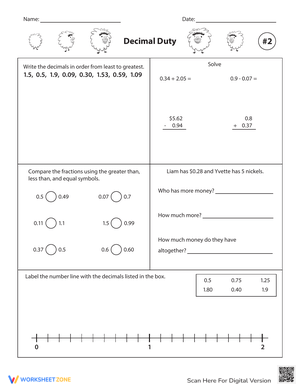
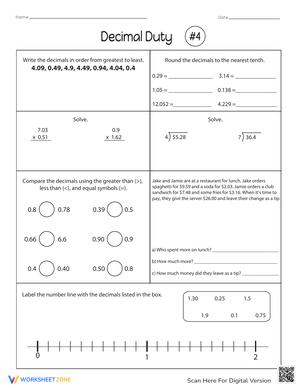
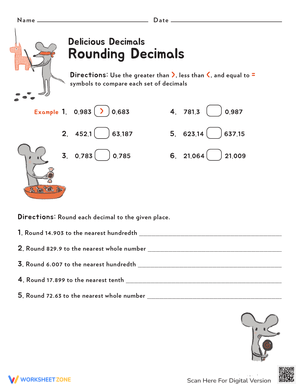
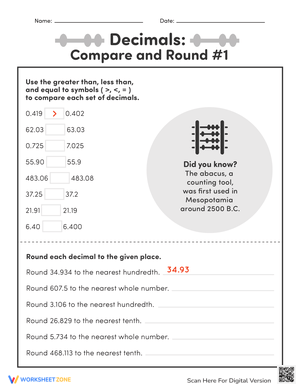
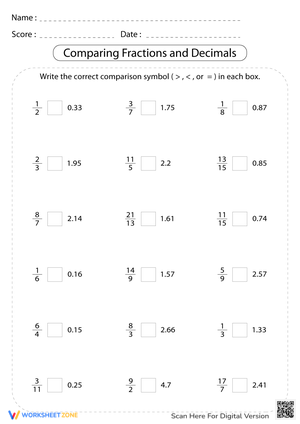
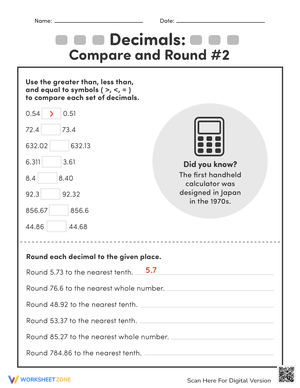
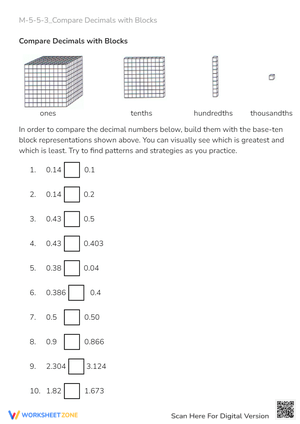
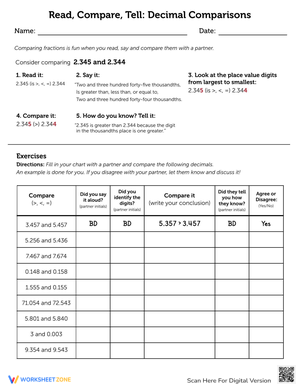
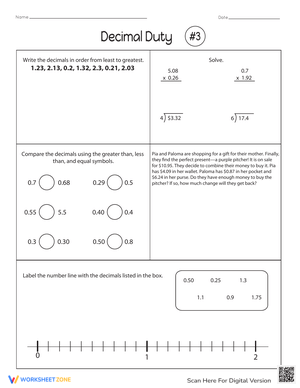
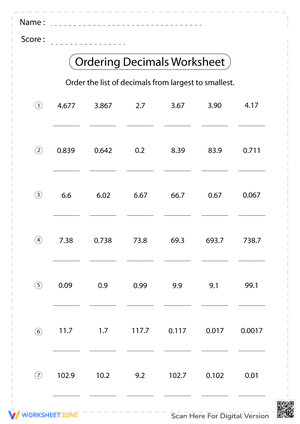
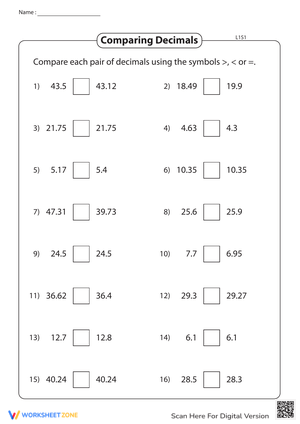
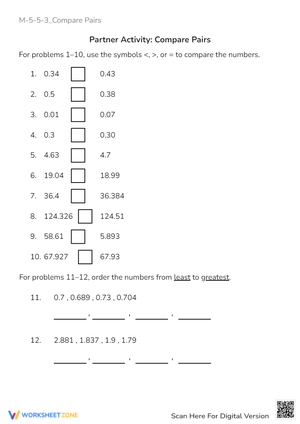
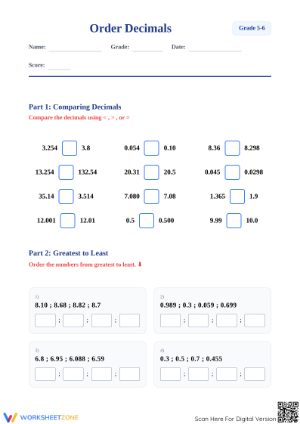
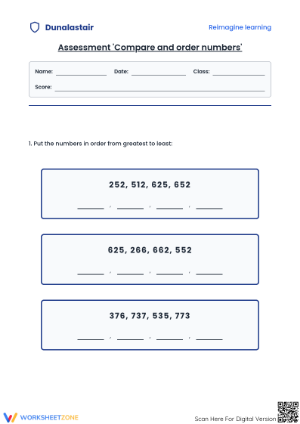
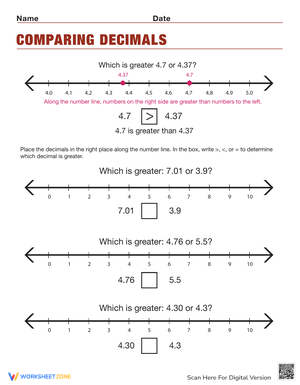
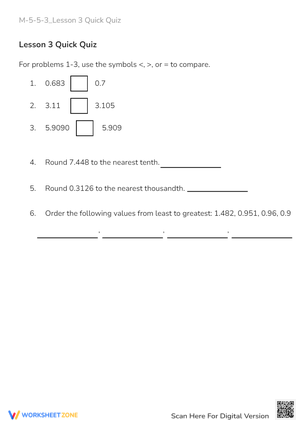
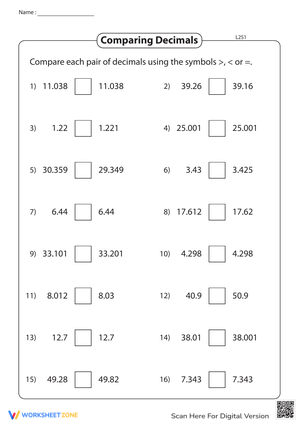
Each worksheet addresses a distinct aspect of decimal comparison rather than repeating the same problem type. Students underline the place that decides the comparison, rewrite decimals with matching decimal places to strip away visual ambiguity, mark comparison symbols between number pairs, and order short lists from least to greatest and back. Some worksheets use number lines, which require students to locate decimals spatially before deciding which is larger — a format that makes digit-counting strategies visible immediately, because the student who thinks 0.35 is greater than 0.4 cannot hide that reasoning when both numbers have to land on a line.
The range of complexity matters. A set that stops at hundredths leaves students unprepared for the thousandths comparisons that appear on grade-level assessments. The strongest worksheets move through tenths and hundredths early, then shift to pairs like 0.507 and 0.57, where students who count digits rather than reading by place will arrive at the wrong answer with confidence.
Student Mistakes Worth Anticipating Before You Hand These Out
The most persistent error at this grade is treating the decimal with more digits as automatically larger. A student who writes that 0.35 is greater than 0.5 is reading 35 as a whole number and comparing it to 5 — a carry-over from whole-number thinking that fifth graders often retain from earlier grades. This isn't carelessness. It's a conceptual gap, and it surfaces on the very first mixed-pair worksheet if the problems are designed to catch it.
Two other errors appear consistently in student work:
- Reading trailing zeros as meaningful — writing that 0.480 is greater than 0.48 because "480 is bigger than 48"
- Placing the comparison symbol correctly in speech but reversing the open end on paper, which is a notation habit and not the same as a conceptual misunderstanding — the correction is entirely different
Grouping students by error type is more efficient than grouping by score. The student confusing 0.5 and 0.35 needs anchored place value work; the student writing 0.480 as greater than 0.48 needs targeted equivalence practice with trailing zeros. A set with varied problem types surfaces both patterns quickly, because different worksheet formats draw out different errors.
Standard Alignment
These worksheets align to CCSS.MATH.CONTENT.5.NBT.A.3b, which expects fifth graders to compare two decimals to thousandths based on the meaning of each digit, recording comparisons with greater than, less than, and equal to symbols. The phrase "meaning of each digit" is the instructional hinge — the standard calls for place value reasoning, not symbol placement as a rote procedure. Teachers can use these worksheets as formative tools by listening during partner work for whether students can explain why one decimal is larger, not just which symbol belongs between them.
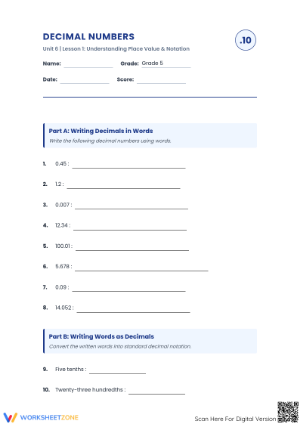
In most grade 5 decimal units, 5.NBT.A.3b follows students' work with reading and writing decimals in standard and word form (5.NBT.A.3a). Students who arrive at comparison practice without a solid grasp of place value vocabulary tend to produce results that look inconsistent — correct on easy items, wrong on harder ones in patterns that appear random but aren't.
Fitting These Worksheets Into the Teaching Week
A reliable three-part structure: a short modeled comparison at the board using a place value chart, a few problems completed with a partner where students have to state their reasoning aloud before marking any symbol, then independent work on the printed worksheet. That sequence keeps cognitive effort on the math rather than on decoding what the task is asking.
Teachers who use a 5th grade comparing decimals worksheets resource across a full decimal unit typically pull different worksheets for different lesson phases. The direct-comparison worksheets suit early independent practice. Ordering and number-line worksheets work better later, once students handle pairs fluently, as a check for flexible understanding rather than procedural recall. Exit tickets are easy to assemble by pulling four to six items from any worksheet — because the format stays consistent, students don't spend time orienting to new directions each time the skill returns in the spiral.
During small-group intervention, one productive move is to have students write both decimals into a place value chart column by column before marking a comparison symbol. Students who fill in the chart correctly and still mark the wrong symbol have a different instructional need than students whose chart itself is wrong. That distinction tells the teacher what to address next.
How to Adapt These Worksheets Across Student Levels
For students who are still uncertain about place value positions, a useful starting point is pairs that share the same tenths digit, so the comparison always resolves at hundredths. Reducing the number of active decisions keeps the practice productive rather than frustrating. Once those students can identify the deciding place consistently, introduce pairs where the tenths digits differ and resolution requires working left to right from the start.
Students who are ready for more challenge can move beyond the 5th grade comparing decimals worksheets format of two-number comparisons and work with ordering sets of four or five decimals presented in mixed forms — some in standard notation, some in word form. Translating before comparing adds meaningful difficulty that stays anchored in the same standard rather than jumping to a disconnected topic.
For students who reverse the symbol on paper despite clearly correct reasoning, the crocodile mouth mnemonic — where the open end always faces the larger number — usually resolves the issue in one session. That error is a notation habit, not a conceptual failure, and it responds to a brief targeted correction rather than a full reteach of place value.
Frequently Asked Questions
What place values should be covered in a grade 5 comparing decimals set?
Tenths and hundredths are necessary starting points, but a grade-appropriate set extends to thousandths. Pairs like 0.4 and 0.04, or 0.307 and 0.37, are where place value reasoning is actually tested — those are the items that reveal whether students understand the system or are pattern-matching from earlier practice.
Can these worksheets serve as a standalone assessment tool?
A full worksheet works well as an informal check for understanding within a unit. For a more formal assessment, teachers typically pull six to eight items from across the set, selecting pairs that represent different error patterns rather than repeating the same level of difficulty. That mix gives a clearer picture of where student understanding holds and where it breaks down.
How do these worksheets work for intervention students who are still building basic place value understanding?
Intervention students benefit from completing each worksheet alongside a physical or drawn place value chart rather than working from memory. The goal is to use the chart as a thinking tool until the column structure becomes internalized. Removing that support too early tends to stall progress — the chart gives students a reliable procedure to return to when numbers become unfamiliar.
Is it useful to assign these worksheets more than once across the year?
Many teachers treat one 5th grade comparing decimals worksheets worksheet as a reusable resource by assigning odd-numbered problems before a unit assessment and even-numbered problems during spiral review weeks. Because the format is consistent, the second pass takes less time, and students can focus on accuracy rather than on orienting themselves to a new task structure.














 Interactive Worksheet Maker
 Quiz Maker
 Word Search Maker
 Crossword Puzzle Maker
 Word Scramble Generator
 Sentence Scramble Generator
 Handwriting Worksheet Generator
 Name Tracing Generator
 Fill In The Blank Generator




 BACK TOSCHOOL