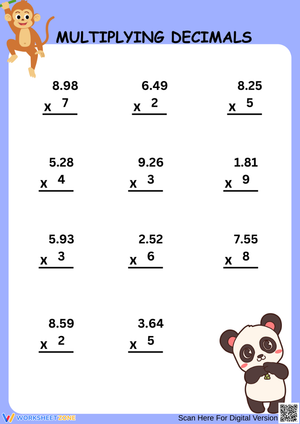
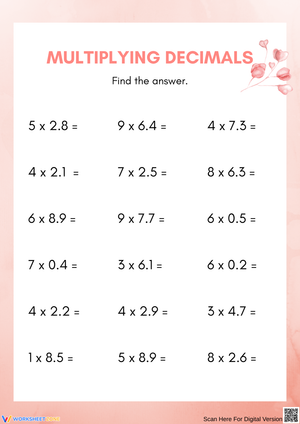
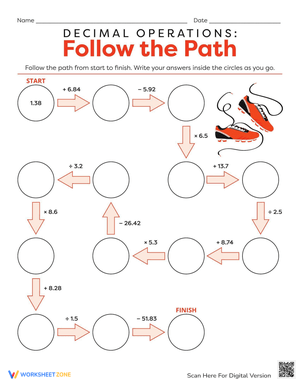
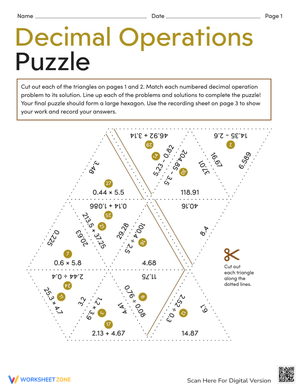
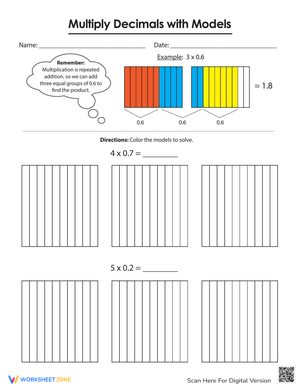
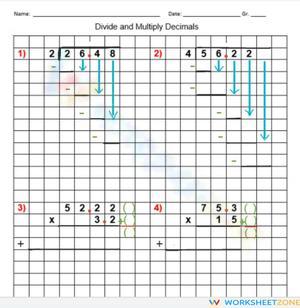
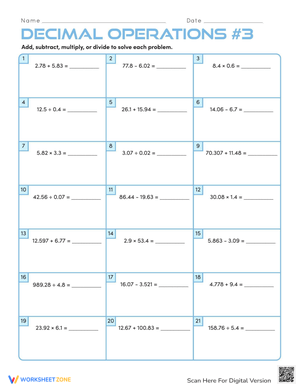
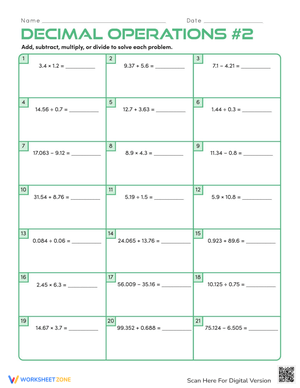
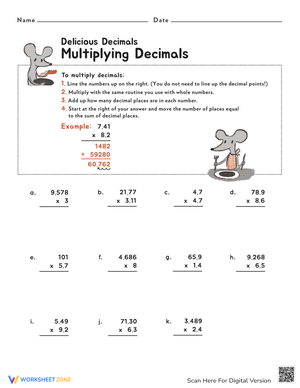
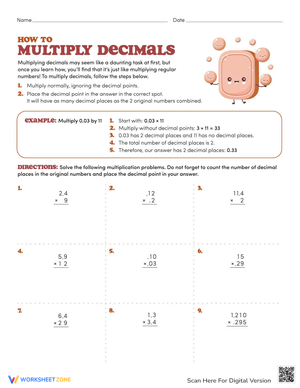
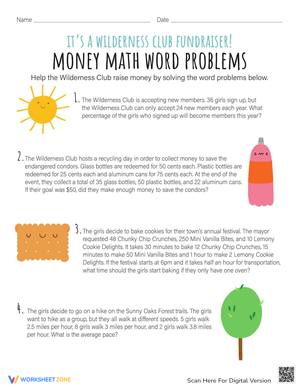
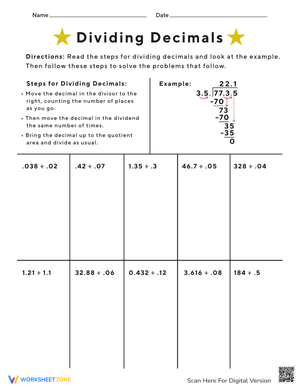
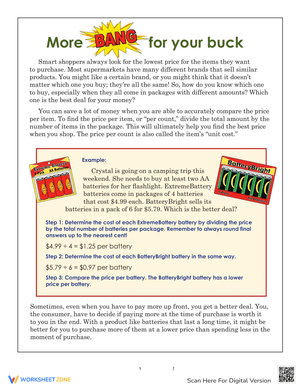
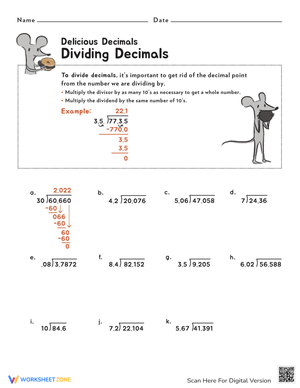
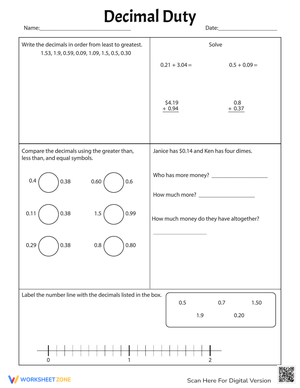
These multiplying and dividing decimals worksheets for 5th grade address a specific gap: students who can multiply and divide whole numbers with confidence but start guessing the moment a decimal appears. The set includes standalone worksheets that move through decimal-times-whole-number computation, decimal-by-decimal multiplication to hundredths, division of decimals by whole numbers, powers-of-ten practice, and short word problems in money and measurement contexts. Teachers who need ready-to-print resources that keep the reasoning visible alongside the computation will find these fit cleanly into independent work time, small-group reteach blocks, or pre-assessment review.
What Each Worksheet Has Students Practice
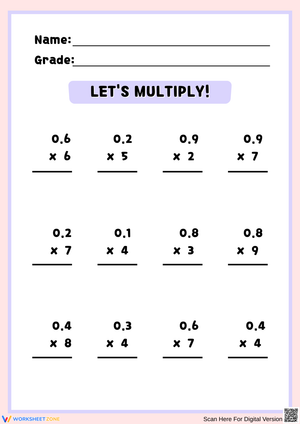
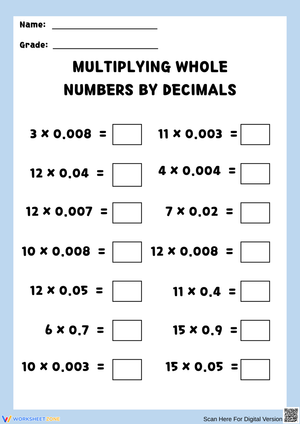
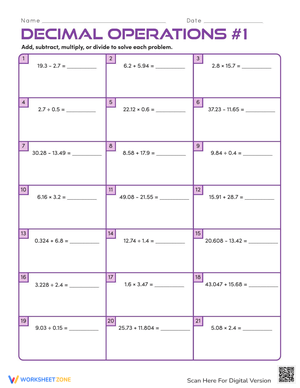
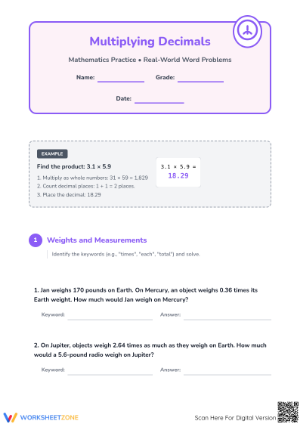
The resources follow a deliberate progression. Early worksheets focus on multiplying decimals by whole numbers—problems like 4 × 0.6 or 15 × 0.04—so students can anchor existing whole-number fluency to what decimal notation actually represents before the numbers become more complex. From there, the set works into decimal-by-decimal multiplication, division of decimals by whole numbers with quotients to hundredths, and mixed-operation review for use before assessments.
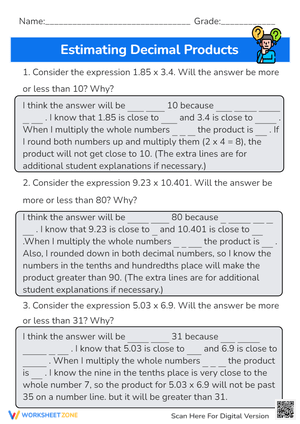
Estimation prompts run alongside computation items throughout. Students who skip estimation consistently skip the reasonableness check that catches a misplaced decimal point, and having the estimate written on the same worksheet before the algorithm starts makes that habit visible to the teacher—not just to the student.
- Decimal-times-whole-number problems, building toward full decimal factors
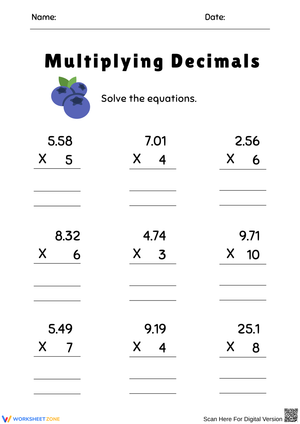
- Multiplication of two decimal factors with products to hundredths
- Division of decimals by whole numbers, quotients to hundredths
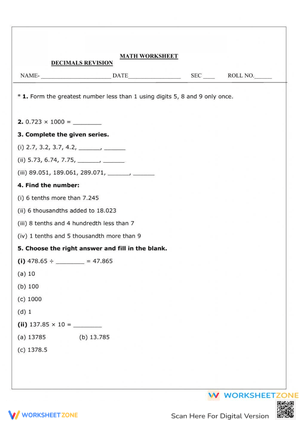
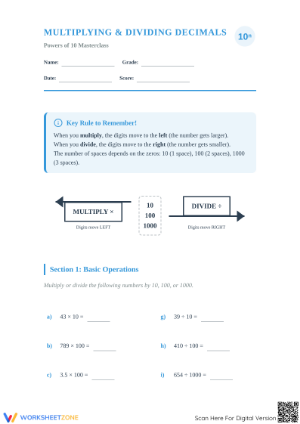
- Powers-of-10 items that reinforce place-value shifts in both directions
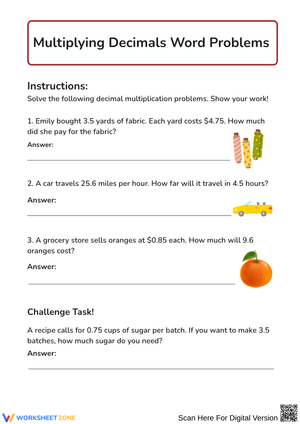
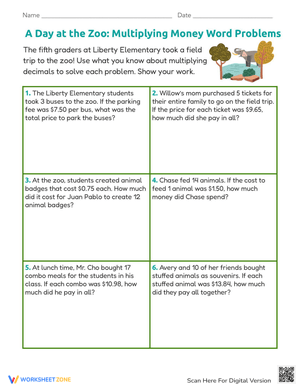
- Word problems using money, length, and data contexts
- Mixed-review sets for spiral practice before assessments
Each worksheet leaves enough white space for students to write estimates, line up place values, and show intermediate steps. When that space is absent, work collapses into answer columns and the error—wherever it started—stays invisible.
Error Patterns Teachers Should Watch For and Correct
The dominant mistake in decimal multiplication is treating the decimal point as something to place after the arithmetic rather than something determined by the numbers' values. When multiplying and dividing decimals worksheets for 5th grade include a problem like 0.3 × 0.4, students frequently write 1.2—they multiply 3 × 4 and place a single decimal digit because that is their habit from single-decimal-factor problems. The correct product, 0.12, requires counting two total decimal places across both factors. Students hear that rule during the lesson and still skip it under time pressure, and several worksheets in the set isolate exactly that structure so the error is easy to catch and name.
Division errors follow a different pattern. A student who divides 8.4 by 6 will frequently write 14 because they computed 84 ÷ 6 correctly and did not carry the decimal back into the quotient. The arithmetic was accurate; the sense of the number was missing. Asking students to commit to an estimate before solving—should this answer be close to 1 or close to 10?—catches the misplacement before the work is done. Several worksheets build the estimate line directly into the problem layout so students cannot skip it without leaving a blank the teacher will notice during a quick scan.
Standard Alignment
These resources align to 5.NBT.B.7 in the Common Core State Standards for Mathematics, which requires fifth graders to multiply and divide decimals to hundredths using strategies grounded in place-value understanding and to explain the reasoning used—not just produce correct answers. That second requirement matters for planning: a student who gets 2.4 × 3 = 7.2 by counting decimal places but cannot explain why the product is a little more than 7 has not yet met the full standard. The estimation prompts and brief written-response items in these worksheets directly target that explanation component.
Two supporting standards also appear in the set: 5.NBT.A.1 (each place represents 10 times the value of the place to its right) and 5.NBT.A.2 (patterns in decimal-point placement when multiplying or dividing by powers of 10). Teachers using spaced retrieval as a review strategy will find the powers-of-10 worksheets useful for revisiting 5.NBT.A.2 during the operations unit rather than treating it as a separate, finished topic.
Fitting These Worksheets Into the Week Without Extra Planning
A focused, narrower worksheet works well as an exit ticket after a mini-lesson on decimal division—six to eight problems checking whether students place the decimal point correctly in quotients, quick enough to sort before the period ends. A mixed-review worksheet fits the Friday practice block or the ten minutes left when a lesson wraps early. The word-problem worksheets suit a math center rotation where one station revisits decimal computation while others cover geometry or data.
For small-group work, the most effective move these multiplying and dividing decimals worksheets for 5th grade support is requiring students to write an estimate before they compute. Committing to a ballpark before the algorithm starts reduces random decimal placement because students have a target to check against. It also creates an immediate discussion prompt: Your estimate was 1.5 and your answer is 15—which one makes sense with the original numbers, and why? That question takes under a minute and reveals more about student understanding than a circled wrong answer ever does.
Substitute lessons and makeup assignments are another reliable use. The problem layouts are clear enough that students can work through computation items without direct teacher instruction, and the estimation prompts give early finishers a reasoning task rather than idle time.
Adjusting the Worksheets for a Range of Learners
Students who need additional support work better with worksheets that stay in the tenths—problems like 0.3 × 5 or 6.3 ÷ 3—where the decimal structure is visible without the added complexity of hundredths and multi-digit factors. On-level students work through the full range, including decimal-by-decimal multiplication and mixed-operation review. Students ready for extension can use any worksheet as an error-analysis task: present a solved example where the decimal point was misplaced, and ask them to identify the error and write the reasoning that produces the correct answer.
For intervention groups, the most effective use of multiplying and dividing decimals worksheets for 5th grade is selecting a single worksheet that targets one error pattern—dividing decimals by whole numbers, or multiplying by powers of 10—rather than assigning a full mixed-review set. Six to ten carefully chosen problems, with a written estimate and one written explanation required, gives more diagnostic information than thirty problems completed mechanically. Teachers can also mark a printed copy by circling only the relevant problems and asking students to write a sentence explaining one answer before continuing, which keeps the cognitive demand focused and makes the error pattern easier to name during a follow-up conference.
Frequently Asked Questions
What prior knowledge do students need before using these worksheets?
Students should be comfortable reading and comparing decimals to hundredths, and they need solid fluency with whole-number multiplication and basic division. Having at least one prior lesson on multiplying and dividing by powers of 10 helps, since that concept underpins the decimal-point shifts students will encounter across the set.
How do I use these worksheets for intervention rather than regular practice?
Choose a worksheet that isolates one operation or structure rather than assigning a mixed-review set. Require a written estimate before any computation begins, and ask students to explain one answer in a sentence before moving on. Six to eight problems done carefully with those two requirements in place gives more information about what a student understands than a full worksheet completed quickly.
Can these worksheets double as formative assessment tools?
Yes. The estimation prompts and written-response items leave a visible record of student thinking that goes beyond right and wrong answers. After students finish, sorting the work into three groups—correct with sound reasoning, correct without reasoning, and incorrect—takes only a few minutes and tells you exactly what to address in the next day's warm-up or small-group pull.
Do the worksheets include answer keys?
Each worksheet comes with a full answer key. For word problems and multi-step items, the key shows one worked solution, though it is worth discussing alternate approaches when students arrive at the correct answer through different reasoning paths—particularly at this grade level, where the standard asks students to explain their thinking, not just replicate a procedure.














 Interactive Worksheet Maker
 Quiz Maker
 Word Search Maker
 Crossword Puzzle Maker
 Word Scramble Generator
 Sentence Scramble Generator
 Handwriting Worksheet Generator
 Name Tracing Generator
 Fill In The Blank Generator




 BACK TOSCHOOL