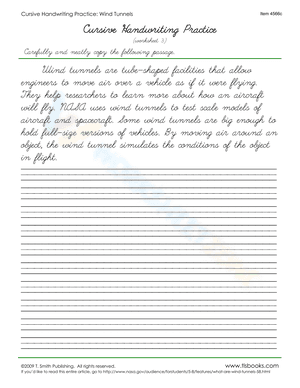
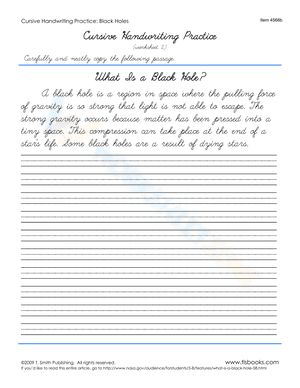
By fifth grade, most students have moved past the basics of letter formation and into daily writing across every subject. But legibility does not take care of itself once students start typing more and writing longer pieces. Fifth grade handwriting worksheets give teachers a quick, low-prep way to reinforce consistent letter size, spacing, and slant before sloppy habits become permanent. For a 5th grade classroom teacher, that might mean a five-minute warm-up. For a resource or intervention specialist, it might mean a full small-group session built around a student who still reverses letters or writes in an uneven mix of print and cursive.
Handwriting is not just an ELA skill at this age. Students who cannot write legibly and fluently often produce shorter, less developed responses in science, social studies, and math because the physical act of writing competes with the thinking behind it. Worksheets that isolate handwriting practice let students build automaticity separately, so that fluency shows up everywhere else.
Cursive Requirements Now Shaping 5th Grade Instruction
Cursive instruction has returned to the spotlight in many states, and fifth grade is frequently the checkpoint where students are expected to read and write it. As of early 2026, at least 24 states require cursive writing instruction in public schools, and most set the expectation that students can read and write cursive by the end of grade 5. New Jersey signed legislation on January 19, 2026 requiring cursive instruction in grades 3 through 5, and Pennsylvania added cursive requirements in 2026 for grades 2 and 3, which means students arriving in upper elementary classrooms increasingly come in with some cursive background, though the level varies widely.
Guidance from the Georgia Department of Education, published in February 2026, notes that at least 24 states now require cursive instruction, most expecting students to read and write cursive by the end of grade 5, and it links cursive proficiency to stronger reading skills and improved fine motor coordination in upper elementary grades.
For fifth grade teachers, this means handwriting worksheets now serve two purposes at once: reviewing manuscript legibility for students who need it, and reinforcing or introducing cursive for students whose earlier grades did not fully cover it. A single worksheet set that offers both formats side by side saves planning time when a class includes both groups.
Teacher Tips
- Keep daily handwriting practice short. Ten minutes of focused practice most days beats a single long session once a week.
- Model the letter or word on the board before students begin, especially when introducing a new cursive letter.
- Watch for pencil grip and paper angle during practice, not just the finished handwriting on the page.
- Rotate between manuscript review and cursive practice across the week so neither skill goes untouched for long.
- Use worksheets as a quick transition activity between subjects to reinforce handwriting without adding a separate block to the schedule.
- Check in briefly with students who are still building basic letter formation before moving them into connected cursive work.
Handwriting Practice Across Content Areas and for Diverse Learners
Because fifth graders write in every subject, handwriting practice pays off well beyond ELA. A student who can write letters and words fluently spends less mental effort on the mechanics of writing and more on the content of a science lab report or a social studies response. Teachers often notice that students who struggle with legibility also produce shorter written answers across subjects, not because they lack ideas but because the physical writing process is still effortful.
Handwriting worksheets can also be adapted for students who need extra fine motor support, including students with suspected dysgraphia or students receiving occupational therapy services. Wider lines, larger letter models, and shorter practice sets reduce fatigue while still building the same skills. For English language learners, handwriting worksheets paired with vocabulary words already used in class reinforce spelling and letter formation together, rather than treating handwriting as a separate, disconnected task.
Frequently Asked Questions
1. Do 5th graders still need to learn cursive given state requirements?
Yes. With at least 24 states now requiring cursive instruction, and most expecting students to read and write cursive by the end of grade 5, fifth grade is often the last checkpoint before that expectation is assessed.
2. How much time should a 5th grade teacher spend on handwriting practice each week?
Short, consistent sessions work best. Ten minutes most school days is generally more effective than one long weekly session, especially for cursive fluency.
3. What is the difference between handwriting worksheets for legibility review versus cursive introduction at this grade level?
Legibility review worksheets focus on spacing, size, and consistency in a students existing handwriting, while cursive introduction worksheets teach individual letter formation before moving into connected words.
4. Can handwriting worksheets help with dysgraphia or fine motor delays in upper elementary?
They can support practice when adapted with wider lines, larger letter models, and shorter sets, though students with more significant needs should also have access to occupational therapy support.
5. How should teachers use these worksheets alongside other 5th grade writing instruction?
Treat handwriting worksheets as a short, separate practice block rather than a replacement for writing instruction, so students build fluency that carries over into longer writing tasks across subjects.
















 Interactive Worksheet Maker
 Quiz Maker
 Word Search Maker
 Crossword Puzzle Maker
 Word Scramble Generator
 Sentence Scramble Generator
 Handwriting Worksheet Generator
 Name Tracing Generator
 Fill In The Blank Generator