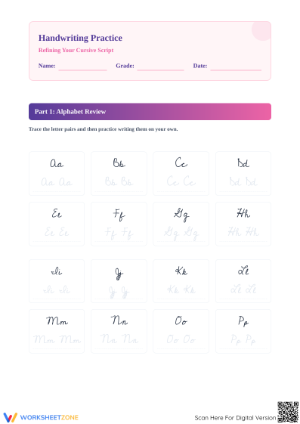
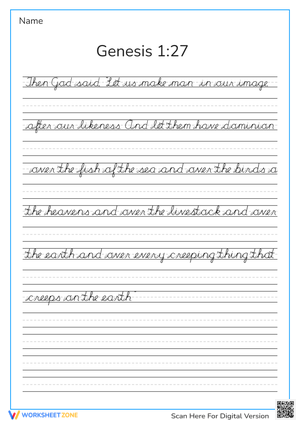
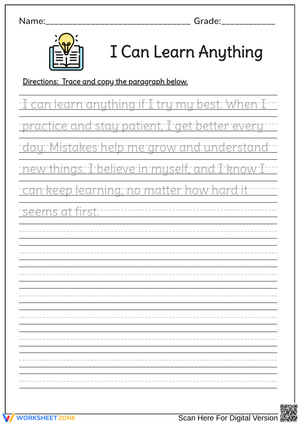
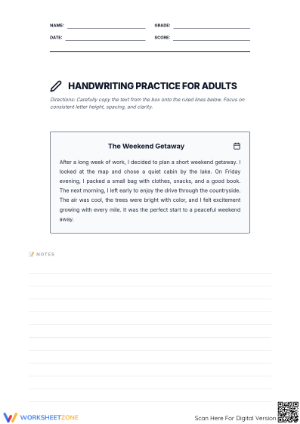
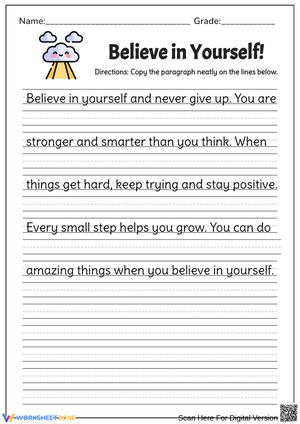
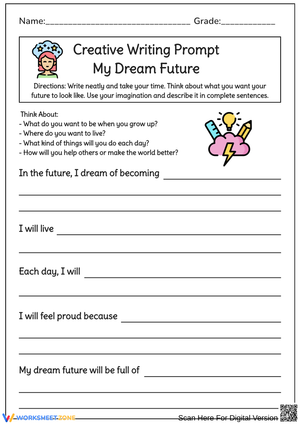
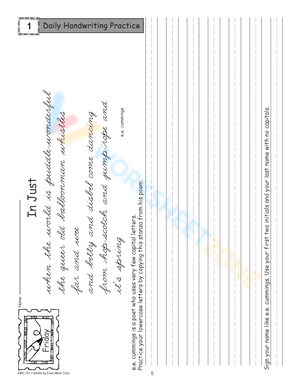
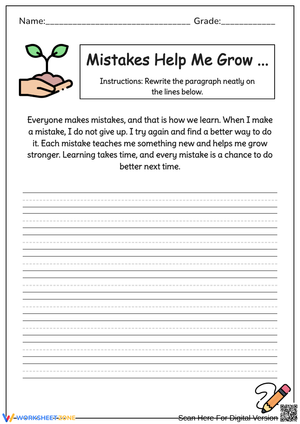
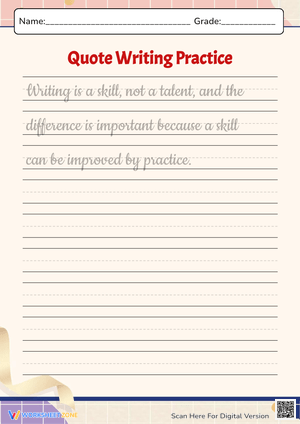
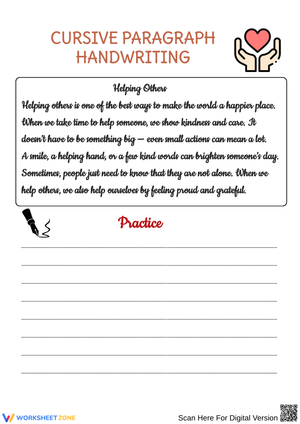
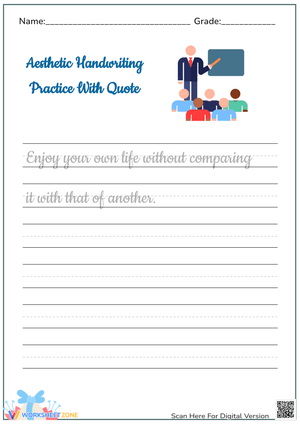
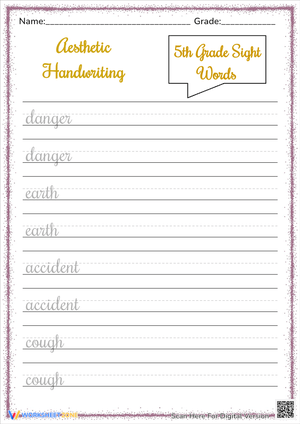
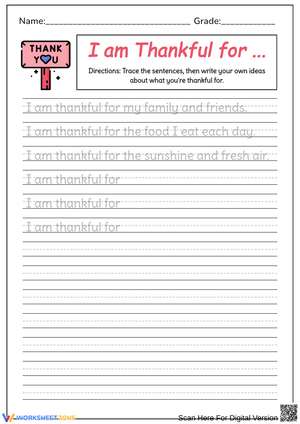
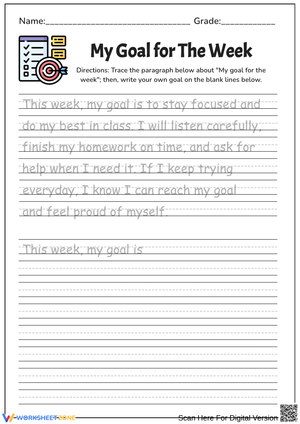
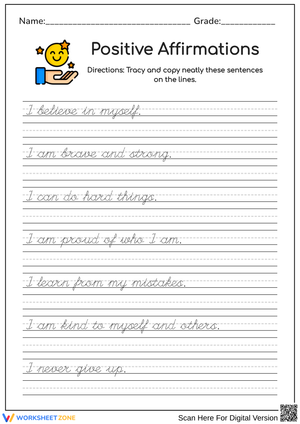
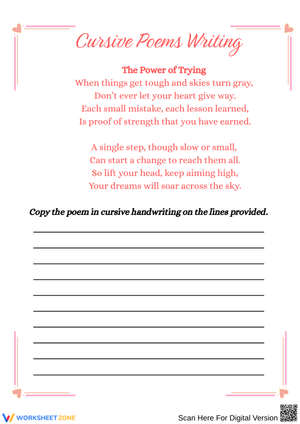
These daily handwriting printable worksheets for 5th grade are built for a specific gap that shows up in upper elementary: students who already know how to form letters but whose written work looks rushed, crowded, or inconsistent when they're writing to think rather than writing to practice. Each worksheet targets sentence and paragraph copying at a level that respects student age, using content-area sentences and informational text rather than primary-grade alphabet drills. This is not remediation — it is maintenance work that keeps legibility from becoming a barrier when students face longer written demands across subjects.
Concepts in Each Worksheet
The skills these worksheets address are about control under real conditions, not starting over with letter formation. By fifth grade, the relevant handwriting questions are: Can a student maintain consistent spacing across a full paragraph? Does letter size stay proportional when writing speeds up? Does the baseline stay stable through the last sentence? The copy tasks on each worksheet are long enough to reveal those habits — usually three to five sentences — but not so long that students sprint through and lose the neatness the practice is trying to build.
- Legibility at volume: Forming letters clearly across a full sentence or paragraph, not just the first word.
- Word spacing: Holding consistent gaps so the text is readable at a glance.
- Baseline alignment: Keeping writing anchored to the line even during faster-paced copy work.
- Letter size proportion: Maintaining a reasonable relationship between capitals and lowercase letters.
- Fluency: Moving through a copy task at a pace that keeps handwriting controlled rather than halting.
Many of the copy sentences use content-area vocabulary — science observations, brief informational statements, social studies references — so handwriting minutes can also reinforce academic language students are already meeting in class.
Student Error Patterns Worth Knowing Before You Assign These
The most reliable problem in fifth-grade handwriting is stamina collapse, not ignorance of letter form. Students often start a copy task with reasonable neatness and gradually compress letters, tighten spacing, and drift off the baseline as the paragraph continues. On a three- or four-sentence worksheet, that pattern shows up right at the seam between sentence two and sentence three — which is exactly where it matters when students are writing a constructed response under time pressure.
A second pattern is worth tracking in students who write in a mixed print-cursive style. They copy a model sentence accurately but switch letterforms mid-word, producing hybrid writing that is harder to decode than either consistent print or consistent cursive. This is not unusual at fifth grade, and it is worth flagging during the self-check step rather than at grading time.
Some students resist the pace adjustment that careful copy work requires. They have gotten through writing tasks by writing fast, and when asked to slow down, they interpret "write neatly" as "write laboriously" — producing stilted, disconnected letters that look worse than their natural handwriting. A brief teacher demonstration showing a controlled but not slow writing pace usually corrects this within a week.
How to Work These Worksheets Into Your Week
A focused five-to-seven-minute slot is the practical sweet spot for this level: about one minute to read and preview the model text, four minutes to copy, and two minutes for a self-check on spacing and line use. The key to making the routine stick is keeping the structure identical every time — same two-item self-check, same turn-in step — so students run the procedure automatically rather than re-learning it each session.
These daily handwriting printable worksheets for 5th grade solve several scheduling problems at once. As a bell ringer, one worksheet settles a slow-starting class and produces a fast written sample. During small-group intervention, the rest of the class has a calm, independent task that needs no teacher facilitation. For sub days, a copy-and-check worksheet is easy to explain and easy to collect. When a student's legibility becomes a grading concern mid-unit, a single worksheet assigned as homework gives families a concrete, low-prep task rather than a vague directive to "practice writing."
Handwriting Fluency and the Writing Work That Depends on It
In fifth grade, students are asked to do more cognitive work while they write — planning an argument, tracking evidence, monitoring sentence structure. Labored handwriting adds to that load in ways that are easy to overlook. Reading Rockets summarizes meta-analytic research on handwriting instruction, reporting that explicit teaching improves both legibility and fluency and can support overall writing quality. The classroom translation is direct: when letter production requires less mental effort, students have more attention available for the ideas on the page.
This shows up most clearly when reviewing responses from students who write slowly. The content reasoning is often present — the student can articulate the thinking verbally — but the written answer is short or hard to evaluate because so much effort went into the handwriting itself. A short daily routine that builds fluency and more automatic letter production is one practical way to close that gap before it starts affecting how student thinking gets assessed.
Differentiating These Worksheets Across Student Levels
For students who finish copy tasks quickly and maintain clean output, the most effective adjustment is length: ask them to complete a second worksheet in the same session, or have them rewrite their weakest line with specific attention to spacing and letter proportion. Neither adjustment requires new materials. For students who struggle to complete even a two-sentence task, reduce the assigned copy to the first sentence and focus feedback on one feature only — usually word spacing — rather than asking them to address every element at once.
English language learners sometimes move more slowly through copy tasks because they are also parsing unfamiliar vocabulary in the model text. A brief vocabulary preview — the teacher reads the model sentence aloud before students begin copying — reduces the reading delay without changing the handwriting goal. The daily handwriting printable worksheets for 5th grade in this collection use informational content sentences, which means ELL students also get repeated exposure to academic language alongside the handwriting practice itself.
Standard Alignment
CCSS does not carry an explicit handwriting standard past second grade, but written production is directly at stake. W.5.4 asks students to produce clear and coherent writing, and illegible or slow handwriting interferes with that in any pen-and-paper context. W.5.10 reinforces this by expecting routine written production across tasks and time frames — an expectation that assumes handwriting fluency the standard does not name directly. Several state standards, including those in Texas and California, maintain explicit handwriting and writing fluency requirements through fifth grade. In a curriculum map, these worksheets belong alongside writing conventions and writing production standards: not as a standalone strand, but as consistent practice that keeps the foundational mechanics of written work from becoming an obstacle to the content demands above them.
Frequently Asked Questions
What should fifth graders actually focus on during a handwriting worksheet?
Consistent spacing, readable letter formation, baseline control, and sustained neatness across a full sentence or paragraph. The target at fifth grade is not perfect penmanship — it is handwriting that a reader can process without effort, produced at a pace that does not interfere with the content of the task.
How long should a daily handwriting session run in Grade 5?
Five to seven minutes covers it for most classrooms. That is long enough to copy a short passage and complete a self-check on one or two features. Running longer pulls time from reading and writing instruction without proportional return.
Can these worksheets support students whose written output is slow?
Yes. The daily handwriting printable worksheets for 5th grade in this set use sentence-length copy tasks, which push students to write at a sustained pace — the same demand they face during constructed responses and timed writing across subjects. Over time, that repetition can make letter production more automatic and free up attention for the content of the writing itself.
How do these worksheets work for sub days or homework?
Both settings work well. The copy-and-check format is self-contained: a substitute needs only to set expectations and collect the finished worksheets. For homework, a handwriting worksheet is a short, concrete task with a clear completion criterion, which is easier for families to support than open-ended writing practice.












 Interactive Worksheet Maker
 Quiz Maker
 Word Search Maker
 Crossword Puzzle Maker
 Word Scramble Generator
 Sentence Scramble Generator
 Handwriting Worksheet Generator
 Name Tracing Generator
 Fill In The Blank Generator