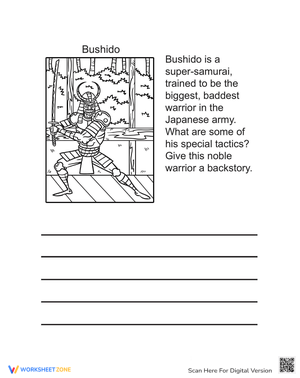
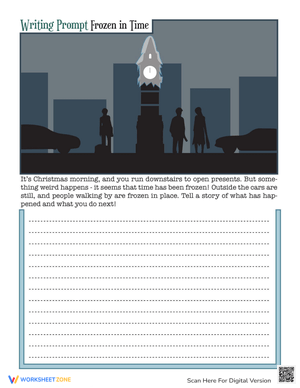
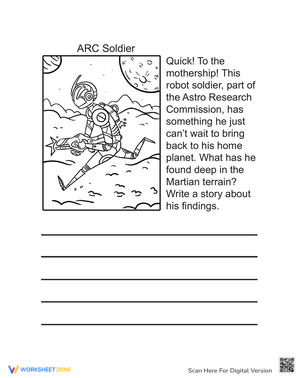
These 4th grade writing a strong introduction worksheets give teachers a set of print-ready, targeted resources built around the three moves that make an opening paragraph work: a hook that earns the reader's attention, background context that orients without over-explaining, and a topic sentence that commits to the essay's direction. The set spans opinion, informative, and narrative writing, so the same instructional sequence transfers across all three text types without rebuilding lessons from scratch.
What Each Worksheet Targets
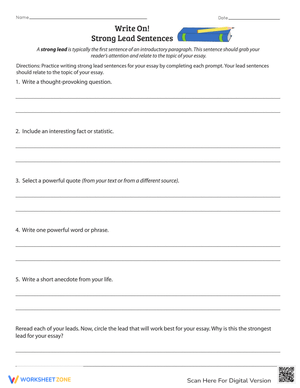
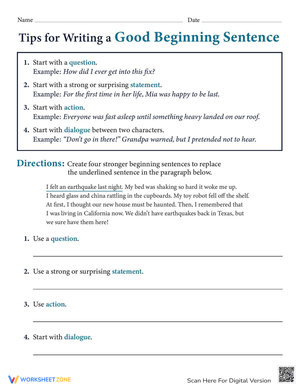
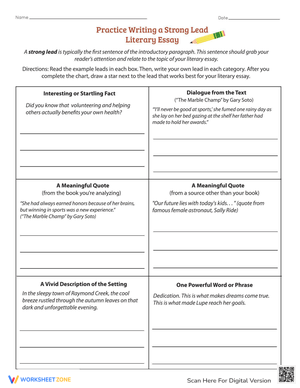
The worksheets move through the components of a strong opening in a deliberate sequence. The earliest activities ask students to read a set of example sentences and sort them by hook type — question, surprising fact, vivid description, bold statement. Sorting before generating is intentional: students at this stage can recognize a strong sentence more reliably than they can produce one on demand, and the sorting task builds the mental model that writing tasks will later draw on.
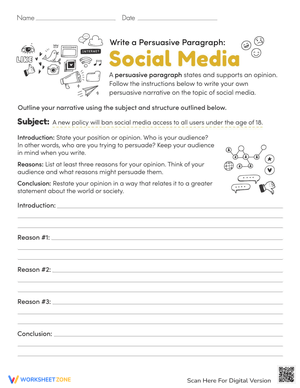
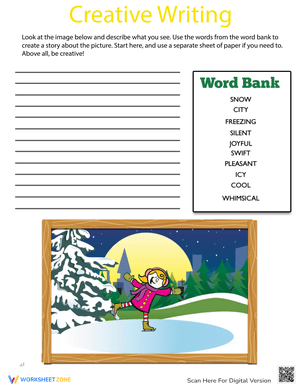
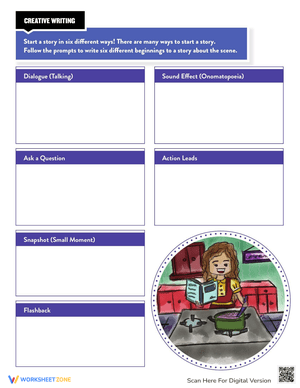
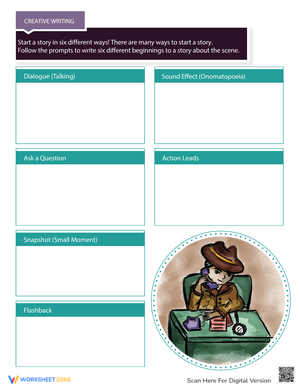
From there, the set moves into fill-in-the-blank templates that provide a sentence starter and leave the specifics to the student. These templates print with the three-part structure labeled directly on the worksheet — hook, context, topic sentence — so students see each section as a distinct job with a distinct purpose. Later, students rewrite weak sample introductions rather than complete a template. That task is harder because it requires diagnosing what is missing before fixing it. The final worksheets in the set give students a prompt and no printed structure, asking them to draft a complete introduction from scratch — this is where teachers see most clearly which students have internalized all three moves and which are still relying on a template to carry them.
A note worth flagging: the rewrite worksheets work best after students have produced some writing of their own. Students who encounter a weak sample introduction before they have drafted anything themselves often find the correction task disconnected — they can sense something is off but have no personal writing experience to anchor the fix. Sequencing these activities matters more than it might appear.
Patterns in Student Work Worth Catching Early
The most persistent opening at this grade level is the announcement: "In this essay, I will tell you about sharks." Students write this because it resembles a topic sentence — it names the subject — but it skips the hook entirely and signals to the reader that nothing surprising is coming. Side-by-side comparison lands the point faster than any explanation: pair that announcement sentence with a strong fact hook on the same topic in front of the whole class, and students understand the difference immediately.
A second pattern appears specifically in the topic sentence slot. After practicing hooks, students often write topic sentences that are still hook-shaped — confident and attention-grabbing but vague. "Sharks are the most terrifying creatures alive!" sounds assertive, but it does not tell the reader what the essay argues or explains. The topic sentence carries a different job than the hook: it narrows and commits. Without explicit instruction on that distinction, students cannot reliably apply both moves in the same paragraph.
Background context is the component students most consistently skip. After landing a hook they like, they move straight to the topic sentence and consider the introduction done. The middle section feels redundant to them because they already know the topic — they do not yet think from the reader's perspective. This realization clicks faster when students look at their own introductions and ask, "What does the reader know at this point?" than when the concept is explained before they write anything.
Building These Worksheets Into Your Writing Block
The sorting and template worksheets belong at the front of a writing unit, before students draft anything longer. Running a hook sort as a warm-up on the first day of an opinion unit establishes the vocabulary — hook, context, topic sentence — so those terms can carry instruction through the rest of the unit without constant re-explanation. The rewrite worksheets land better mid-unit, once students have produced a rough draft of their own and have something to hold against the weak sample they are fixing.
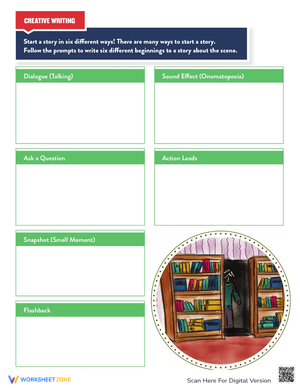
One classroom move worth trying: give the whole class the same prompt and ask students to write three different hooks for it in under five minutes, then read two or three aloud before anyone drafts the full paragraph. The variety that surfaces — some students going for a question, others trying a fact or a vivid scene — shows the room that the same topic can open in multiple legitimate ways. It also exposes weak hooks while there is still time to correct them, before students get attached to a particular opening line.
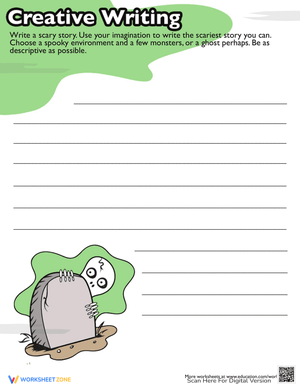
The open-ended prompt worksheets double as a quick formative check. Collecting one at the end of a writing period gives a clear picture of which students control all three moves without printed support. That takes less than two minutes per worksheet to assess and shapes the next day's instruction without requiring a formal rubric. The 4th grade writing a strong introduction worksheets set is most useful when teachers treat those final worksheets as a mid-unit snapshot rather than a summative grade — the goal is to catch gaps while the unit is still running.
Standard Alignment
The worksheets address CCSS.ELA-LITERACY.W.4.1, W.4.2, and W.4.3. Each standard requires a clear introduction, but each asks for something different in that opening paragraph. W.4.1 (opinion writing) requires students to state a clear opinion at the outset; W.4.2 (informative writing) requires a clearly introduced topic with a preview of the structure; W.4.3 (narrative writing) requires establishing a situation and orienting the reader before the story moves forward. The fill-in-the-blank templates identify their text type in the header, so students connect the consistent three-part structure to the specific purpose of each piece. The introduction is also the first place teachers and assessors look when evaluating whether a student understands their writing purpose — which is exactly why all three standards address it at the opening level.
Differentiating the Set Across a Mixed-Ability Class
For students who stall at the hook stage, the sorting worksheet functions as a reference card after the initial activity. Once students have categorized eight example hooks, they can return to that same worksheet and ask, "Which type do I want to try?" — a more manageable question than staring at a blank line. Students who move through the templates quickly can be pushed to write two complete introductions for the same prompt using different hook types, then write a sentence explaining which version works better and why. That metacognitive step extends the task without introducing new content.
The rewrite worksheets challenge fluent but imprecise writers more than any other activity in the set. Students who write with confidence but without intentional structure often produce introductions that feel energetic yet lack a clear topic sentence. The rewrite format requires them to name the specific problem before correcting it, which is a harder skill than simply drafting something new. For students working below grade level, the graphic organizer worksheets provide enough structure to get words on the page while still requiring the student to supply all the content. Across the set, the 4th grade writing a strong introduction worksheets activities range in demand far enough that teachers can assign different worksheets during the same class period without it being obvious that students are working at different levels.
Frequently Asked Questions
What is the difference between a hook and a topic sentence in a fourth-grade introduction?
The hook is the opening move — its only job is to make the reader want to keep reading. It does not need to explain the topic, state an argument, or preview the structure. The topic sentence usually comes at the end of the opening paragraph and does the opposite: it commits to the main idea or argument and tells the reader exactly what the essay covers. Students often draft the topic sentence first and then try to add a hook before it, which produces paragraphs where the two sentences feel unrelated. A more effective approach is to draft the hook, write the context, and let the topic sentence land last, where it naturally fits.
Do the worksheets address all three writing genres?
Yes. The three-part structure — hook, background context, topic sentence — applies to opinion, informative, and narrative writing. The fill-in-the-blank templates in the set are genre-specific: the sentence starters and guiding questions on each worksheet match the text type labeled at the top, so students see how the underlying structure stays consistent while the specific content and purpose shift. This makes the worksheets useful during dedicated genre units rather than only in a standalone writing-process lesson.
How do the open-ended prompt worksheets work as formative assessment?
Because those worksheets provide no sentence starters or labeled structure, they show directly which components a student controls independently. Collecting one mid-unit and again at the end gives a concrete before-and-after comparison — two actual student paragraphs sitting side by side — that is more useful at a writing conference or parent meeting than a rubric score on its own. The comparison shows specifically which move a student added between the two points in the unit, which makes next instructional steps concrete rather than general.
When in a unit should each type of worksheet appear?
Sorting and template worksheets work at the unit's opening, before students draft anything, because they establish the vocabulary and structure in a low-stakes format. Rewrite worksheets fit mid-unit, once students have seen the structure modeled and produced a rough draft of their own. Open-ended prompt worksheets belong at the end of a unit or as a check at the start of the next one. Using a 4th grade writing a strong introduction worksheets set in that sequence gives teachers a complete instructional arc from initial exposure to independent application without needing a separate lesson plan for each activity type.












 Interactive Worksheet Maker
 Quiz Maker
 Word Search Maker
 Crossword Puzzle Maker
 Word Scramble Generator
 Sentence Scramble Generator
 Handwriting Worksheet Generator
 Name Tracing Generator
 Fill In The Blank Generator




 BACK TOSCHOOL