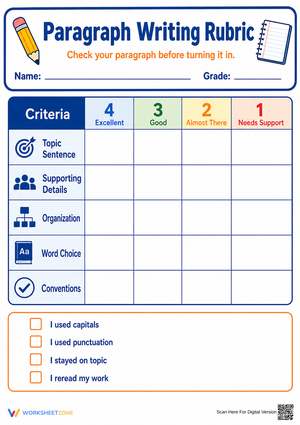
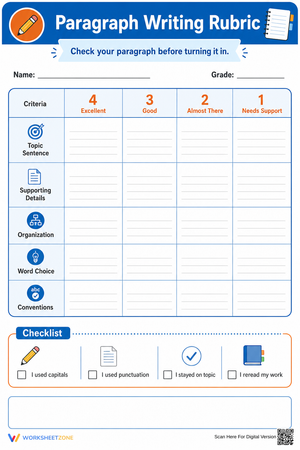
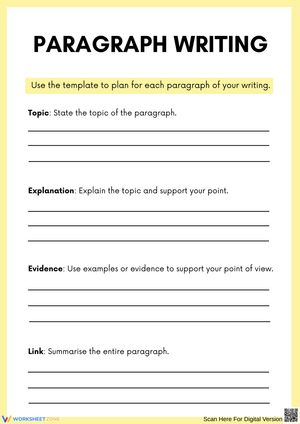
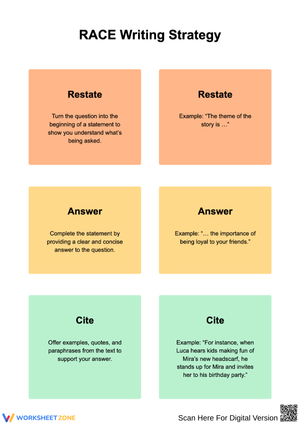
These paragraph structure printable worksheets for 4th grade address the specific transition point in elementary writing when teachers start expecting students to organize ideas — not just produce them. Fourth grade is when that organizational demand becomes explicit in both standards and in writing conferences: a paragraph is no longer any cluster of sentences but a unified structure where every sentence earns its place. This set gives students repeated, low-stakes practice with that structure through exercise formats that build toward independent drafting.
The Specific Skills Targeted
Each worksheet isolates one part of the paragraph-building process so students can work on that skill before they have to manage all of it at once. The set covers:
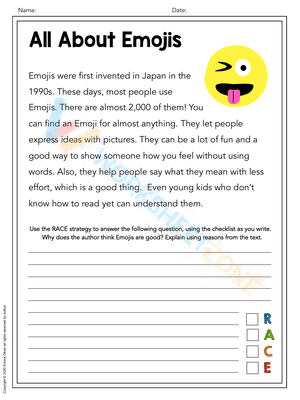
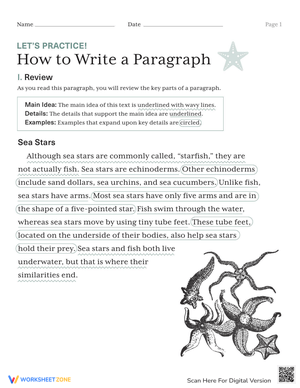
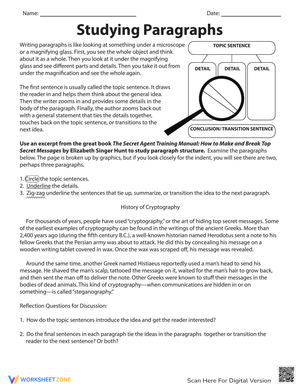
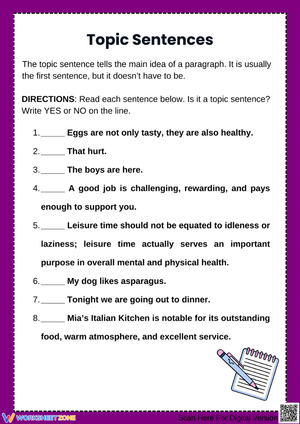
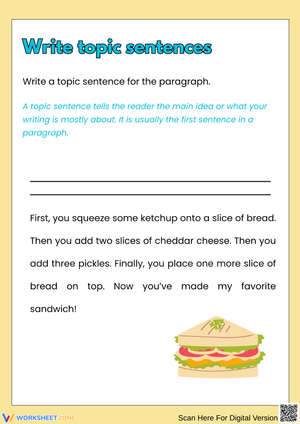
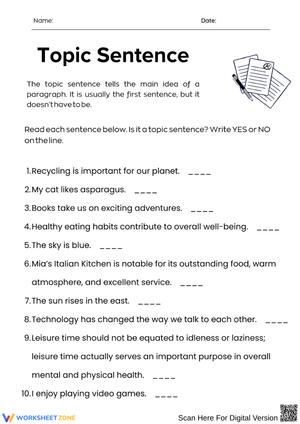
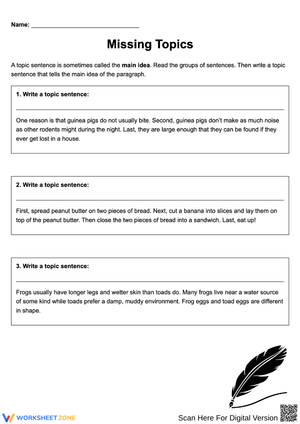
- Topic sentence identification: Students read a paragraph and underline the sentence that states the central claim. A common early exercise pairs a genuine topic sentence with three decoys — including an announcement sentence like "This paragraph is about the water cycle" — and students choose the strongest option, then explain their reasoning in writing.
- Detail selection and relevance: Students receive a topic sentence alongside six possible supporting details and sort them into "belongs" and "doesn't belong" columns. This exercise is one of the most diagnostic in the set — a student who keeps an off-topic detail often reveals they're responding to subject matter rather than logical relevance.
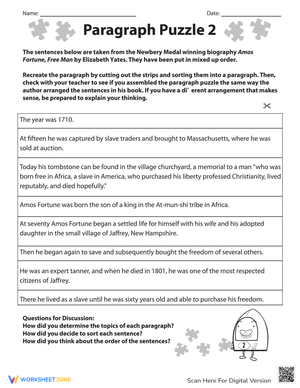
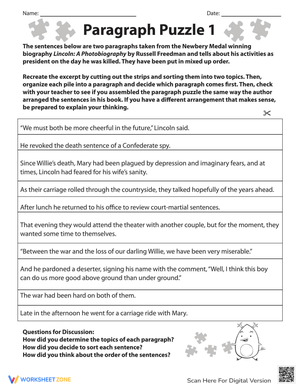
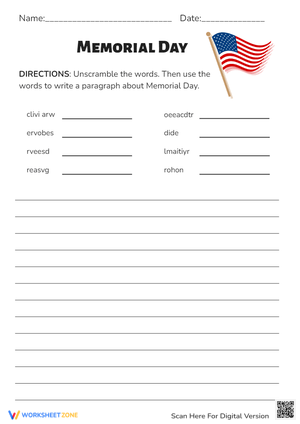
- Scrambled paragraph reordering: Sentences are presented out of sequence and students arrange them logically, then label each sentence with its structural role — topic, detail, or conclusion.
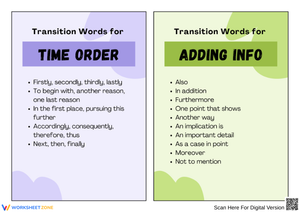
- Transition word practice: Fill-in-the-blank sentences where students choose from a word bank that distinguishes addition transitions ("in addition," "also") from contrast transitions ("however," "on the other hand") and cause-and-effect transitions ("therefore," "as a result").
- Concluding sentence writing: Students read a complete paragraph with the final sentence removed and write an ending that wraps the point without restating the topic sentence word-for-word.
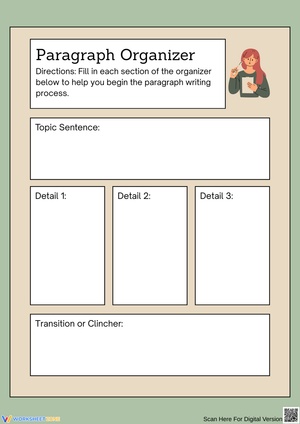
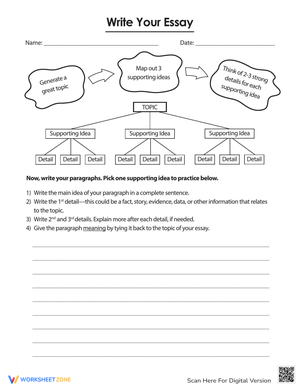
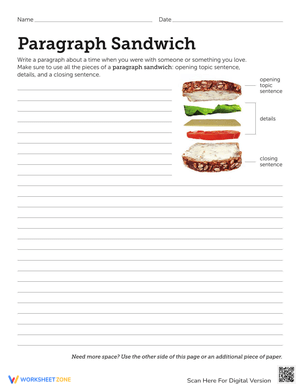
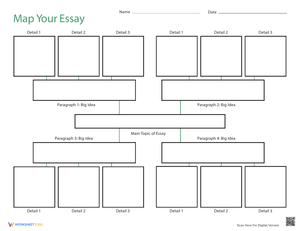
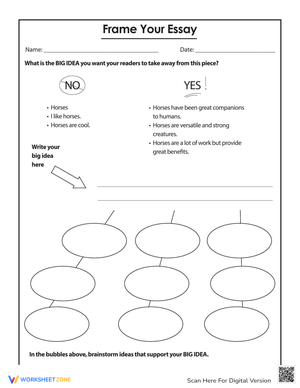
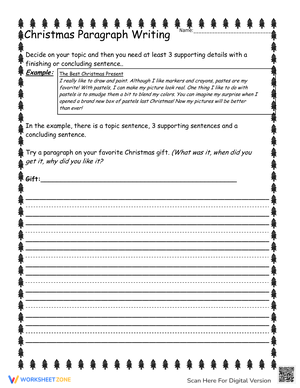
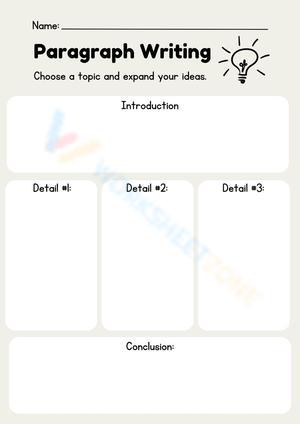
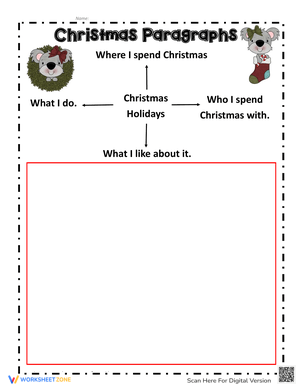
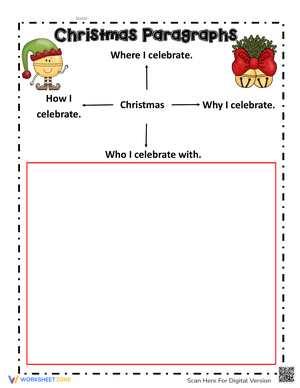
- Full-paragraph drafting: Using a graphic organizer, students plan and write a paragraph from a prompt — the culminating task where all previous practice comes together.
Fitting These Worksheets Into Your Writing Instruction
The identification and sorting worksheets work well as opening activities — ten minutes at the start of a writing block before students move into drafting. The scrambled paragraph exercise earns its spot especially on days when students are returning to writing after a break. Reorganizing something already written is lower-stakes than starting from blank space, and it gets students thinking structurally before they have to generate original ideas. It's a reliable way to fill the first ten minutes of a Monday writing block without asking students to produce anything from scratch.
The transition word worksheets fit naturally into a small-group rotation. While one group drafts independently, another can work through the word bank exercises without needing direct teacher facilitation. What does benefit from direct teacher presence is the concluding sentence work — that's where the most productive conversation happens. Students who write "In conclusion, dolphins are interesting animals because they are smart" are technically following the structure but haven't synthesized anything. Sitting with four or five students and pushing them past the restatement is a five-minute conversation that pays off in every paragraph they write afterward.
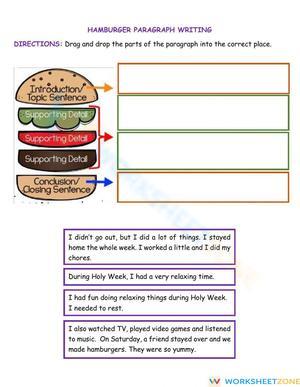
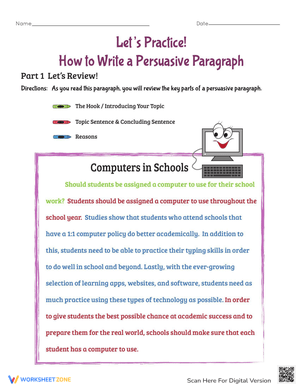
The colored-highlighter technique pairs well with the graphic organizer worksheets. Before students plan their own paragraph, have them annotate a mentor text: green for the topic sentence, yellow for each supporting detail, red for the concluding sentence. When the visual structure of a published paragraph sits next to a blank graphic organizer, the planning task becomes significantly more concrete for students who otherwise stall before writing a single word.
Where Students Go Wrong: Paragraph Errors to Address
The most persistent error at this grade level is the announcement topic sentence. Students who understand that a topic sentence "introduces the paragraph" interpret that as permission to write "I am going to tell you about ocean pollution." That sentence announces a subject but doesn't stake a claim — there's nothing for the supporting details to support. The identification exercises expose this error directly: one of the decoy options is always an announcement sentence, and students have to articulate why it's weaker than the actual topic sentence. That articulation is where the learning happens.
A subtler problem shows up in the detail-selection work. Students correctly identify that a paragraph about the solar system shouldn't include a sentence about a family pet, but they struggle to recognize when their three "different" supporting details are actually one idea restated three times. If the topic sentence is "Dolphins are intelligent animals," a student often produces: "Dolphins are very smart. They are clever. Scientists say dolphins have good brains." Three sentences, one idea, no actual evidence. What makes paragraph structure printable worksheets for 4th grade particularly useful here is that the sorting exercises surface this pattern before it calcifies into a writing habit — students have to evaluate sentences against a standard, not just generate them.
Transition word misuse is the third pattern worth anticipating. Students treat these words as neutral connectors and drop them in without attending to meaning: "The water cycle includes evaporation. Furthermore, fish live in the ocean." The word "furthermore" implies an additive relationship between logically related ideas — those two facts aren't building on each other. The fill-in-the-blank format forces students to select the word that correctly describes the logical relationship between two specific sentences, which surfaces exactly this misunderstanding in a way that an open-ended draft does not.
Standard Alignment
These resources address CCSS.ELA-LITERACY.W.4.2.A, which expects fourth graders to introduce a topic clearly and group related information in paragraphs. In classroom terms, this is the standard that separates brain-dump writing from organized writing. Students can have accurate content knowledge and still fail to meet W.4.2.A if that information is scattered across disconnected sentences with no controlling claim. The sorting and identification exercises target the "grouping related information" expectation specifically, giving teachers a clear line from the worksheet activity to the assessed standard.
The transition word worksheets address CCSS.ELA-LITERACY.W.4.2.C, which requires students to link ideas within categories of information using words and phrases. This standard is easy to gloss over in instruction — transition words feel like a stylistic concern, not a structural one — but W.4.2.C is what separates a list of facts from a paragraph that reads like a developed explanation. Both standards typically appear together in fourth-grade writing rubrics, so practicing them in tandem reflects how they're actually evaluated.
Tailoring the Worksheets for Different Writing Levels
Students who are still building confidence at the sentence level get the most from the identification and sorting worksheets before they attempt drafting. Providing a sentence frame for the topic sentence — something like "_______ is important because _______" — removes one cognitive obstacle without removing the structural thinking the task requires. On the graphic organizer worksheets, pre-filling the topic sentence so students focus only on generating and evaluating three supporting details keeps the practice meaningful while reducing the overall load on students who freeze when too many decisions arrive at once.
For students who produce structurally sound paragraphs and finish early, the revision layer is where the challenge lives. Ask them to return to a completed paragraph and replace every "also" with a more specific transition, or evaluate whether their concluding sentence genuinely synthesizes the three details or simply restates the opening. Stronger writers can also try writing two paragraphs on the same topic — one using only addition transitions and one incorporating a contrast — to see how transition choice shapes the reader's experience. The paragraph structure printable worksheets for 4th grade that include the graphic organizer are the most useful anchor for this group during revision, since the visible structure gives students something concrete to interrogate rather than vague feedback to apply blindly.
Frequently Asked Questions
How many sentences should students aim for in a standard paragraph?
Five to seven sentences is a workable range: one topic sentence, three supporting details, and one conclusion. The more useful classroom question, though, is whether each sentence does a distinct job — a six-sentence paragraph where two sentences say the same thing is weaker than a tight five-sentence paragraph where every sentence adds something new. When students start chasing a sentence count, they pad with restatements. Being explicit about that distinction with the class saves a lot of correction in later units.
At what point should students work without the graphic organizer?
Most students are ready to write without it once they can consistently identify all three structural parts of a paragraph in someone else's text — meaning they've internalized the structure rather than just following a template. For students who still produce off-topic details or missing conclusions after regular practice, the organizer should stay in the toolkit regardless of how far into the year it is. There's no developmental milestone that makes planning tools unnecessary.
Do these exercises apply to opinion writing, or only informational?
The sorting and identification worksheets use informational paragraphs as their primary context, which aligns with W.4.2. The structural principles — claim, support, conclusion — transfer directly to opinion writing, where the topic sentence becomes a stated position and the supporting details become reasons. Narrative paragraphs are structurally different enough that the sorting and identification exercises don't translate as cleanly, though the transition word work carries over across all three modes.
How do these fit alongside a published writing curriculum?
These paragraph structure printable worksheets for 4th grade work as supplemental practice during the revision and editing phases of most writing units, or as standalone warm-up activities at the start of writing blocks. If a unit is moving into informational writing, pulling the topic sentence and detail-selection worksheets during prewriting gives students a structural anchor before they encounter the longer demands of the unit. They fill the gap between "I understand the concept" and "I can execute it consistently" — which is exactly the gap that stalls most fourth-grade writers.












 Interactive Worksheet Maker
 Quiz Maker
 Word Search Maker
 Crossword Puzzle Maker
 Word Scramble Generator
 Sentence Scramble Generator
 Handwriting Worksheet Generator
 Name Tracing Generator
 Fill In The Blank Generator




 BACK TOSCHOOL