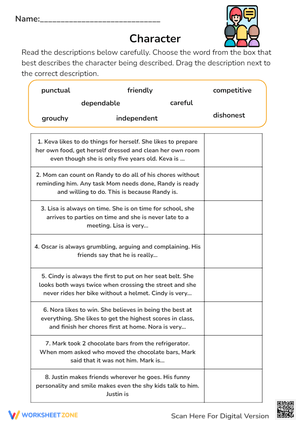
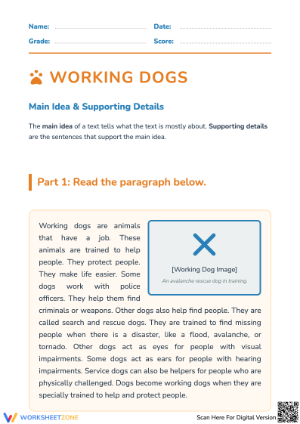
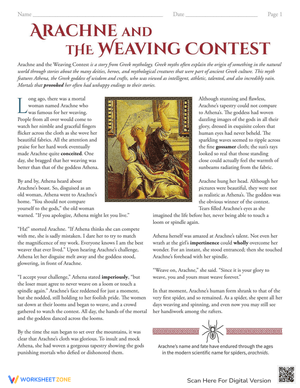
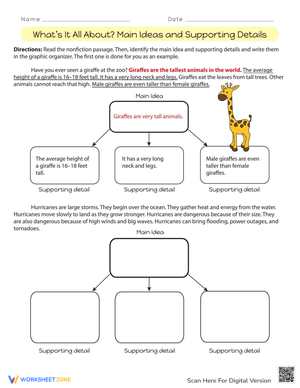
These 4th grade relevant details printable worksheets give teachers a direct way to address one of the most persistent writing problems at this grade: students who know plenty of facts about a topic but haven't yet learned to distinguish which facts actually serve a focused response. Each worksheet in the set targets a specific part of that decision-making process — sorting relevant and irrelevant details, choosing the strongest support for a topic sentence, or adding precise evidence to an incomplete paragraph — making them easy to slot into mini-lessons, writing centers, and revision blocks without requiring a separate instructional unit.
The Specific Skills Each Worksheet Targets
The core task across the set is asking students to evaluate whether a detail earns its place in a piece of writing. That sounds simple; in practice, it breaks into several distinct moves that Grade 4 students need to practice separately before they can apply them together inside a full draft.
- Relevant-versus-irrelevant sorting: Students read a topic sentence and a list of possible details, then mark which ones support the main idea and which ones don't.
- Best-evidence selection: Given three or four options, students choose the detail that most directly answers the prompt — not the most interesting one, not the most dramatic one, but the one that does real work for the topic sentence.
- Paragraph completion: Students read a paragraph with a topic sentence and one or two existing details, then add two more that fit without restating what's already there.
- Revision-style tasks: Students cross out the sentence in a paragraph that doesn't belong, then write a brief explanation of why it's off-topic.
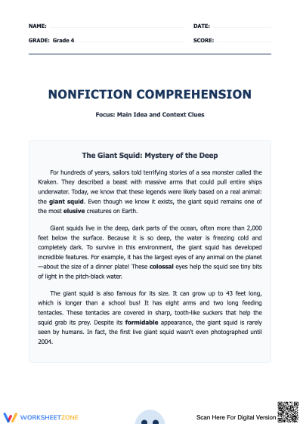
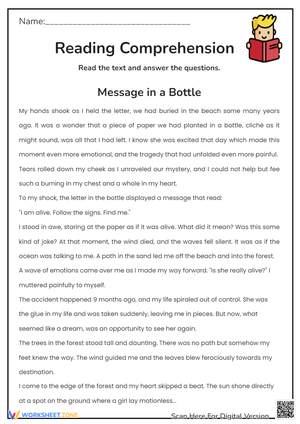
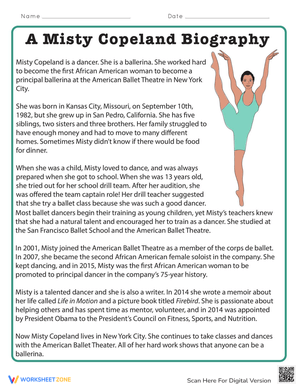
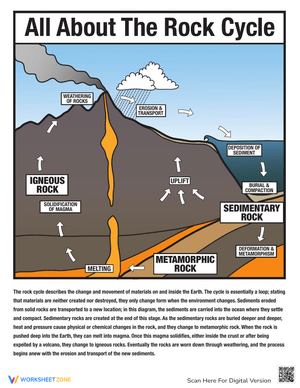
- Text-connected tasks: Students read a short passage and identify two or three details that support a stated main idea — the same evaluative skill, applied through reading rather than writing.
The revision tasks deserve particular attention. Identifying an irrelevant sentence in someone else's paragraph is harder than it sounds, because students must hold the main idea in working memory while reading each sentence and checking it against that anchor. That sustained attention is exactly what constructed-response assessments require, and it's a habit students build through repeated low-stakes practice — not through a single lesson.
Mistakes Students Make That These Worksheets Help You Catch
The most consistent error in Grade 4 relevant-details work is what might be called topical drift: a student includes a detail that's connected to the general subject but doesn't support the specific claim. A student writing about how monarch butterflies survive migration will correctly cut a sentence about their wing colors being beautiful, but will often leave in a sentence about declining monarch populations — accurate, related to the same animal, but off-topic for a paragraph focused on migration survival strategies. That detail feels relevant because it shares the same subject category. What students don't yet see is that relevance is defined by the topic sentence, not by the broader topic.
A second error surfaces during paragraph-completion tasks. Students who understand the concept will add two strong supporting details — and then add a third that essentially restates one of the first two in slightly different words. They've hit the quantity target but lost sight of whether each sentence is doing new work for the reader. Asking students to number their added details and explain what each one contributes that the others don't will surface this pattern before it becomes a habit in longer drafts.
Building These Worksheets Into Your Instructional Week
The strongest results come from brief, frequent practice tied to whatever writing unit is already running. During an informative writing unit, a relevant-versus-irrelevant sorting worksheet works well as the Monday warm-up — five minutes before writing workshop opens, students read a topic sentence connected to the class's current content area and evaluate six possible supporting details. That activation sets up the lesson without consuming it.
Midweek, a paragraph-completion worksheet fits naturally as a literacy center task. Students who finish early can compare their chosen details with a partner and talk through any disagreements before the group debrief. Friday is a good time for revision-style work: students mark and explain an off-topic sentence in a sample paragraph, which makes the transition to revising their own drafts the following Monday more concrete and less abstract. Because 4th grade relevant details printable worksheets follow a consistent visual format across the set, students spend their attention on the thinking rather than on orienting to a new routine each time.
Standard Alignment
The worksheets align directly to CCSS.ELA-LITERACY.W.4.2b, which asks Grade 4 students to develop topics using facts, definitions, concrete details, and examples. In classroom terms, that standard isn't only about gathering information — it's about selecting it. A student who writes five sentences about rainforests but includes two that drift into unrelated tropical territory hasn't met the standard, even if every sentence is factually accurate. These 4th grade relevant details printable worksheets put the selection decision at the center of every task, which is exactly where W.4.2b places it.
The text-connected tasks also support CCSS.ELA-LITERACY.RI.4.3, which asks students to explain relationships between events, concepts, or steps in a text. When students pull supporting details from a short passage to defend a stated main idea, they practice the same analytical move that standard targets on the reading side — making the set useful during reading instruction as well as writing.
Adapting the Set for Different Student Levels
For students who struggle to hold a topic sentence in mind while evaluating individual details, write the topic sentence in bold at the top of their copy and ask them to point to it before marking each option. That physical prompt reduces the working-memory demand of the task without changing what the student is actually asked to decide.
Students who finish sorting tasks quickly can go further by writing a one-sentence explanation for each irrelevant detail — not just that it doesn't belong, but which specific word in the topic sentence it fails to connect to. That move pushes toward the analytical writing Grade 4 state assessments increasingly ask for. For students who need more support with the written explanation portions, a sentence frame such as "This detail does not belong because ___" keeps the focus on the reasoning rather than on sentence construction.
Frequently Asked Questions
Do these worksheets work for both informative and opinion writing?
Yes. The skill transfers across writing types. In informative writing, students choose details that explain or describe. In opinion writing, they choose details that support a reason. The sorting and selection tasks within the set use both formats, so students see early that "relevant" shifts meaning depending on the purpose of the piece — a useful distinction before standardized writing prompts ask them to navigate both.
How many practice tasks should students complete before applying the skill independently in their own writing?
Most students need three to five sorting or selection tasks before the evaluative thinking starts to feel automatic. Students still guessing after five worksheets are usually not confused about the concept — they're having difficulty holding the main idea in memory while reading each detail. At that point, small-group think-aloud work is more efficient than additional independent practice, because the bottleneck is working memory, not understanding.
Are these useful for state test preparation?
The 4th grade relevant details printable worksheets align closely with the format of constructed-response items on state ELA assessments, where students must support a claim with evidence and recognize information that weakens or distracts from a response. The revision tasks are especially transferable — asking students to cross out an off-topic sentence and justify that decision in writing mirrors what those assessment items require, and it gives teachers a clear window into whether students are reasoning through the skill or just guessing.












 Interactive Worksheet Maker
 Quiz Maker
 Word Search Maker
 Crossword Puzzle Maker
 Word Scramble Generator
 Sentence Scramble Generator
 Handwriting Worksheet Generator
 Name Tracing Generator
 Fill In The Blank Generator




 BACK TOSCHOOL