4th grade sequencing printable worksheets give teachers a direct line to one of the most portable skills in ELA — the ability to track how events unfold, recognize what connects them causally, and explain why the order matters. Fourth graders are ready for more than basic event listing; they can distinguish key events from minor details, notice transition language in context, and apply that same logic when planning narratives or writing summaries. The resources here address all of that in formats flexible enough to fit anywhere in the school day.
What These Worksheets Ask Students to Do
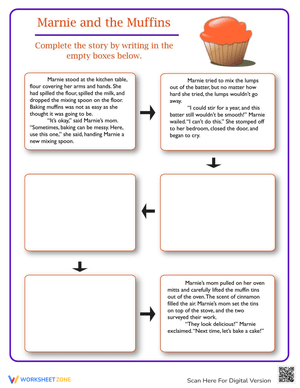
The set covers the range of sequencing tasks fourth graders meet across ELA. Some worksheets ask students to read a short narrative passage and number the key events in order, specifically stopping them from listing every sentence and forcing them to select. Others present scrambled sentences from a paragraph and ask students to reassemble them — a task that naturally surfaces how transition words do structural work. Several worksheets focus on procedural and informational text, where students order steps in a process and then explain why a step placed out of order would cause a problem.
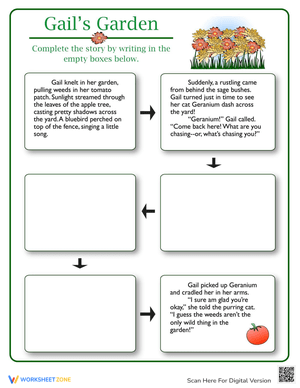
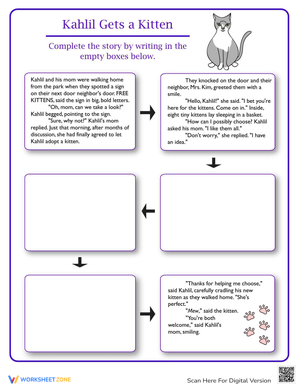
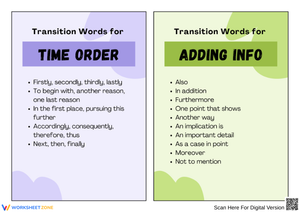
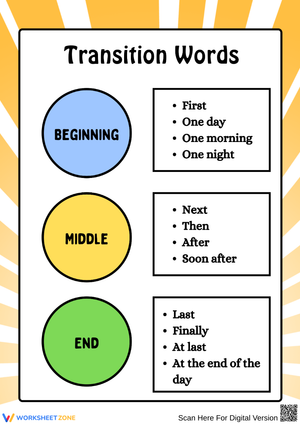
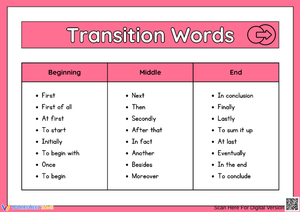
Written response tasks run through the set. Students don't only number boxes — they use sequence language (first, next, after that, finally) to write a short retelling or explain their ordering decisions in complete sentences. That shift from mechanical numbering to written explanation is where most of the learning lives, and these worksheets push students toward it consistently.
Student Errors Teachers Should Anticipate Before They Take Root
The most persistent error in fourth-grade sequencing work is event inflation — students treat every sentence in a passage as equally important and try to list all of them, rather than selecting the events that actually move the story or process forward. A student reading a passage about a school fair might correctly identify "the students set up the booths" and "the fair opened at noon," but also include "the gym smelled like popcorn" as a sequenced event. Several worksheets in the set ask students to label events as major or minor before they order them, which interrupts that habit early.
A second pattern is numbering events correctly on the worksheet but then writing a summary in jumbled order. Students have learned to fill in the boxes, but they haven't transferred the sequence into their own language. That gap shows up most clearly in written responses, which is precisely why these worksheets don't stop at ordering — they require students to write the sequence in their own sentences using transition markers.
In procedural text specifically, students often resist causal order. They understand that narrative events have a logical sequence because one thing emotionally causes another, but they find it less obvious in process text. A student might flip two steps in a science procedure because both seem equally doable in either order. Worksheets that ask students to explain what would go wrong if a step were moved help build that causal reasoning explicitly rather than assuming it develops on its own.
Where These Worksheets Fit Across the Week
The most practical entry point is as a warm-up before a reading comprehension lesson. Five to seven minutes on a short event-ordering task — fiction on days when the class is reading a story, procedural text when you're heading into informational reading — primes students to look for sequence structure in whatever comes next. That brief activation costs almost no setup and pays off in sharper attention during the lesson itself.
Small-group time is another strong fit. Pull together students who can number events but can't retell them and work through a worksheet together, pausing at each event to ask "How do you know this comes before that one?" The conversation is often more instructive than the worksheet itself, and the written task at the end gives a quick sample of each student's thinking without requiring a separate assessment.
One technique worth building in: before students mark answers or begin writing, have partners say the sequence aloud using first, next, then, and finally. That thirty-second oral run-through catches order problems before they get written down, and students who hear themselves say an event out of order usually self-correct before any intervention is needed. 4th grade sequencing printable worksheets also work well as exit tickets after a read-aloud or mini-lesson — a four-event sorting task takes under five minutes and shows immediately whether students tracked the key events from that day's instruction.
Stretching and Supporting Students Across the Same Worksheet Set
What makes 4th grade sequencing printable worksheets practical for mixed-ability classrooms is that the core thinking task stays consistent even when the level of support changes. For students who struggle with text volume, use the shorter narrative worksheets and focus them on only the three or four most obvious events. Reducing the passage length keeps the sequencing demand intact while cutting the reading load that causes some students to disengage before the task even begins.
For students who need more concrete support with procedural text, pair the worksheet with a physical run-through: have them act out the steps or arrange cut-apart sentences before completing the written task. That kinesthetic step often clarifies what the text alone doesn't make visible.
Students working above grade level benefit from open-response worksheets that ask them to justify their event ordering or rewrite a scrambled passage into a polished piece. Removing the transition word bank from those worksheets — asking students to supply their own rather than choosing from a list — shifts the task from recognition to production. A further extension: after finishing a worksheet, students write one event that could logically appear between two existing ones and argue where it belongs in the sequence.
Standard Alignment
These worksheets align most directly to CCSS.ELA-LITERACY.RI.4.3, which asks students to explain events, procedures, ideas, or concepts in an informational text — including what happened and why. That phrase "and why" marks the developmental leap from Grade 3 to Grade 4: fourth graders are expected to articulate the causal logic connecting events, not just list them in order. The procedural text worksheets in this set address that standard directly, asking students to explain what would happen if a step were displaced rather than simply numbering the steps correctly.
Narrative sequencing worksheets connect to CCSS.ELA-LITERACY.RL.4.3, which requires students to describe a character, setting, or event in depth using specific text details. Accurate sequencing is a prerequisite for that depth — students can't describe an event fully if they've misread its place in the story. The worksheets that close with short written responses also support CCSS.ELA-LITERACY.W.4.3, particularly the requirement that student narratives include clear event sequences and use transitional words and phrases to signal order.
Frequently Asked Questions
Do these worksheets cover informational text as well as fiction?
Yes, and that range is intentional. The set includes narrative event-ordering worksheets and procedural sequencing worksheets that draw from informational text. Both text types appear on Grade 4 assessments, and the thinking required for each is meaningfully different — narrative sequencing hinges on plot cause-and-effect, while procedural sequencing depends on operational logic. Students need practice with both separately before they can transfer the skill across text types with confidence.
When in a sequencing unit should these worksheets be introduced?
The event-ordering worksheets work well in the first week, directly after whole-group modeling. The open-response worksheets — where students write the sequence in their own sentences — are better saved until students have had at least two or three days of ordering practice. Moving to written explanation too early tends to produce more anxiety about the writing than engagement with the sequencing itself. Build mechanical fluency first through the ordering tasks, then shift to the written response format once students are comfortable with the core skill.
How do these worksheets connect to writing instruction?
4th grade sequencing printable worksheets connect to writing most directly when placed just before narrative drafting or summary writing. Students who have recently ordered events in a passage — and explained that order in their own sentences — enter their own drafts with a clearer feel for how transition language structures a piece. Several worksheets in the set close with a writing extension that asks students to add a missing event or rewrite a scrambled passage, making the link between reading and writing explicit rather than leaving it to chance.












 Interactive Worksheet Maker
 Quiz Maker
 Word Search Maker
 Crossword Puzzle Maker
 Word Scramble Generator
 Sentence Scramble Generator
 Handwriting Worksheet Generator
 Name Tracing Generator
 Fill In The Blank Generator




 BACK TOSCHOOL