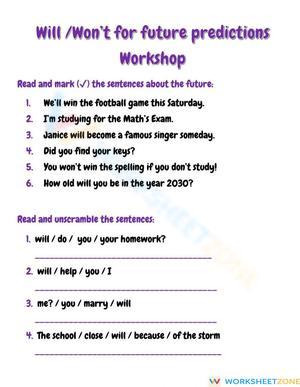
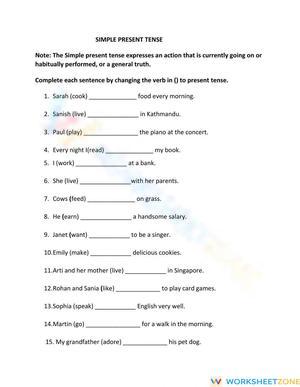
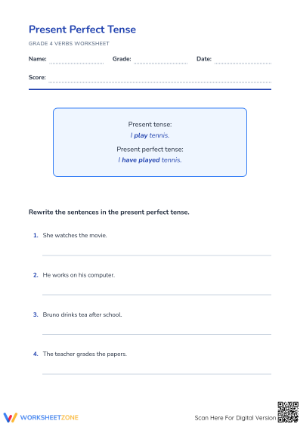
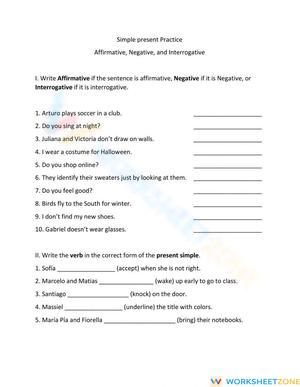
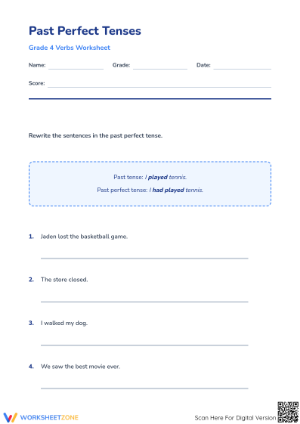
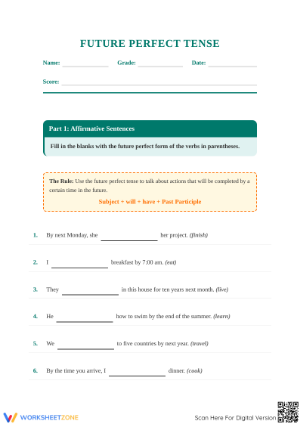
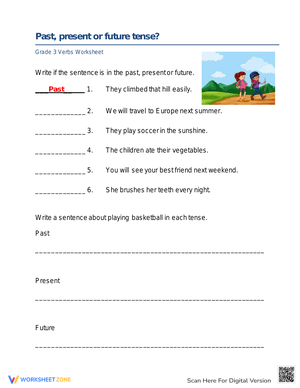
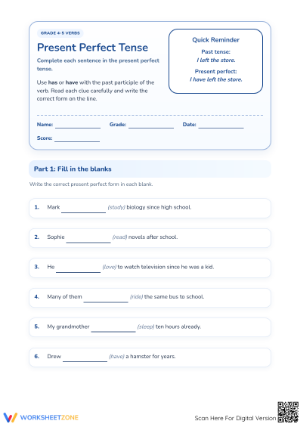
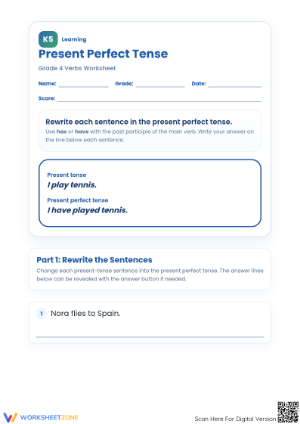
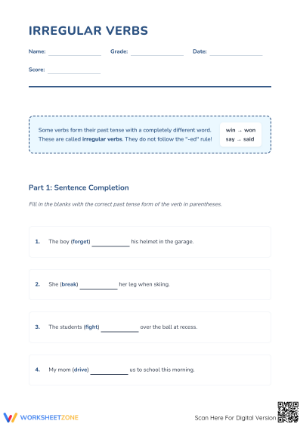
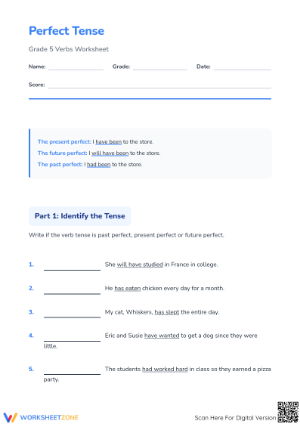
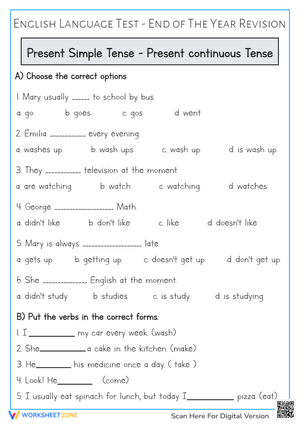
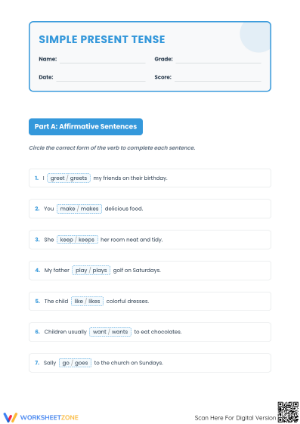
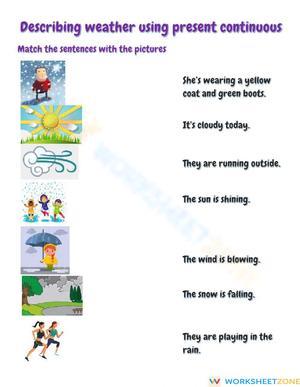
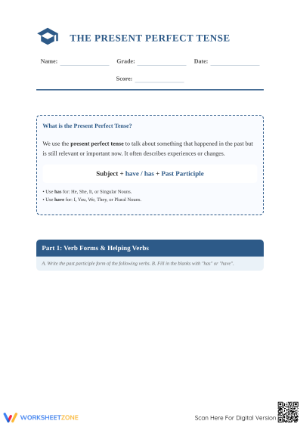
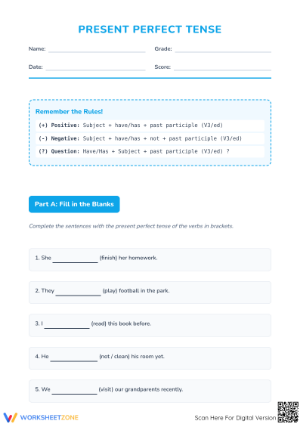
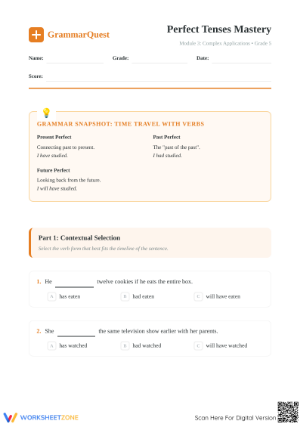
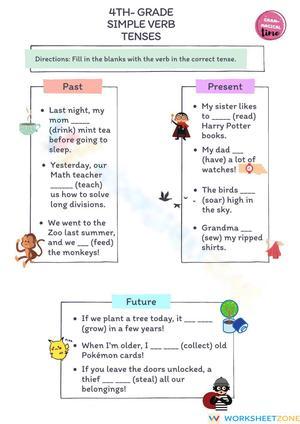
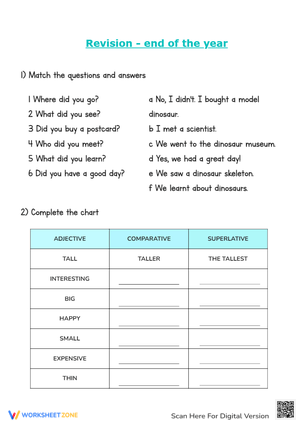
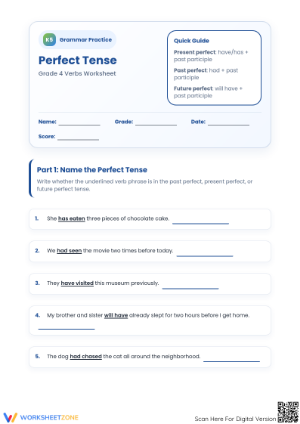
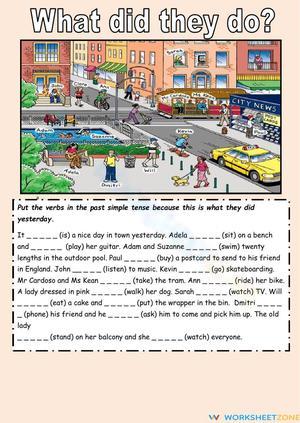
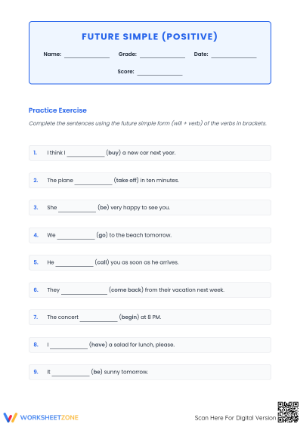
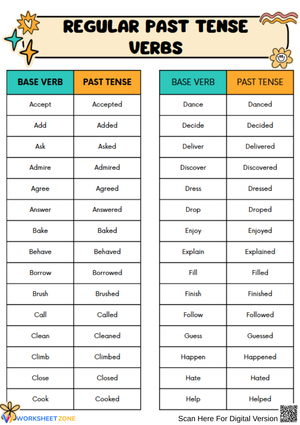
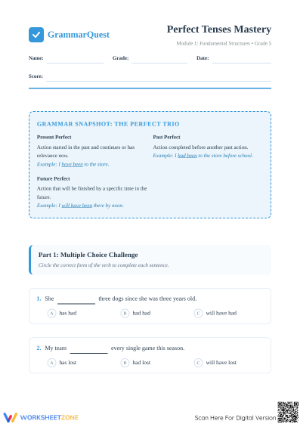
These tenses worksheets for 4th grade give teachers a focused set of printable practice resources targeting the three verb skills that surface most often in fourth-grade writing instruction: progressive tense formation, irregular past-tense forms, and tense consistency across multi-sentence paragraphs. The collection moves from identification exercises to paragraph-level editing tasks, so the same set works during early instruction and again as a revision-focused review before a major writing project.
The Specific Skills Targeted
Fourth grade is the year simple tenses stop being enough. ELA expectations shift students from "I walked" toward "I was walking" — and that construction, which requires a helping verb paired with a present participle, generates more confusion than almost anything else in the grammar strand. The progressive forms ask students to track two verb components at once, and many fourth graders initially treat the helping verb as optional or interchangeable. These worksheets address that directly.
The set covers three skill areas in depth:
- Progressive tense formation — students identify helping verbs, label tense type, and rewrite sentences to shift between simple and progressive forms
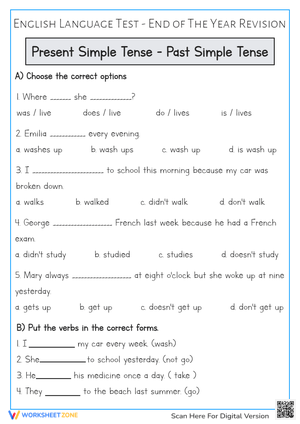
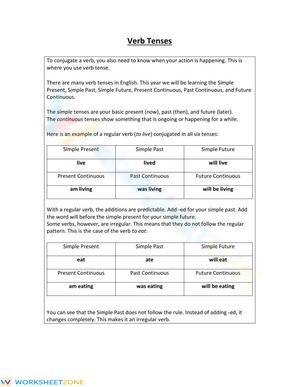
- Irregular verb practice — fill-in and rewrite tasks targeting high-frequency forms: go/went, catch/caught, see/saw, run/ran, think/thought, and the full conjugation of to be
- Tense consistency editing — each worksheet presents a short paragraph with deliberate tense shifts baked in; students mark the errors and produce a corrected version
Mistakes Students Make That These Worksheets Help You Catch
The most consistent pattern in fourth-grade writing is what might be called the progressive-to-simple slip. A student writes "She was running to the gate and drops her bag." The past progressive opener is correct; the shift to simple present at the end is the error — and students make it constantly, because it mirrors natural speech patterns. The editing tasks in this set are built around exactly this kind of drift rather than invented tense errors that don't actually appear in real student work.
Progressive tense formation produces its own category of errors separate from consistency. Students who understand that a helping verb is required will still write "She is runing" or "He was droped the ball" — confusing the present-participle construction with a simple past ending. These aren't wild guesses; they're systematic misapplications of rules students do know. The identification tasks help teachers see exactly where the breakdown is occurring: the spelling of the participle, the choice of helping verb, or the participle form itself.
Irregular verbs follow a reliable diagnostic pattern. The verb catch is one of the most useful to watch: students who haven't internalized the irregular form write "catched," especially when surrounding verbs follow the regular -ed pattern ("He walked to the fence and catched the ball"). Grouping irregular verbs in sentence context — rather than drilling them as isolated lists — surfaces this error and gives teachers a clearer picture of what actually needs re-teaching.
Lesson-Planning Ideas to Get the Most From These Worksheets
The most effective sequence is to introduce one tense category explicitly before students touch the corresponding worksheet. A brief kinesthetic moment works well here: ask students to stand up and demonstrate the difference between "I jump" (a single completed action) and "I am jumping" (an ongoing motion). After two minutes of that, the identification exercise feels intuitive rather than abstract. Move to the editing tasks only after students can reliably form the tense in controlled sentences — don't front-load the hardest task.
The tenses worksheets for 4th grade fit naturally into the ten-minute windows that accumulate around transitions — the gap before students leave for specials, or the Monday morning slot after morning meeting while attendance is being taken. An editing task with one short paragraph and three planted errors is exactly the right scope for those moments. Students aren't learning a new skill; they're reinforcing one already introduced, which is a legitimate use of otherwise fragmented time.
For literacy centers, the fill-in and sorting exercises work well as partner tasks — two students working through an irregular verb activity will catch each other's reasoning errors in ways solo practice doesn't. The paragraph-editing worksheets are better assigned individually first, so each student commits to their own correction before any partner comparison. Reversing that order tends to produce one student's thinking with two names on it.
Standard Alignment
CCSS.ELA-LITERACY.L.4.1 is the direct anchor for this set. The progressive-tense expectation is spelled out explicitly within that standard: students must form and use past, present, and future progressive tenses. Tense consistency falls under the same standard's verb-usage requirements, and irregular verb control is listed as a specific fourth-grade benchmark within the conventions strand.
In classroom terms, L.4.1 is most often addressed during the grammar component of the writing block rather than as a separate grammar period. The editing tasks in this collection function as a transition point between explicit instruction and independent writing application — which is precisely how most district pacing guides position grammar work within the writing workshop model.
Adjusting the Worksheets for a Range of Learners
For students who are still solidifying simple tenses, the progressive-tense identification tasks can be assigned without the rewriting component. Asking those students to circle the helping verb and underline the main verb provides structured practice without overloading working memory. The rewriting portion comes once they can identify the construction reliably.
Students who already control progressive forms can extend any editing task by writing their own three-to-four-sentence paragraph using the same subject, a consistent tense of their choice, and at least one irregular verb. That extension doesn't require separate materials — it just adds a generation step after the correction work. The tenses worksheets for 4th grade editing tasks lend themselves to this kind of extension because the corrected paragraphs give students a working model to respond to rather than a blank page.
The irregular verb worksheets tier naturally by frequency. Every student works with the highest-priority forms first — was/were, went, saw, did, ran. Less common irregular verbs like wove, shook, and clung can be held for students who are ready to go further without disrupting pacing for the rest of the class.
Frequently Asked Questions
What verb tenses are fourth graders expected to know?
Simple past, present, and future tenses are generally expected to be in place entering Grade 4, with the focus on consolidation and correct use in writing. The new fourth-grade targets are the six progressive forms — past, present, and future progressive — along with tense consistency across a paragraph and control of frequently used irregular verbs. Most Grade 4 assessments evaluate these skills through editing tasks and short writing samples rather than isolated identification drills.
How do I explain progressive tenses without losing students?
Lead with the idea of ongoing action and anchor it physically before touching paper. Have a student walk across the room and ask the class: "What is she doing right now?" ("She is walking.") Then have her stop and ask what she did. ("She walked.") That contrast — action in progress versus action completed — is the core concept. After that, the helping verb behaves like a signal flare: it tells the reader the action is still happening. A timeline drawn on the board with a shaded span for progressive tenses and a point marker for simple tenses reinforces the same idea visually for students who need a second entry point.
How do the editing worksheets work for students who read slowly?
The paragraph-editing format in the tenses worksheets for 4th grade set uses short paragraphs — typically four to six sentences — so the reading load stays manageable for students who find longer passages overwhelming. If a student freezes when encountering an unfamiliar paragraph, reading the passage aloud together before assigning independent work removes that barrier. The objective is tense editing, not a cold-reading assessment, and keeping that purpose clear helps slower readers stay focused on the grammar task.
Which irregular verbs should teachers prioritize?
Start with the verbs students use most often in their own writing and encounter most often in assigned reading. The full conjugation of to be is the single highest-priority item — was and were appear in nearly every progressive tense construction. After that: go/went, see/saw, do/did, run/ran, catch/caught, and think/thought. Those eight verbs cover the irregular forms that appear most frequently in Grade 4 narrative and informational writing, which means mastering them delivers the most immediate return across all writing tasks.












 Interactive Worksheet Maker
 Quiz Maker
 Word Search Maker
 Crossword Puzzle Maker
 Word Scramble Generator
 Sentence Scramble Generator
 Handwriting Worksheet Generator
 Name Tracing Generator
 Fill In The Blank Generator