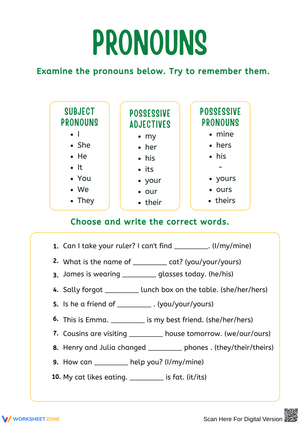
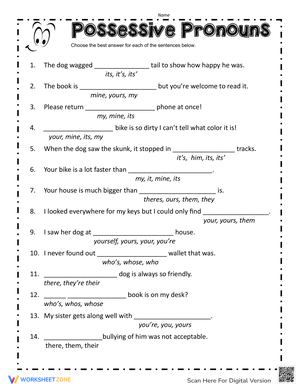
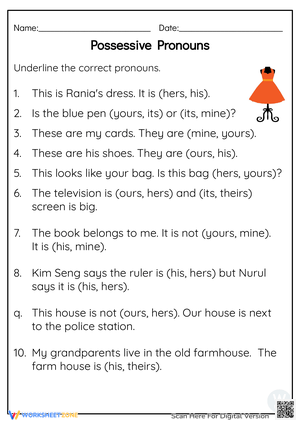
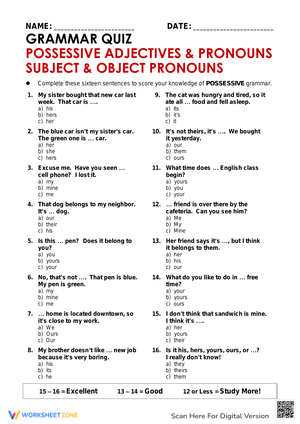
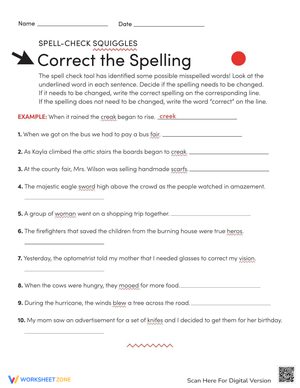
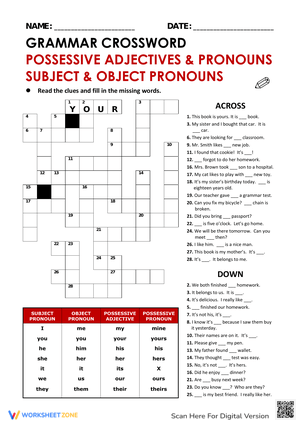
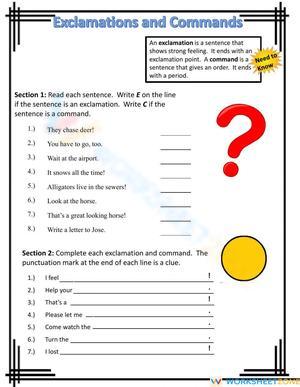
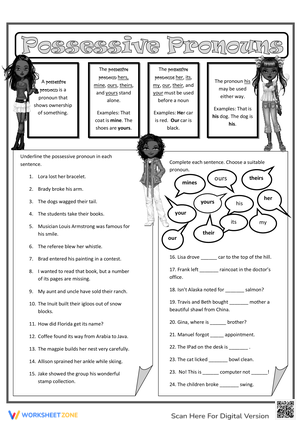
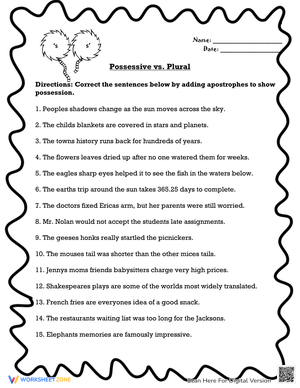
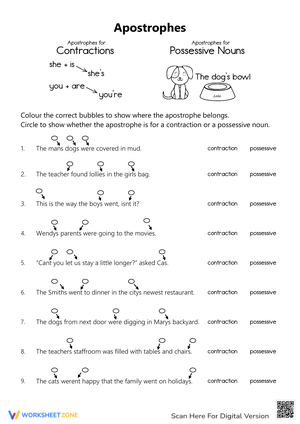
These punctuation printable worksheets for 4th grade focus on the three mechanics clusters that define fourth-grade writing development: dialogue punctuation, compound sentence commas, and apostrophes with possessive nouns. Each worksheet isolates one of those skills, giving teachers a direct, assignable resource that drops into a lesson without requiring additional explanation or setup.
Skills Each Worksheet Targets
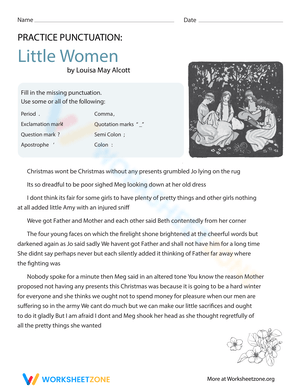
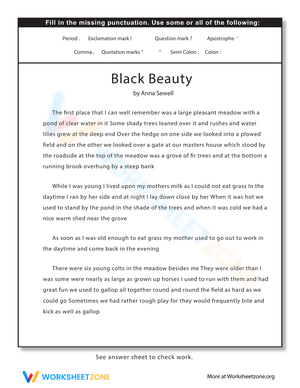
The dialogue worksheets ask students to rewrite broken dialogue lines, insert missing commas and end marks, and identify whether punctuation belongs inside or outside the closing quotation mark. Students work through all three speaker-tag positions, each carrying its own punctuation pattern:
- Tag before the quoted words: She said, "Come here."
- Tag after the quoted words: "Come here," she said.
- Tag interrupting a longer statement: "Come here," she said, "right now."
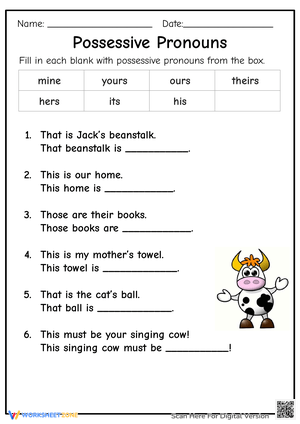
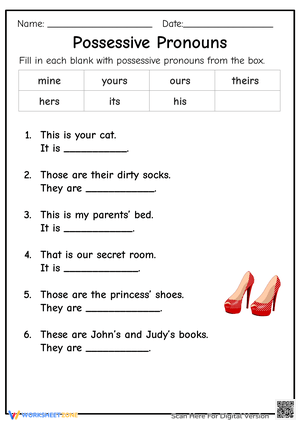
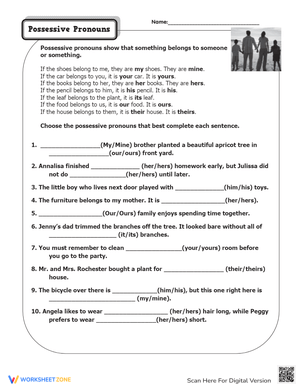
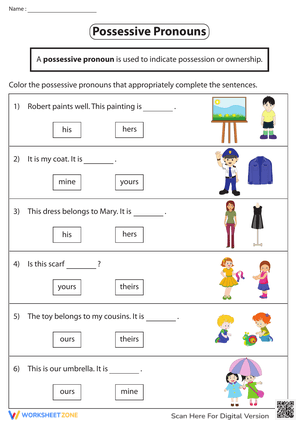
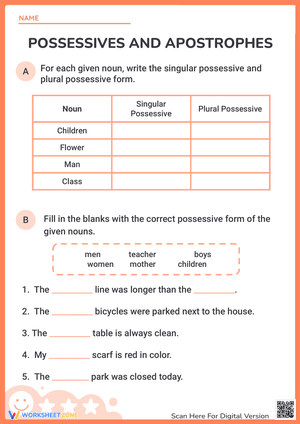
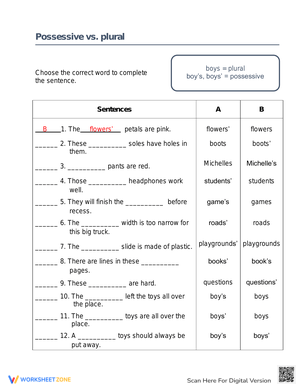
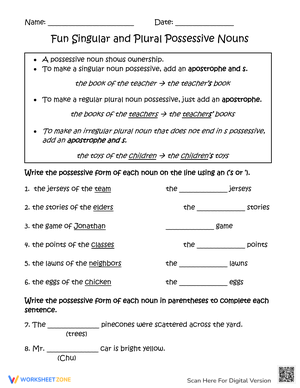
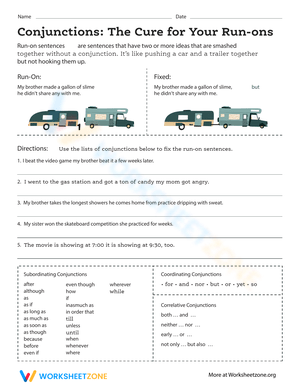
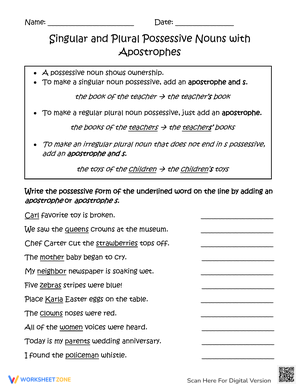
The compound sentence worksheets give students two related simple sentences and ask them to combine the pair using a comma and a coordinating conjunction. A separate group of exercises presents already-combined sentences — some correct, some with comma splices — and asks students to mark and fix the errors. The apostrophe worksheets move from contractions through singular possessives to plural possessives, ending with exercises that distinguish between forms like the child's book and the children's books.
Error Patterns to Watch for and Correct
The most persistent dialogue error is punctuation placed outside the closing quotation mark. A student writes She said, "Let's go". — the period lands right next to the quote, but outside it. Both writer and peer editor can read the sentence without noticing anything wrong, which is exactly why it survives revision. Naming this error explicitly before students sit down with a dialogue worksheet makes a real difference in what they look for when they self-check.
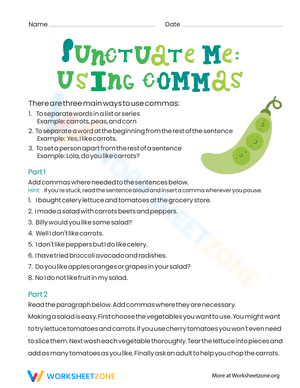
Compound sentence comma errors run in both directions. Some students omit the comma entirely, producing run-ons. Others — usually students who have absorbed the rule "put a comma before 'and'" without the full condition — start inserting commas before every "and" regardless of sentence structure. She ran fast, and won the race is a common result. Worksheets that present correct and incorrect examples side by side help students build the conditional understanding: the comma belongs before a coordinating conjunction only when both sides are independent clauses.
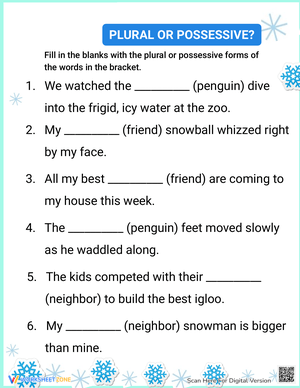
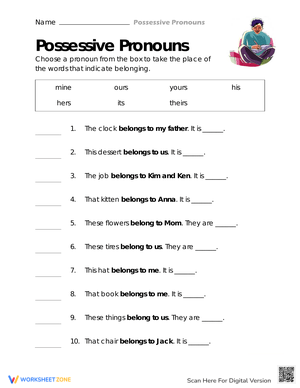
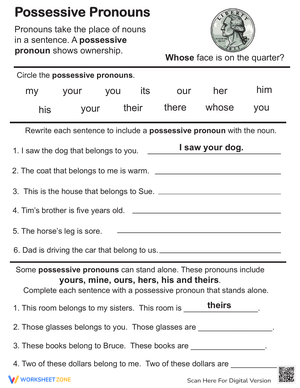
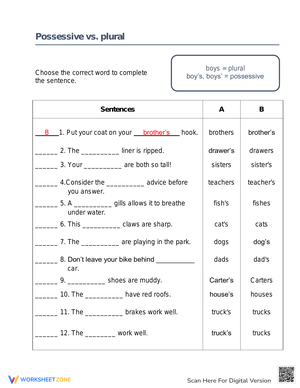
Plural possessives are where punctuation printable worksheets for 4th grade show the most persistent, class-wide error clustering. Students who write the dog's correctly will default to the dogs's when there are multiple dogs — they know the apostrophe belongs somewhere, but they have not internalized that a noun already ending in s takes only an apostrophe at the end, nothing after it. Exercises that place both the singular and plural forms in a sentence context, rather than as isolated nouns on a blank line, give students the contrast they need to distinguish the two rules.
Building These Into Your Lesson Planning
The most consistent classroom use is a Monday warm-up tied to the previous week's grammar instruction. Students pick up a worksheet when they arrive, work through it for five to seven minutes, and then the class checks answers together before moving into the writing block. That gap between initial instruction and practice — a few days rather than the same class period — does more for long-term retention than repeating the mini-lesson immediately after teaching it. Spaced retrieval is not complicated to arrange when the materials are already prepared and targeted to one skill.
Teachers running literacy centers can place one worksheet per station with a self-checking answer key posted at the station. The single-skill format means students rarely need to interrupt a small-group pull to ask questions. One specific placement that pays off: assigning a dialogue worksheet as the activity immediately before a narrative drafting session. Students who complete it keep it out as a reference while they write, which cuts the hand-raising to confirm comma placement during independent work time — a small shift that adds up across a full class period.
For test-prep blocks, punctuation printable worksheets for 4th grade align directly with the editing and revising questions that appear on most state ELA assessments at this level. Running one worksheet per skill cluster in the days before a benchmark gives students targeted review without turning the full week into drilling.
Standard Alignment
The resources address CCSS.ELA-LITERACY.L.4.2, which requires fourth graders to demonstrate command of standard English punctuation in writing. The specific sub-standards covered are:
- L.4.2b — using commas and quotation marks to mark direct speech and quotations from a text
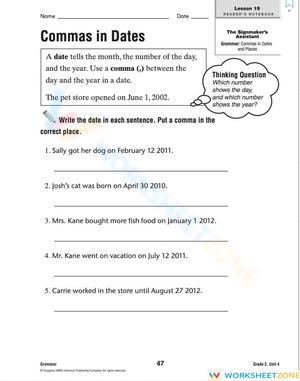
- L.4.2c — using a comma before a coordinating conjunction in a compound sentence
The apostrophe exercises address the broader L.4.2 expectation for command of punctuation conventions at the grade level. In classroom terms, L.4.2 surfaces most directly during writing workshop editing conferences. Teachers who use punctuation printable worksheets for 4th grade as a pre-draft mechanics review find that students produce cleaner first drafts — which shifts conference time away from comma corrections and toward the work of structure and meaning.
Adjusting the Worksheets for a Range of Learners
For students who need additional support with dialogue punctuation, one low-preparation adjustment is to have them trace the correct punctuation pattern in a worked example before they attempt to rewrite any sentences on their own. The physical act of tracing where the comma sits relative to the closing quotation mark activates pattern recognition before the production task begins. This works with the existing worksheet — no separate version needed.
Students who are ready to move beyond isolated sentence practice benefit from an extension that does not require creating new materials: take a paragraph of student-written dialogue from an earlier class draft — anonymized — project it, and have the student mark every punctuation error before rewriting it correctly. That shift from correcting individual sentences to editing sustained dialogue is the level of work students do in their own revision conferences, and it is a natural next step once the worksheet exercises feel automatic.
Frequently Asked Questions
How do I prevent students from over-applying the comma rule once they learn it?
Show students both structures in the same lesson: "Let's go," she said. alongside She said, "Let's go." The core message is that the comma separates the spoken words from the speaker tag — it does not belong inside every quotation regardless of context. Seeing both forms together, rather than learning one rule at a time, prevents the over-correction where students start placing commas inside quotes even when no tag is present.
Which skill area typically takes the most instructional time at this grade level?
Plural possessives, by a significant margin. Most students move through dialogue punctuation and compound sentence commas quickly once they understand the underlying logic. Plural possessives require a two-step process — identify whether the noun is already plural, then decide where the apostrophe goes — and that extra step is where reteaching time accumulates. Plan to return to it across multiple weeks rather than expecting to resolve it in a single lesson.
Can these be used as formative assessments rather than just practice?
Yes. A completed worksheet gives a clear snapshot of a student's command of one specific skill without requiring a separate quiz. When reviewing a full class set, look for shared error patterns rather than individual scores. If the majority of students make the same mistake on the same exercise type, the issue most likely lies with the initial instruction — and that distinction changes how you plan the follow-up lesson.
How do these worksheets fit into a writing workshop model?
They work well as a five-to-eight minute mini-lesson follow-up before students move into independent drafting or revision time. The single-skill format means students can work through one worksheet on their own while you hold individual conferences. A completed worksheet also creates a natural entry point for editing conversations: if a student's worksheet shows confusion about plural possessives, that becomes the specific focus when you sit down with their narrative draft, rather than a general reminder to "check your punctuation."












 Interactive Worksheet Maker
 Quiz Maker
 Word Search Maker
 Crossword Puzzle Maker
 Word Scramble Generator
 Sentence Scramble Generator
 Handwriting Worksheet Generator
 Name Tracing Generator
 Fill In The Blank Generator