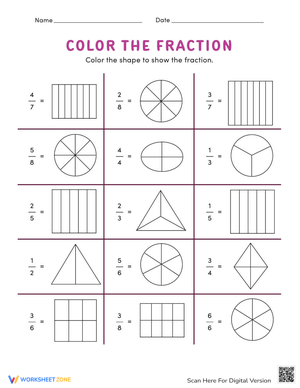
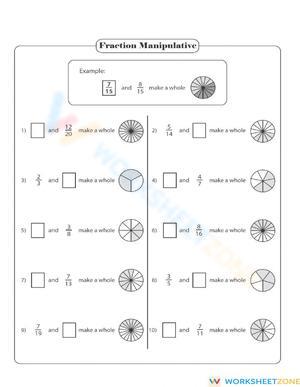
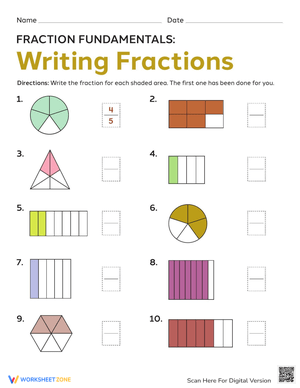
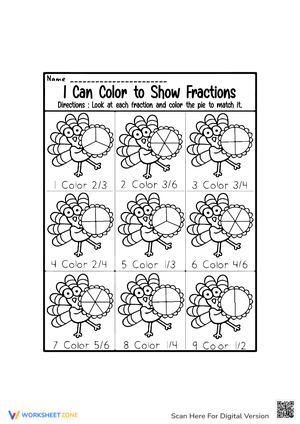
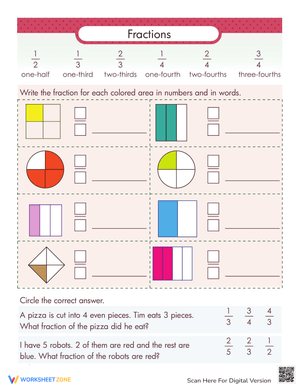
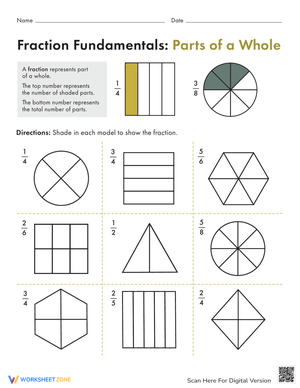
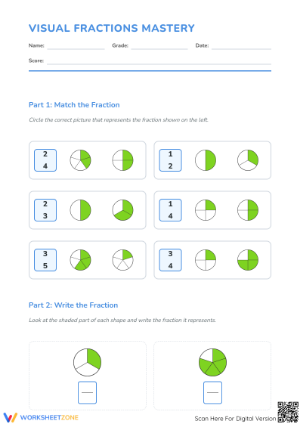
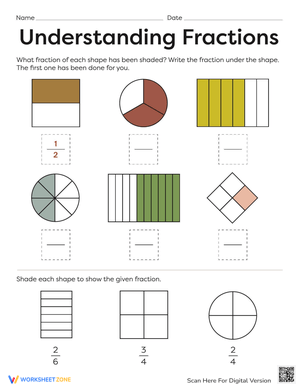
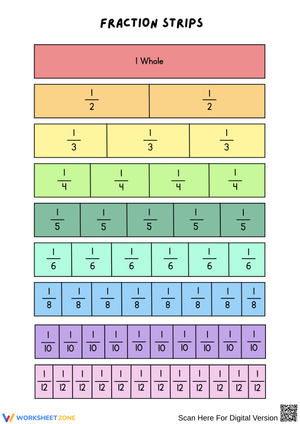
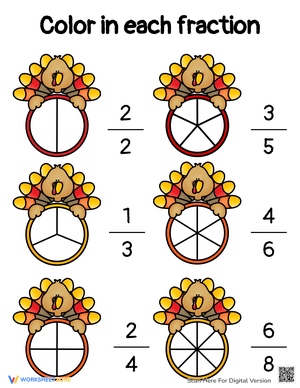
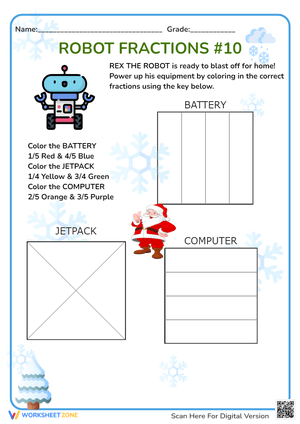
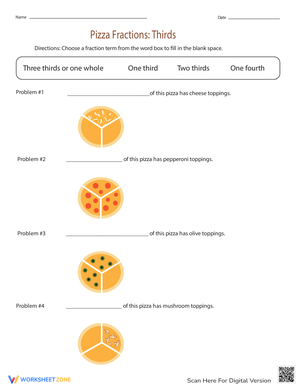
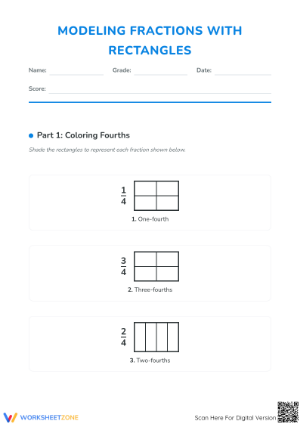
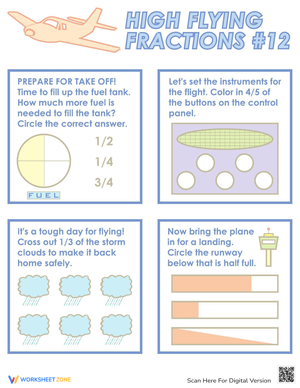
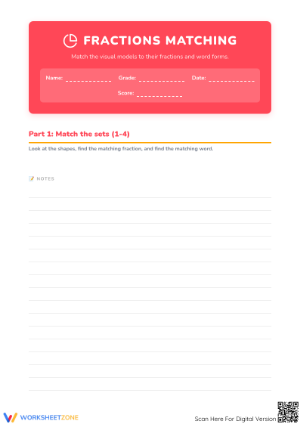
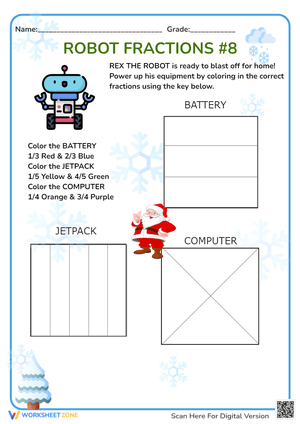
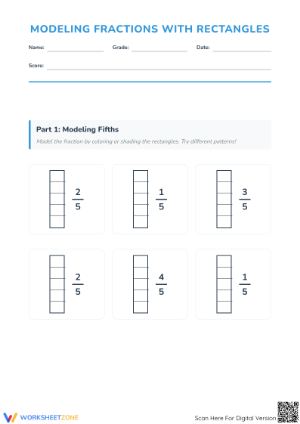
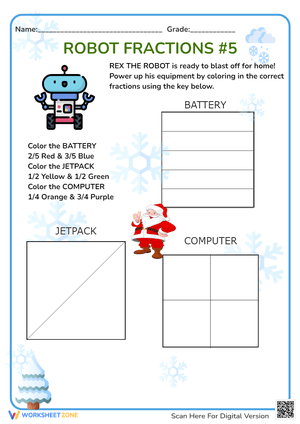
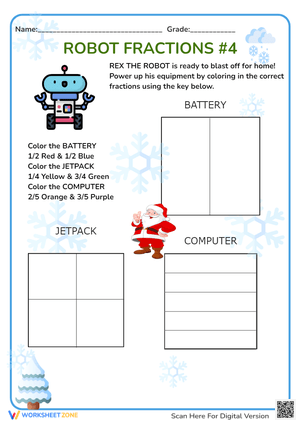
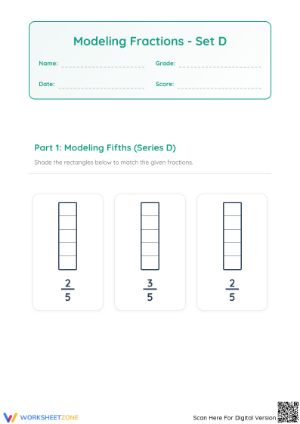
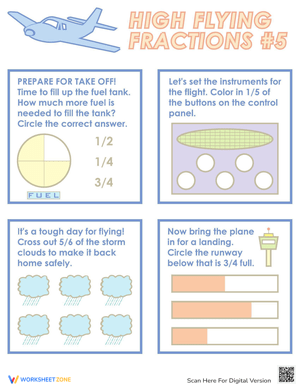
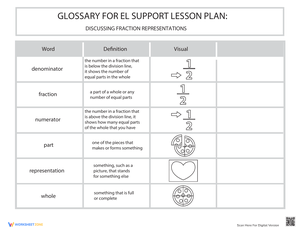
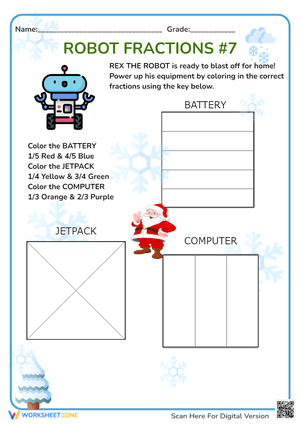
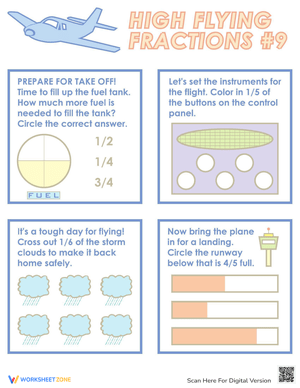
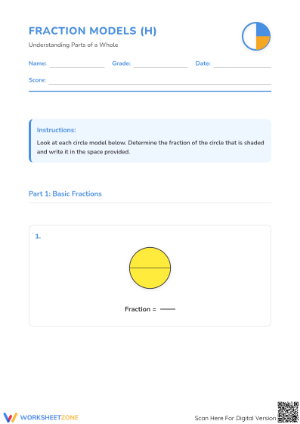
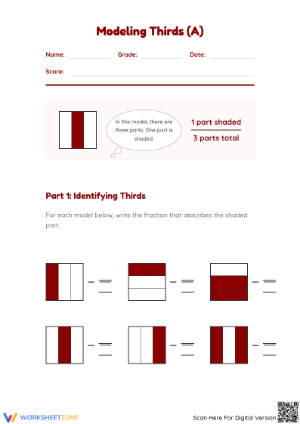
These 3rd grade fractions as parts of a whole worksheets give teachers a structured set of area-model tasks that bridges the gap between manipulative-based lessons and independent written practice — the precise moment in a fractions unit where many students either lock in their understanding or begin to drift. Each worksheet targets a specific visual skill: reading a shaded model, producing a model from a written fraction, or analyzing whether a partition is valid. The set works as guided practice, a station anchor, or a daily warm-up during the weeks a class spends on 3.NF.A.1.
What's Inside the Set
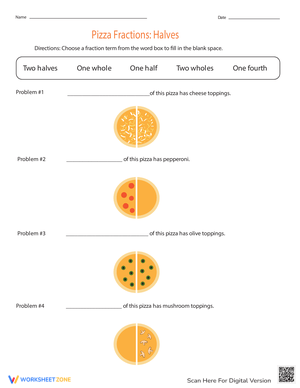
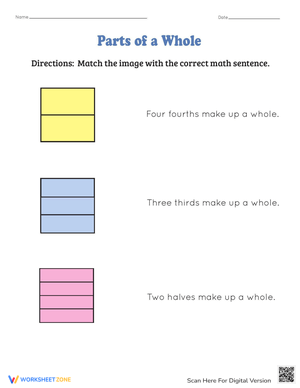
The tasks build across the worksheets using circles, rectangles, and squares as area models, which varies the visual presentation without shifting the underlying concept. Students work with unit fractions — 1/2, 1/3, 1/4, 1/6, 1/8 — before moving to non-unit fractions, mirroring the progression laid out in 3.NF.A.1. The specific skills covered include:
- Reading a pre-shaded model and writing the corresponding fraction in standard notation
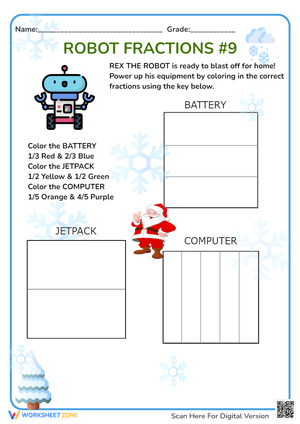
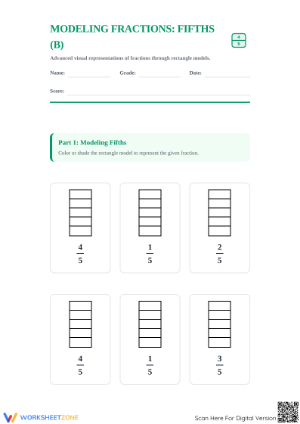
- Shading a blank shape to represent a given written fraction
- Evaluating whether a partition shows equal or unequal parts and explaining why unequal partitions do not represent a valid fraction
- Labeling the numerator and denominator and articulating what each tells us about the model
- Comparing unit fractions visually to see why a larger denominator produces a smaller individual piece
One worksheet asks students to analyze non-examples — shapes partitioned into unequal sections — and write a sentence explaining what each model gets wrong. Doing that task before shading practice forces students to state the equal-parts rule explicitly before they have had a chance to build the habit of ignoring partition size.
Mistakes Students Make That These Worksheets Help You Catch
The most persistent error in this unit is not numerator-denominator reversal — it is ignoring whether the parts are actually equal. A student who draws four sections in a circle and shades one will write 1/4 confidently, even if one section is noticeably larger than the others. They have counted correctly; they just have not applied the equal-size constraint. Worksheets that present deliberately unequal models alongside correct ones train students to check the partition before they count anything.
The numerator-denominator confusion tends to appear in a specific form: students count the unshaded parts and use that number as the numerator, rather than counting total parts for the denominator and shaded parts for the numerator. So on a rectangle split into fourths with two sections shaded, they write 2/2 instead of 2/4. That pattern usually surfaces around the third or fourth time students work through this kind of practice — not on the first attempt, when they are still being careful — which is why repeated exposure across multiple worksheets matters here.
A third pattern shows up around denominator magnitude. Students who have spent two years learning that bigger numbers mean bigger quantities often assume 1/8 is greater than 1/2. Seeing both fractions drawn inside circles of the same size — eight small wedges versus two large halves — gives students a visual correction that verbal explanation alone cannot produce.
The tasks in these 3rd grade fractions as parts of a whole worksheets surface all three patterns in ways that make the error visible to both teacher and student, without requiring a lengthy diagnostic exchange.
How to Work These Worksheets Into Your Lesson Plan
These worksheets produce the strongest results when students have already had at least one hands-on session with physical models — paper strips folded into equal sections, fraction tiles rearranged on a desk — before moving to drawn representations. The written tasks ask students to reproduce on paper what they have just handled physically, which is a lower cognitive jump than moving from teacher explanation directly to abstract notation.
For pacing: identification tasks (read a model, write the fraction) take most third graders six to eight minutes and work well as lesson openers or Monday warm-ups after morning meeting. Creation tasks and non-example analysis run closer to twelve to fifteen minutes because students must generate the visual rather than read one already drawn. A single identification item pulled from any worksheet also makes a clean exit-ticket check before dismissal — you will see immediately who needs a reteach the next day.
Small-group remediation is another strong fit. When a class moves into comparing fractions, students still unsettled on equal partitioning can continue with earlier worksheets in the set while the larger group works forward. The tasks are direct enough that a paraprofessional or student partner can facilitate, which gives the teacher room to push ahead with the group that is ready.
Standard Alignment
CCSS.MATH.CONTENT.3.NF.A.1 — Understand a fraction 1/b as the quantity formed by 1 part when a whole is partitioned into b equal parts; understand a fraction a/b as the quantity formed by a parts of size 1/b.
This standard is the entry point for the entire Number and Operations — Fractions domain in third grade, meaning instruction here is foundational, not review. Students who leave 3.NF.A.1 without a reliable grip on equal partitioning carry that gap directly into 3.NF.A.2 (placing fractions on a number line) and 3.NF.A.3 (comparing and finding equivalent fractions), where the underlying confusion becomes far harder to address. Every task in the set connects a visual model to a written fraction or produces a model from one — exactly what 3.NF.A.1 requires — without introducing the number line yet, so cognitive demand stays focused on the part-whole relationship.
Differentiating Across Readiness Levels
For students who need more support, narrow the denominator range to halves, thirds, and fourths and use rectangles rather than circles. Rectangles are easier to partition accurately by hand — evenly spaced vertical lines are simpler to draw than equal-angle cuts in a circle — so spatial precision stops being a barrier and attention stays on the fraction concept itself. Starting with unit fractions only (1/2, 1/3, 1/4) is the right entry point; once a student reliably reads 1/4 from a four-part rectangle with one section shaded, non-unit fractions like 3/4 become a natural extension rather than a separate concept to learn.
For students who move through the standard tasks quickly, the non-example worksheets offer a genuine challenge. Asking those students to design their own invalid fraction model — a shape that appears to show a fraction but does not — and then write a defense of their reasoning places them at the productive edge of 3.NF.A.1 without pulling in content that belongs in a later unit. These 3rd grade fractions as parts of a whole worksheets carry no level labels or color-coded tiers, which means students at different points in their understanding can be working on different worksheets in the set without that distinction being visible to the class.
Frequently Asked Questions
What is the difference between a part-of-a-whole model and a part-of-a-set model?
A part-of-a-whole model uses a single object — one rectangle, one circle — divided into equal sections. A part-of-a-set model involves a collection of separate items, like twelve counters, where a fraction identifies a subset of the group. Third grade instruction under 3.NF.A.1 centers on part-of-a-whole. Introducing part-of-a-set reasoning before students are secure on part-of-a-whole tends to produce more confusion than clarity, because the two models require different interpretive logic even though they share the same notation.
Why do circles work for some denominators but not others?
Circles divide cleanly into halves, fourths, and eighths — denominators that align with rotational symmetry — but thirds and sixths require 120-degree or 60-degree cuts that third graders cannot reliably draw by hand. A student attempting to partition a circle into thirds almost always produces unequal sections, which directly contradicts the lesson's central requirement. Rectangles sidestep this entirely: evenly spaced vertical or horizontal lines divide a rectangle into any number of equal sections without demanding precise angle work. These 3rd grade fractions as parts of a whole worksheets use circles for denominators where they are visually clean and switch to rectangles for denominators where hand-drawing a circle would undermine the task.
Can any of these worksheets serve as a pre-assessment before the unit begins?
Yes. The identification tasks — where students read a shaded model and write the fraction — require no prior instruction on notation. Running one of those worksheets in the first week of the unit tells you which students retained fraction vocabulary from second grade and which are starting fresh. A student who writes 2/3 correctly from a shaded rectangle probably needs vocabulary reinforcement, not conceptual rebuilding. A student who places the denominator where the numerator belongs needs explicit instruction on notation before more practice will help. That information changes how you sequence direct instruction for the first two weeks.
How long does each worksheet take to complete?
Identification-focused worksheets take most on-level third graders eight to twelve minutes. Creation tasks and non-example analysis run twelve to fifteen minutes because students produce the visual representation rather than read one already provided. Those estimates lengthen for students who need more support — some may need the full math block for the more demanding worksheets. Keeping these ranges in mind helps when planning station rotations or choosing which worksheets to use as warmups versus full-session practice.













 Interactive Worksheet Maker
 Quiz Maker
 Word Search Maker
 Crossword Puzzle Maker
 Word Scramble Generator
 Sentence Scramble Generator
 Handwriting Worksheet Generator
 Name Tracing Generator
 Fill In The Blank Generator