


























Views
Downloads

Essential Grade 3 Worksheet: Modeling Fractions with Rectangles
Paste this activity's link or code into your existing LMS (Google Classroom, Canvas, Teams, Schoology, Moodle, etc.).
Students can open and work on the activity right away, with no student login required.
You'll still be able to track student progress and results from your teacher account.
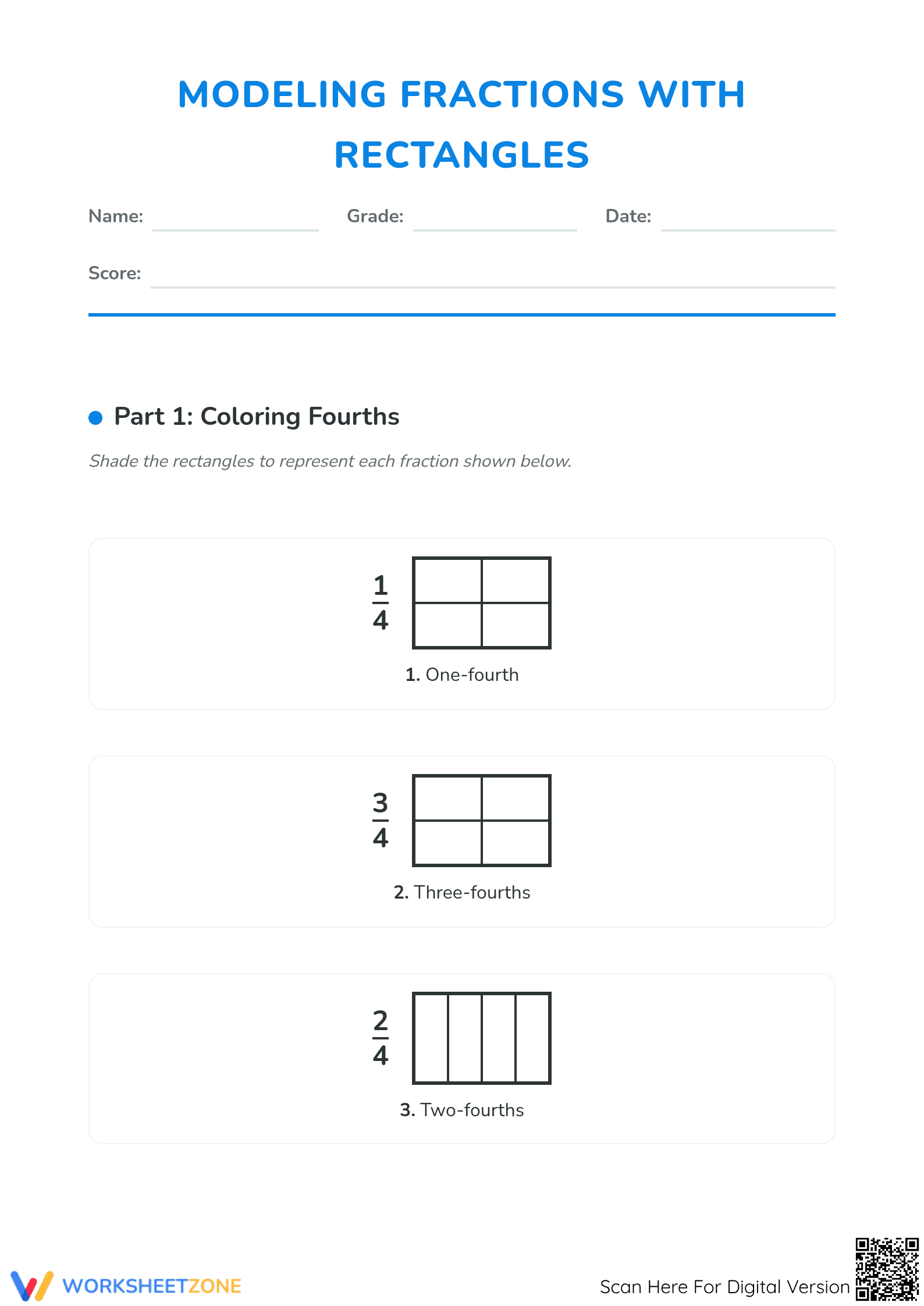
This comprehensive fractions worksheet provides students with targeted practice in modeling fractions using rectangular area models. By shading specific segments of a whole, learners develop a concrete understanding of how numerators and denominators represent parts of a whole. This resource ensures students move beyond abstract numbers to visual mastery of fractional values.
At a Glance
- Grade: 3 · Subject: Math (Fractions)
- Standard:
CCSS.MATH.CONTENT.3.NF.A.1— Understand fractions as the quantity formed by parts of a partitioned whole- Skill Focus: Shading rectangular area models
- Format: 5 pages · 20 problems · Answer key included · PDF
- Best For: Initial instruction and independent skill reinforcement
- Time: 25–35 minutes
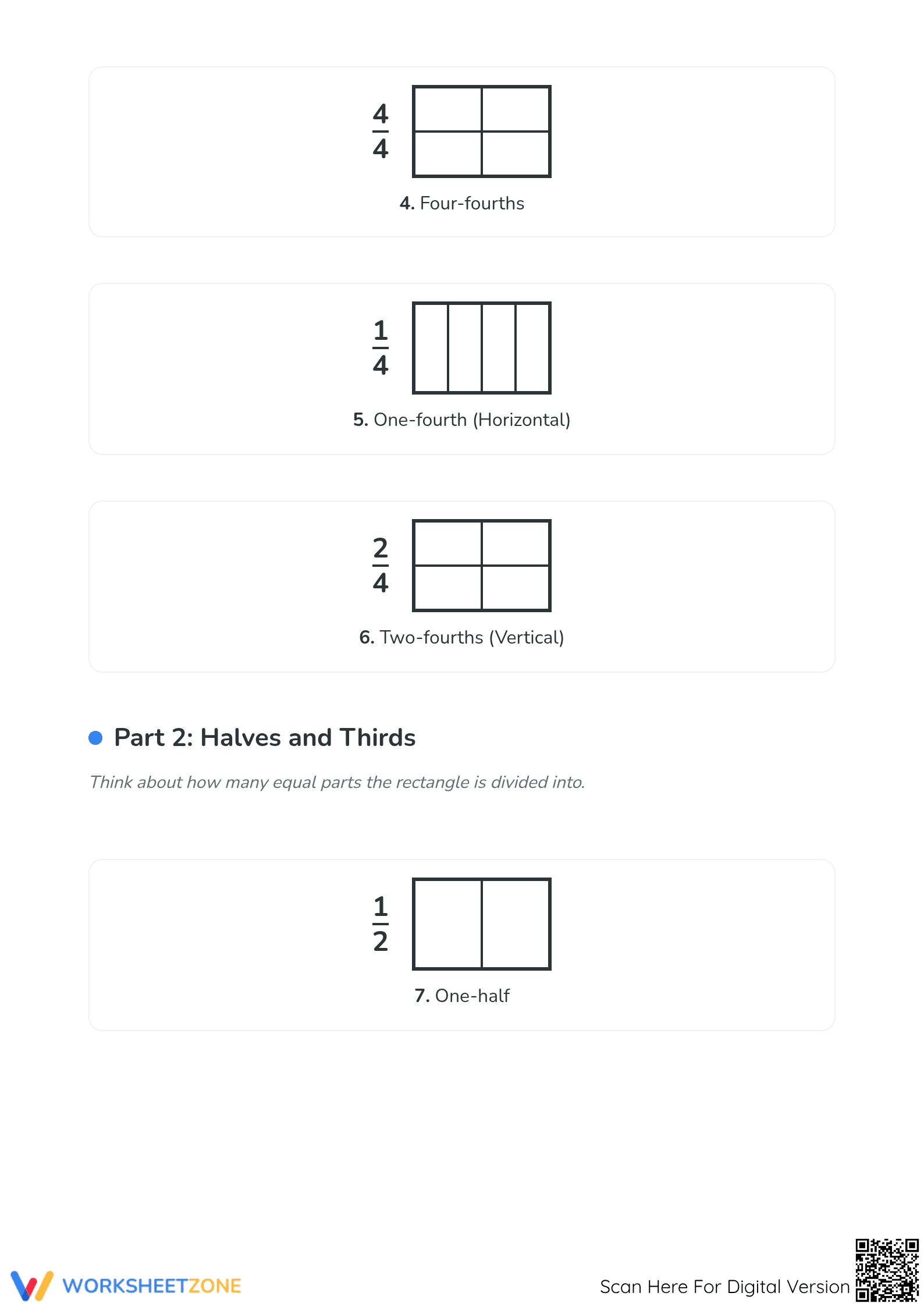
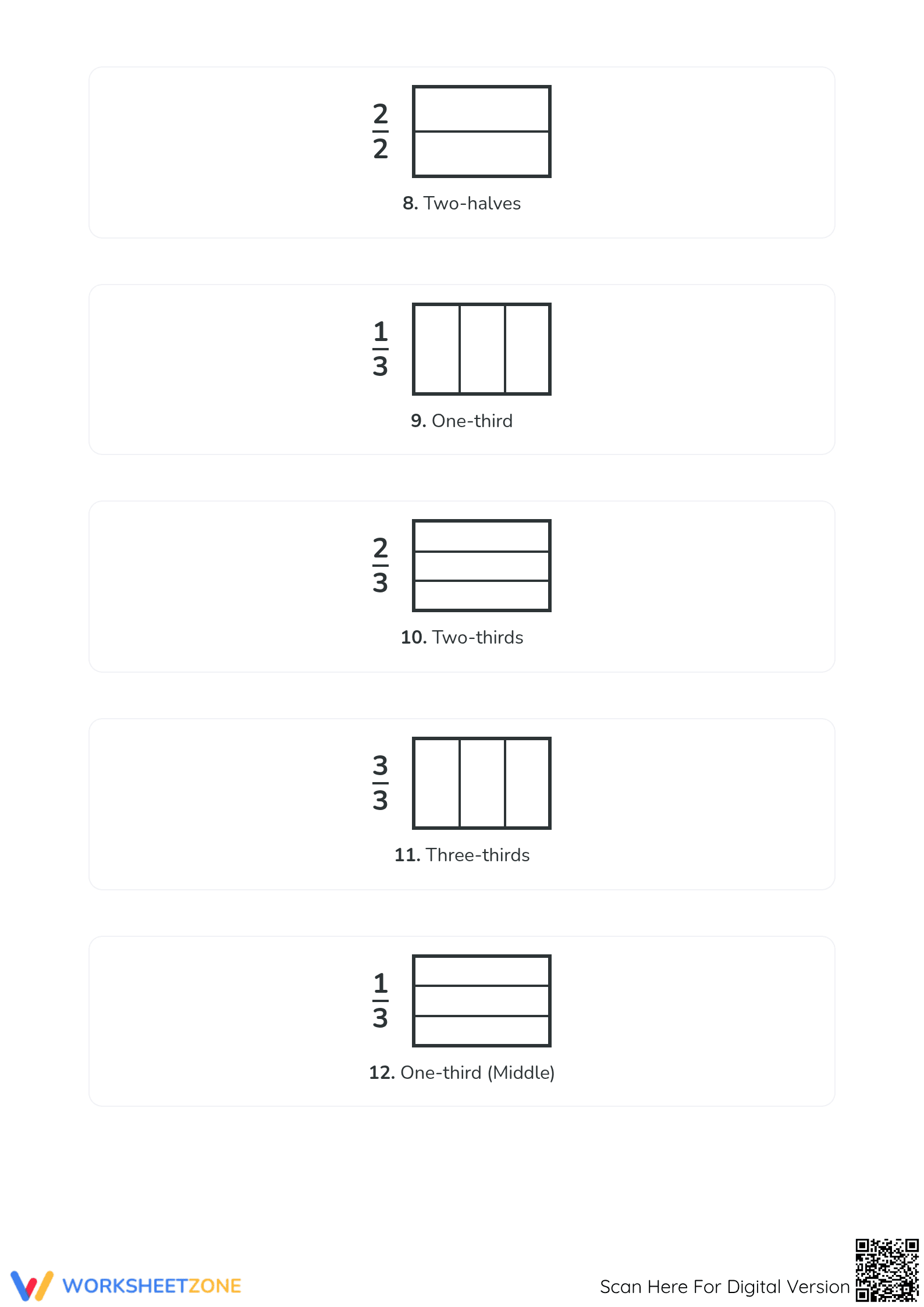
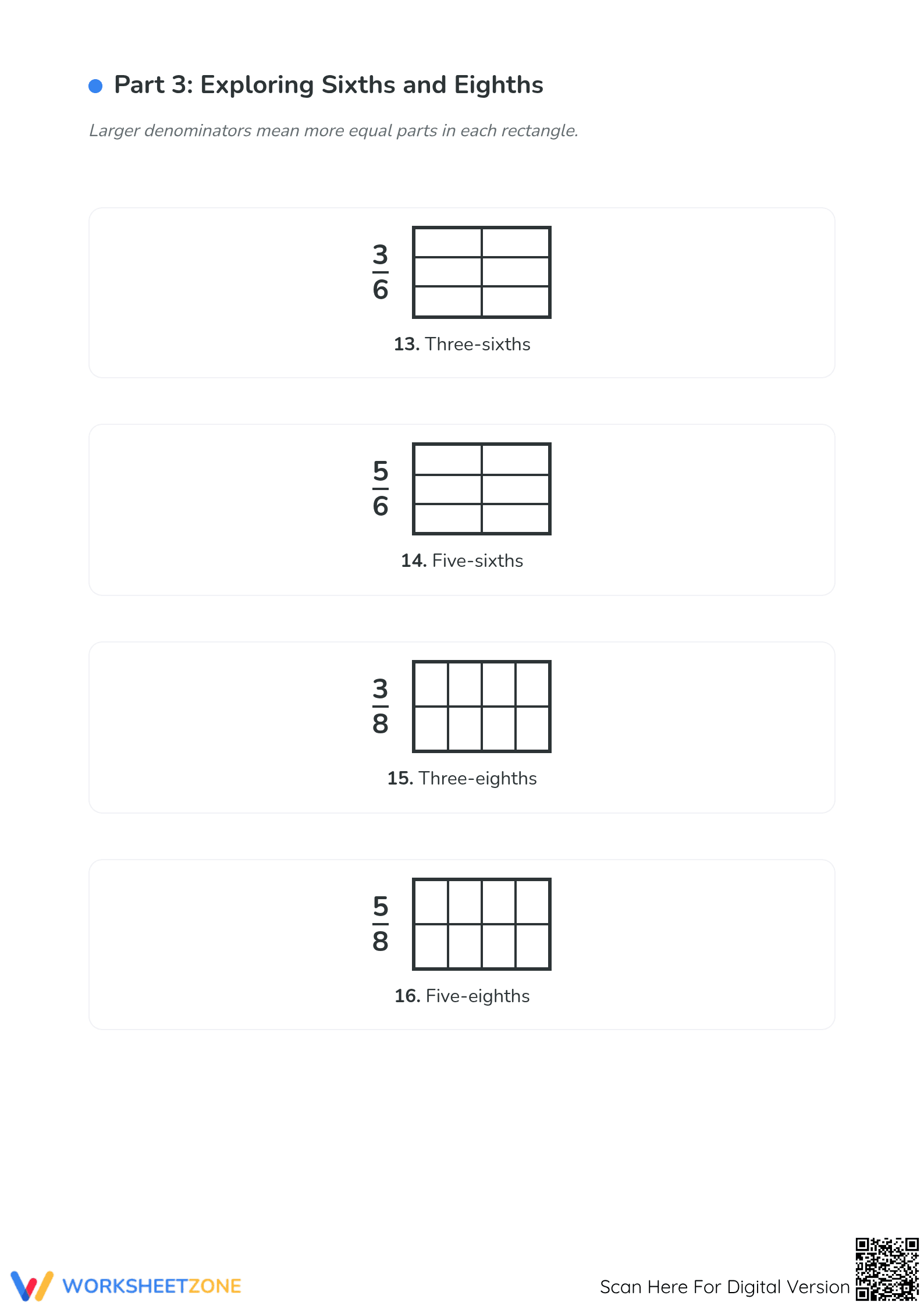
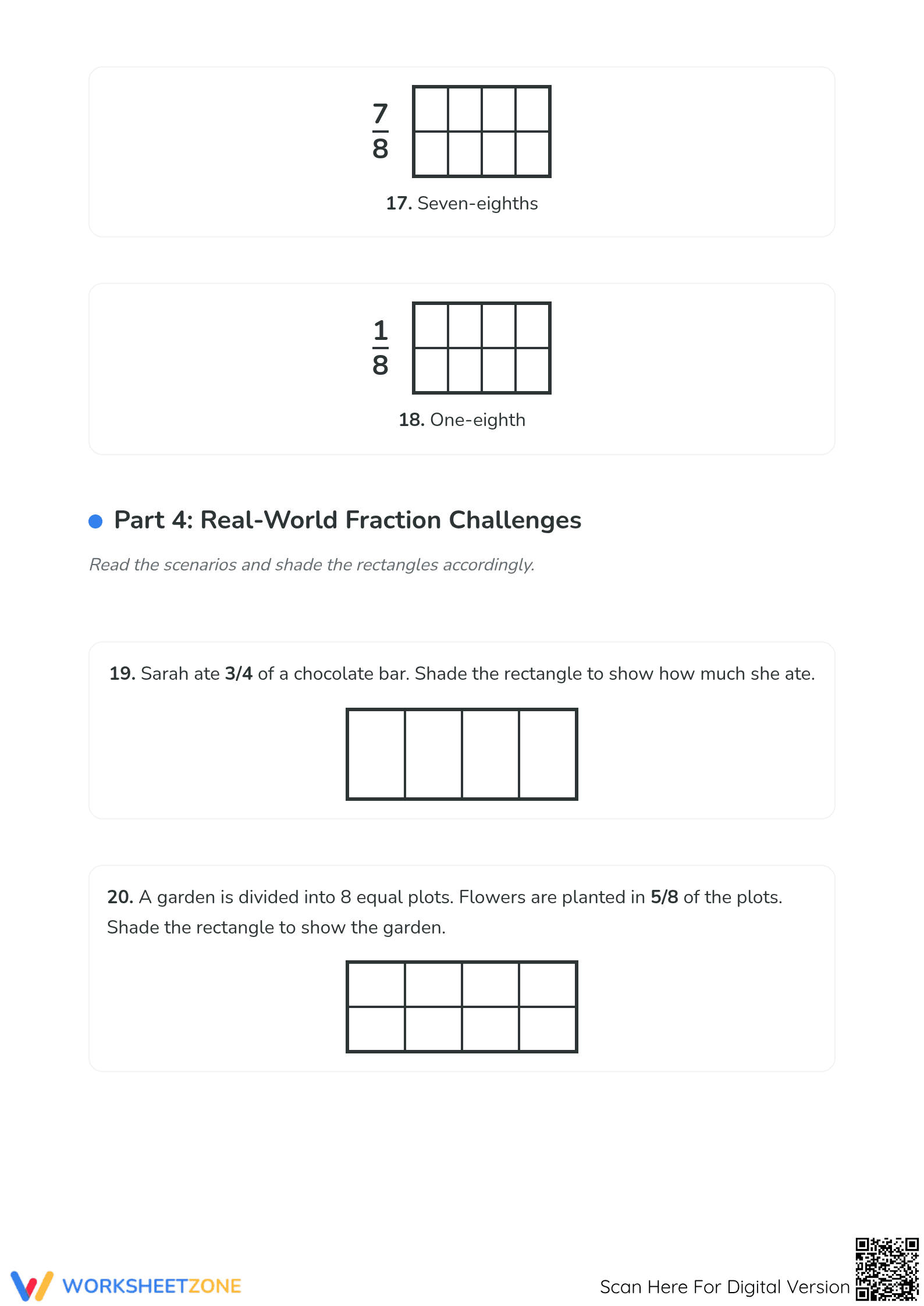
What's Inside: This 5-page PDF packet contains 20 distinct problems organized into four progressive sections. Each problem features a clear numerical fraction paired with a partitioned rectangle. The set includes a full answer key with shaded visual examples, allowing for immediate feedback or self-grading. Structural features like horizontal and vertical partitions challenge students to recognize fractions regardless of orientation.
Skill Progression
- Guided Practice: The first 6 problems focus on coloring fourths using varied rectangular orientations to establish a baseline understanding of equal partitioning.
- Supported Practice: Problems 7 through 12 introduce halves and thirds, requiring students to identify the denominator's role in determining the total number of parts.
- Independent Practice: The final sections move into sixths, eighths, and real-world word problems, demanding higher-order application of the shading skill.
This structure follows a gradual-release model, transitioning from simple identification to complex application across 20 structured tasks.
Standards Alignment
This resource is strictly aligned to CCSS.MATH.CONTENT.3.NF.A.1. Students demonstrate their understanding that a fraction 1/b represents the quantity formed by 1 part when a whole is partitioned into b equal parts. Additionally, it supports CCSS.MATH.PRACTICE.MP4 as students model mathematics through visual representations. These standard codes can be copied directly into lesson plans, IEP goals, or district curriculum mapping tools.
How to Use It
Use this worksheet as a primary practice tool following a direct instruction lesson on area models. For a formative assessment, observe students during Part 2 to see if they can correctly identify the difference between horizontal and vertical partitions of the same fraction. Expect most third-grade students to complete the full 5-page packet within 30 minutes of focused work time.
Who It's For
This worksheet is designed for third-grade students first encountering fractions, but it serves as an excellent remedial tool for fourth and fifth graders needing to rebuild their conceptual foundation. It pairs naturally with physical manipulatives like fraction strips or transparent overlays to provide a multi-sensory learning experience during math centers or small-group intervention.
The use of area models, such as the rectangles in this worksheet, is a proven strategy for developing fractional sense. According to the RAND AIRS 2024 report on mathematics instruction, visual representations are critical for students to transition from whole-number thinking to rational-number reasoning. This worksheet focuses on CCSS.MATH.CONTENT.3.NF.A.1, requiring students to shade 20 different models to represent specific fractional quantities. By engaging with various denominators including fourths, sixths, and eighths, learners build the spatial awareness necessary for later operations with fractions. Research suggests that students who master area models early are significantly more likely to succeed in middle-school algebra. This resource provides the structured, high-repetition practice needed to cement these concepts before moving to number lines or abstract comparison tasks. Educators can use these 5 pages as a standalone unit or as a series of bell-ringers to ensure consistent exposure to fractional modeling throughout the school year.


