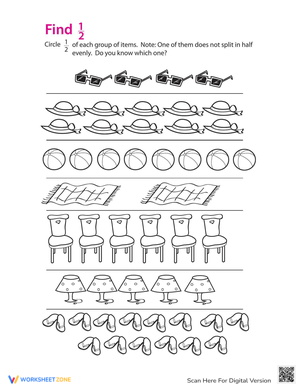
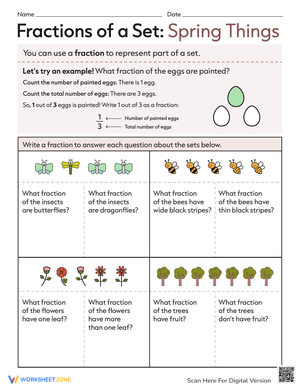
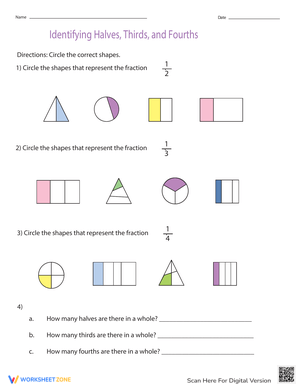
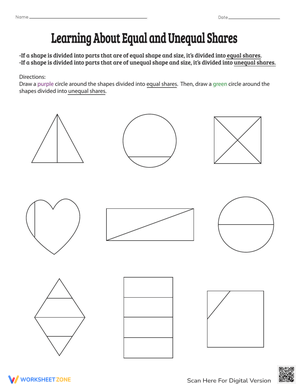
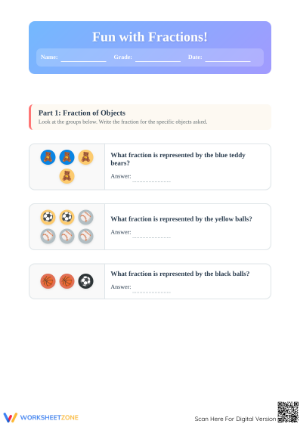
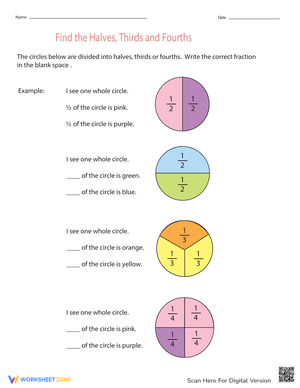
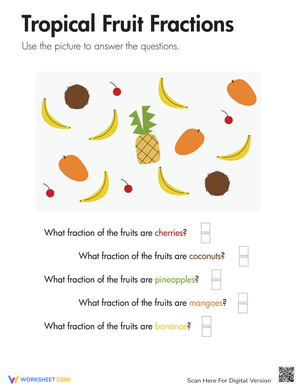
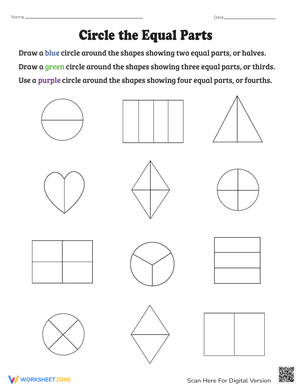
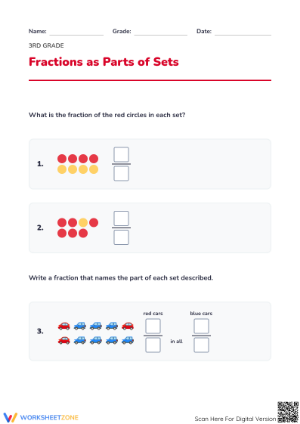
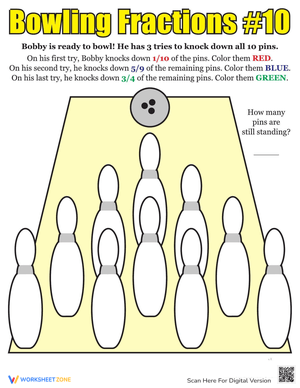
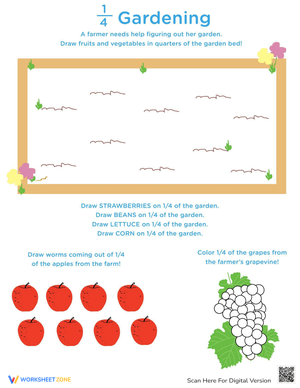
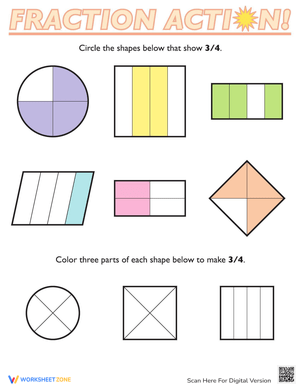
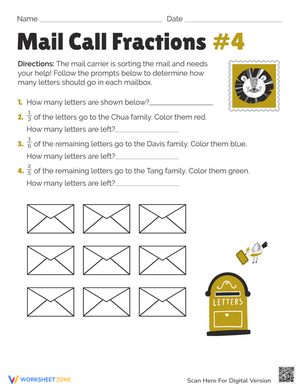
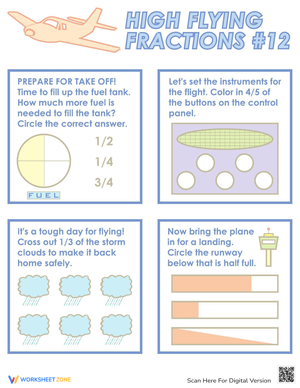
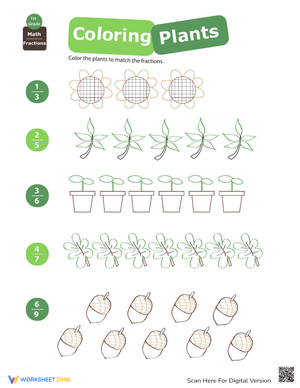
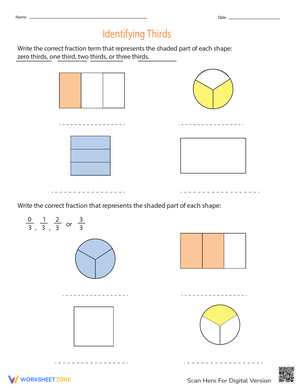
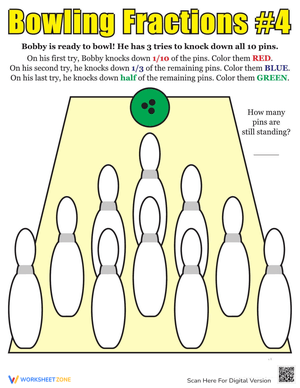
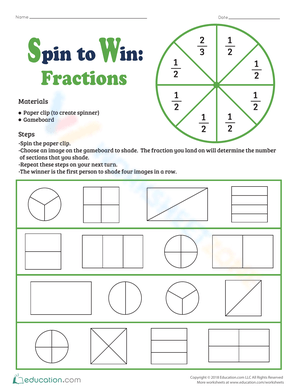
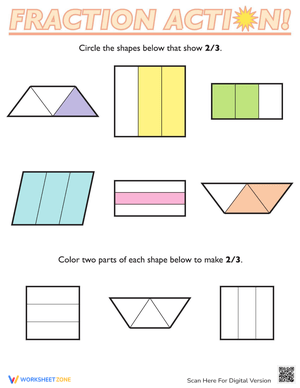
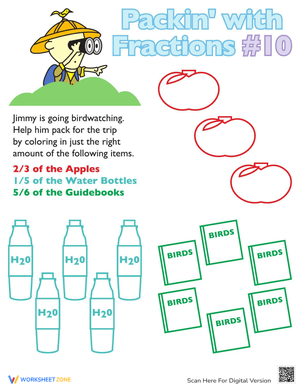
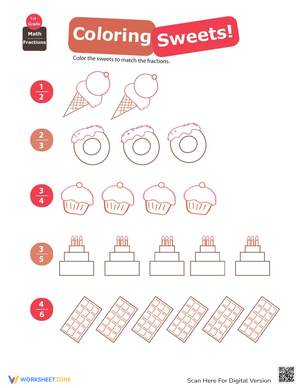
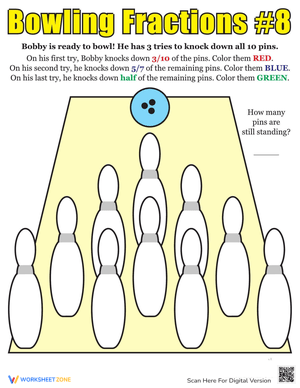
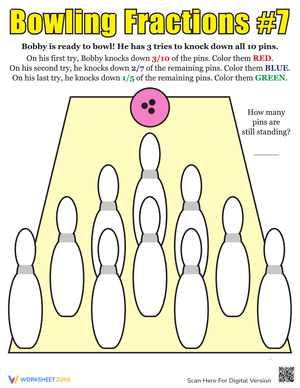
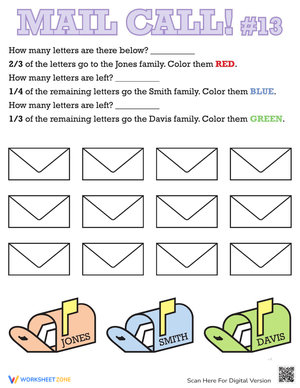
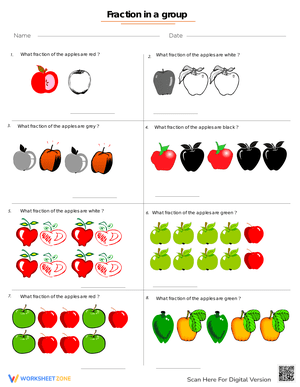
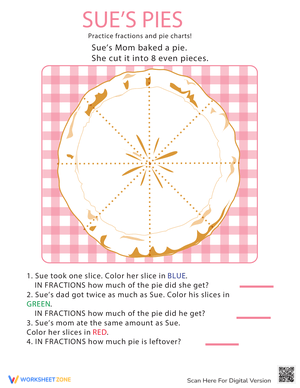
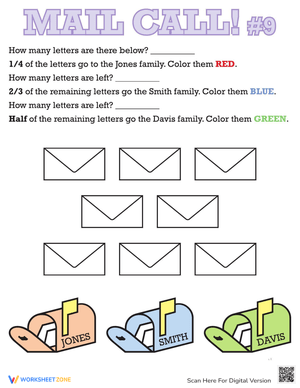
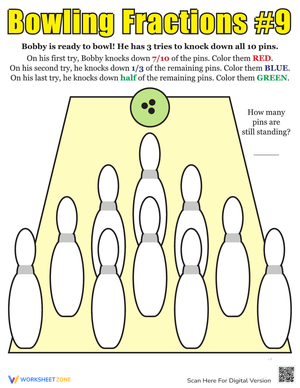
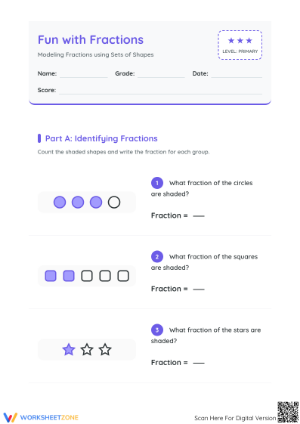
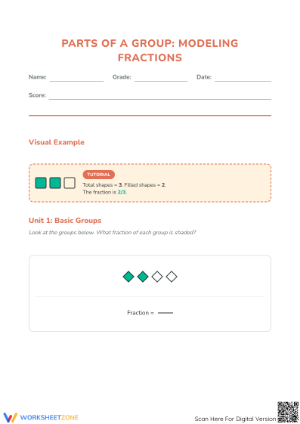
These 3rd grade fractions as parts of a set printable worksheets target one of the trickiest conceptual shifts in Grade 3 math: moving from a single partitioned object to a collection of discrete items where the whole group itself is the unit. Teachers get a set of standalone worksheets covering counting-based fraction identification, fraction writing from visual sets, and drawing sets to match a given fraction — all within denominator ranges appropriate for third grade instruction.
The Conceptual Work That Makes This Skill Harder Than It Looks
In area model work, students learn to count equal pieces of one object. With set models, the "equal parts" are the individual objects themselves — a shift that sounds minor but stops a surprising number of third graders cold. A student who correctly reads 3/4 from a shaded rectangle will sometimes stare at a row of four circles and search for parts inside one circle. That is not a careless error; it reflects a genuine over-application of the previous model. This is why every worksheet in the set includes a circling prompt: students ring the entire group first to establish the whole before they count toward the numerator. That one step re-anchors the denominator before the confusion has time to compound.
What Each Worksheet Targets
The denominators across the set run from halves through twelfths. Visual groups include both uniform objects — six identical stars, two of them shaded — and mixed-attribute sets where students must attend to a specific characteristic like color or type rather than just shape. The uniform sets reduce working memory load and belong early in the sequence; the mixed-attribute sets push students to filter by attribute, the kind of thinking that carries forward into data and early probability work in later grades.
- Counting all objects in a group to establish the denominator
- Identifying a subset by attribute — color, shape, size, or category — to determine the numerator
- Writing a fraction in a/b notation from a visual set
- Drawing a set of objects to represent a given written fraction
- Recognizing the same fractional value across a set model and its area model counterpart
The draw-a-set problems deserve specific attention. They reverse the usual direction of thinking — students must decide on a total group size and then mark the appropriate subset — and they surface a specific gap. A student who can read 3/5 from a picture but cannot construct one is showing incomplete conceptual understanding, not just a missed skill. These problems catch that gap during practice rather than on an assessment.
Frequent Student Errors Worth Watching For
The most consistent error in student work is denominator undercounting caused by visual arrangement. When eight objects appear in two rows of four, students regularly report the denominator as 4 — they count one row and stop. This happens predictably in the first three problems of independent work, which is exactly when the teacher should be circulating rather than pulling a small group. Catching one student mid-error and redirecting to the circling strategy usually spreads the correction across the table without a whole-class interruption.
A subtler error shows up in the written fraction: students who correctly identify both numbers but then reverse them. A child looking at six pencils where two are yellow sometimes writes 6/2. Reading the fraction aloud and saying "two out of six total" before writing it down interrupts the reversal before it becomes a pattern. Students who reverse fractions on two or more problems in one sitting typically need another round of concrete work with physical counters before returning to the printed worksheet.
Lesson-Planning Strategies for Getting the Most From These Worksheets
3rd grade fractions as parts of a set printable worksheets fit best in a lesson sequence that opens with concrete manipulatives. Give students a small cup of two-color counters and ask them to show 2/5 — five counters total, two in one color. Once the group can do that fluently with held objects, distribute the printed worksheet. The transition from physical counters to pictured groups is far smoother when the hands-on step comes first, and it takes roughly eight minutes of class time to establish before students are ready to work independently.
For small-group instruction, projecting one worksheet on a document camera gives the teacher a natural anchor for a ten-minute pull-out session. Think out loud through the first problem, then release students to the remaining items while you observe. As an exit ticket, a five-problem worksheet in the last seven minutes of math block tells you exactly which students are misreading set size before the weekend interrupts the learning sequence. That data shapes Monday's warm-up far more usefully than a verbal check ever does.
Standard Alignment
CCSS 3.NF.A.1 asks third graders to understand a fraction 1/b as the quantity formed by one part when a whole is partitioned into b equal parts. Set models extend this standard directly — the complete group of objects is the whole, and each individual object is one equal part of it. Curricular placement matters here: set-model work belongs in the middle-to-late phase of a fractions unit, after students have stable footing with the vocabulary of numerator, denominator, and equal parts through area models. Introducing set models before area model understanding is firm tends to compound confusion rather than extend it. 3rd grade fractions as parts of a set printable worksheets are most effective once students can locate a basic fraction on a number line and explain what the denominator represents — not as the very first fraction exposure.
Differentiating These Worksheets Across Ability Levels
Students who need more support should start on worksheets with denominators of two, three, or four and uniform objects — nothing that requires attribute filtering. Placing a fraction number line beside the worksheet so students can locate the fraction after they write it adds a second representation without requiring a different resource. For students ready for more, ask them to write two fractions for the same set: what fraction is shaded and what fraction is not shaded, then check that both fractions combine to equal one whole. That extension introduces complementary fractions ahead of formal curriculum and gives fast finishers a genuine thinking task instead of extra repetition.
For English learners and students with weaker number sense, the physical circling strategy — ring the full group before counting parts — provides a reliable procedure that reduces mid-problem confusion without simplifying the mathematics. It applies to every worksheet in the set without any modification to the printed materials, which means a teacher can teach one consistent strategy to the whole class and still have it serve differentiated needs.
Frequently Asked Questions
What is the difference between fractions as parts of a whole and fractions as parts of a set?
Fractions as parts of a whole involve one object — a circle, rectangle, or shape — divided into equal-sized sections. Fractions as parts of a set involve a group of individual objects where the total count is the denominator and the objects are not physically connected. Each object stands as one equal part of the group. Third graders need both models to fully meet 3.NF.A.1, and 3rd grade fractions as parts of a set printable worksheets provide the specific counting-based practice that area models do not.
How many problems is a reasonable amount for one sitting?
Eight to twelve problems is a workable range for focused independent practice. Fewer than eight gives too little information about whether a student is applying the concept consistently or just getting a few right by chance. More than twelve problems in a single sitting often produces careless late-session errors — students rushing to finish — which muddies your read of what they actually understand. Five problems works well as an exit ticket; twelve works well for a station rotation that runs about fifteen minutes.
Can these worksheets be sent home for homework?
Yes, with one practical note: set-model fractions are easy for parents to re-explain incorrectly at home, because many adults default to area model logic when they try to help. A child who gets confused at the kitchen table and receives a pizza-slice explanation comes back the next morning more tangled than when they left. Attaching a one-sentence note — "the bottom number is the total number of objects in the group, not the pieces of one object" — heads off the most common home-support problem before it happens.













 Interactive Worksheet Maker
 Quiz Maker
 Word Search Maker
 Crossword Puzzle Maker
 Word Scramble Generator
 Sentence Scramble Generator
 Handwriting Worksheet Generator
 Name Tracing Generator
 Fill In The Blank Generator