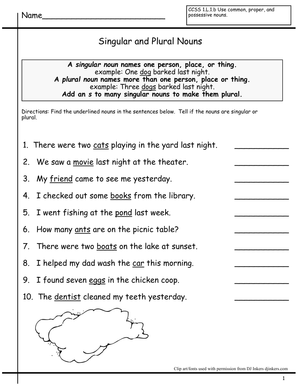
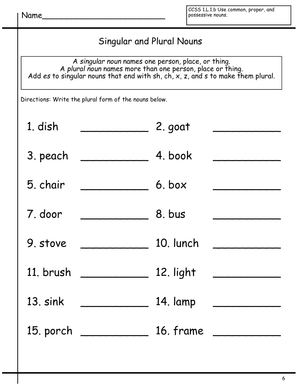
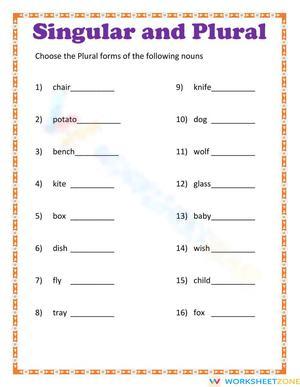
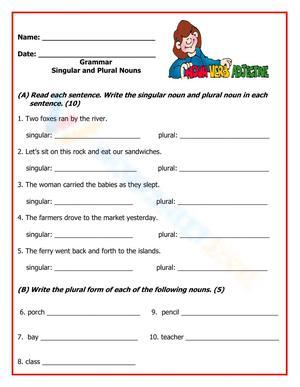
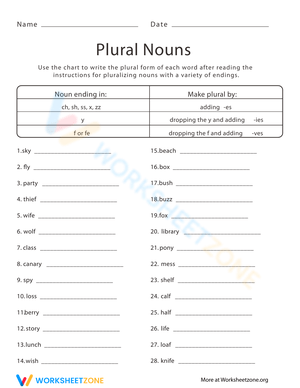
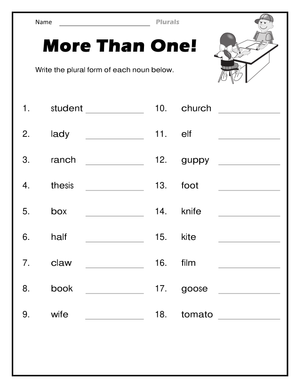
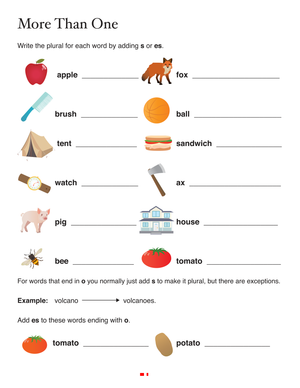
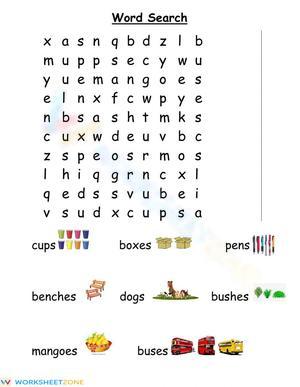
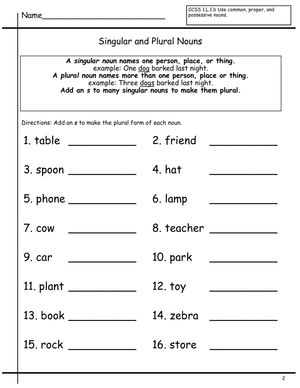
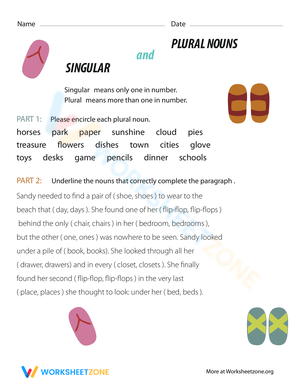
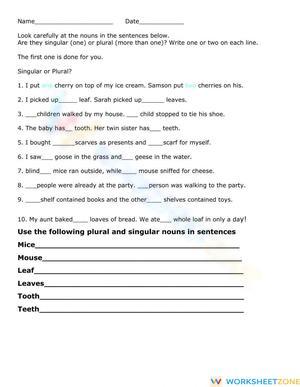
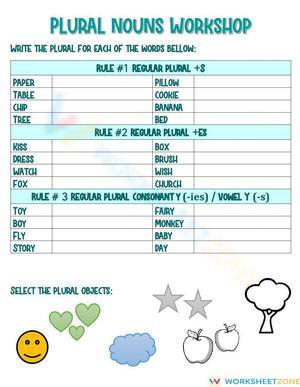
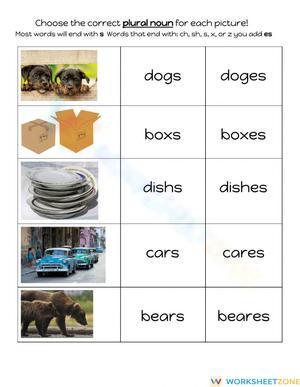
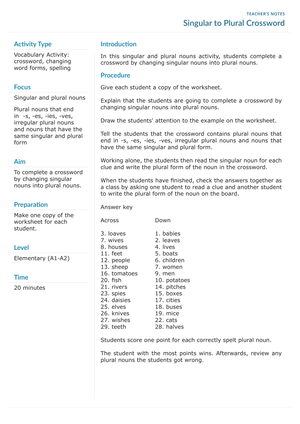
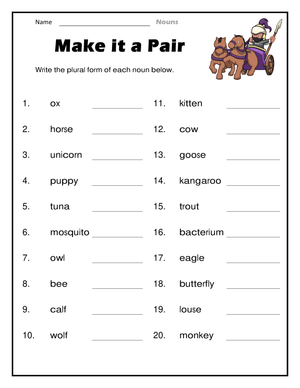
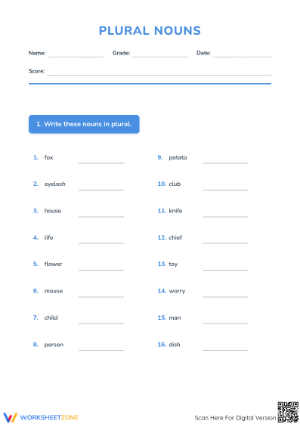
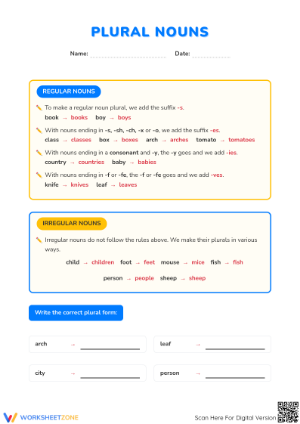
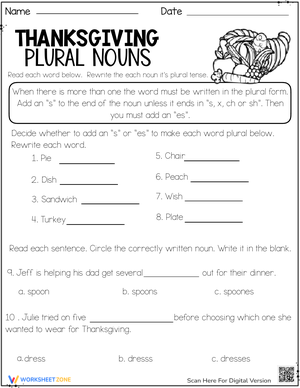
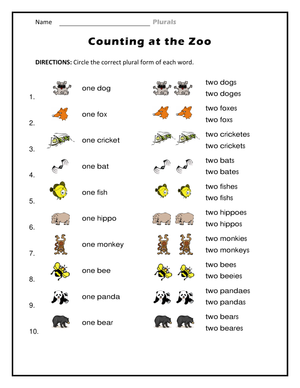
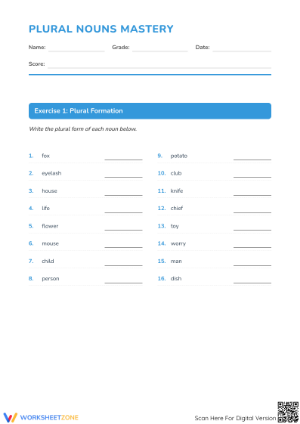
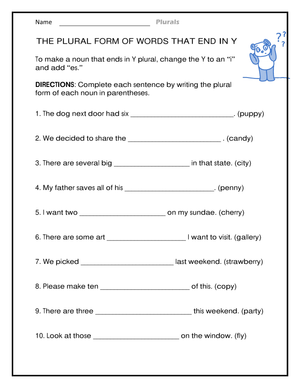
These plural nouns printable worksheets for 3rd grade address the full range of spelling rules third graders are accountable for — the -es pattern, the consonant-plus-y transformation, the f-to-ves change — alongside the irregular forms that resist pattern instruction and simply require memorization. The set is organized so teachers can target one rule at a time before moving to mixed-review practice, which matters because combining all the rules before students have internalized each one separately tends to produce more confusion than progress.
The Spelling Rules Each Worksheet Addresses
What separates solid plural nouns printable worksheets for 3rd grade from general grammar practice is the degree to which they isolate each rule category before combining them. This set follows that principle — each worksheet targets a specific transformation so students develop genuine command of the pattern rather than a vague sense that nouns "change somehow" in the plural.
The worksheets move through five distinct rule areas:
- Basic -s addition — covered briefly since students typically bring this skill from earlier grades, but reinforced through sentence-level rewriting rather than simple word lists
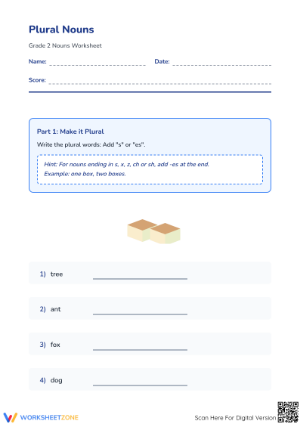
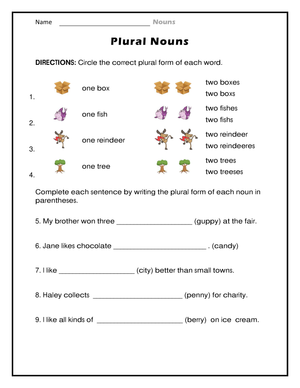
- -es endings — for nouns ending in s, ss, sh, ch, x, or z; sorting tasks require students to attend to the final letters before choosing -s or -es, rather than guessing by sound
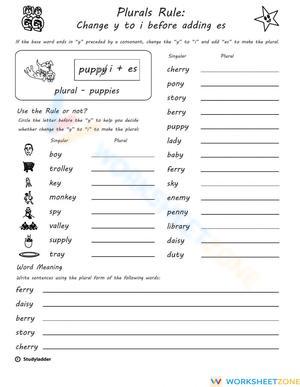
- Consonant-plus-y — drop the y, add -ies; students circle the letter preceding the y before writing the plural, which interrupts the overgeneralization error before it becomes a habit
- Vowel-plus-y — add -s only; kept in a separate worksheet from the consonant-y rule because students frequently apply y-to-ies to every word ending in y once they've learned the pattern
- F and fe words — change to -ves; sentence-level contexts for words like leaf, knife, and wolf show students why the spelling change matters inside an actual sentence, not just on a word list
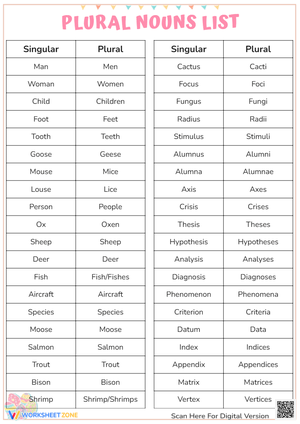
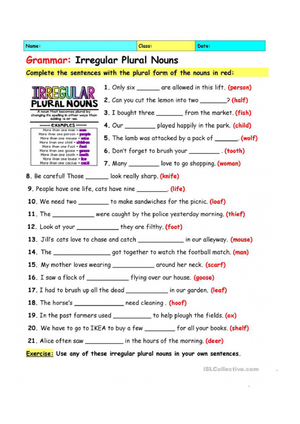
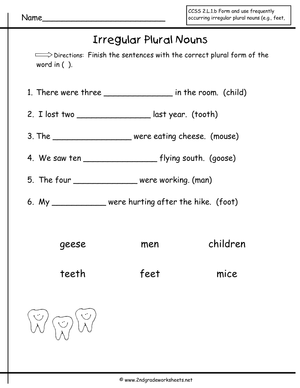
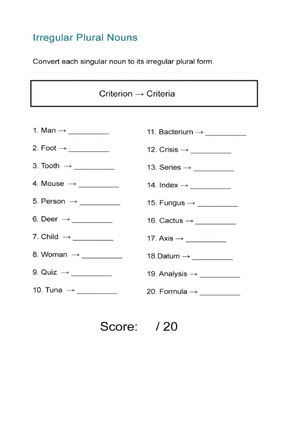
Irregular plurals — child/children, foot/feet, tooth/teeth, mouse/mice, person/people — appear in matching, fill-in, and rewriting tasks. The rewriting tasks are the most useful: students who can recite "foot becomes feet" will still write "I have two foots" in a paragraph unless they've practiced retrieving the correct form under the same conditions as independent writing.
Student Mistakes That Surface in Every Class
The consonant-plus-y rule generates the most consistent errors, and they're predictable once you know what to watch for. Students who correctly write "baby → babies" will turn around and write "monkey → monkies" or "turkey → turkeies" because they see a y at the end and apply the transformation automatically, without checking what precedes it. The worksheets address this directly by requiring students to identify the letter before the y before writing the plural — that one step breaks the automatic response.
With irregular plurals, the most common error isn't writing a completely wrong word — it's treating an already-correct irregular form as if it still needs a plural marker. Students write "childrens," "mices," and "teeths" because "children," "mice," and "teeth" don't look plural to them. They're applying the rule they know to a word that already completed the transformation. Repeated exposure to these forms in sentence-level writing, rather than isolated recitation, is what eventually corrects the pattern in actual student work.
The f-to-ves rule produces inconsistency more than a single wrong answer. Some students write "leafs" when they should write "leaves." Others overcorrect and write "rooves" for "roofs" — a word that takes a standard -s plural. When you see overcorrection, it signals that a student has internalized the rule but hasn't yet learned which words it governs. Mixed-review worksheets that include both regular words ending in f and true f-to-ves words help students build that distinction over repeated practice.
Standard Alignment
These worksheets directly address CCSS.ELA-LITERACY.L.3.1.B, which requires students to form and use regular and irregular plural nouns. This standard sits within the Language strand alongside subject-verb agreement, and the connection is practical: a student who writes "the leafs fell" has both a plural noun error and a verb agreement problem traceable to the same gap. Third grade is where the curriculum shifts its expectation from recognition to production — students are now supposed to control noun forms in their own writing, not just identify them in prepared examples. These worksheets support that shift by sequencing from identification tasks (choose the correct plural) into production tasks (rewrite this sentence using the plural form), following the gradual release model teachers already use in writing instruction.
Building These Worksheets Into Your Week
Used as morning bell-ringers, plural nouns printable worksheets for 3rd grade fill the 6 to 8 minutes while attendance runs without requiring a teacher-led launch. Students come in, find the worksheet, and start — especially useful on days when a longer lesson follows and you can't spend the opening block on a grammar warm-up. One rule-specific worksheet per day across a week covers the major patterns without eating into instruction time.
Literacy centers are another natural fit. A grammar rotation with one of these worksheets gives students focused independent work while you pull a small group. Sorting tasks work particularly well here because students can self-check by counting: if all the -es words ended up in one column and all the -s words in another, the sort worked. Pair work on irregular plural matching also surfaces misconceptions quickly — students will debate aloud whether "fishs" sounds right before they settle on "fish," which is exactly the kind of active processing that makes the forms stick.
For formative data, a Friday mixed-review worksheet takes roughly 10 minutes and tells you immediately where students are. Students who write "wolf → wolfes" haven't internalized the f-to-ves pattern yet; students who write "roof → rooves" have internalized it but are overapplying it. Both errors are actionable for Monday's reteach, and both are visible in a single short assessment without needing a formal quiz.
Adjusting the Set for a Range of Learners
Students who are still consolidating the -s/-es distinction benefit from a reference card alongside the worksheet — not answers, but one worked example of each rule type. That kind of support reduces the cognitive load during practice itself, freeing students to focus on applying the pattern rather than simultaneously trying to recall it. For these students, hold the f-to-ves and consonant-y worksheets until the -es rule is automatic, typically a week or two into the unit.
Students who have moved past the basic rules get more from the plural nouns printable worksheets for 3rd grade when the task is extended slightly. Ask them to take five plural forms from a completed worksheet and use each one in an original sentence — with the added requirement that the verb must agree with the plural subject. That small modification turns a grammar drill into a sentence-writing task without needing a different activity altogether. Students working well above grade level can be asked to find irregular plural nouns in their independent reading books and bring examples to a class anchor chart discussion, which builds both vocabulary and pattern recognition at the same time.
English Language Learners often benefit from pairing the worksheets with physical objects or picture cards during irregular plural practice. Pluralization is marked differently across languages — some don't modify the noun form at all to indicate quantity — so the English irregular forms have no analogue students can borrow from their home language. A concrete object alongside the written form anchors the abstract spelling change to something visible and tangible, bridging the gap that a written rule alone cannot close.
Frequently Asked Questions
What is the Common Core standard for plural nouns in third grade?
The standard is CCSS.ELA-LITERACY.L.3.1.B, part of the Language strand under Conventions of Standard English. It requires students to form and use both regular and irregular plural nouns correctly. The standard applies to written and spoken contexts, so students need to control plural noun forms during writing assignments and classroom discussion — not only on isolated grammar tasks.
Which irregular plural nouns are most important at this level?
The core list includes child/children, man/men, woman/women, foot/feet, tooth/teeth, mouse/mice, and goose/geese. Students also need the zero-change group — deer, sheep, fish — because these generate their own errors: students write "deers" and "sheeps" precisely because the plural looks identical to the singular and doesn't feel grammatically complete to them. Start with the forms that appear most often in third-grade reading and writing before expanding to less frequent examples.
How do I teach the consonant-plus-y rule without creating overgeneralization errors?
Teach the vowel-plus-y exception at the same time, not after. If students only encounter the "drop the y and add -ies" rule, they'll apply it to every word ending in y — including toys, days, and keys. Present both patterns together with a sorting task that requires students to examine the letter before the y and decide: consonant or vowel? Pairing "baby/babies" with "toy/toys" from the first lesson prevents the overgeneralization before it develops into a default response that has to be unlearned later.
How does plural noun mastery connect to broader writing development?
Subject-verb agreement depends on accurate plural noun identification. A student who writes "the childs plays" has two errors — the irregular plural and the agreement — that trace back to the same root gap. Once plural noun forms are reliable, students can direct their attention to matching the verb to the subject rather than working out the noun form at the same time. That sequence — noun forms first, then agreement — is why this standard appears in third grade, just before fourth-grade instruction begins putting sustained pressure on sentence-level editing in students' own writing.












 Interactive Worksheet Maker
 Quiz Maker
 Word Search Maker
 Crossword Puzzle Maker
 Word Scramble Generator
 Sentence Scramble Generator
 Handwriting Worksheet Generator
 Name Tracing Generator
 Fill In The Blank Generator