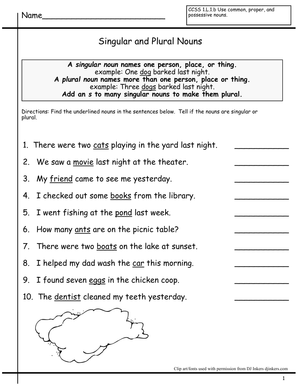
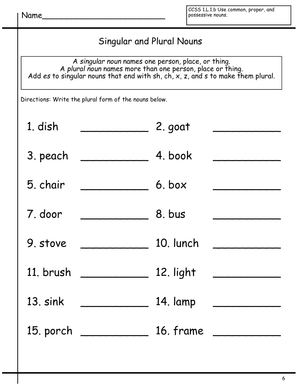
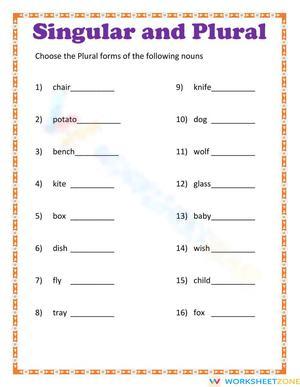
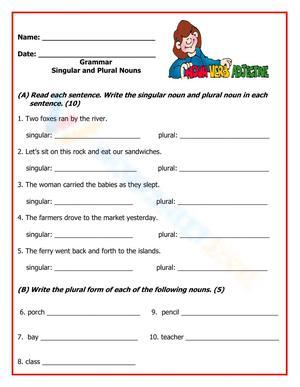
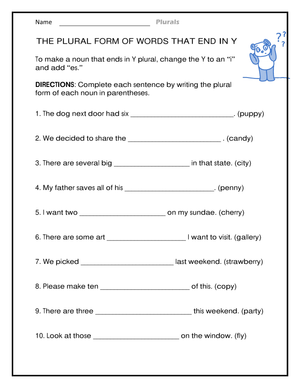
These 3rd grade singular and plural nouns printable worksheets tackle one of the trickier grammar transitions in early elementary: the move from recognizing what a plural noun is to correctly producing one across four distinct rule sets. Teachers get a set of focused, print-ready worksheets that address regular and irregular pluralization through structured practice formats students can complete independently.
The Four Patterns Covered in This Set
Each worksheet targets a specific aspect of noun pluralization rather than mixing all the rules together on one task. That separation matters at this grade level — students who are still internalizing the "add -es" rule don't need it competing with "change -y to -ies" at the same time.
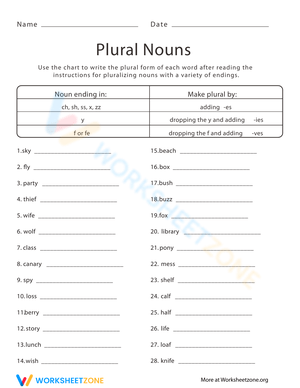
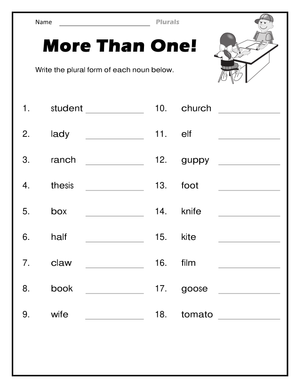
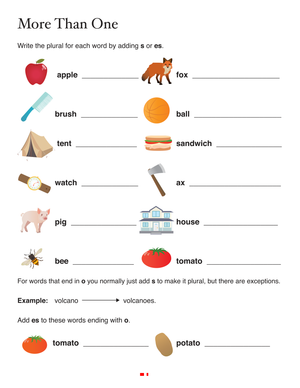
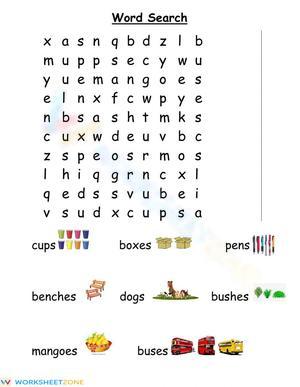
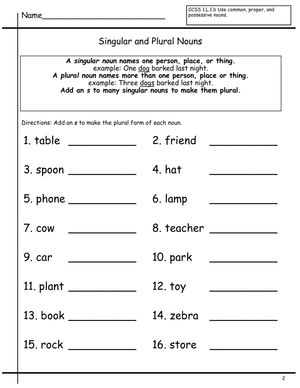
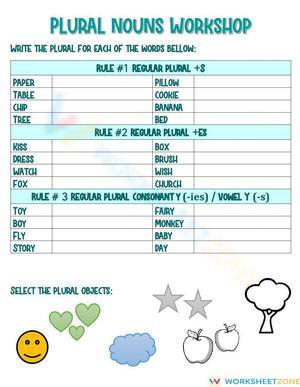
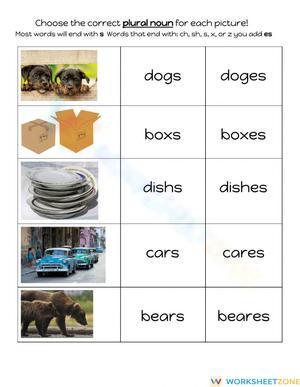
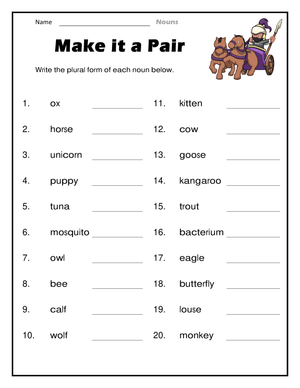
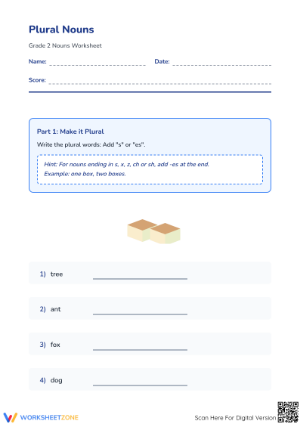
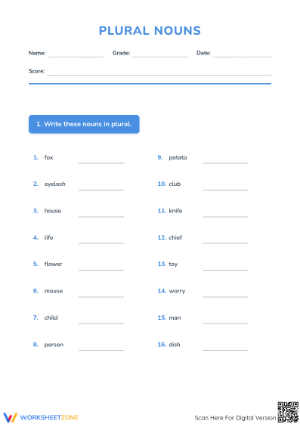
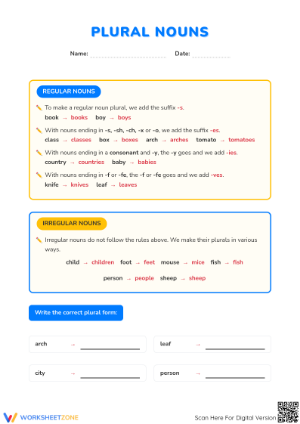
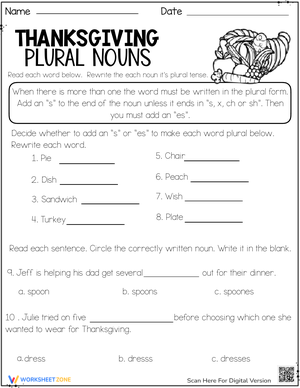
- Standard plurals (-s and -es): Students sort nouns by ending, then write the plural form. Words ending in -s, -x, -z, -ch, and -sh require -es; students identify which ending applies before writing the plural.
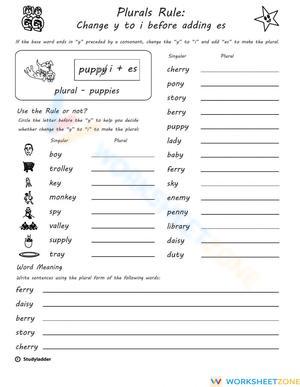
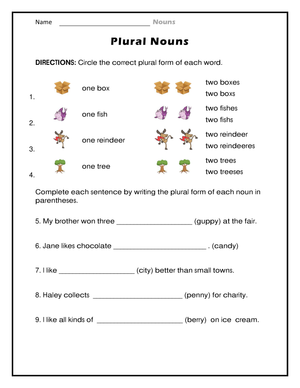
- The consonant-y rule: Nouns ending in a consonant plus -y (city, puppy, berry) change to -ies. Nouns ending in a vowel plus -y (boy, day, toy) take -s. Worksheets pair both patterns side by side so students practice identifying the preceding letter before deciding which rule applies.
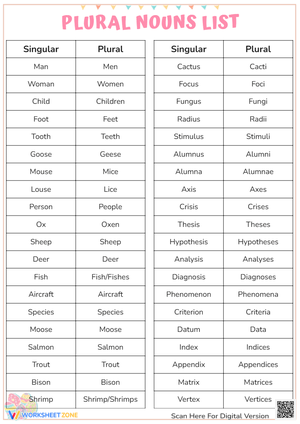
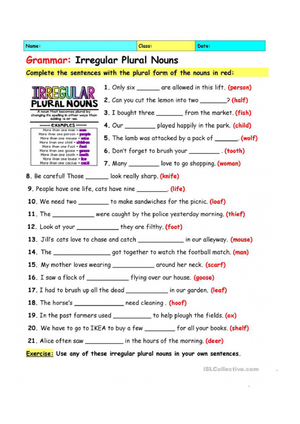
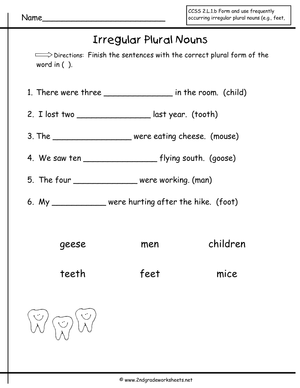
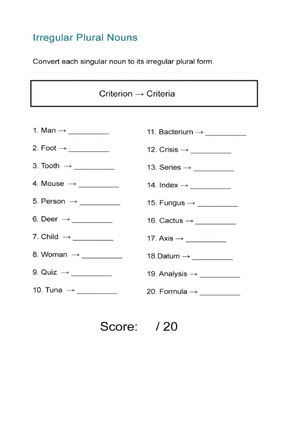
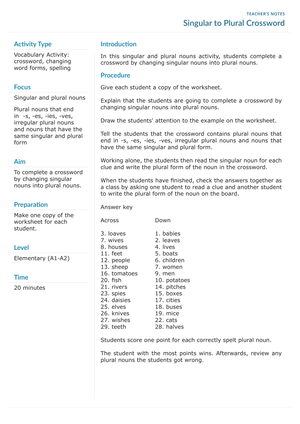
- Irregular plural nouns: Word-form changes that no rule predicts — mouse/mice, child/children, foot/feet, tooth/teeth, goose/geese. Students encounter these inside short sentences rather than word lists, which builds recognition in running text.
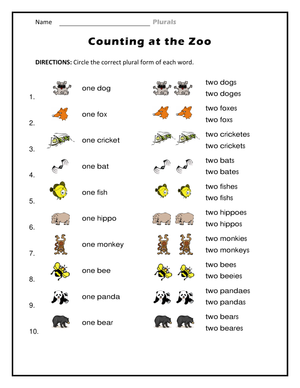
- Unchanging nouns: Sheep, deer, and fish stay the same in both singular and plural. Worksheets present these in sentences with quantity cues so students use context — a number word, a determiner, a verb form — to confirm plurality.
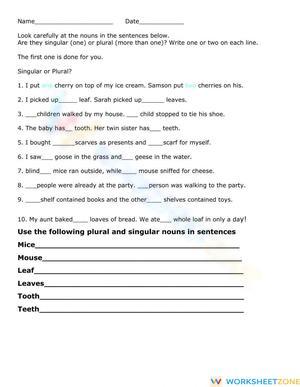
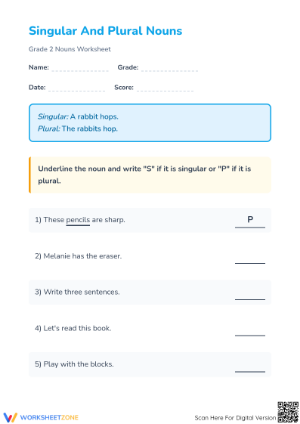
One worksheet in the set focuses on sentence-level editing: students read short paragraphs, locate the incorrect plural form, and rewrite the corrected noun in the margin. A sentence like The childs ran to the bus appears alongside correctly written sentences, requiring students to distinguish correct from incorrect rather than simply filling a blank. That distinction — finding the error rather than producing the form — is a different cognitive task, and it prepares students for the kind of error awareness they need in their own writing.
Common Student Mistakes Teachers Should Anticipate and Address
The consonant-y rule produces a predictable error. Students who have never explicitly noticed the vowel-versus-consonant distinction before -y will pluralize "boy" as "boies" — they've applied a rule, just to the wrong category. This usually surfaces in student writing, not on isolated drills where the word is lifted from a word list. It's worth pulling a few of those student examples to the board and working through the decision process aloud: what letter comes right before the -y? Vowel or consonant? The students who make this error are often following a rule carefully — they just haven't sorted out which words that rule governs.
With irregular nouns, the most persistent errors aren't "childs" — most students learn that one early. It's "mouses" and "foots" that stick around well into fourth grade, appearing even in students who can pass a fill-in worksheet with full marks. The gap between recognizing a correct form on a drill and using it automatically while drafting a story is real. The sentence-editing worksheet helps close that gap by training students to notice the error inside continuous text, which is closer to what actual proofreading looks like.
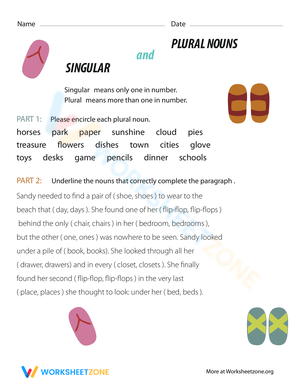
A separate problem: third graders who have just started learning possessive nouns begin adding apostrophes to regular plurals — writing The dog's ran instead of The dogs ran. It shows up in student writing for months if it isn't addressed directly. One worksheet in this set includes a brief comparison section where students circle the noun that correctly shows plural versus the one that has borrowed an apostrophe from possessive forms, which makes the distinction concrete before the habit calcifies.
Standard Alignment
These worksheets align to CCSS ELA-Literacy L.3.1.b, which requires third graders to form and use regular and irregular plural nouns. In most district scope and sequence documents, this standard appears in the first trimester alongside noun types and basic sentence structure. Teachers who use these worksheets as formative checkpoints during instruction — rather than as a unit-end review — get more diagnostic value from them. A short sorting worksheet given after the -es rule mini-lesson tells you immediately which students need small-group reteaching before you introduce the consonant-y pattern. By the time irregular nouns come up, you want the regular rules solid.
How to Build These Worksheets Into Your Lesson Plans
These worksheets fit several different slots in a typical grammar unit without requiring restructuring. A few approaches that hold up in actual classroom schedules:
- Morning warm-up: A ten-question sorting or fill-in worksheet during the first eight minutes of the day gives students focused practice before writing workshop starts. It also gives you a quick scan of the room — who's working confidently, who's staring at the page — before the day gets away from you.
- Literacy centers: Laminate the sorting worksheets and pair them with dry-erase markers for reusable independent practice. The cut-and-paste format, where students physically move word cards into columns labeled "add -s," "add -es," and "change -y to -ies," builds pattern recognition faster than writing answers alone. The physical act of sorting forces categorization before the pencil moves.
- Pre-unit baseline: Distribute a simple fill-in worksheet before teaching irregular plurals. Students' errors give you a concrete list of which forms to prioritize. "Mouses" and "gooses" appear often at the start; "childs" usually doesn't by third grade.
The sentence-editing worksheet makes a strong Friday review or exit ticket. It takes about five minutes and shows clearly whether students can catch plural errors inside continuous text — which is the real-world skill — rather than only in isolated blank-filling tasks.
Differentiating These Worksheets Across Learner Levels
Students who are still consolidating -s and -es rules benefit from the sorting worksheet before any fill-in task. Sorting by ending pattern — without also having to write — reduces how much a student holds in working memory at once, letting them focus entirely on identifying the pattern. Once they're sorting consistently, move them to writing the plural form. That sequence is more effective than asking both things simultaneously at the start.
For students who've already internalized the regular rules and need something harder, the sentence-editing worksheet can be extended: ask them to rewrite the corrected sentence and explain in one sentence which rule they applied and why. This is harder than it looks. Students who correctly fix The childs played outside often cannot articulate that "children" is irregular rather than rule-based. Writing out the explanation surfaces that gap, and surfacing it is the first step toward closing it.
English learners often need extra support with the unchanging-noun category specifically. In many languages, number is marked differently, and the idea that "three sheep" and "one sheep" are spelled identically can read as a typo rather than a grammatical pattern. Pairing the worksheet with a brief visual — a picture of one deer next to a picture of a herd — and a sentence frame (There is one ___. There are three ___.) gives those students a concrete anchor before they work through the worksheet independently.
Frequently Asked Questions
Do these worksheets cover both regular and irregular plural nouns, or just one category?
Both. The 3rd grade singular and plural nouns printable worksheets include separate worksheets for standard pluralization rules (-s, -es, and the consonant-y change) as well as worksheets focused on irregular forms like feet, mice, children, and geese. Because each worksheet addresses one category at a time, teachers can pull exactly what a particular group needs rather than using the whole set every time.
Can I use these worksheets as formative assessment rather than just practice?
Yes, and that's often the most efficient use of them. A sorting or fill-in worksheet given right after a rule-focused mini-lesson tells you which students are ready to move on and which need reteaching before you introduce the next pattern. The sentence-editing worksheet works especially well as a summative check at the end of the plural nouns unit, since it asks students to apply all four rule categories inside continuous text rather than in isolated slots.
How do I handle the plural-versus-possessive confusion that surfaces at this grade level?
The cleanest classroom fix is a direct comparison: write dogs and dog's on the board and ask, "Is anything owned in this sentence?" If the answer is no, there's no apostrophe. The worksheet section that compares plural and possessive forms in sentences reinforces this distinction, and using it before the apostrophe unit begins prevents the confusion from taking root in student writing in the first place.
Are these useful beyond third grade, or are they strictly grade-level resources?
The 3rd grade singular and plural nouns printable worksheets are written to the third-grade standard, but the irregular noun worksheets work well as an intervention or review resource in fourth grade. Fourth graders who still write "mouses" in their drafts benefit from the sentence-editing format because it mirrors the error-awareness work they're already doing during revision. The regular-rules worksheets are pitched at a third-grade reading level and tend to feel too straightforward for most fourth graders who've already moved past those patterns.
Do these work well in an independent center without the teacher present?
The sorting and fill-in worksheets run well independently once students have had direct instruction on the rule being practiced — they rarely need procedural help once they understand the task. The sentence-editing worksheet is better as guided or partner work the first time, especially for students who hesitate to mark something wrong unless they're certain. After one guided walkthrough, most students handle it independently without difficulty. These 3rd grade singular and plural nouns printable worksheets are formatted clearly enough that students spend their time on the grammar, not on figuring out what the task is asking.












 Interactive Worksheet Maker
 Quiz Maker
 Word Search Maker
 Crossword Puzzle Maker
 Word Scramble Generator
 Sentence Scramble Generator
 Handwriting Worksheet Generator
 Name Tracing Generator
 Fill In The Blank Generator