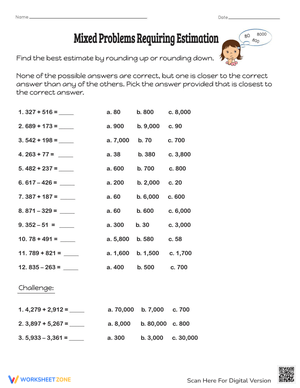
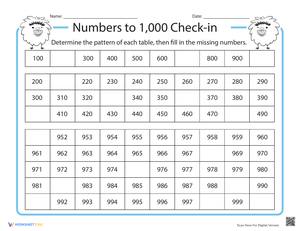
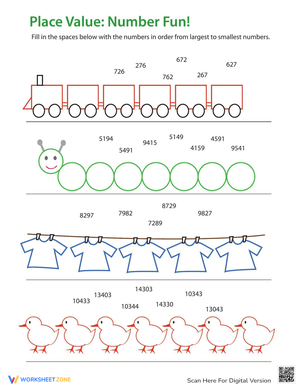
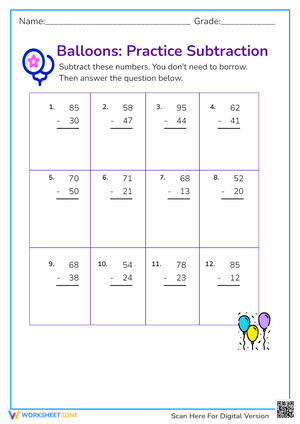
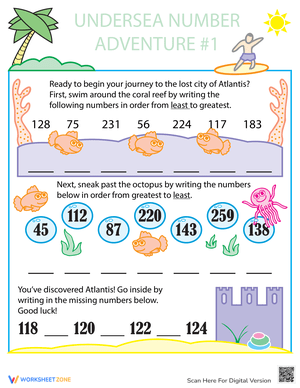
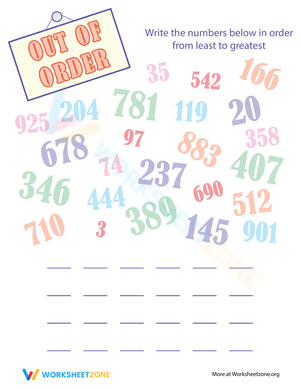
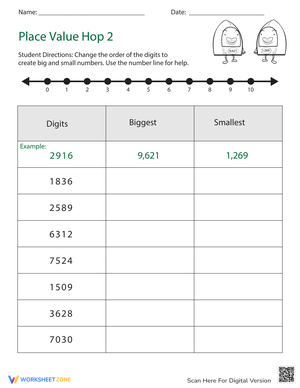
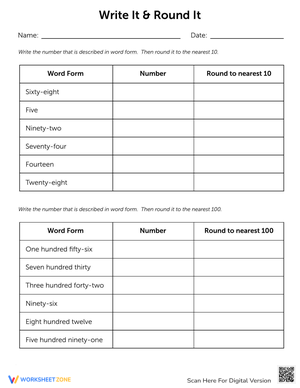
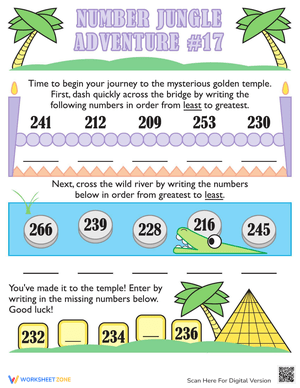
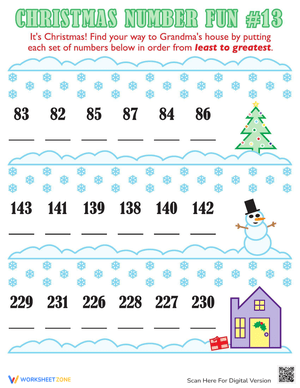
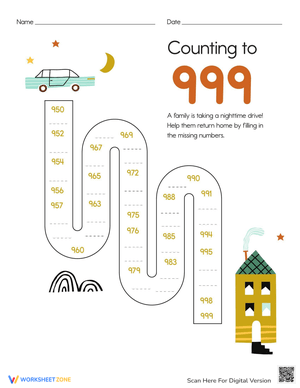
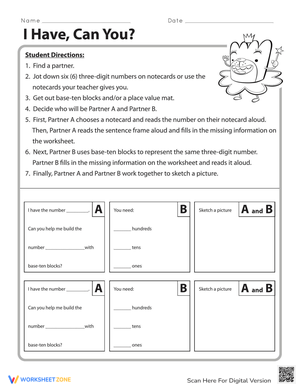
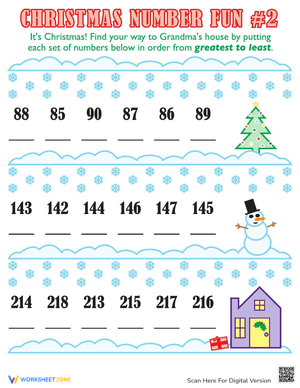
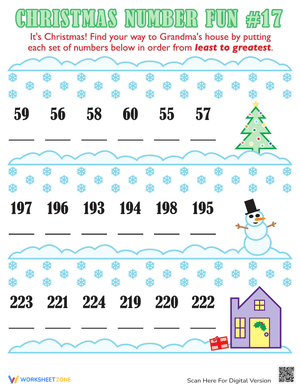
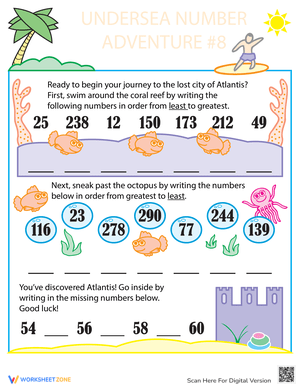
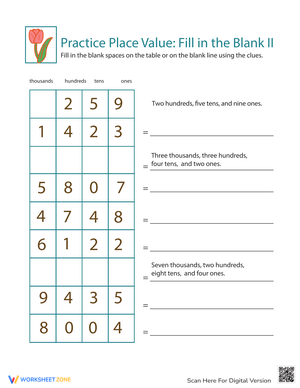
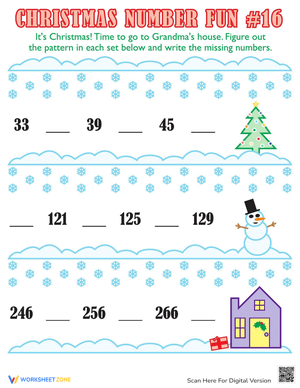
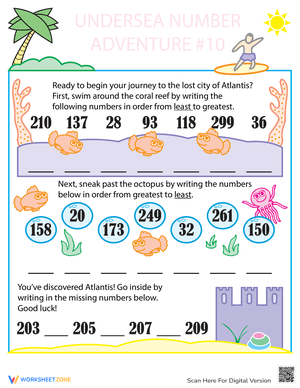
These multi digit numbers worksheets for 2nd grade give teachers a focused set of resources for one of the more significant cognitive shifts in early math — the move from two-digit numbers to three-digit numbers, where students must hold hundreds, tens, and ones as simultaneous, distinct quantities rather than as one undivided "big number." The set addresses place value identification, expanded form, symbolic comparison, and open number line placement, all within the base-ten framework that anchors Grade 2 number sense instruction.
The Specific Skills Targeted
Each worksheet addresses one or two tightly defined skills so students get concentrated practice rather than skimming through too many concepts at once. The core skills across the set include:
- Base-ten block interpretation: Students count hundreds flats, tens rods, and ones units shown in pictorial models and write the corresponding three-digit number. This bridges manipulative work to paper-based practice and reinforces that a flat is worth exactly ten rods — a relationship second graders often accept verbally before they fully internalize it numerically.
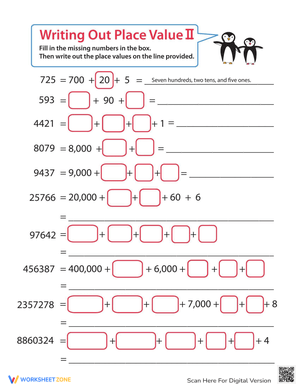
- Standard, expanded, and word form translation: Students move between all three representations. Translating from expanded form back to standard form — reading 400 + 50 + 9 and writing 459 — proves harder for most students than the forward direction, so several worksheets target that reversal specifically.
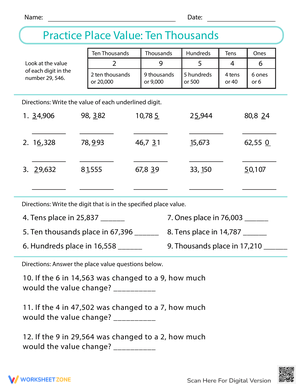
- Digit value identification: Students identify the value of a specific underlined or circled digit within a three-digit number, distinguishing between the digit 8 and what that 8 is actually worth depending on whether it sits in the ones, tens, or hundreds place.
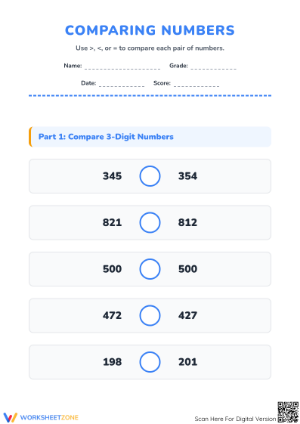
- Comparison using relational symbols: Students fill in greater than, less than, or equal to symbols between pairs of three-digit numbers. Select exercises require a brief written justification rather than simply a symbol, which makes reasoning visible.
- Open number line placement: Students mark the approximate location of a given number between two labeled endpoints, building a sense of relative magnitude — for instance, judging why 640 sits closer to 600 than to 700.
Where Students Consistently Go Wrong in This Unit
The single most persistent error is digit-value conflation: a student reads 382, correctly identifies the middle digit as 8, and writes the value as 8 rather than 80. It sounds like a small slip, but it signals that the student is reading the number as a string of unconnected digits rather than as a structured composition of place-value groups. The worksheets that ask students to write both the digit and its value as a full number surface this confusion quickly — and reliably, before it drifts into the operations unit undetected.
Expanded form reversals catch a different category of student. A child who writes 300 + 60 + 7 from the number 367 will sometimes, when given 300 + 7 and asked for the standard form, write 37 — dropping the tens place entirely because there are no tens to show. The internal logic is consistent: they concatenate the visible parts. Worksheets that include numbers with a zero in the tens or ones place are the most reliable diagnostic for this misconception, and the set includes those deliberately.
On comparison tasks, students frequently start evaluating at the ones place rather than the hundreds. A student comparing 547 and 581 might focus on the 7 and the 1 and conclude that 547 is greater. Written justification prompts force this procedural confusion into the open so teachers can address it directly in the following lesson, rather than discovering it on a unit assessment.
Lesson-Planning Ideas to Get the Most From These Worksheets
The base-ten block worksheets work best at the opening of a new concept — used alongside physical manipulatives before students work from symbolic representations alone. Even five minutes of building a three-digit number with actual rods and flats before sitting down to the pictorial worksheet reduces the cognitive load of the paper task substantially. Once students identify quantities from pictures without hesitation, the symbol-only worksheets are appropriate.
The comparison worksheets work well as a structured partner activity during the 10–12 minutes before transition on days when independent practice is wrapping up. Two students, one worksheet between them, each explain their reasoning aloud before writing the symbol. The explanations reveal far more than the filled-in symbols do. One student says "they both have five hundreds so I looked at the tens" and another says "I knew 8 tens is more than 4 tens" — both right, both showing genuine place-value thinking. That tells you more than a completed worksheet sitting in a folder.
For expanded form work, try having students use two different colored pencils during early sessions — one color for hundreds and tens, another for ones. The visual separation reinforces that expanded form is a decomposition, not just a notational habit. Within two or three sessions, most students stop needing the color separation and write expanded form fluently on their own.
Standard Alignment
These resources align directly with CCSS.MATH.CONTENT.2.NBT.A.1, which establishes that students understand the three digits of a three-digit number represent amounts of hundreds, tens, and ones, and with 2.NBT.A.3, which requires students to read and write numbers to 1,000 using base-ten numerals, number names, and expanded form. The comparison work connects to 2.NBT.A.4, specifying comparison of three-digit numbers using greater than, less than, and equal to symbols.
In curriculum sequencing terms, these standards typically appear in the second major unit of the school year, after students have consolidated two-digit addition and subtraction. The place value work done here sets the groundwork for 2.NBT.B.7 — adding and subtracting within 1,000 — which is why solid understanding of three-digit structure matters before regrouping instruction begins. Gaps in place value at this stage compound into the operations unit in predictable ways.
Differentiating the Set Across a Range of Learners
Students who are not yet secure with two-digit place value benefit from starting with the base-ten block worksheets and working alongside physical manipulatives. A student who builds 34 with rods and units before building 340 with a flat and rods sees the structural parallel clearly. This is not a separate version of the worksheet — it is a temporary entry point using materials already on the desk.
For students who move through the set quickly, the comparison worksheets offer a natural extension: instead of comparing two given numbers, ask them to generate a three-digit number that falls between two given values and justify their choice in writing. A student who writes "I picked 516 because the hundreds match both endpoints, and 516 has more tens than 502 but fewer tens than 581" is demonstrating exactly the flexible place-value reasoning that signals readiness for early three-digit addition work.
Multi digit numbers worksheets for 2nd grade can also serve students who need reinforcement across multiple exposure cycles. The set covers enough distinct formats — pictorial models, symbolic notation, verbal descriptions, number lines — that repeated practice across a week does not feel like the same task repeated. The variation in representation keeps the cognitive work genuine without requiring a separate bank of differentiated materials.
Frequently Asked Questions
What is the difference between a digit and its place value, and how do I explain it clearly?
A digit is a symbol — one of ten possible symbols, zero through nine. Its value is what that symbol is worth based on its position in the number. The digit 6 is always 6, but it represents six ones, six tens (sixty), or six hundreds depending on where it appears. A place value chart where students physically slide a digit card into different columns — watching the value label beneath it change — makes this visible before any worksheet practice begins. The exercises that ask students to write both the digit and its full numerical value reinforce this distinction directly.
In what order should I introduce the worksheets across a unit?
Start with base-ten block worksheets, which are the most concrete. Move to standard-and-expanded-form work once students read pictorial models accurately. Introduce comparison tasks after expanded form is stable, because students who understand 347 as 300 + 40 + 7 compare numbers far more reliably than students who see 347 as an unanalyzed whole. Number line placement works well near the end of the sequence, when students have enough sense of magnitude to reason about where a number sits between two benchmarks.
How do I handle numbers with a zero in the middle, like 307 or 504?
Zeros in the tens or ones place are the hardest cases in this unit. A student who writes 300 + 7 for the number 307 has the right values but omits the zero-tens, which matters when reconstructing standard form. Treat these numbers as their own mini-lesson. Have students write 300 + 0 + 7 explicitly so the zero tens appear in the expanded form — from there, the connection to 307 (three digits, not two) becomes much clearer. Several worksheets include at least one number with an internal zero precisely because this is where understanding gets genuinely tested.
Can these worksheets function as assessments?
Multi digit numbers worksheets for 2nd grade work well as formative checkpoints. The digit-value identification exercises give a fast read on whether a student understands place value structurally or is still guessing from pattern. The comparison tasks with written justifications give richer data than symbol-only answers do. For a formal summative grade, select three or four exercises across different skill types rather than scoring a full worksheet — partial-credit scoring on the written justification items gives the most instructionally useful information.
What should I do when a student completes a worksheet correctly but fails the same skill in a different context?
Multi digit numbers worksheets for 2nd grade use a consistent format by design, so a student who performs well here but struggles when the same question appears inside a word problem or on a cumulative test is showing context-dependent knowledge rather than genuine place-value understanding. Introduce the same concept in a different format — a verbal question, a number talk, or a quick whiteboard check — to confirm whether the understanding transfers. If it does not, that student needs more varied exposure, not more repetitions of the same worksheet format.













 Interactive Worksheet Maker
 Quiz Maker
 Word Search Maker
 Crossword Puzzle Maker
 Word Scramble Generator
 Sentence Scramble Generator
 Handwriting Worksheet Generator
 Name Tracing Generator
 Fill In The Blank Generator