


























Views
Downloads
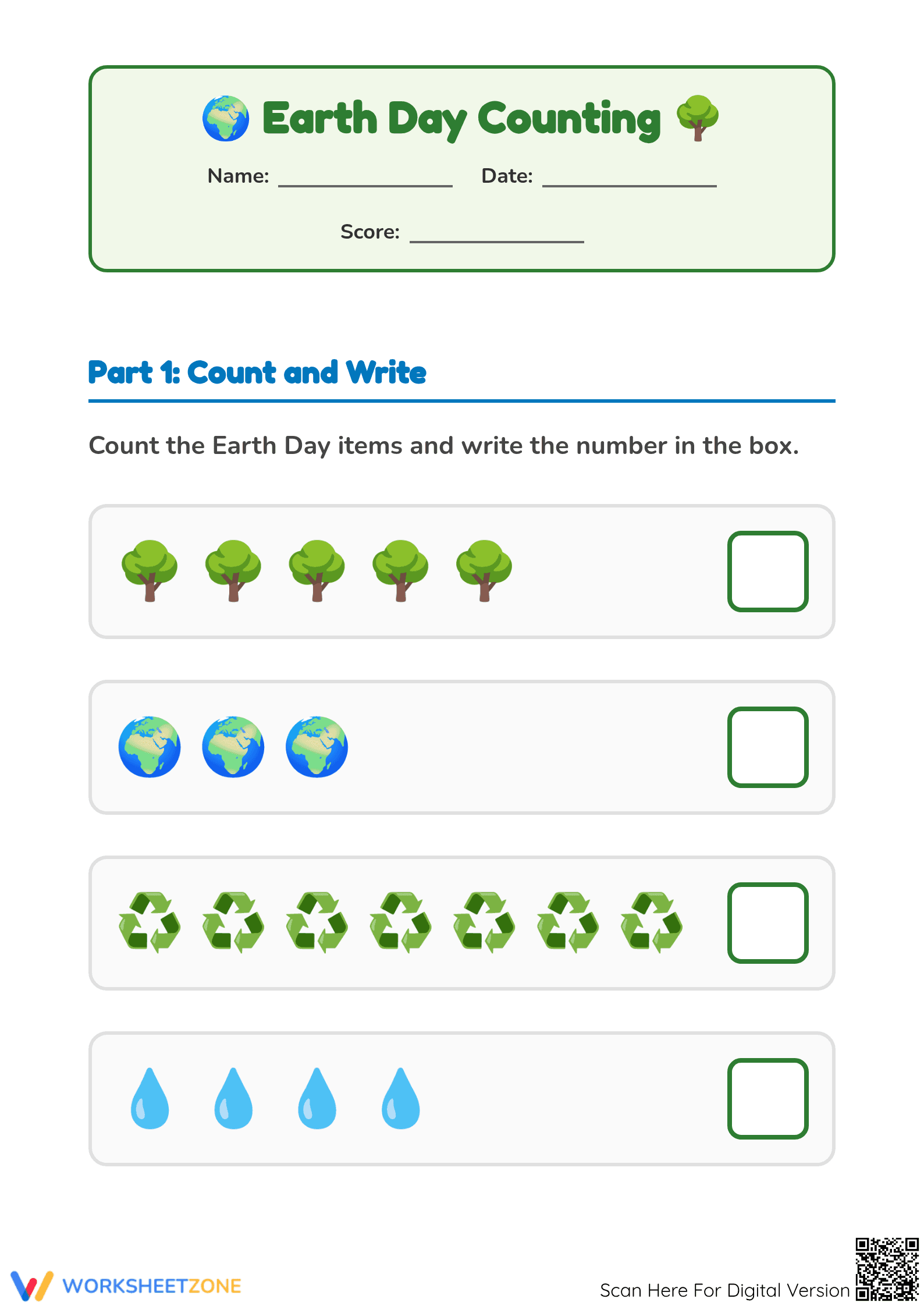
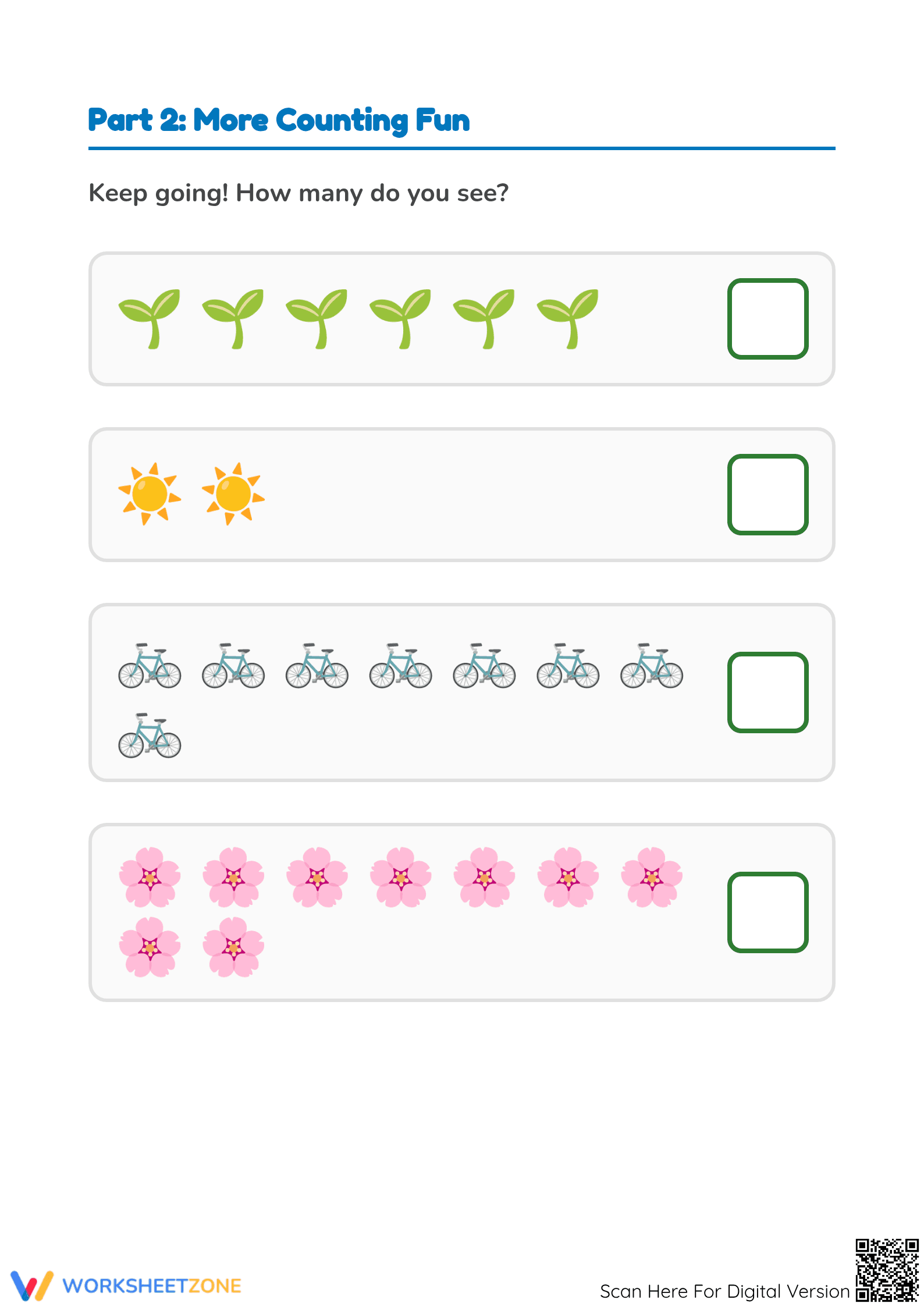
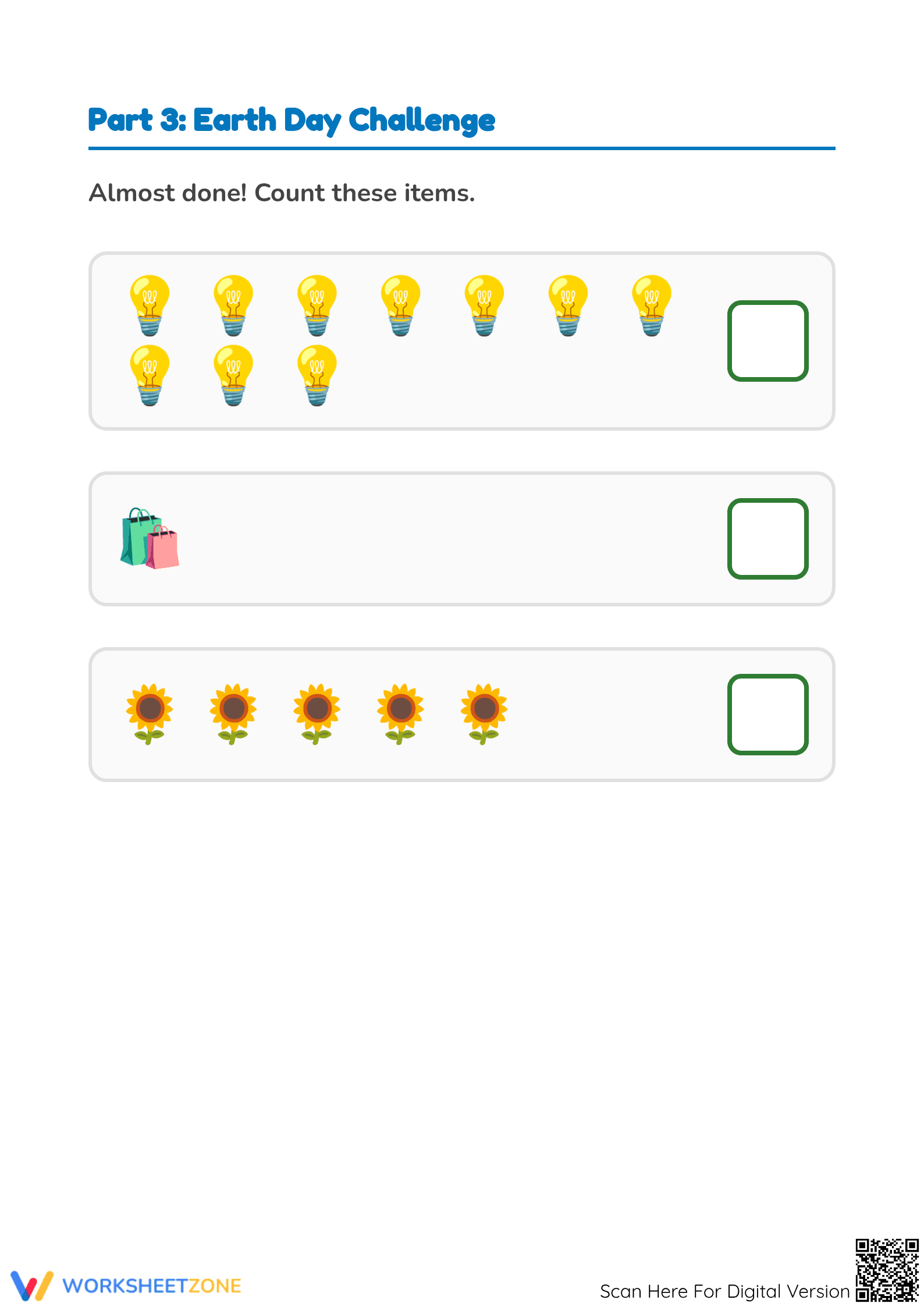

Printable Earth Day Counting Worksheet | Grade K
Paste this activity's link or code into your existing LMS (Google Classroom, Canvas, Teams, Schoology, Moodle, etc.).
Students can open and work on the activity right away, with no student login required.
You'll still be able to track student progress and results from your teacher account.
This Earth Day counting worksheet helps Kindergarten students practice one-to-one correspondence and number writing. By counting themed objects like trees, globes, and recycling symbols, early learners build foundational math skills while celebrating environmental awareness. The structured format ensures students can confidently count and record quantities up to ten.
At a Glance
- Grade: Kindergarten · Subject: Math
- Standard:
CCSS.MATH.CONTENT.K.CC.B.5— Count to answer how many objects are in a group- Skill Focus: Counting objects up to 10
- Format: 3 pages · 11 problems · Answer key included · PDF
- Best For: Independent practice or morning work
- Time: 10–15 minutes
This three-page resource features eleven distinct counting tasks divided into three engaging parts. Students will count various Earth Day-themed items, including water drops, bicycles, and sunflowers, and write the corresponding numeral in the provided box. The clear, uncluttered layout minimizes distractions, while the included full answer key allows for quick grading or self-checking.
Zero-Prep Workflow
This resource requires minimal teacher setup:
- Print (1 minute): Simply download the PDF and print the three student pages.
- Distribute (1 minute): Hand out the packets during morning work, math centers, or as a thematic holiday activity.
- Review (1 minute): Use the provided answer key to quickly check student responses or project it on the board for whole-class review.
With under two minutes of total prep time, this activity is an excellent addition to any emergency sub plan or busy holiday week schedule.
Standards Alignment
This activity is directly aligned to CCSS.MATH.CONTENT.K.CC.B.5, requiring students to count to answer "how many?" questions about as many as 20 things arranged in various configurations. By focusing on quantities up to ten, it provides targeted practice for early learners mastering one-to-one correspondence. Both standard codes can be copied directly into lesson plans, IEP goals, or district curriculum mapping tools.
How to Use It
Use this worksheet during independent math centers after a whole-group counting lesson. It also serves as an excellent thematic morning work assignment during Earth Day week. As a formative assessment tip, observe students as they complete the first page; watch to see if they physically touch or cross out each object as they count, which indicates developing one-to-one correspondence. Expected completion time is 10 to 15 minutes.
Who It's For
This resource is designed for Kindergarten students developing basic counting skills. It is also appropriate for preschool students who are ready for an academic challenge, or first-grade students needing foundational review. To support differentiation, provide physical manipulatives like counting bears or mini erasers for students who need tactile reinforcement. Pair this activity with a read-aloud book about recycling or taking care of the Earth to integrate literacy and math.
Effective early mathematics instruction relies heavily on explicit, repeated practice with counting and cardinality. According to a recent EdReports 2024 analysis of foundational math curricula, providing students with thematic, visually distinct objects to count significantly improves their ability to master one-to-one correspondence and number recognition. This worksheet directly targets CCSS.MATH.CONTENT.K.CC.B.5, helping students count to answer how many objects are in a group. By integrating high-interest themes like Earth Day with rigorous academic tasks, educators can increase student engagement while meeting core developmental milestones. The structured repetition of counting and writing numerals solidifies the connection between spoken numbers and written symbols, a critical precursor to addition and subtraction. Utilizing targeted, standards-aligned materials ensures that early learners build the necessary cognitive frameworks for future mathematical success in elementary grades and beyond.


