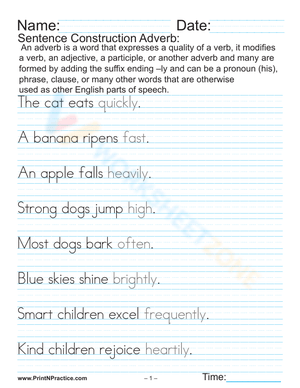
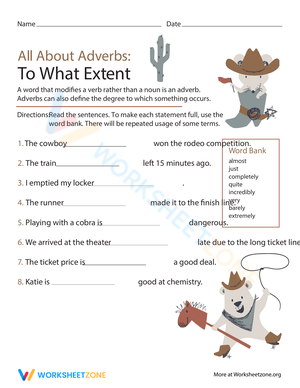
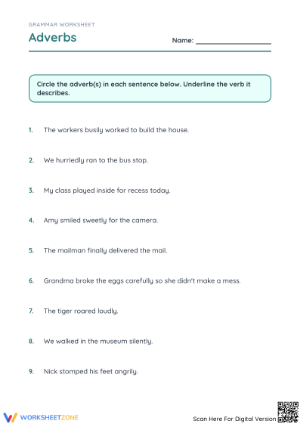
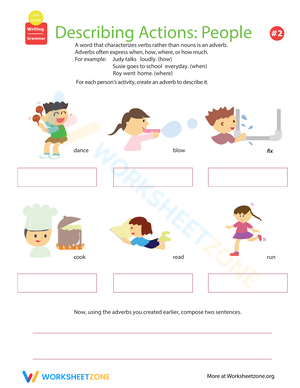
These adverbs worksheets for 2nd grade give teachers a targeted, print-ready set built around the three questions second graders learn to ask about any action verb: how, when, and where. Each worksheet addresses one skill in isolation — identification, sorting, sentence completion, or original writing — so students do different cognitive work on each rather than repeating the same drill. The set fits naturally into the grammar block, writer's workshop warm-ups, or Friday review without any extra preparation.
The Three Questions Students Learn to Ask
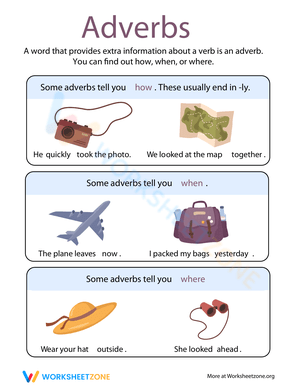
Second grade is the right moment to name adverbs explicitly. Students at this stage have enough reading and writing experience to see the difference between "the dog ran" and "the dog ran frantically," but they don't yet have a word for what frantically is doing in that sentence. Giving them the how/when/where framework turns what could feel like an abstract grammar rule into a practical tool they can reach for during any writing task.
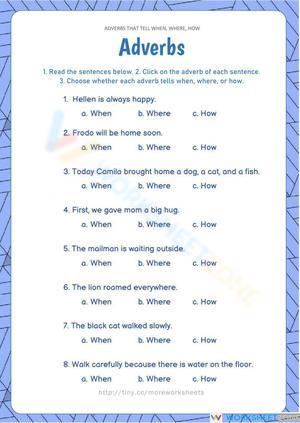
The "how" category gets the most space in the set because that's where the most learning happens and where most errors surface. Students work with manner adverbs like carefully, slowly, and loudly before encountering the ones that don't follow the -ly pattern. The "when" worksheets address temporal words — today, always, never, soon — which students need for sequencing in their own writing. "Where" adverbs (here, outside, everywhere) get their own targeted practice because students routinely misread them as prepositions when they encounter them in print.
What the Worksheets Ask Students to Do
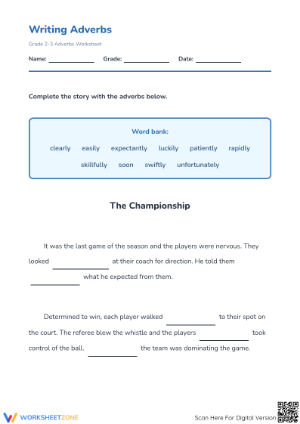
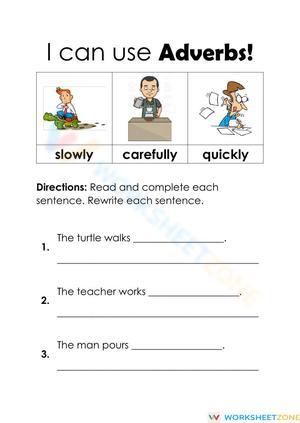
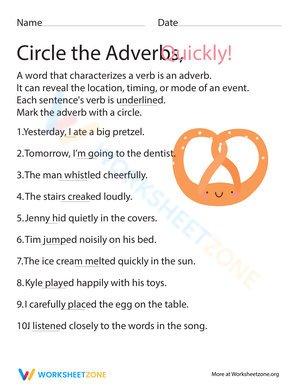
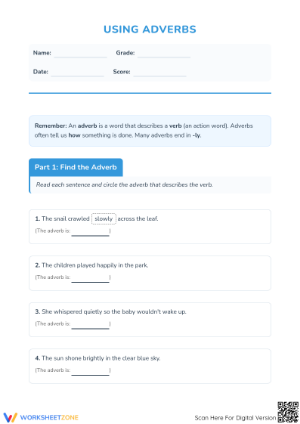
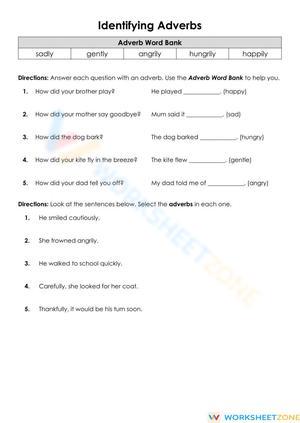
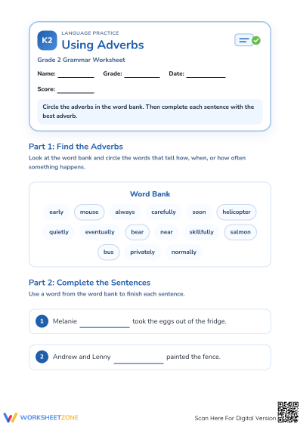
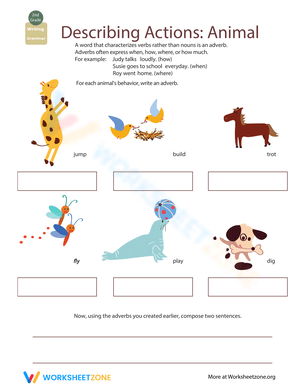
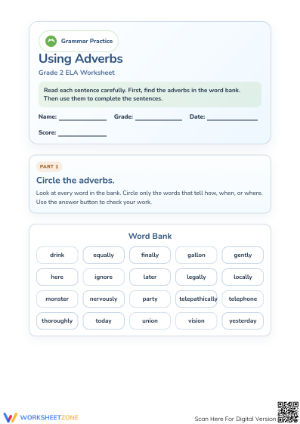
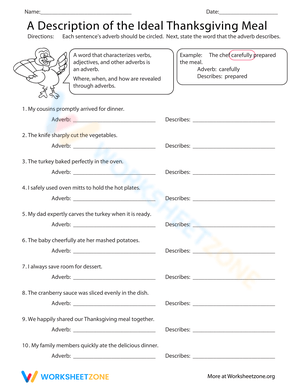
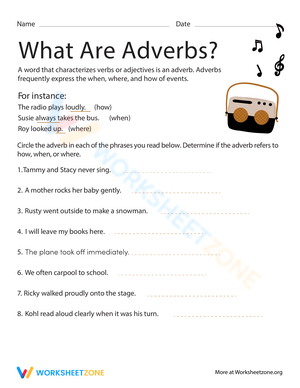
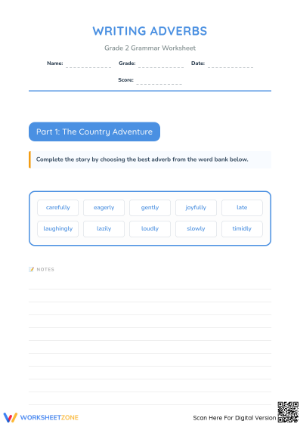
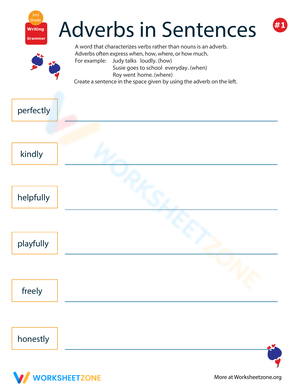
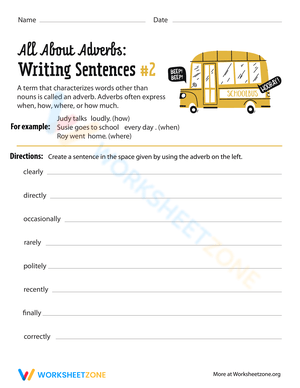
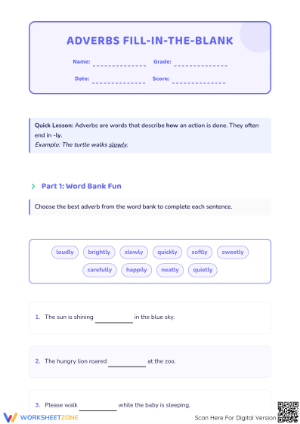
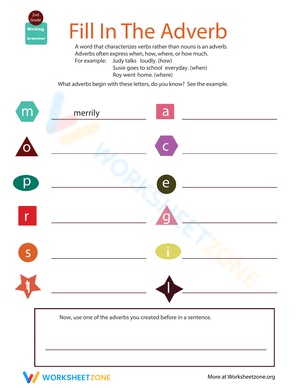
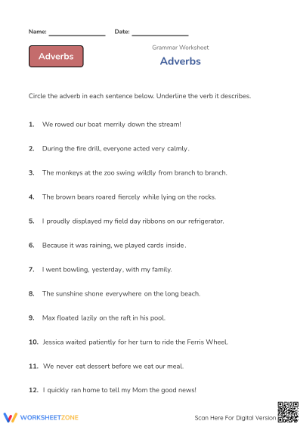
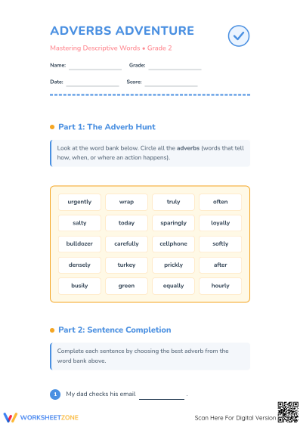
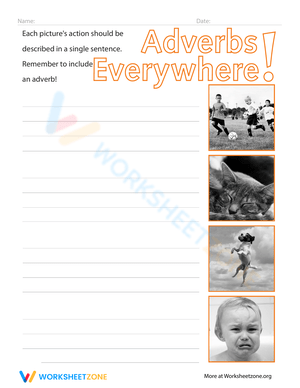
Across the set, students underline adverbs in context sentences, sort word cards into how/when/where columns, choose the best adverb from a word bank to complete a sentence, and write original sentences using a given adverb. That last task is the most diagnostic. When a student writes "The boy loudly" and stops, it tells you they haven't yet internalized that the adverb needs a verb to modify. When a student writes "She carefully placed the tiny egg back in the nest," the concept has clicked.
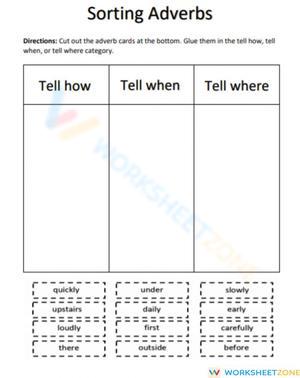
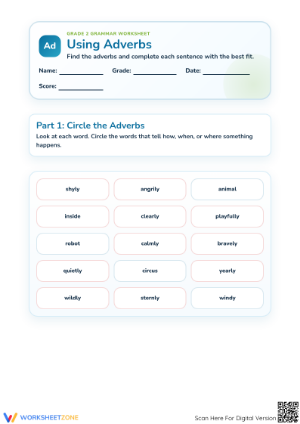
The sorting activity deserves particular mention. Sorting adverbs by function — rather than simply identifying them — shifts the cognitive work from recognition to categorization. Students who can circle an adverb in a sentence don't always know which kind it is, and that distinction matters when they sit down to revise a flat paragraph in writer's workshop. The sorting worksheet surfaces that gap quickly.
Common Misconceptions to Watch For and Correct
The adjective-adverb confusion is the most persistent error at this grade level, and it almost always appears in the same place: sentences where an adjective follows a linking verb. A student reads "the music was soft" and marks soft as the adverb because they've just learned that adverbs describe how things happen — and soft does describe something. What they missed is that was connects soft back to music, the noun. That distinction is genuinely difficult for seven-year-olds, and re-explaining the rule rarely resolves it on its own. The more effective move is to have students test each word against the three questions: does soft answer how, when, or where about the verb? If not, it's not functioning as an adverb here.
A second pattern: students drop the -ly ending when writing their own sentences even after identifying -ly adverbs correctly in earlier tasks. You'll see "she ran quick to the door" from the same student who circled "quickly" without hesitation in exercise one. That's a transfer problem, not a comprehension problem. The original-sentence tasks at the end of each worksheet are specifically positioned to catch it.
Fitting These Worksheets Into the Grammar Block
The identification and sorting worksheets work well as warm-ups in the 8–10 minutes before morning meeting wraps up — short enough to finish cleanly, targeted enough to prime the day's grammar instruction. The sentence-completion and sentence-writing worksheets are better suited to the independent-work portion of a grammar lesson, after 10–15 minutes of direct instruction where students have already tried examples together as a class.
One sequencing strategy that pays off: introduce the "how" worksheet before reading a mentor text that uses strong manner adverbs, then revisit the worksheet after the read-aloud. Students notice the words differently the second time. Mo Willems's Elephant and Piggie books and E.B. White's Charlotte's Web both offer accessible, high-frequency examples. Using the worksheet as both pre-reading and post-reading practice gives students two passes at the concept within a single lesson — enough repetition to move most second graders from "heard of it" to "can find it in print."
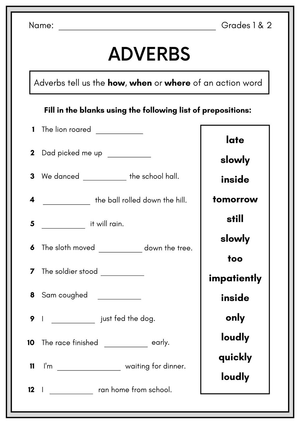
The adverbs worksheets for 2nd grade set also works as a self-paced Friday review station during literacy centers. Place one worksheet at a grammar station with the answer key tucked underneath, and students can check their own work. That immediate feedback loop matters more for grammar than teachers sometimes expect — students who wait until Tuesday to find out they circled the wrong word have already reinforced the error.
Standard Alignment
These worksheets address CCSS.ELA-LITERACY.L.2.1.E, which requires second graders to "use adjectives and adverbs, and choose between them depending on what is to be modified." The standard is placed at second grade — not first, not third — because students at this stage are producing multi-clause sentences and need grammatical vocabulary to talk about and revise their own word choices. Meeting L.2.1.E isn't just about passing a grammar check; it's about giving students the metalanguage they'll use in writing conferences for the next several years. The full adverbs worksheets for 2nd grade set covers both the identification and the application requirements of L.2.1.E, addressing the standard on both its recognition and production sides.
Adjusting the Set for a Range of Learners
For students who need more support — including English language learners encountering manner adverbs for the first time — the identification worksheets are the right entry point. Adding a small picture next to each adverb in the word bank (a tortoise beside slowly, a lightning bolt beside quickly) takes about two minutes to prep and meaningfully lowers the language barrier without changing the grammatical task. Sentence starters on the writing tasks ("The rabbit ______ hopped...") give these students a structural anchor without removing the grammar challenge itself.
Advanced students who finish standard tasks quickly can take the sentence-writing worksheet further: rewrite a provided paragraph of flat sentences by adding at least one adverb per sentence, then write a one-sentence explanation of why they chose each word. That second step is the real extension. It asks students to move from intuitive use to intentional, metalinguistic reasoning — exactly the kind of revision thinking they'll need in third and fourth grade writing.
Frequently Asked Questions
Do students need to know adjectives before starting these worksheets?
A basic familiarity with adjectives helps, because the adjective-adverb distinction surfaces quickly once students begin identifying adverbs in sentences. Students don't need to have mastered adjectives, but they should have heard the term and practiced using describing words with nouns before this unit begins. If your class hasn't done adjective work yet, a single day of quick review before introducing the adverbs worksheets for 2nd grade set makes the sorting tasks go considerably more smoothly.
How many worksheets should I assign per week during a grammar unit?
One or two per week is enough to build retention without letting grammar crowd out the rest of the literacy block. Spaced practice — returning to an adverb worksheet after a week away from the topic — produces stronger long-term recall than running the entire set in one dense unit. Teachers who revisit one worksheet per week during the month after the main grammar unit often see the concept hold better in student writing than teachers who front-load all the practice at once.
What should I do if a student keeps mixing up adverbs and adjectives even after multiple lessons?
This rarely resolves through more identification drills. The more effective move is to shift the student's habit before they look for the adverb: ask them to find and circle the verb first. Once students reliably locate the action word, the follow-up question — "what word in this sentence tells us more about that verb?" — becomes much easier to answer. The sentence-writing tasks in this set build exactly that habit, because students have to produce a sentence with a functioning verb before the adverb has anywhere to attach.












 Interactive Worksheet Maker
 Quiz Maker
 Word Search Maker
 Crossword Puzzle Maker
 Word Scramble Generator
 Sentence Scramble Generator
 Handwriting Worksheet Generator
 Name Tracing Generator
 Fill In The Blank Generator