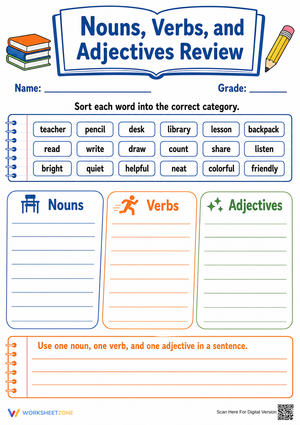
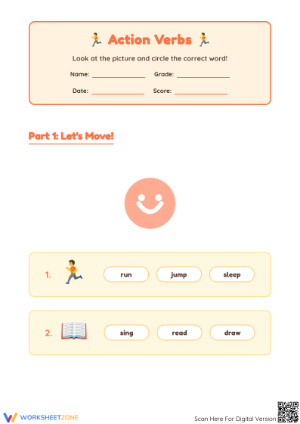
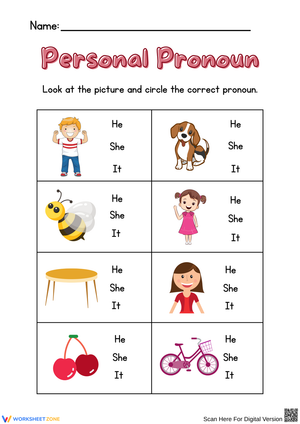
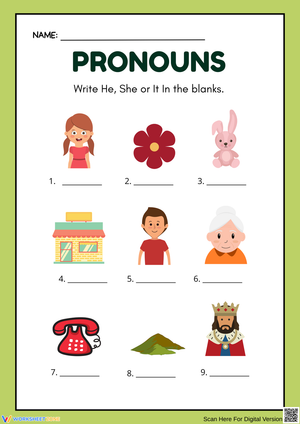
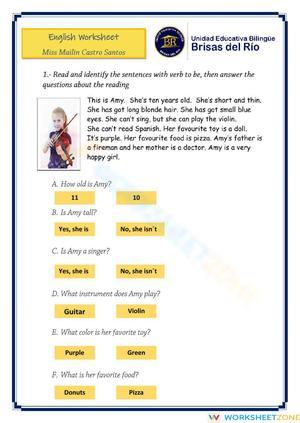
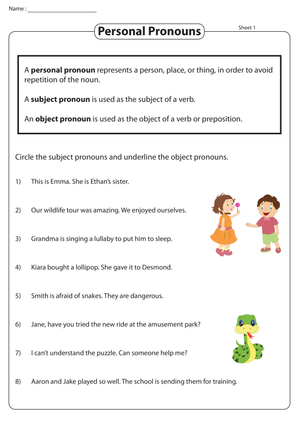
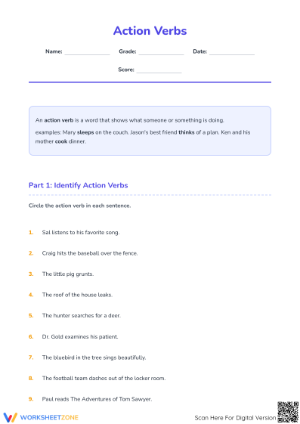
These parts of speech printable worksheets for 2nd grade give teachers targeted, ready-to-use practice on the grammar concepts students are expected to own by the end of second grade — common and proper nouns, action verbs, past and present tense, adjectives, and pronouns. The set covers each category with focused exercises that move between identification and application, so students aren't just naming parts of speech but using them in sentences they write themselves.
What Each Worksheet Targets
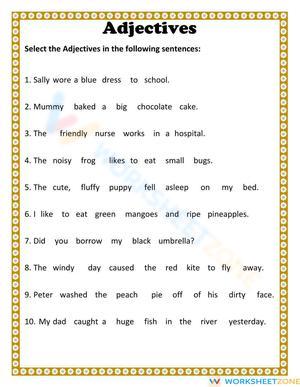
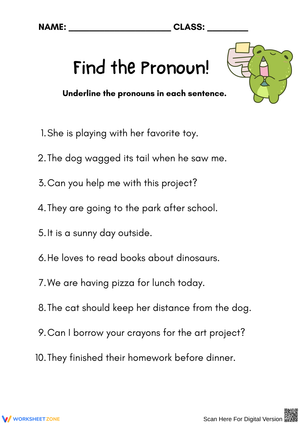
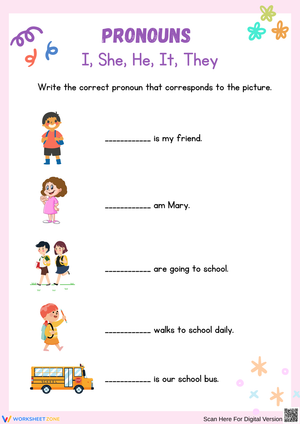
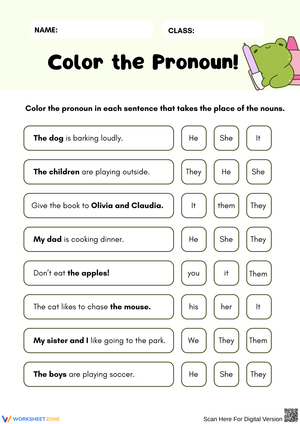
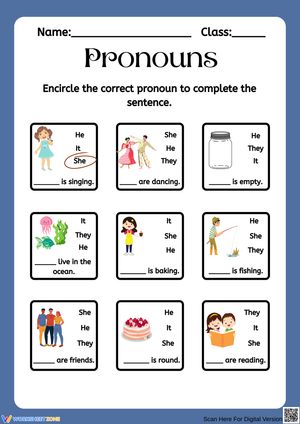
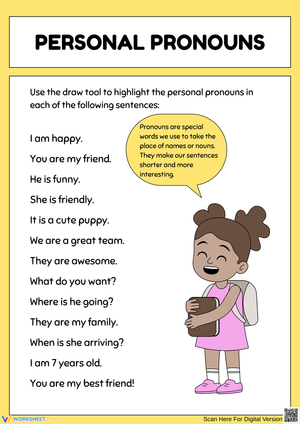
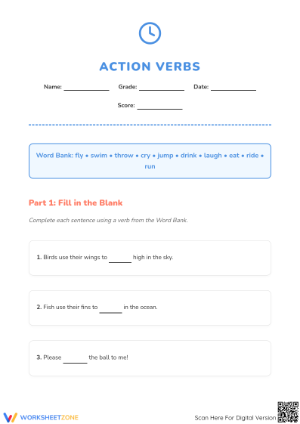
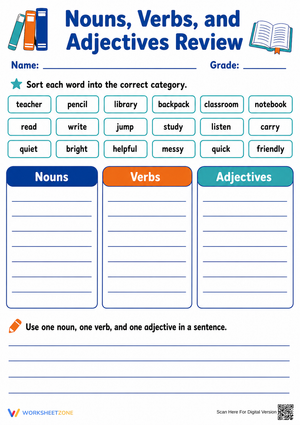
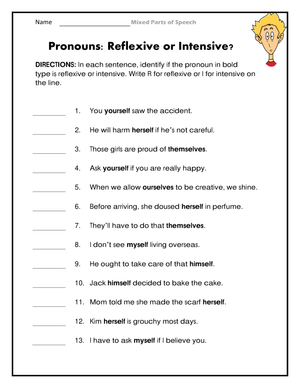
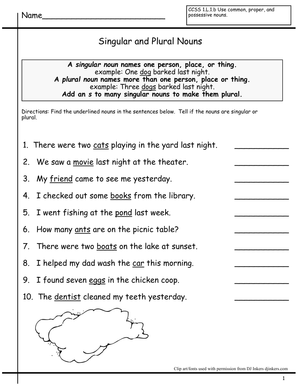
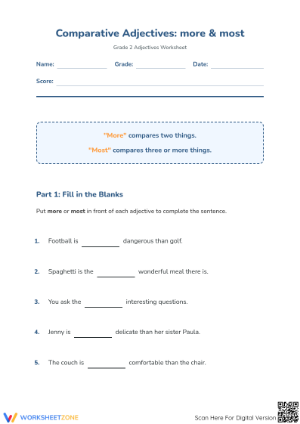
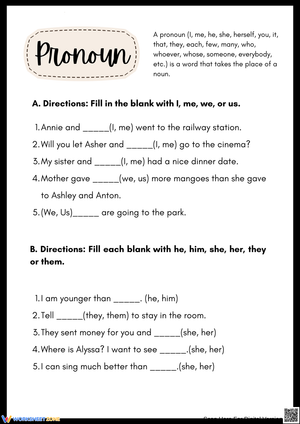
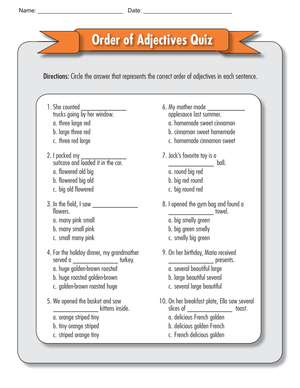
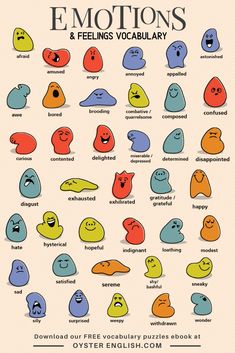
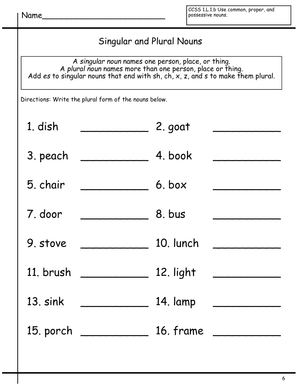
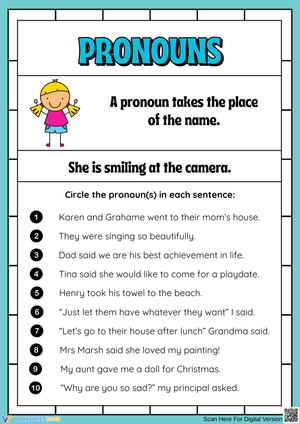
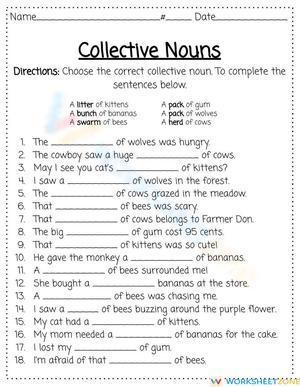
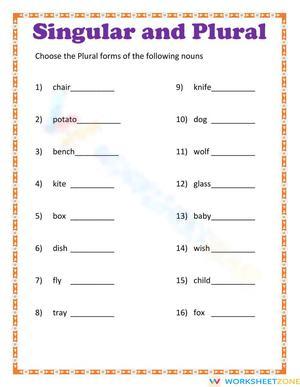
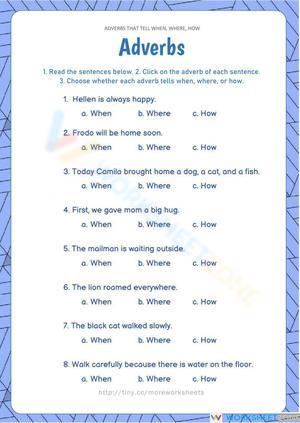
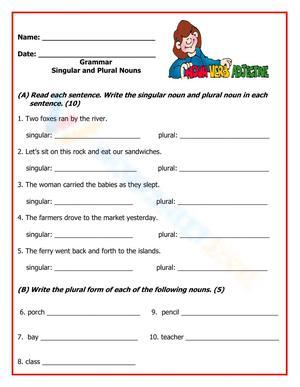
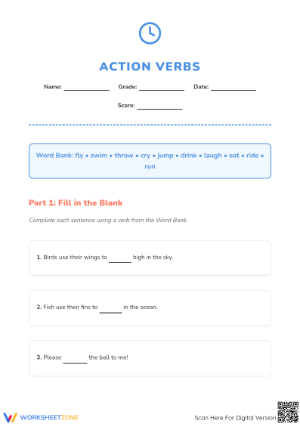
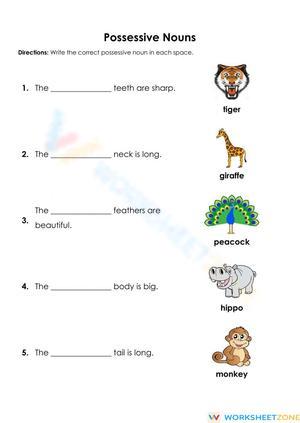
Second grade is when grammar instruction shifts from pure exposure to accountable use. Students are no longer just hearing nouns and verbs explained during read-alouds; they're expected to use them correctly in their own writing. The worksheets in this set reflect that shift. Across the noun exercises, students sort common and proper nouns, rewrite singular nouns as irregular plurals — foot/feet, child/children — and identify collective nouns in full sentences. Verb worksheets ask students to mark the action verb in each sentence and then rewrite it in a different tense. The adjective exercises start with sensory categories — how something looks, sounds, or feels — and build toward stringing two or three adjectives together before a noun. Pronoun practice begins with personal pronouns, then moves into reflexive forms that trip up even strong second-grade writers.
One thing these worksheets do consistently: every exercise uses complete sentences, not isolated word lists. A student never circles a noun presented in isolation — they're always finding it in context, which is what actually prepares them for the writing tasks that follow. The parts of speech printable worksheets for 2nd grade in this collection hold to that format throughout.
Student Errors Worth Anticipating Before You Hand These Out
Irregular plural nouns produce the most predictable mistakes at this level. Students who write "mouses" and "childs" aren't being careless — they're applying the regular rule they just internalized, which is exactly what developing writers do. The noun worksheets give enough concentrated exposure to irregular forms that the correct versions start to feel familiar rather than arbitrary.
Pronoun errors follow a different logic. Students who use "he" and "she" without any trouble will still write "Me and Marcus finished first" without a flicker of doubt, because that construction sounds natural in spoken language. The pronoun worksheets ask students to underline the pronoun in a given sentence and then evaluate whether it's correct — which forces slowing down rather than just filling in a blank. Proper noun recognition is the other pattern worth watching: a student who correctly capitalizes "Monday" on a calendar will write "my mom works at jefferson elementary" in a story. That transfer is slow, and it needs practice across varied sentence contexts, not just on a word list.
Building These Worksheets Into Your Weekly Routine
Short, frequent sessions outperform long grammar blocks at this age. Ten minutes during morning meeting wrap-up, a literacy center rotation, or the last few minutes before specials — these windows are where consistent grammar practice actually lives in a second-grade schedule. Each worksheet is self-contained, so you can assign one as a Monday warm-up and return to the same skill Thursday with a different exercise rather than waiting for a test to show you what students missed.
A sequence that works well: introduce a parts of speech category through a mentor text by having students hunt for every adjective in a paragraph from a class read-aloud, then use the corresponding worksheet the following day as retrieval practice rather than initial instruction. That gap between the whole-group lesson and the exercise gives the concept a night to settle. The parts of speech printable worksheets for 2nd grade in this set fit naturally into that second-day slot, after direct teaching has already happened.
Standard Alignment
These worksheets align to CCSS.ELA-LITERACY.L.2.1, which requires second graders to demonstrate command of standard English grammar and usage. Specific standards addressed include L.2.1.a (collective nouns), L.2.1.b (irregular plural nouns), L.2.1.c (reflexive pronouns), and L.2.1.e (adjectives and adverbs). In classroom terms, L.2.1 is the standard that most directly drives the grammar strand of the second-grade writing block — it's what teachers reference when they write grammar objectives on the board and what surfaces in report card language about writing conventions. The repeated, documented practice these worksheets provide gives you the evidence base that standard asks for.
Adjusting the Worksheets for a Range of Learners
For students still working toward grade-level expectations, the most effective adjustment is splitting the identification tasks from the generative ones. Most worksheets in the set move from "find and mark" to "write your own," and separating those two phases across two sessions — rather than completing the worksheet in one sitting — gives those students processing time without altering the content or expectations.
For students ready to push further, the exercises open up additional possibilities without any extra materials. Ask them to rewrite a completed sentence using a different subject pronoun, or challenge them to combine two short sentences from a verb worksheet into one by adding a well-chosen adjective. Students who finish early can annotate a sentence by labeling every word's part of speech — the worksheet doesn't ask for it, but the format makes it possible. The parts of speech printable worksheets for 2nd grade in this collection don't require separate advanced versions to serve these students; a single additional direction from you extends the work meaningfully.
Frequently Asked Questions
Which parts of speech should second graders know by year's end?
By June, second graders should reliably identify and use common and proper nouns — including collective nouns and irregular plurals — action verbs in past and present tense, adjectives that describe nouns, and personal and reflexive pronouns. Future tense verbs and basic adverbs are introduced at this level but often aren't fully consolidated until third grade. These worksheets focus on the categories that CCSS.ELA-LITERACY.L.2.1 explicitly holds second graders accountable for.
Can these worksheets serve as informal assessments, or are they practice only?
Both. As practice, they fit into daily routines without grading pressure. As informal assessment, a completed noun or verb worksheet tells you quickly which students are applying the rule correctly and which ones are still over-generalizing. If you want a cleaner assessment moment, assign a worksheet cold — without a warm-up activity or review — and use the results to gauge independent mastery. That's a different and more useful data point than the same worksheet completed right after a class lesson.
How are the worksheets organized within the set?
The worksheets are grouped by category: nouns (common and proper, singular and plural, collective), verbs (action, tense shifts), adjectives (sensory and comparative), and pronouns (personal and reflexive). Within each category, exercises increase in demand — from identification to sentence-level writing. You can move through the set in order as you introduce each concept, or pull individual worksheets to match wherever your class is in the curriculum at any given point in the year.












 Interactive Worksheet Maker
 Quiz Maker
 Word Search Maker
 Crossword Puzzle Maker
 Word Scramble Generator
 Sentence Scramble Generator
 Handwriting Worksheet Generator
 Name Tracing Generator
 Fill In The Blank Generator