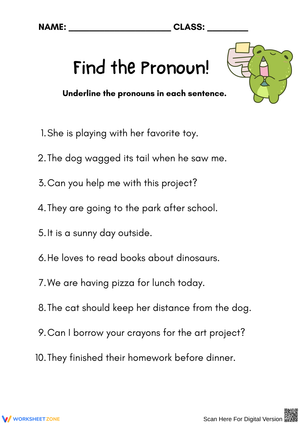
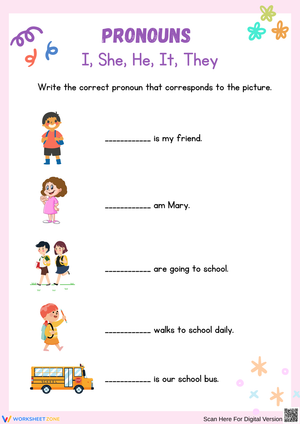
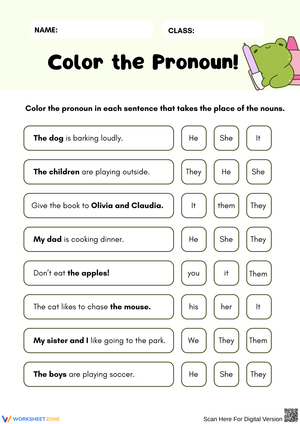
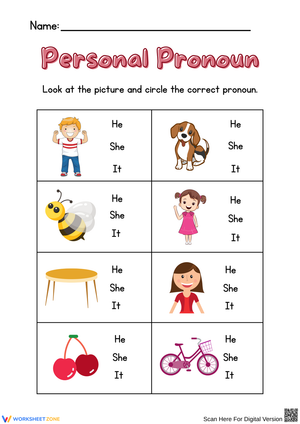
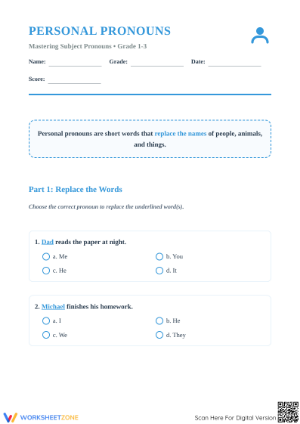
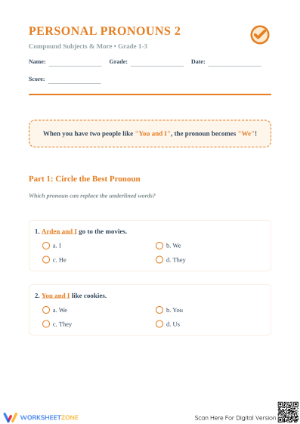
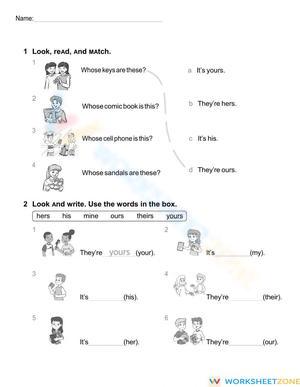
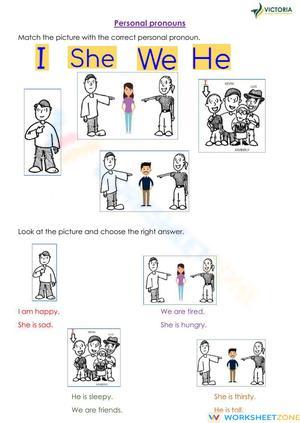
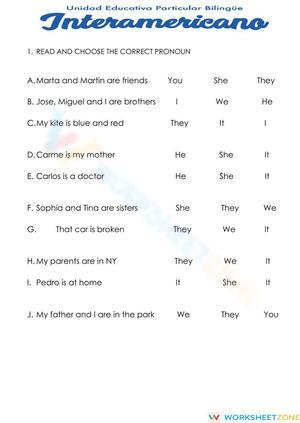
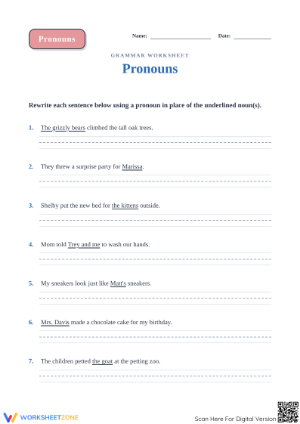
These 2nd grade pronouns worksheets cover the three core pronoun types second graders encounter most in their writing — subject pronouns, object pronouns, and pronoun-antecedent matching — with each worksheet targeting a distinct skill so teachers can slot the right exercise into a lesson at the exact moment students need it. The set does not recycle the same sentence format across every exercise; identification tasks, substitution practice, and paragraph-level rewriting each appear in separate worksheets, giving teachers genuine variety without requiring extra prep.
The Specific Skills Each Worksheet Builds
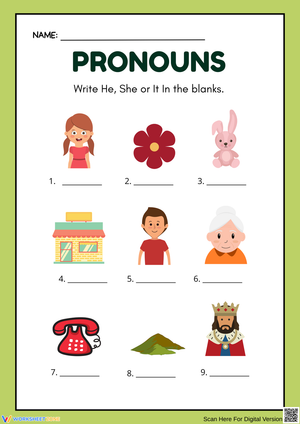
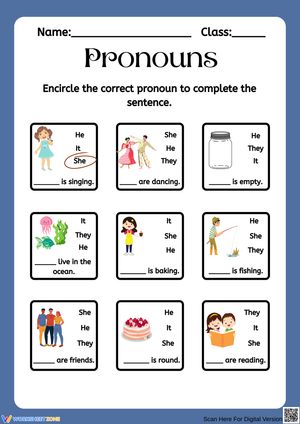
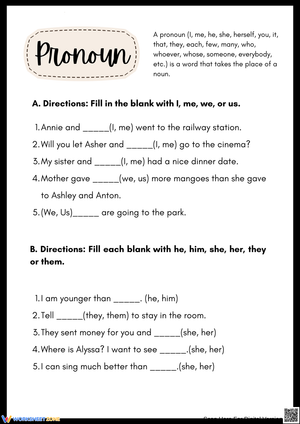
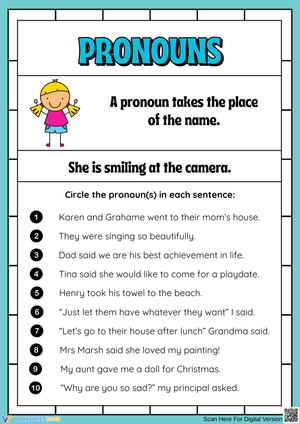
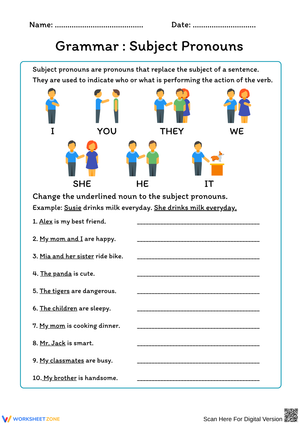
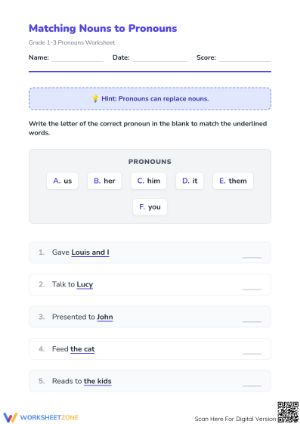
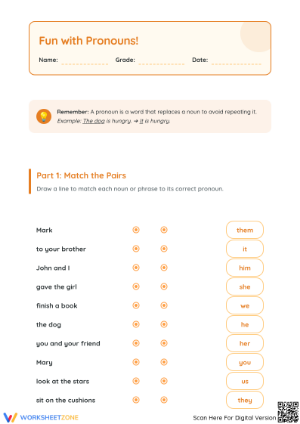
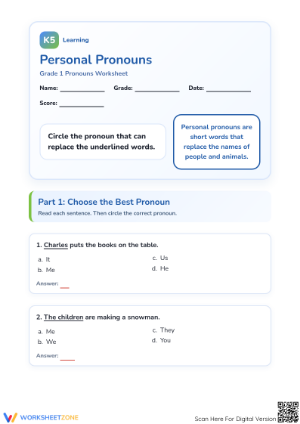
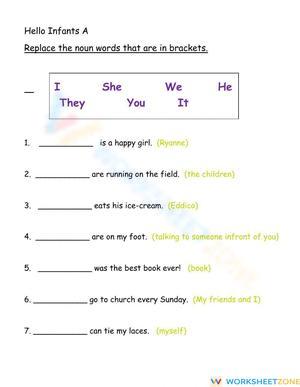
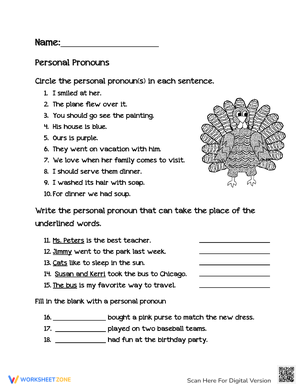
Subject pronoun work comes first: students read a sentence with a bolded noun, then rewrite it using the correct pronoun from I, he, she, it, we, and they. These exercises feel simple until students hit a sentence with two nouns where only one gets replaced — that is where the real thinking starts. Object pronoun worksheets shift the focus to pronouns that follow verbs and prepositions. Students complete sentences like "The teacher handed the paper to ___" using context from a preceding sentence to choose between him, her, or them. A third group of worksheets asks students to read a short paragraph, underline every pronoun, and draw an arrow back to its antecedent — a task that quickly reveals whether a student understands what a pronoun is actually standing in for.
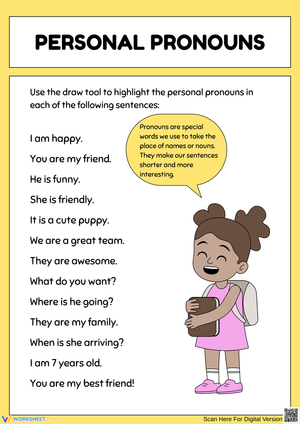
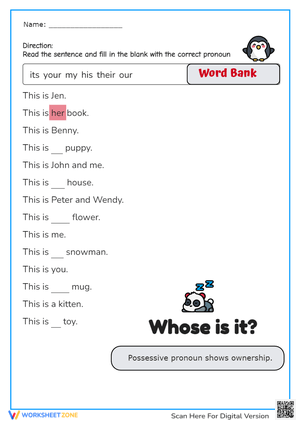
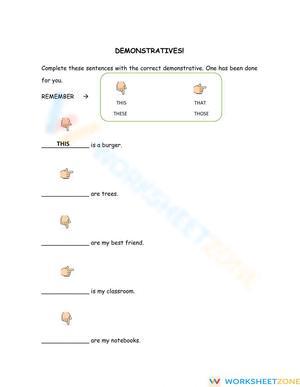
Possessive pronouns — my, your, his, her, its, our, their — appear in a separate cluster. Second graders often read them fluently without recognizing them as pronouns at all, so these worksheets pair reading identification with sentence writing so students practice both recognition and production in the same sitting.
Mistakes Students Make That These Worksheets Help You Catch
The most persistent second-grade pronoun error isn't choosing between "he" and "she" in isolation — it is subject-object confusion that students carry over from informal speech. Students write "Me and Jaylen went to the park" because that construction sounds natural in conversation. When they see the sentence in print on a worksheet, many still mark it correct. One question breaks that habit faster than any rule-recitation: "Is 'me' doing the action, or receiving it?"
A second pattern emerges when two characters of the same gender appear in a paragraph. Students replace both names with the same pronoun and then lose track of who is who. A sentence like "Maria told Priya that she forgot her lunch" is genuinely ambiguous, and seven-year-olds rarely notice the problem until a reader flags it. These 2nd grade pronouns worksheets include paragraph-level tasks specifically for this reason — that kind of reference confusion never surfaces on sentence-level exercises alone.
Building These Worksheets Into Your Weekly Lesson Plans
Most teachers introduce subject pronouns during the morning language block — five minutes before reading, projecting one worksheet for the class while students follow along on their copies, then finishing the bottom half independently. That pattern works cleanly for the first week. Object pronouns take longer and benefit from being connected to writing workshop: after a mini-lesson on replacing repeated nouns, students work through an object pronoun worksheet before drafting, so the grammar and the writing feel like one task rather than two separate activities.
These 2nd grade pronouns worksheets also fit naturally into a Monday review after a weekend gap — the antecedent-matching worksheets especially, since that skill fades fastest over a break. Teachers who use writing journals get the most traction by pairing a worksheet with a short journal entry on the same day: students practice the rule on the worksheet, then apply it in their own writing within the same sitting. That same-day transfer is worth building in wherever the schedule allows.
Standard Alignment
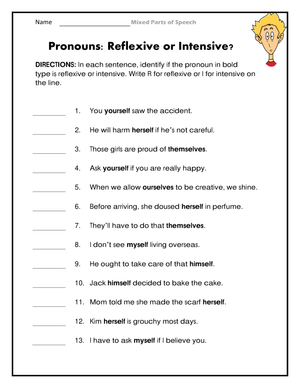
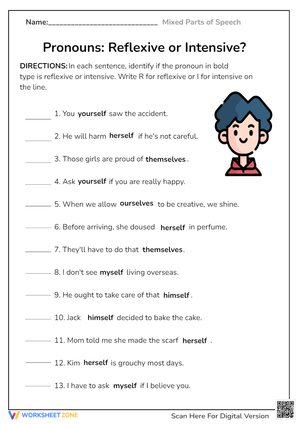
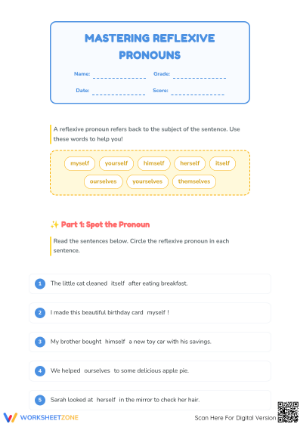
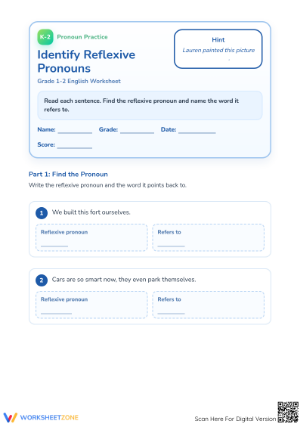
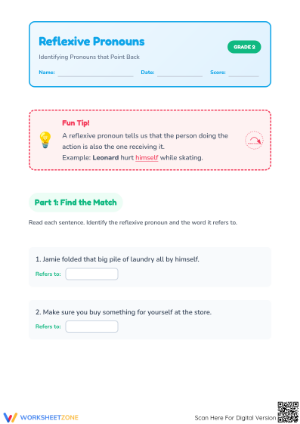
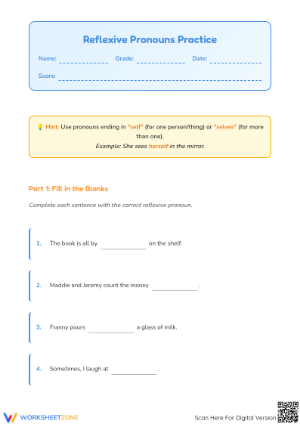
Subject and object pronoun worksheets address CCSS.ELA-LITERACY.L.1.1.D, which requires students to use personal, possessive, and indefinite pronouns correctly. That standard is formally introduced in first grade, but second-grade teachers regularly spend the first quarter reinforcing it because students arrive with uneven mastery — many can identify subject pronouns in isolation but lose accuracy when writing across a full paragraph. Reflexive pronoun worksheets covering himself, themselves, and ourselves address CCSS.ELA-LITERACY.L.2.1.C, the pronoun standard formally assigned to second grade. Placing the two sets side by side gives teachers a clear instructional path: consolidate the personal pronoun work first, then layer in reflexive pronouns once students are steady.
Adjusting the Worksheets for a Range of Learners
Students who are still sorting out basic sentence structure benefit most from the subject pronoun worksheets, where sentences are short and the replacement noun is bolded. Those students should stay at that level until they complete substitutions quickly and consistently before moving to object pronouns. English language learners often need the pronoun-antecedent connection made visible — drawing the arrow from pronoun back to the noun it replaces is not busywork for this group; it builds the conceptual link that carries over into reading comprehension. For students who have already internalized subject and object pronouns, the paragraph-level rewriting worksheets offer a genuine challenge: they must track pronoun reference across multiple sentences, notice when a pronoun creates ambiguity, and revise accordingly.
These 2nd grade pronouns worksheets include enough surface variety that teachers can assign different worksheets to different table groups without the room feeling sorted into obvious ability tiers — the exercises look similar from a distance even when they are operating at different cognitive levels.
Frequently Asked Questions
Do these worksheets cover possessive pronouns, or just subject and object pronouns?
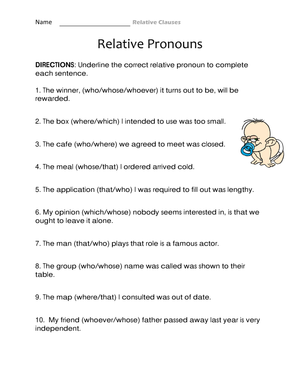
The set covers subject pronouns, object pronouns, possessive pronouns, and reflexive pronouns — each type in separate worksheets. The possessive worksheets pair well with any lesson on apostrophes, since second graders routinely confuse "its" and "it's" when both forms appear in the same week of instruction.
Are these better for whole-class instruction or independent practice?
Both work, depending on which worksheet. The identification worksheets — where students locate every pronoun in a paragraph — project well for whole-class practice, with students marking their own copies while the class discusses each pronoun aloud. The sentence-rewriting worksheets work better as independent or partner practice, because students need time to write out the full sentence rather than calling out a single answer.
How do I know when a student is ready to move from subject pronouns to object pronouns?
Watch for two signals: speed and transfer. When a student finishes a full subject pronoun substitution worksheet in under ten minutes with fewer than two errors, the content knowledge is solid. The stronger signal, though, is whether that student is replacing repeated nouns in their writing journal without a reminder. If the transfer isn't happening yet, one more worksheet round or a brief writing conference usually shows exactly where the rule broke down.












 Interactive Worksheet Maker
 Quiz Maker
 Word Search Maker
 Crossword Puzzle Maker
 Word Scramble Generator
 Sentence Scramble Generator
 Handwriting Worksheet Generator
 Name Tracing Generator
 Fill In The Blank Generator