


























Views
Downloads

Adverbs Fill-in-the-Blank Worksheet | Grade 2 Essential
Paste this activity's link or code into your existing LMS (Google Classroom, Canvas, Teams, Schoology, Moodle, etc.).
Students can open and work on the activity right away, with no student login required.
You'll still be able to track student progress and results from your teacher account.
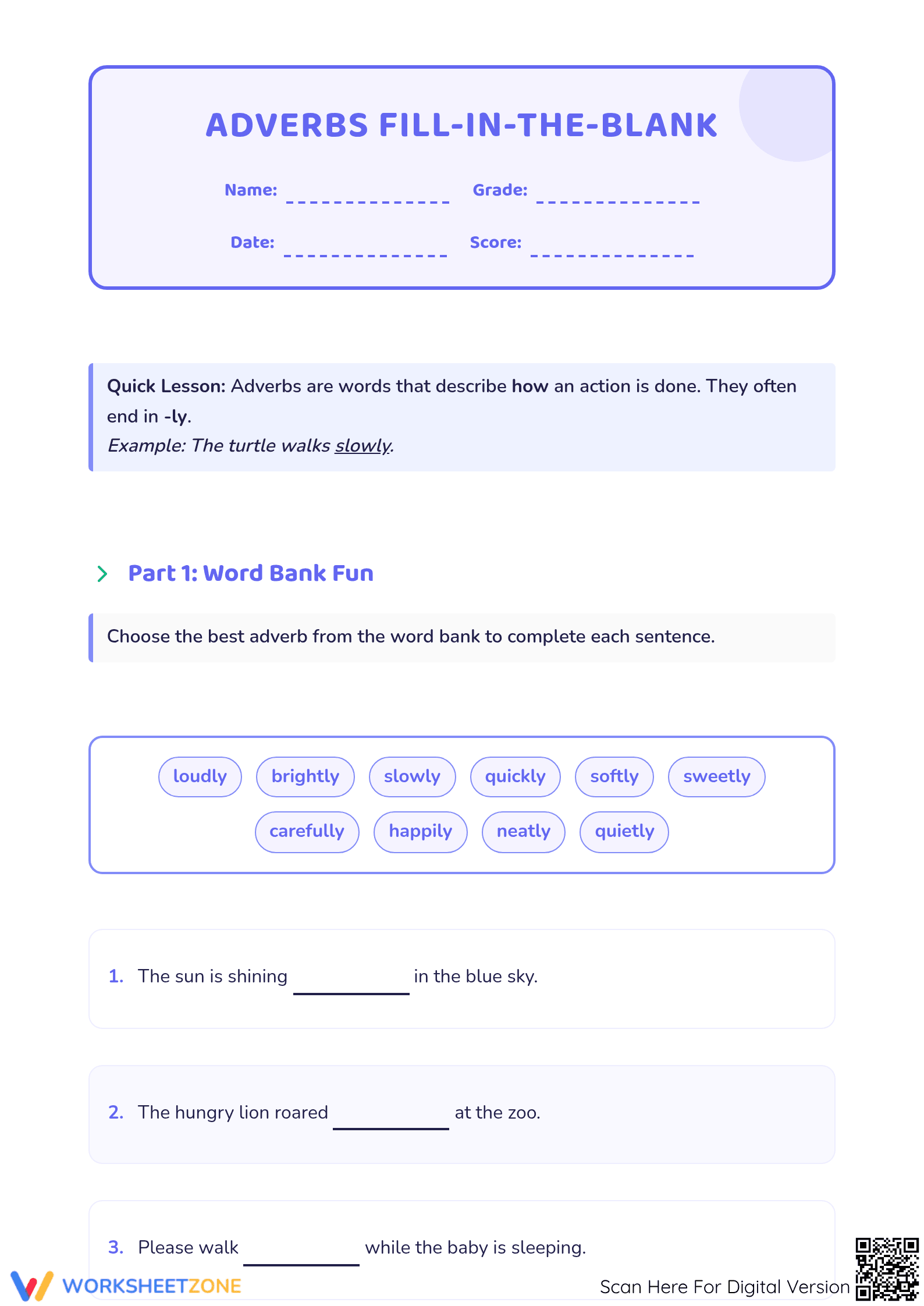
This comprehensive Grade 2 adverbs worksheet helps students master the use of descriptive words that explain how an action is performed. By engaging with 23 distinct tasks, learners move from simple identification to creative application, ensuring they can modify verbs accurately in their own writing. This resource provides a clear path toward grammatical fluency and sentence variety.
At a Glance
- Grade: 2 · Subject: English Language Arts
- Standard:
CCSS.ELA-LITERACY.L.2.1.E— Use adjectives and adverbs, and choose between them depending on what is modified- Skill Focus: Adverbs ending in -ly
- Format: 4 pages · 23 problems · Answer key included · PDF
- Best For: Independent practice and grammar centers
- Time: 20–30 minutes
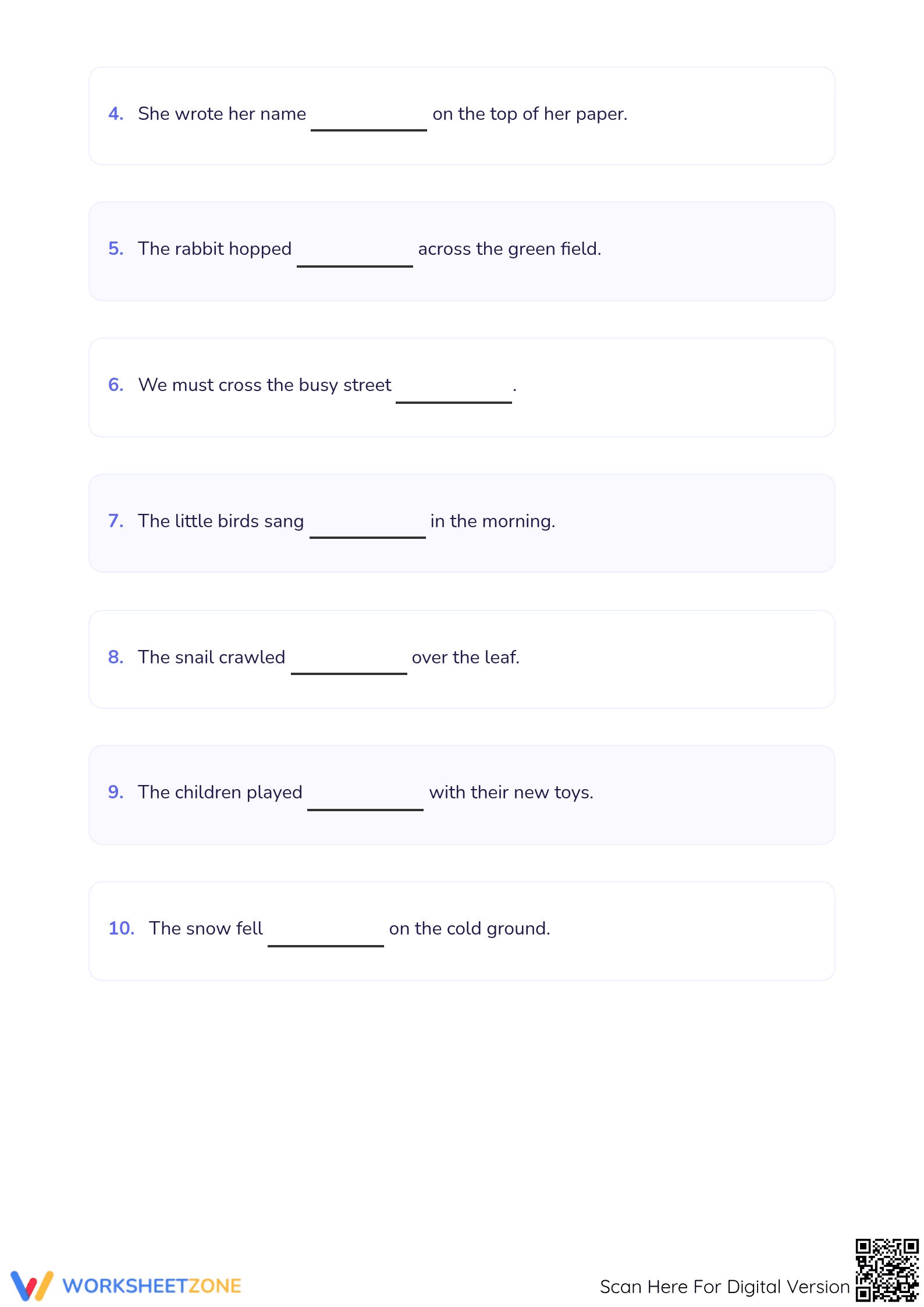
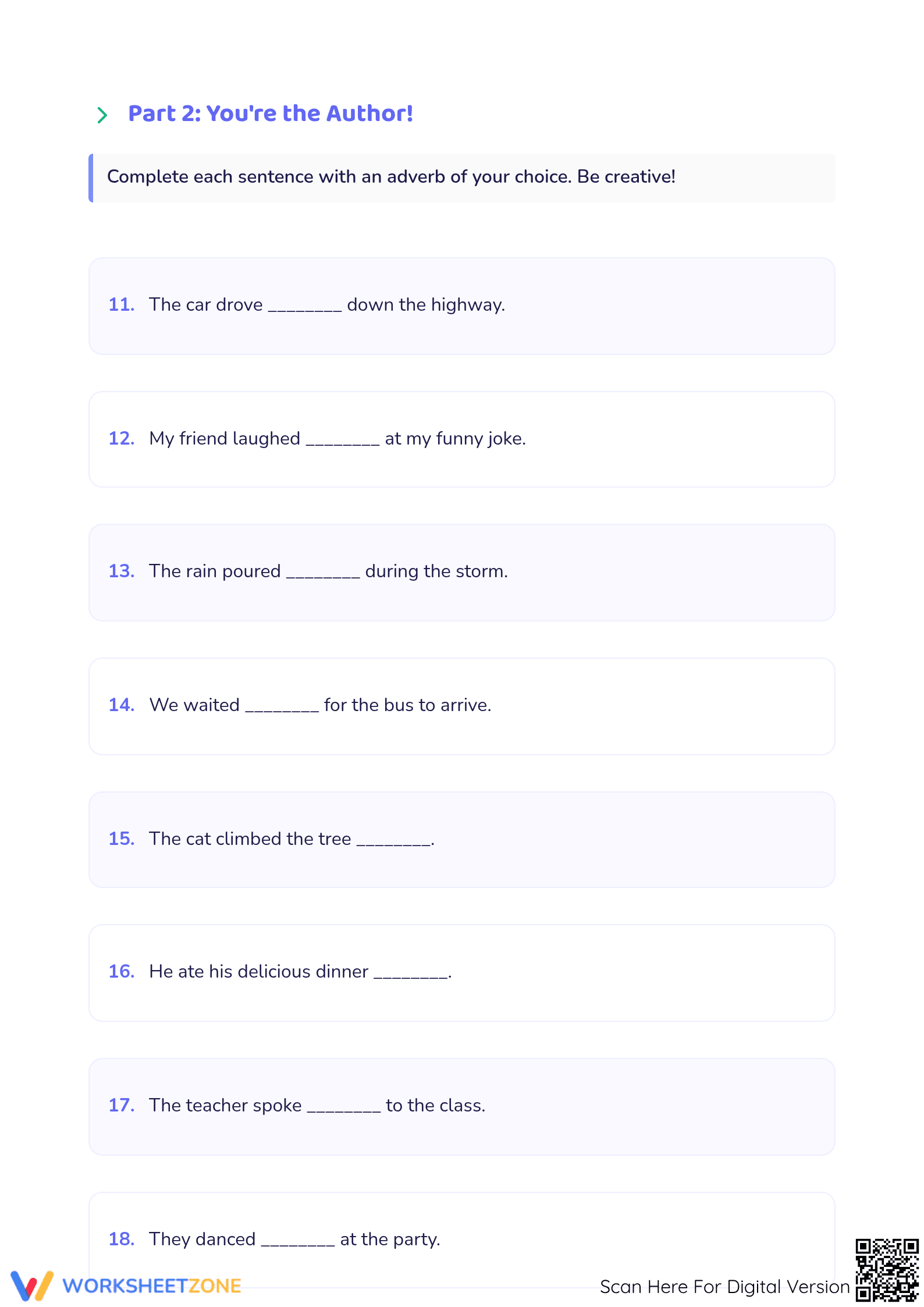
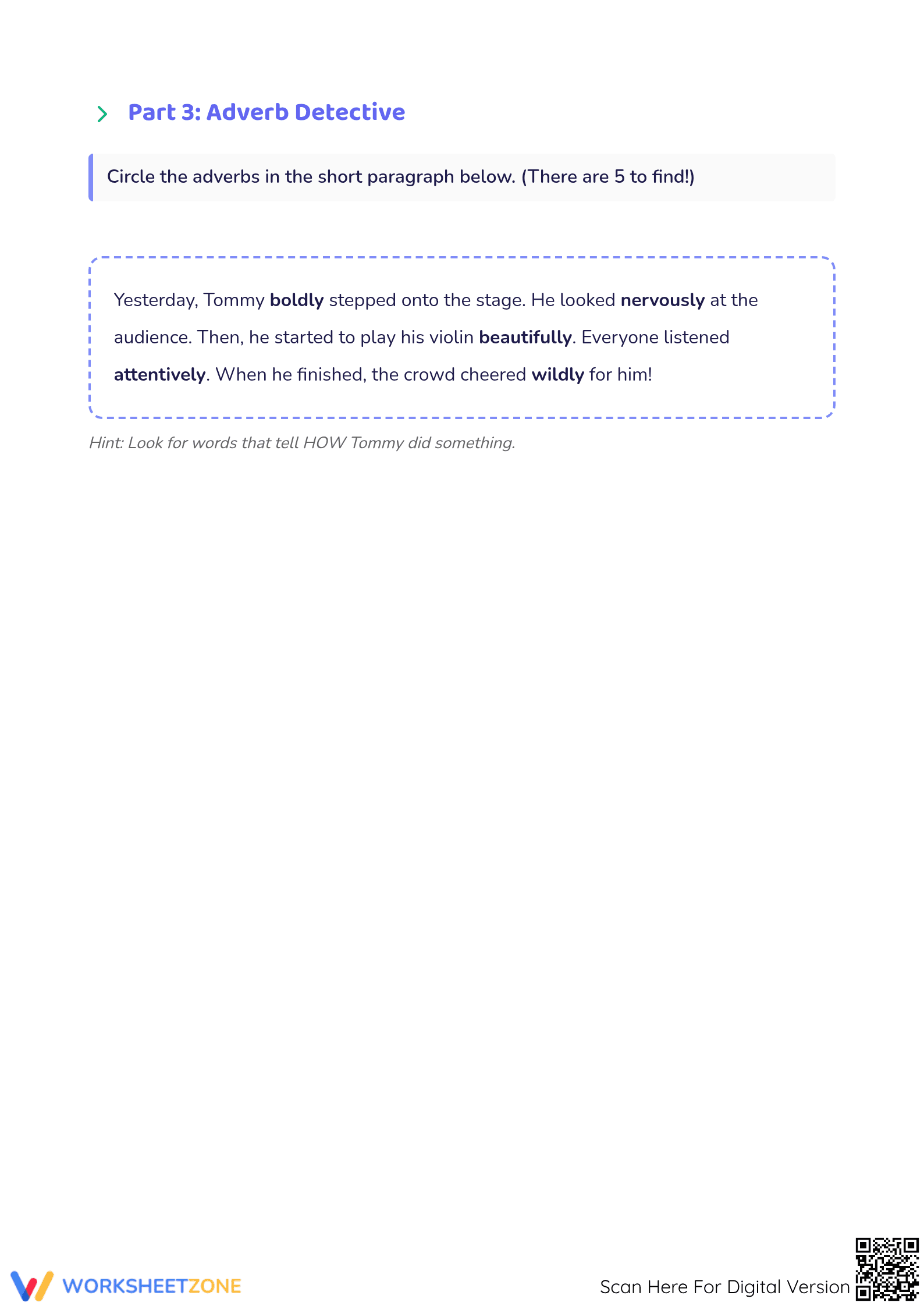
What's Inside: This 4-page instructional packet begins with a concise "Quick Lesson" defining adverbs and providing clear examples. Part 1 features a 10-question word bank activity to build vocabulary. Part 2 transitions to eight open-ended "You're the Author" prompts where students select their own adverbs. Finally, Part 3 challenges students to become "Adverb Detectives" by identifying five specific adverbs within a narrative paragraph. A full answer key is provided for rapid grading.
Zero-Prep Workflow
This resource is designed for immediate classroom implementation with minimal teacher oversight. Follow these simple steps to integrate it into your literacy block: Print the high-contrast pages, distribute the packets during your grammar rotation or as a quiet morning work activity, and use the included answer key to check for student understanding. The structured layout makes this an ideal candidate for emergency sub plans or homework assignments.
Standards Alignment
The primary focus of this worksheet is CCSS.ELA-LITERACY.L.2.1.E, which requires students to use adverbs and understand their relationship to the verbs they modify. By distinguishing between the action and the manner of the action, students build the foundational syntax required for more complex third-grade writing. Both standard codes can be copied directly into lesson plans, IEP goals, or district curriculum mapping tools.
How to Use It
Use this worksheet during the "You Do" phase of a lesson. After instruction on -ly endings, assign the first two pages to gauge comprehension. For a formative assessment, observe students during Part 2; if they struggle to generate original adverbs, it indicates a need for vocabulary front-loading. Expect most second-grade students to complete the full set within 25 minutes.
Who It's For
This resource is tailored for Grade 2 students but serves as excellent reinforcement for Grade 3 learners or an advanced challenge for Grade 1. It is particularly effective for English Language Learners (ELLs) who benefit from the visual support of the word bank and the contextual clues provided in the sentences. Pair this worksheet with a mentor text focused on action to see these adverbs in a literary context.
According to the RAND AIRS 2024 report, structured grammar practice moving from recognition to production is vital for developing syntactic awareness. This worksheet applies these principles by utilizing 23 targeted tasks that scaffold the learning process. By isolating the -ly adverb form, the material reduces cognitive load, allowing students to focus on the semantic relationship between the adverb and the verb. Research from Fisher & Frey (2014) supports this gradual release of responsibility, mirrored in the transition from the word bank to creative writing. This ensures the CCSS.ELA-LITERACY.L.2.1.E standard is met through active student engagement.


