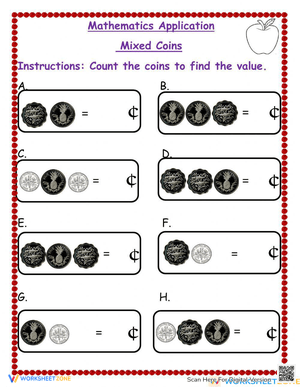
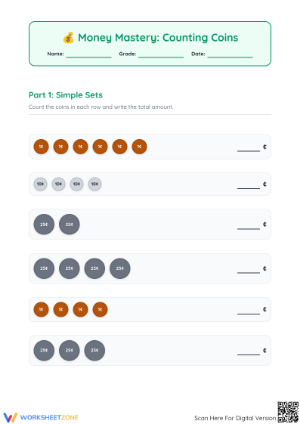
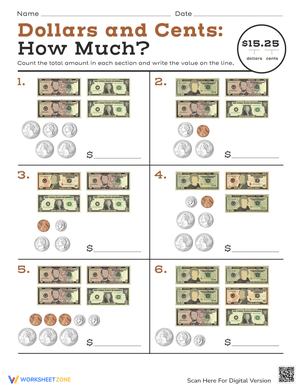
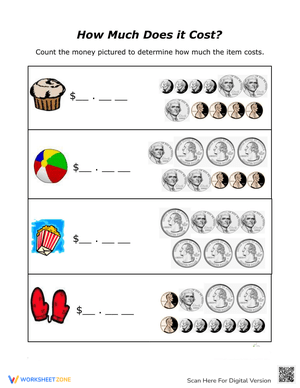
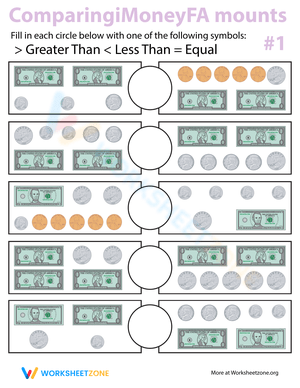
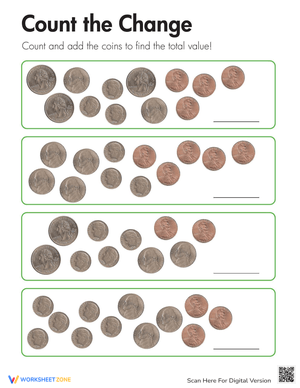
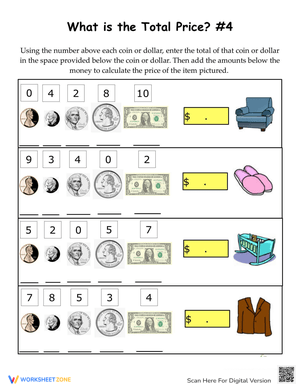
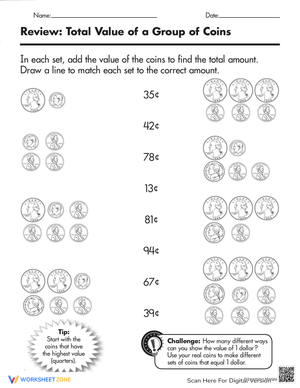
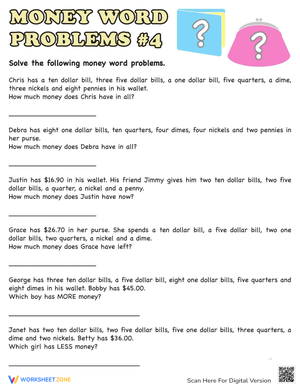
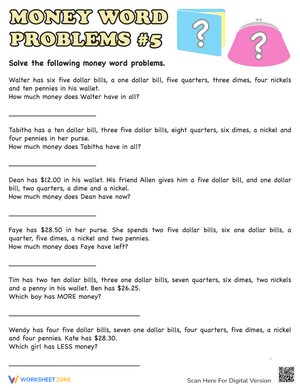
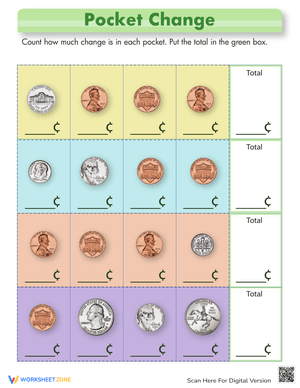
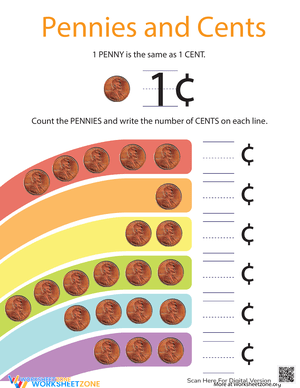
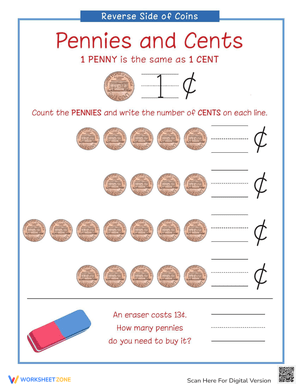
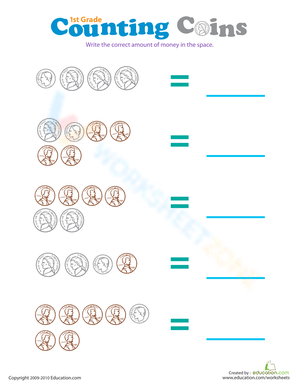
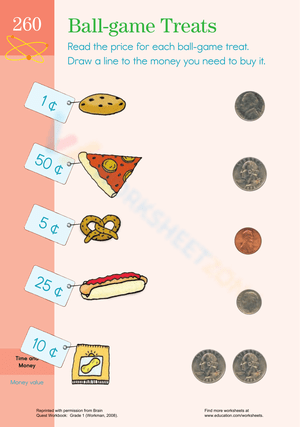
1st grade identifying coins printable worksheets give teachers a low-prep, high-specificity tool for developing the visual discrimination skills that all coin work depends on. Each worksheet isolates what students actually confuse — edge texture, relative size, color, and portrait — and asks them to mark, label, and compare at their desks. The set targets the penny, nickel, dime, and quarter through activities that work alongside plastic manipulatives or stand alone as focused independent practice.
What Each Worksheet Targets
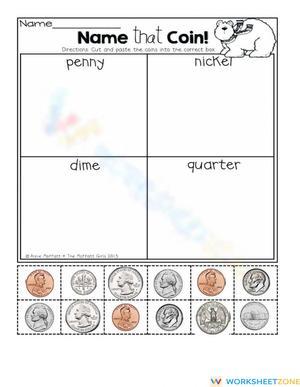
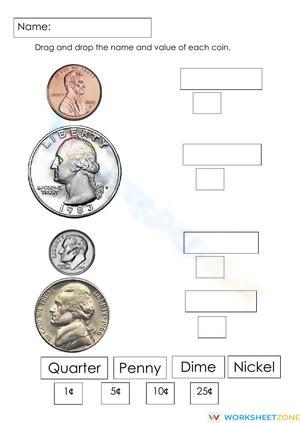
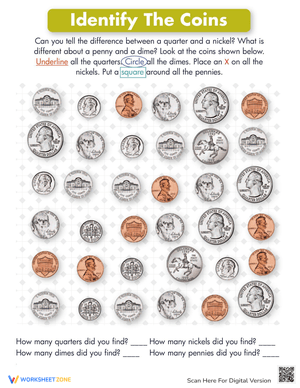
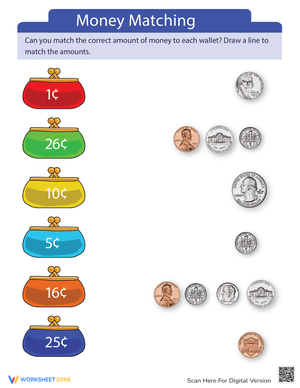
The worksheets build identification through several concrete tasks. Students underline the coin name that matches a printed image, circle the coin with ridged edges, sort coin images into labeled columns, and draw lines connecting portraits to names. Later worksheets ask students to label both the obverse and reverse of each coin — a necessary step, because children regularly see dimes tails-side up in the lunch line and need to recognize that small, ridged circle without seeing Roosevelt's profile.
Size comparison is woven throughout. Worksheets print all four coins at accurate relative scale so students internalize that the dime is physically smaller than a nickel even though it is worth twice as much. Seeing this on paper repeatedly — and tracing the outlines — does more for long-term retention than any verbal explanation of the discrepancy.
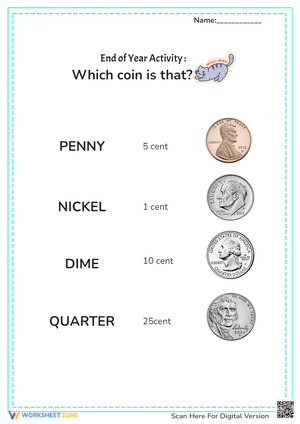
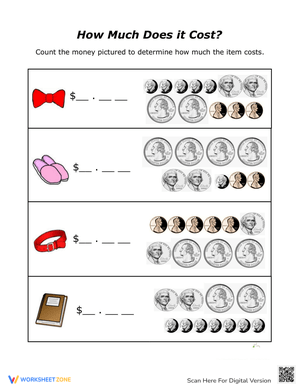
- Penny: Copper color, smooth edges, Abraham Lincoln portrait, one cent
- Nickel: Silver, smooth edges, Thomas Jefferson portrait, thicker than a dime, five cents
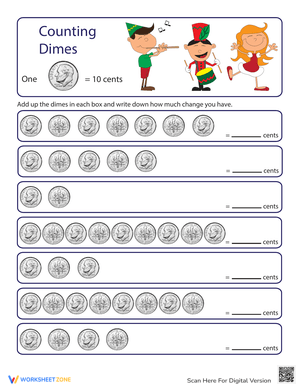
- Dime: Silver, ridged edges, Franklin D. Roosevelt portrait, smallest of the four, ten cents
- Quarter: Silver, ridged edges, George Washington portrait, largest of the four, twenty-five cents
Mistakes Students Make That These Worksheets Surface
The most persistent error in first-grade coin work is the size-value inversion with the dime. A student who has correctly matched three coins will look at a dime and nickel side by side and assign higher value to the nickel because it is bigger. 1st grade identifying coins printable worksheets that repeatedly print both coins at true scale — and ask students to write the value beneath each — interrupt that intuitive but wrong association before it calcifies. In actual student work, this error reappears even after direct instruction; encountering the comparison on paper three or four separate times is what finally dislodges it.
A second pattern worth watching: students who have learned the penny solely by its copper color will confidently label a tarnished or darkened penny as a nickel. Worksheets that strip away color cues — printing coins in grayscale or asking students to identify using edge detail and portrait alone — surface this over-reliance early. The edge-texture test turns out to be the most durable identification strategy across all four coins, and worksheets that ask students to circle "smooth" or "ridged" beside each image explicitly teach it as a primary tool rather than a backup.
Standard Alignment
Coin identification in first grade is the direct prerequisite for 2.MD.C.8 under the Common Core State Standards for Mathematics, which requires second graders to solve problems involving dollar bills, quarters, dimes, nickels, and pennies. That standard arrives formally in Grade 2, but the recognition fluency — seeing a coin and naming it without hesitation — has to be built a full year earlier. Most state-level Grade 1 frameworks include coin identification for exactly this reason: by the time students are computing "three dimes and two nickels" in second grade, the identification step should be automatic and not competing for working memory. These worksheets sit at that preparatory stage, treating identification as a distinct skill that deserves dedicated practice rather than as something absorbed incidentally alongside computation.
Fitting These Worksheets Into Your Lesson Plans
The most effective placement for 1st grade identifying coins printable worksheets is immediately after hands-on time with physical coins — not before. The concrete-to-representational sequence matters here: students who have sorted real coins by edge texture in a math center and then move to a printed comparison worksheet retain the distinction far longer than students who encounter the worksheet first. A five-minute coin-sorting activity with a small bag of real or plastic coins, followed immediately by a matching worksheet, makes a natural two-part center rotation without requiring any additional materials.
For whole-class use, projecting the worksheet under a document camera while students work on paper copies lets the teacher point to specific features — "look at the edge here, now trace the edge on yours" — without managing thirty handfuls of loose change simultaneously. The coloring tasks on several worksheets also serve as quick formative checks: asking the class to color every coin with ridged edges blue takes about four minutes and immediately shows who still cannot distinguish a quarter from a nickel by edge alone.
Adjusting the Work for Students at Different Starting Points
Students who arrive with limited prior exposure to coins benefit from a reduced scope at the start — penny and nickel only, leaning on the color contrast before introducing the all-silver group. Once those two are solid, adding the quarter before the dime prevents the size confusion from being the very first thing a struggling student encounters. The worksheets that present all four coins simultaneously are better positioned as mid-unit practice once students can name each coin unprompted in random order.
For students who identify all four coins quickly, the same worksheets offer natural extension: ask them to write the value beneath each coin they identify, then group identical coins and write a repeated-addition sentence showing the total. A student who finishes a matching worksheet in three minutes and writes "4 dimes = 10 + 10 + 10 + 10 = 40 cents" in the margin has moved into exactly the work that 2.MD.C.8 requires — without needing a separate resource.
Frequently Asked Questions
Why do students keep confusing the nickel and quarter even after repeated practice?
Both coins are silver with a similar matte appearance in printed images, so students often rely on size alone — but at worksheet scale, the difference between a nickel and a quarter looks smaller than it does in hand. The most reliable fix is redirecting students to the edges: the quarter has ridged edges, the nickel does not. Worksheets that ask students to label "smooth" or "ridged" rather than just match portraits address the root of the confusion rather than layering one memorized fact on top of another.
When should coin identification move into coin counting?
When a student can correctly identify all four coins in random order, on both sides, without hesitation — that is when counting becomes productive. Moving too early means the student is simultaneously retrieving the coin name, retrieving the value, and performing skip counting, which is more cognitive demand than most first graders handle cleanly. Identification needs to be automatic first so that counting can draw on a stable foundation rather than a still-forming one.
Do these worksheets include newer designs like the Lincoln Union Shield penny reverse?
The 1st grade identifying coins printable worksheets in this set include the reverse designs students encounter on current circulation coins, including the Union Shield penny back. Since children may see both older and newer designs in everyday life, several worksheets show multiple reverse images for the same coin and ask students to identify what stays consistent — size, edge texture, and color — regardless of the design. That consistent-features approach transfers more reliably than memorizing a single back image.













 Interactive Worksheet Maker
 Quiz Maker
 Word Search Maker
 Crossword Puzzle Maker
 Word Scramble Generator
 Sentence Scramble Generator
 Handwriting Worksheet Generator
 Name Tracing Generator
 Fill In The Blank Generator