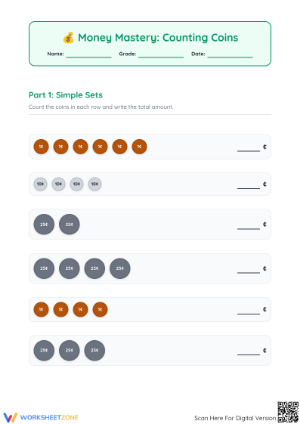
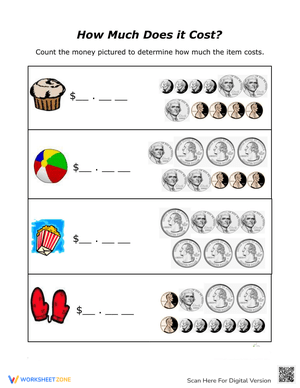
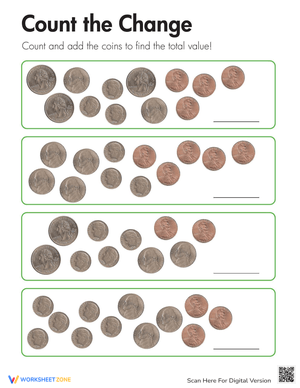
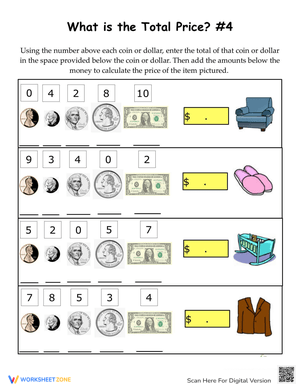
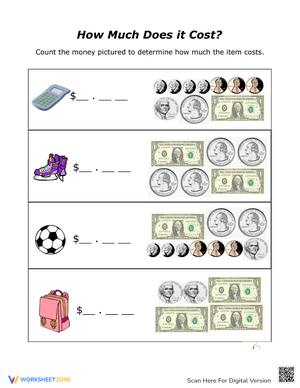
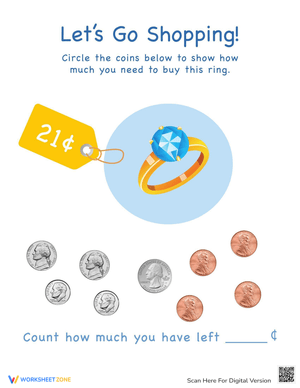
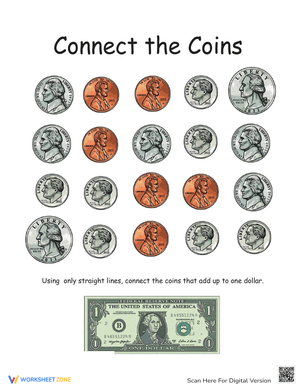
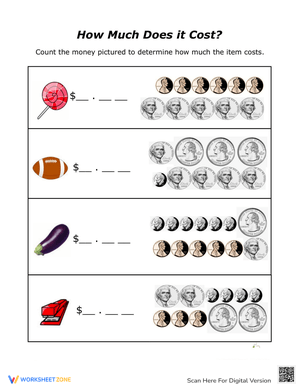
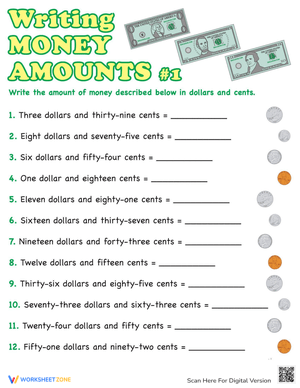
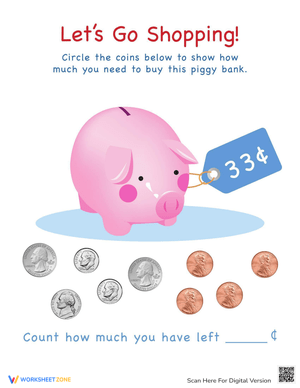
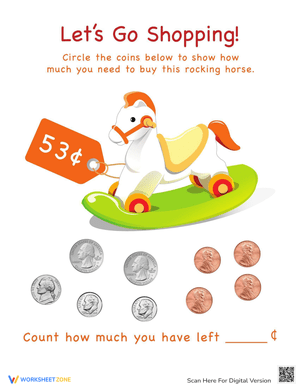
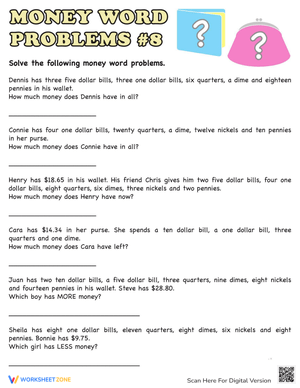
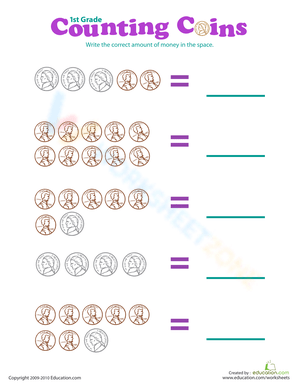
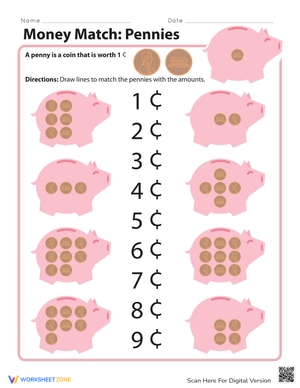
These pennies worksheets for 1st grade give teachers a set of counting and coin-identification practice that fits cleanly into the Grade 1 math block. Each worksheet targets the moment in the year when students are crossing from rote counting into applied number sense — and the penny, at exactly one cent per coin, is the right entry point because it demands no skip counting, no multiplication, and no conversion. Students count objects; the total is the answer.
The Specific Skills Each Worksheet Targets
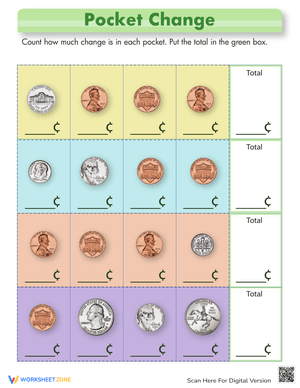
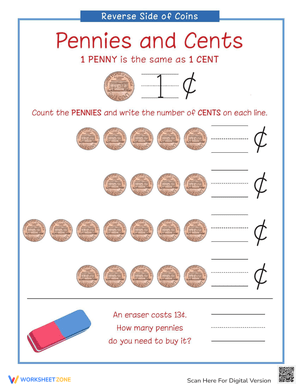
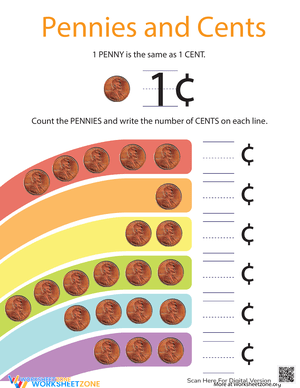
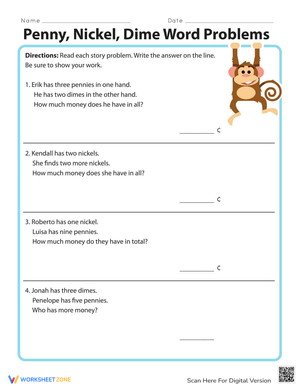
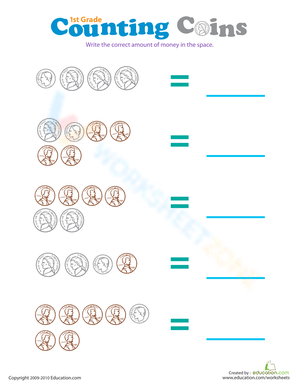
The set covers a range of tasks, and the progression matters. Early worksheets ask students to identify a penny from a lineup of coins and circle all pennies in a mixed group. Once identification is solid, the worksheets shift to counting tasks: students count rows of pennies and write the total value with the cent sign. Later worksheets frame the same skill as simple addition — six pennies on the left side, two more on the right, write the total — so the counting strategy becomes a bridge to a written number sentence. Cut-and-paste exercises ask students to match a group of pennies to the correct price tag on a small toy or food item, which grounds the counting in a transaction students recognize from everyday life.
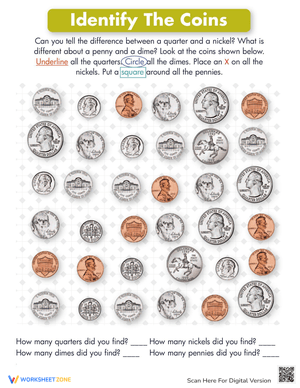
- Coin identification: circle the pennies, cross out the non-pennies in a mixed group
- Counting groups of 1–15 pennies and writing the cent value
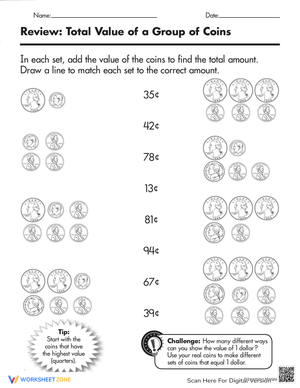
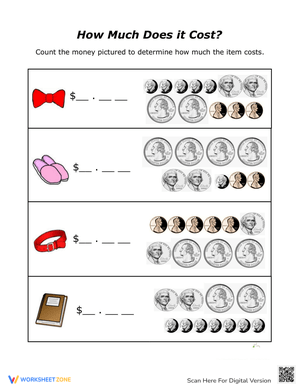
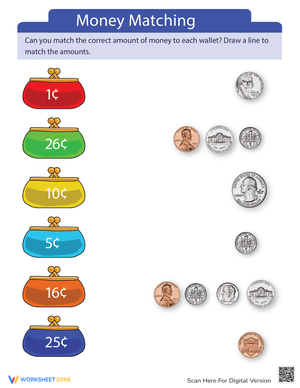
- Matching penny groups to price tags in the 1¢–12¢ range
- Cut-and-paste sorting: pennies separated from other coins
- Addition in context: counting on from a starting group when more pennies are added
Student Errors These Worksheets Surface Early
The most reliable error in this skill area is the penny-dime confusion on black-and-white printouts. Both coins carry a presidential profile, and when the copper-silver color distinction disappears from a photocopied worksheet, students who correctly identified a penny on a color image will circle dimes without hesitation. The text cues — "ONE CENT" on the obverse — become the only reliable discriminators on a grayscale page. Teaching students to read those words before circling any coin is worth five minutes of direct instruction before they ever see a printed worksheet.
A second pattern worth watching: students who count correctly but write the numeral without the cent sign. A student who touches seven penny images, counts aloud to seven, and then writes "7" instead of "7¢" understands the counting but treats the answer as a naked number. The unit hasn't registered yet. Asking students to say "seven cents" aloud before writing — not just "seven" — closes that gap faster than marking the answer wrong after the fact.
These pennies worksheets for 1st grade are structured to make both error types visible early. The coin-identification exercises appear before the counting tasks, so a student who cannot reliably distinguish a penny from a dime on paper gets flagged before that confusion contaminates every counting answer downstream.
Building These Worksheets Into Your Lesson Plans
These worksheets work best when physical pennies are available alongside the printed page. Set a small cup of real pennies on each table group before distributing the sheet — students who physically place a coin over each printed image are building one-to-one correspondence between the object and its two-dimensional representation, which is the developmental move that makes the later counting tasks stick. This takes roughly three minutes of setup and pays off during independent work time by reducing the hand-raising that follows when students lose their count mid-row.
The identification worksheets make strong Monday warm-ups after a weekend, when counting fluency often needs a quick reset. The cut-and-paste worksheets run well in a math center — laminate a copy, add a dry-erase marker, and the same worksheet runs all week without reprinting. For the pennies worksheets for 1st grade that involve price matching, pair them with a Friday small-group lesson where students use physical pennies to pay a partner, who checks the count before they mark the sheet. That social layer adds accountability without requiring the teacher to be present at the center the entire time.
Standard Alignment
CCSS 1.NBT.A.1 — Count to 120, starting at any number less than 120. Counting pennies is one of the most direct classroom applications of this standard: each coin adds exactly 1 to the running total, so a row of pennies is a counting task with a real-world container. The identification and counting exercises in this set sit squarely inside this standard and give students a reason to care about reaching an accurate number.
CCSS 1.OA.C.5 — Relate counting to addition and subtraction. The worksheets that ask students to count a starting group of pennies and then add more coins practice the "counting on" strategy this standard names explicitly. A student who counts six pennies, then continues — seven, eight, nine — when three more are added is demonstrating exactly the connection between counting and addition that the standard targets. These exercises give that standard a concrete, immediately testable context.
Differentiating the Set Across Ability Levels
For students still consolidating one-to-one correspondence, select worksheets with widely spaced coin images and large answer boxes. Crowded layouts — eight pennies packed into a small rectangle — interrupt the left-to-right tracking routine before it becomes automatic. Wide spacing lets students cross off or check each coin as they count, which prevents the skip-and-double-count errors that derail the total. These students also benefit from circling each coin before counting rather than tracking with a finger alone.
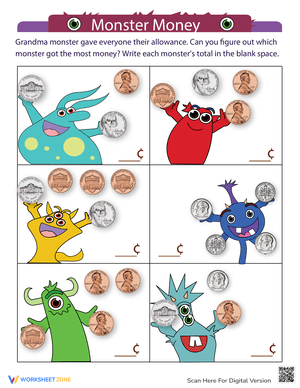
Students who have moved past basic penny identification and count reliably to 15 are ready for worksheets that mix pennies with nickels and ask them to separate the two. This keeps penny recognition active while introducing the context they'll need for the next unit. Resist moving these students off penny work entirely — the confident ones often start guessing rather than attending to coin details, and a single mixed-coin sorting exercise each week prevents that drift. The pennies worksheets for 1st grade that include sorting tasks are the right tool for this group during that transition period.
Frequently Asked Questions
These worksheets print on a black-and-white printer. Will students still be able to tell a penny from a dime?
Yes, but only after direct instruction on the text features of each coin. The copper color — the easiest discriminator on a color image — disappears on a grayscale printout, which means students have to read "ONE CENT" or identify Lincoln's portrait specifically. Build one explicit lesson around black-and-white coin images before assigning independent work on printed sheets. After that lesson, black-and-white printouts work reliably and in some ways are better practice, because they force students to use the right cues rather than the shortcut of color.
Can these worksheets double as formative assessment?
The coin-identification worksheets are reliable quick checks. A student's circled responses show exactly which coins are being misidentified and whether the confusion is consistent — always circling dimes too — or random, suggesting the student is guessing rather than attending to any feature. The counting worksheets tell a different story: check whether wrong totals cluster at the high end of the row, which indicates the student is losing track partway through rather than misidentifying the coin itself. Both types of evidence are immediately actionable without requiring a separate assessment instrument.
Do the cut-and-paste worksheets require scissors and glue every session?
Not necessarily. Laminate one copy per student and have them sort with dry-erase markers — draw a line to connect the penny to its category, or circle and label. This works especially well at a math center where reprinting the same sheet daily is impractical. The fine motor benefit of actual cutting and pasting is real, so if that's a goal for a specific lesson, use the printed version with glue sticks. For repeated penny-sorting practice across a week, the laminated version is more efficient and just as effective for the counting and identification goals.













 Interactive Worksheet Maker
 Quiz Maker
 Word Search Maker
 Crossword Puzzle Maker
 Word Scramble Generator
 Sentence Scramble Generator
 Handwriting Worksheet Generator
 Name Tracing Generator
 Fill In The Blank Generator