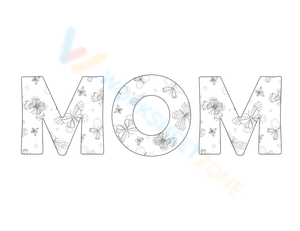
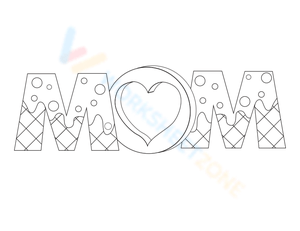
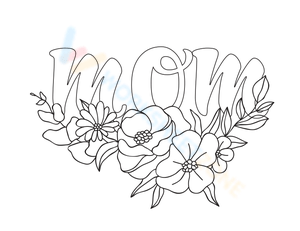
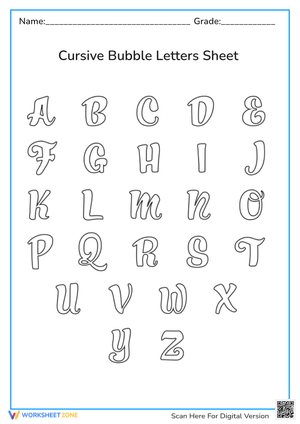
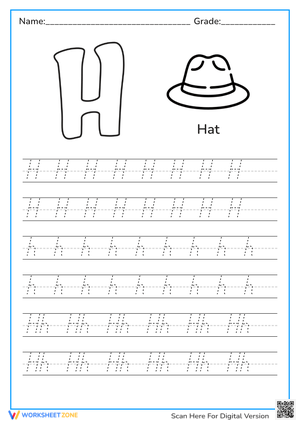
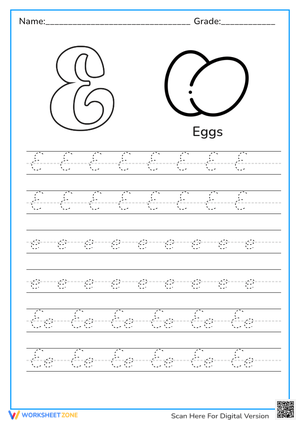
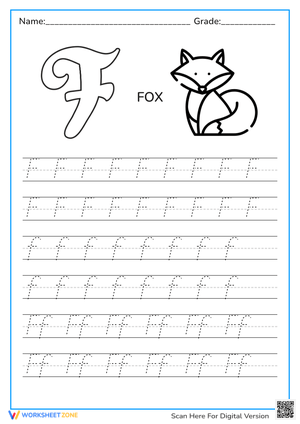
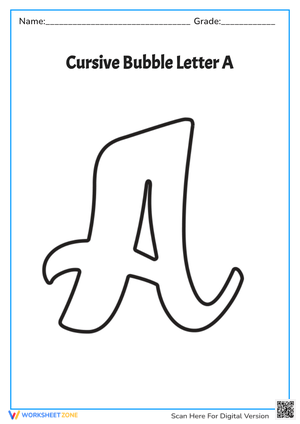
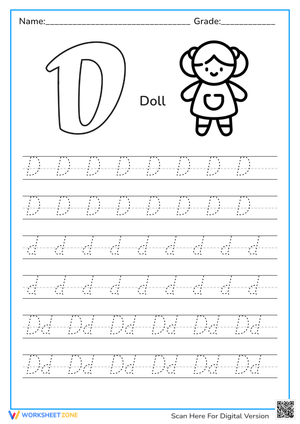
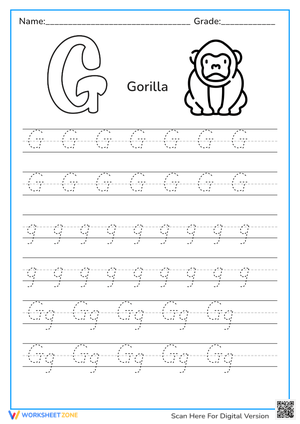
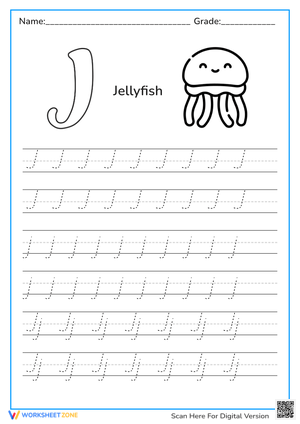
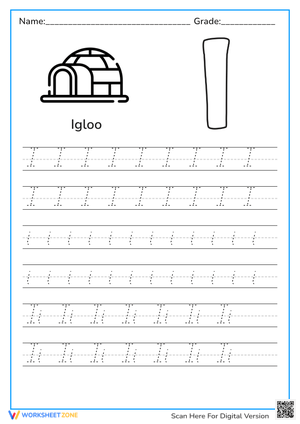
Cursive bubble letters give first graders a large, rounded version of cursive letterforms that they can trace, color, and shape without the fine-tuned pencil control that standard cursive lines demand. On the Worksheetzone bubble-letter pages for grade 1 handwriting, each letter appears as a bold outline with plenty of open space inside, so students see the loops and connections of cursive long before they are asked to reproduce them at full speed. The scale is the point: a letter that fills half a page is far more forgiving than one squeezed onto a handwriting line.
It helps to treat these worksheets as a preview rather than a full handwriting curriculum. A first grader coloring inside a bubble cursive letter is getting comfortable with the shape of the letter and the direction it flows. That is exactly the kind of early, low-stakes exposure that pays off when direct cursive instruction begins later in elementary school. Nobody is grading slant or spacing yet; students are simply making friends with the shapes.
Why Bubble Letters Work Before Formal Cursive
Standard cursive asks a lot of a young hand all at once: consistent slant, controlled loops, connected strokes, and steady pressure. Oversized bubble outlines lower every one of those demands. The wide letter bodies give students a generous margin for error, so a wobbly line still lands inside the shape and still reads as a success. That early success keeps first graders willing to try again.
The lower demand matters for children whose grip strength and pencil control are still developing. Instead of stumbling over precise strokes, they build confidence and a sense of directionality first. Bubble letters also invite coloring and decorating, and that playful layer keeps students engaged long enough to repeat the same shape several times in a single sitting. Repetition that feels like play is repetition students will actually do.
Here is the piece many handwriting plans overlook: the value of bubble cursive is not the coloring, it is the repeated tracing of a single continuous outline. Each time a student runs a crayon or a finger around the same cursive letter body, they rehearse the motor path for that letterform. That rehearsal is what builds the muscle memory a child later relies on to write the letter unassisted, which is why several short exposures across a week outperform one long, tiring session. Plan for frequency, not duration.
Classroom Implementation
Bubble cursive letters slot into routines you already run. Here are practical ways to put them to work during your handwriting block or center rotations:
- Letter-of-the-week station: Feature one bubble cursive letter per week and have students trace it, color it, and say the letter name and sound aloud.
- Name practice: Print the bubble letters that spell each child's first name for a personalized tracing and decorating activity they are motivated to finish.
- Morning work: Use a single bubble letter as a five-minute settle-in task while you take attendance and check in with individuals.
- Bulletin boards: Have students color oversized cursive letters for a class display that doubles as a print-rich environment.
- Literacy center rotation: Pair each worksheet with a matching print card so students connect the cursive form to the letter they already know.
- Fast finisher choice board: Offer a bubble cursive letter as an anytime option so early finishers keep practicing purposeful movement.
Because the outlines are large, these pages also support students who need extra fine motor help, and they hand you an easy, low-stakes sample of pencil control for your formative handwriting notes. Keep finished pages in a folder and you have a running record of how each student's control changes across the year.
Frequently Asked Questions
1. Is it appropriate to introduce cursive bubble letters in 1st grade?
Yes. Bubble letters are exposure, not formal instruction. They let first graders see and trace cursive shapes at a low-pressure, oversized scale, which builds readiness for the direct cursive teaching that typically comes later in elementary school. You are previewing the shapes, not expecting fluent writing.
2. What classroom activities work best with cursive bubble letter worksheets?
Letter-of-the-week stations, name-tracing activities, morning work, and bulletin-board letters all work well. Short center rotations that pair a bubble letter with its name and sound give students repeated, engaging practice without committing to a long handwriting block.
3. How do bubble letters help students build fine motor skills?
Tracing and coloring inside a bold outline asks students to control the crayon, manage pressure, and follow a curved path. Those movements strengthen the same hand muscles and sense of direction that pencil-based cursive writing will later require, so the skills carry straight over.
4. Which states make early cursive exposure useful for 1st grade?
States differ, but mycursive.com reports that roughly two dozen require cursive somewhere in elementary school, and California allows it as early as 1st grade. In those settings, bubble-letter tracing is a practical, standards-friendly readiness activity.