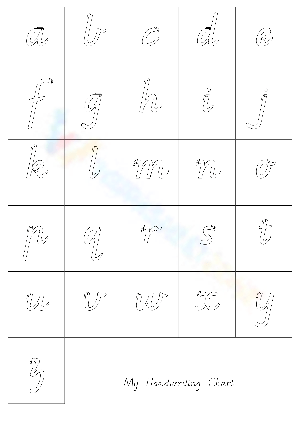
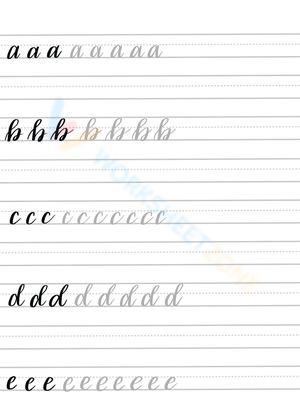
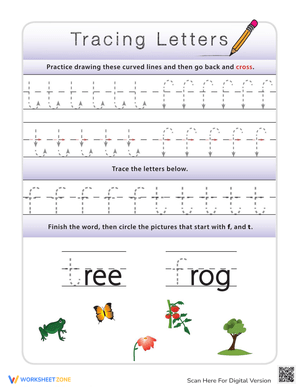
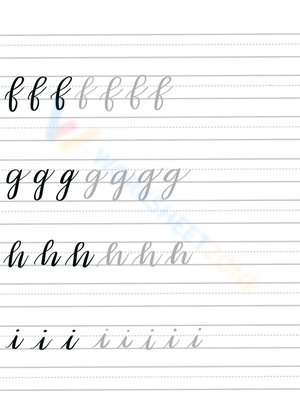
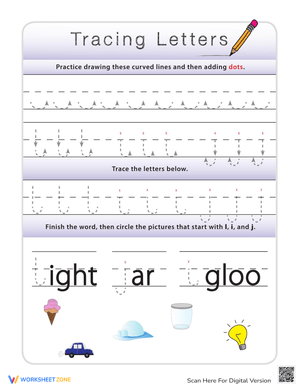
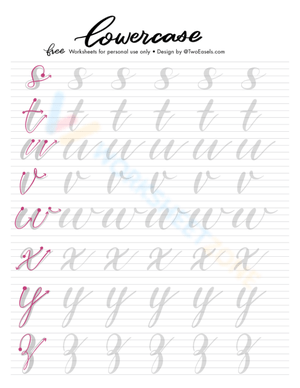
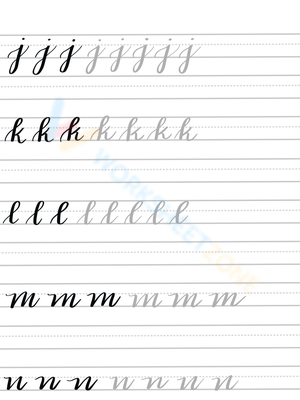
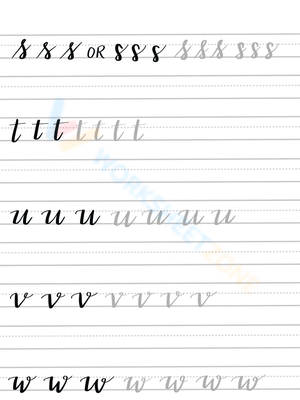
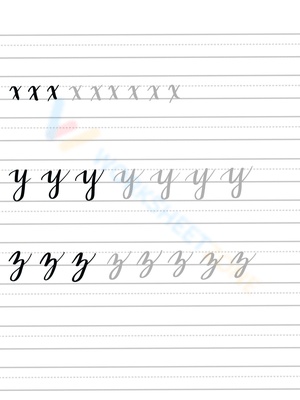
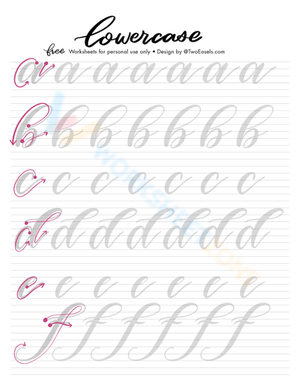
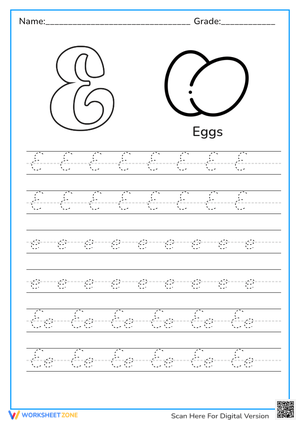
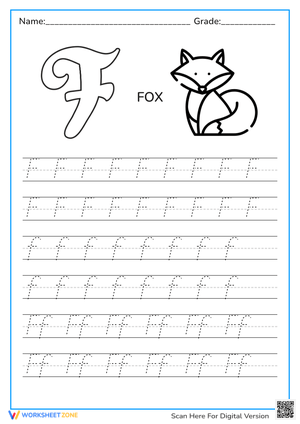
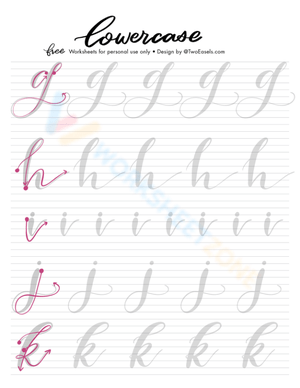
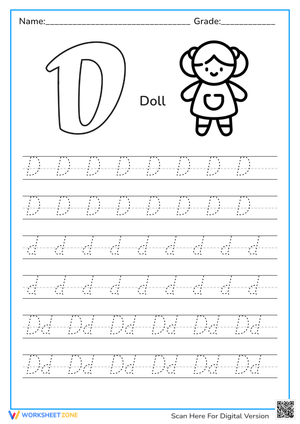
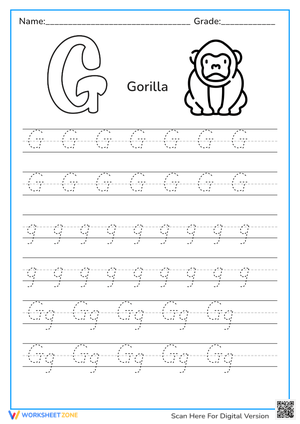
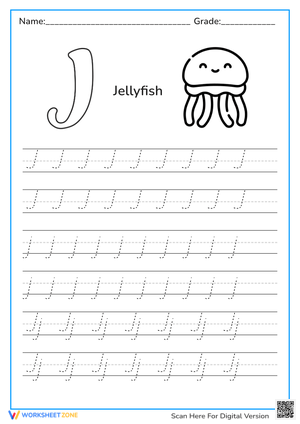
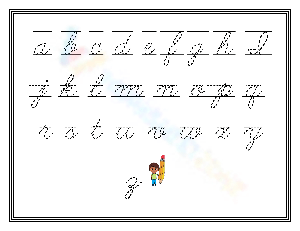
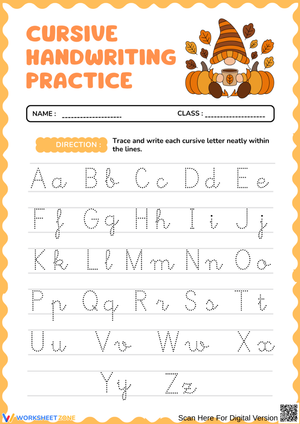
Most first graders arrive with a solid handle on print letters from kindergarten, which makes grade 1 a natural entry point for lowercase cursive letter formation. Once a student can form print letters with consistent size, spacing, and starting points, adding connected strokes is a manageable next step rather than a completely new skill. Lowercase cursive letters worksheets for grade 1 typically start with simple, isolated letters before asking students to connect two or three letters together.
Teachers who introduce cursive early often notice that students are still developing fine motor control, so short, frequent practice sessions work better than long ones. A six or seven year old's hand muscles tire quickly, and asking for extended cursive drills can lead to sloppy loops and frustration rather than skill growth. Framing lowercase cursive practice as a short daily routine, rather than an occasional special activity, helps first graders build the muscle memory these letterforms require.
Grouping Lowercase Cursive Letters by Stroke Pattern
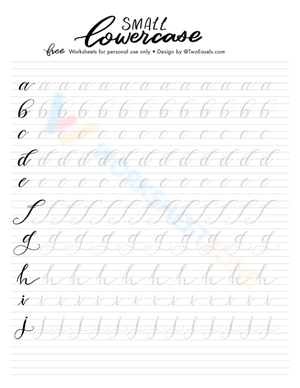
One of the most effective ways to sequence lowercase cursive letters handwriting for grade 1 is to group letters by the motion they share rather than teaching them in strict alphabetical order. Loop letters such as e, l, and h share an upward swinging stroke. Hump letters like n, m, and r share a rounded overstroke. Letters with a tail below the line, such as g, j, and y, share a downward loop.
Grouping by stroke pattern lets a teacher model one motion and have students practice several letters that use it before moving to a new pattern. This reduces the cognitive load of switching between unrelated hand motions every few minutes, which matters a great deal for young writers still learning how a pencil should move across the page. Worksheets organized this way also make it easier to spot which motion, not just which letter, a student needs more repetition with.
What Grade 1 Students Need Before They Start Cursive
Before lowercase cursive letters worksheets are introduced, most first graders benefit from a quick readiness check. A student should be able to hold a pencil with a comfortable grip, write print letters on and between guidelines with reasonable consistency, and sit through a short seated writing task without significant fatigue. Students who are still reversing print letters frequently may need a bit more print practice first, since cursive's connected strokes can make reversals harder to self-correct.
It also helps to confirm that a student recognizes the target letter by sound and sight before asking them to write it in a new form. A first grader who is still unsure whether a letter is a b or a d will likely find the cursive version of that same letter confusing rather than clarifying. Readiness checks do not need to be formal; a quick one-minute writing sample during morning work is often enough information.
Common Reversals and Connector-Stroke Errors in Grade 1
Even well-prepared first graders make predictable mistakes when they begin lowercase cursive letters handwriting. The most common issues involve connector strokes, the small joining lines between letters, rather than the letters themselves. Students often either skip the connector entirely, leaving letters disconnected, or add an extra loop that changes the letter's shape.
A PLOS ONE study followed 141 first-grade students across eight classes and found that students who received structured cursive instruction showed stronger reading and writing outcomes than peers who did not receive that instruction. This suggests that the benefit of early cursive work goes beyond neat handwriting; the connected letterforms appear to reinforce letter recognition and word-level processing in ways that carry over into reading tasks.
Reversals of letters like b, d, and g can persist into cursive if they were not fully resolved in print. Rather than treating every reversal as a handwriting error, it can help to briefly revisit the print form of the letter alongside its cursive counterpart so the student sees the connection between the two.
Teacher Tips for Daily Lowercase Cursive Practice
Short, consistent sessions work better than infrequent long ones for lowercase cursive letters handwriting for grade 1. A five to eight minute block, done most days of the week, tends to build more lasting letter formation habits than a single twenty-minute session once a week.
- Warm up with a large-motor tracing motion in the air before students pick up a pencil, especially for loop letters.
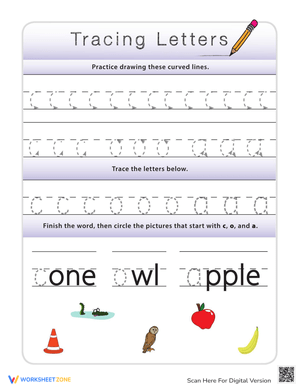
- Pair a tracing worksheet with a quick independent practice line so students move from guided to unguided writing in the same sitting.
- Use a simple visual check, such as circling the best-formed letter in a row, as a fast formative assessment.
- Rotate small groups through extra guided practice for students who need more repetition on a specific stroke pattern, while the rest of the class works independently.
- Keep a consistent set of guideline paper across weeks so students do not have to adjust to new spacing every session.
Neuroscience research from the Norwegian University of Science and Technology has found that handwriting, and cursive in particular, activates more brain connectivity than typing does, which supports memory formation and letter recognition. That research gives teachers a concrete reason to protect even brief cursive practice time, since the benefit appears tied to the physical act of forming connected letters rather than simply producing legible text.
Frequently Asked Questions
1. What grade should students start learning lowercase cursive letters?
Grade 1 is a common starting point once students have a solid grasp of print letters, though some classrooms introduce simple cursive strokes informally even earlier as a fine motor warm-up.
2. How many lowercase cursive letters should grade 1 students learn at once?
Most first-grade sequences introduce a small group of two to four letters that share a stroke pattern at a time, rather than moving through the alphabet in order.
3. How much daily practice time is recommended for cursive handwriting in grade 1?
Five to eight minutes of focused daily practice tends to work better for first graders than longer, less frequent sessions.
4. Is cursive still required in US schools?
Roughly 25 states require cursive instruction as of 2024, so requirements vary by state and sometimes by district.
5. How can teachers tell if a grade 1 student is ready to move from print to cursive?
A student who writes print letters consistently, holds a pencil comfortably, and can sit through a short writing task without significant fatigue is generally ready to begin lowercase cursive practice.