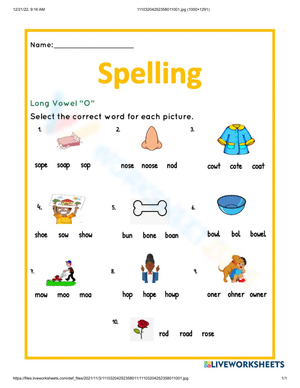
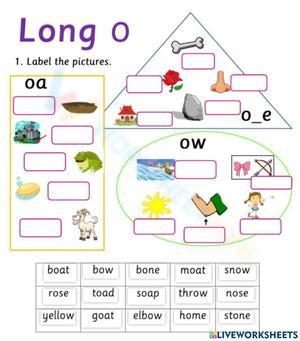
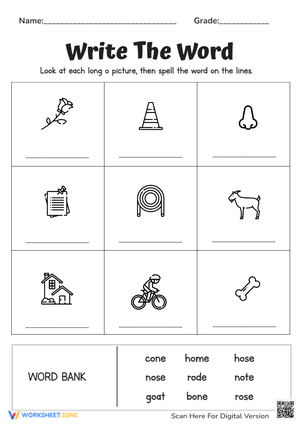
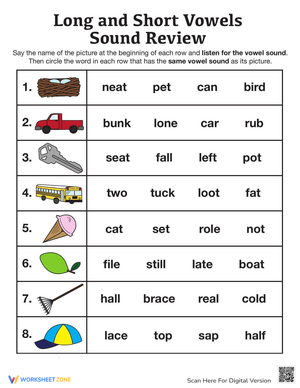
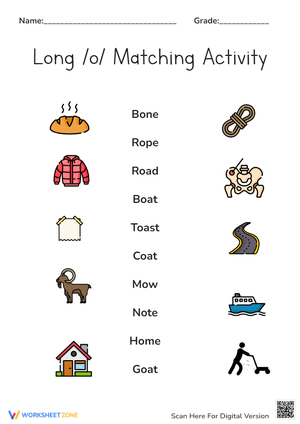
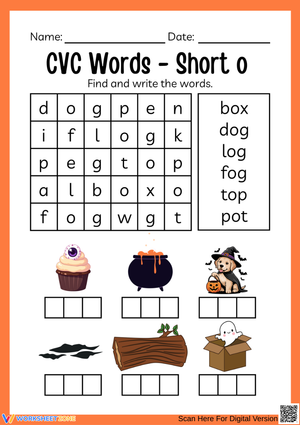
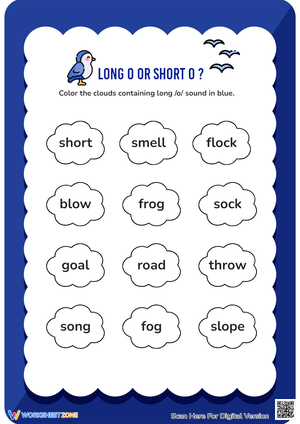
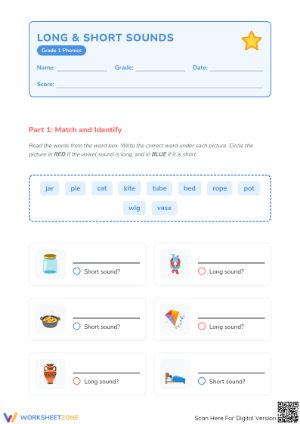
These long o and short o printable worksheets for 1st grade give teachers a focused set of phonics materials built around one of the most instructionally significant vowel contrasts in early reading — the same letter producing two distinct sounds depending on spelling pattern. Each worksheet targets a specific skill, from auditory sound discrimination to written decoding of CVCe and vowel team patterns, so there's no guessing about which gap a given sheet addresses. Teachers get materials ready to slot into morning work, literacy centers, or small-group intervention without any additional preparation.
What Each Worksheet Practices
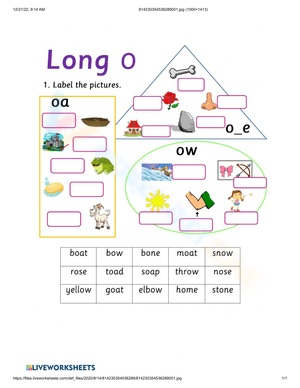
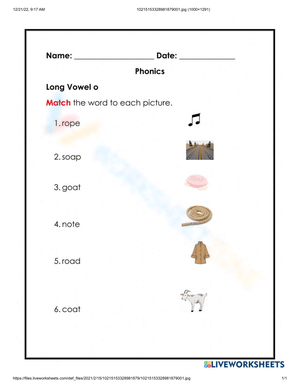
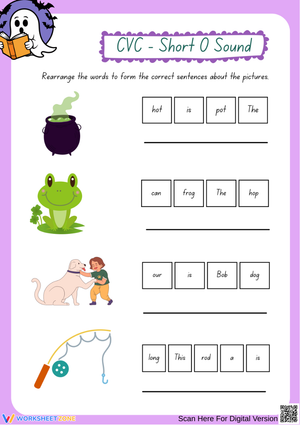
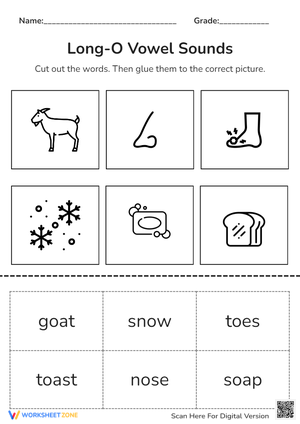
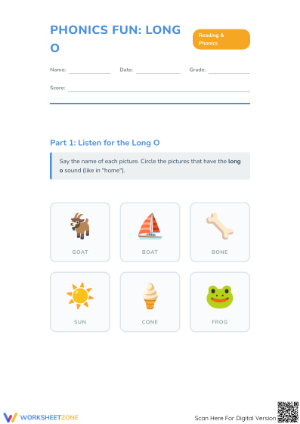
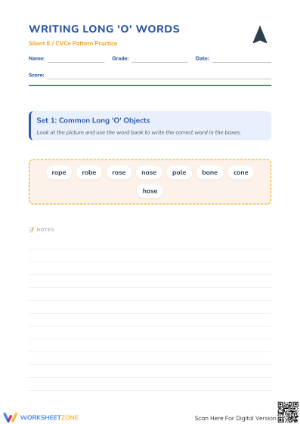
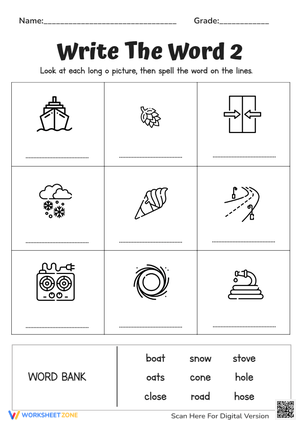
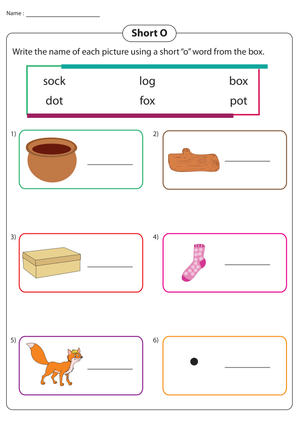
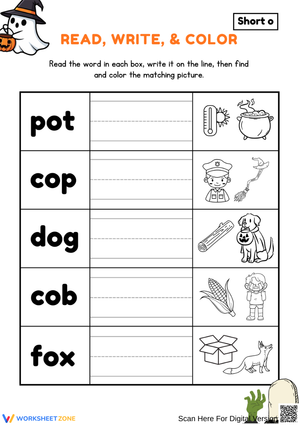
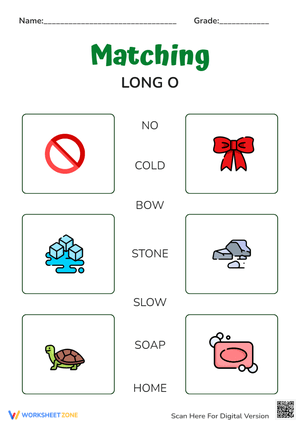
Short o work focuses on CVC words — mop, hot, dog, cot, fox, sob — where the vowel sits between two consonants and produces the clipped, jaw-dropped sound students first encounter in kindergarten. Long o practice is distributed across three spelling patterns, each addressed on its own before review worksheets mix them: the silent-e (CVCe) transformation covering words like hope, note, rope, and globe; the oa vowel team as in boat, coat, and soap; and the long-o ow pattern as in snow, grow, and own.
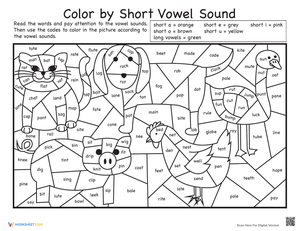
Across the set, students complete several distinct task types:
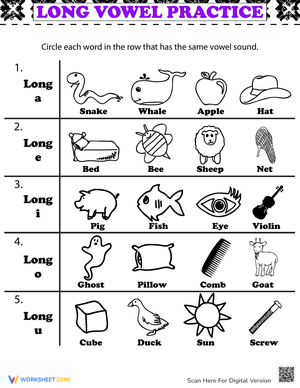
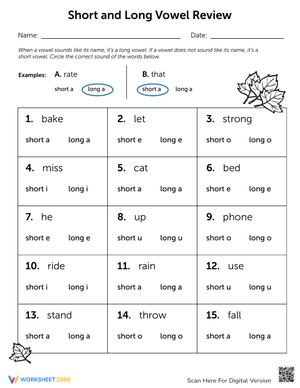
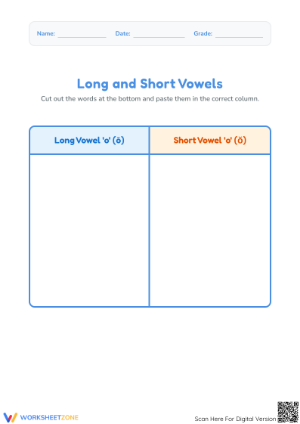
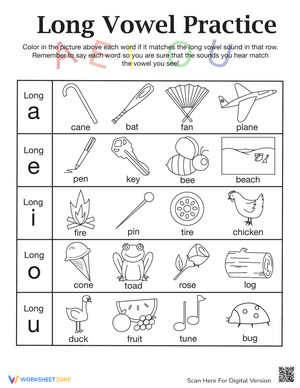
- Sort pictures by vowel sound — fox and mop in one column, rope and snow in the other — without a labeling prompt on the first attempt
- Rewrite short-o CVC words with a silent e appended, read the transformed word, and identify which sound changed
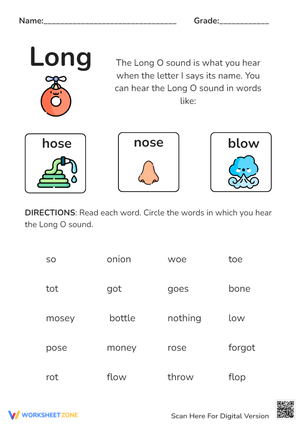
- Underline vowel teams in a word list and write long or short beside each entry
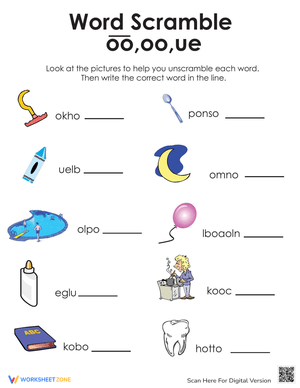
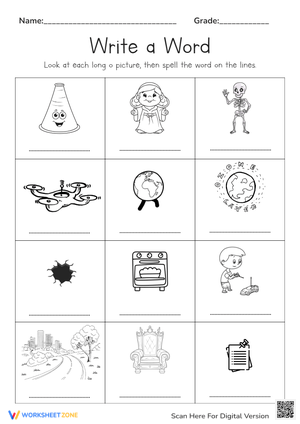
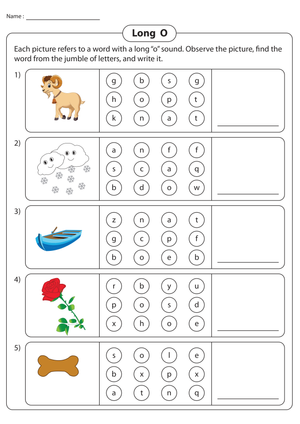
- Fill in missing vowel letters using context pictures as clues
- Read decodable sentences built from target words and mark every o sound as long or short
Student Errors That Surface Immediately When You Use These Worksheets
The sharpest confusion point isn't the short o — it's the ow pattern. First graders meeting ow on a worksheet almost universally reach for the /ow/ sound from "cow" and "brown" rather than the long o in "snow" and "grow." Both pronunciations are legitimate; the same spelling produces two different sounds, and no phonetic rule resolves it predictably. The worksheets that isolate long-o ow words give teachers a clean moment to name this directly: students aren't deriving the pronunciation from a rule, they're building a memory set of specific words.
The silent-e transformation generates its own predictable error. Students who read "hop" without hesitation will often read "hope" as "hoh-pee" — they see the final e and try to voice it rather than letting it lengthen the vowel. In practice, that looks like a student moving down a word list, pausing at "rope," producing "roh-pee," stopping, and attempting the correct form on the second try. The side-by-side comparison format used on several worksheets — short word on the left, the same word with a silent e added on the right — makes this error surface faster than any running record, because both forms are sitting directly next to each other for comparison.
There's also a consistent lag in student writing: children who decode long-o words fluently in reading still spell them with short-o patterns for weeks afterward. A student who reads "bone" without effort will write "bon" or "boan" in a sentence journal. That's not a failure of instruction — it reflects the normal gap between decoding automaticity and encoding automaticity, which typically closes over three to four weeks of sustained practice across both reading and writing contexts.
Lesson-Planning Ideas to Get the Most From This Set
The sorting worksheets work best as Monday openers, used before new pattern instruction rather than after. A two-minute cold sort — students attempt to place pictures of a globe and a mop into long-o and short-o columns before any direct teaching — provides exactly the diagnostic information a formal pre-assessment would, at zero cost to instructional time. What students sort correctly tells teachers where to start; what they misplace tells teachers where to linger.
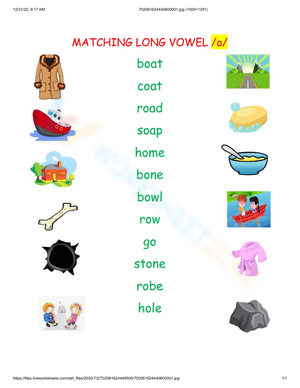
For literacy centers, the picture-to-word matching worksheets run without teacher support. The task is self-contained, the pictures serve as built-in clues, and students who finish early can flip the sheet over and write three original words following the same vowel pattern — a quick extension requiring no additional materials. The decodable-sentence worksheets, where students mark and label every o sound, are well suited to the last eight minutes before specials or lunch: the task is procedural and finite, which sustains focus during the moments of the day when sustained reading work falls apart. Teachers who use the long o and short o printable worksheets for 1st grade as a homework assignment find that the side-by-side CVC/CVCe format is self-explanatory enough for parents to rehearse at the kitchen table without any accompanying teacher note.
Standard Alignment
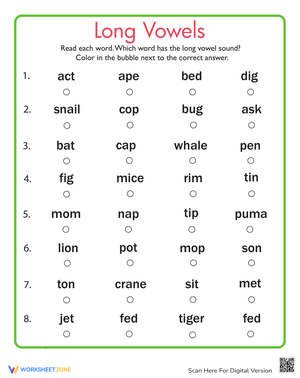
RF.1.2.a requires students to "distinguish long from short vowel sounds in spoken single-syllable words." This standard occupies a specific instructional window — after students have consolidated CVC decoding carried over from kindergarten but before multisyllabic word work begins in the second half of first grade. The auditory discrimination worksheets address RF.1.2.a directly: students say or hear a word and mark whether they detect the long or short vowel. The spelling-pattern worksheets extend into RF.1.3.b, which targets decoding of regularly spelled one-syllable words, and RF.1.3.c, which identifies common vowel teams as a named pattern category. For teachers documenting alignment in lesson plans or coaching cycles, those three codes cover the full range of skills in the set without any interpretive stretch.
Adjusting the Worksheets for a Range of Learners
Students still consolidating short-o CVC reading work the picture-matching and single-pattern decoding worksheets before any comparison or sorting is introduced. Sorting requires holding two categories simultaneously in working memory, and for a student who hasn't automatized short-o reading, that cognitive demand crowds out the discrimination task itself. Keeping those students on one pattern at a time until their responses are automatic is more productive than moving them prematurely into contrast activities that overwhelm rather than strengthen.
Students who've already internalized CVCe and can read long-o words without visible effort benefit most from the mixed-pattern review worksheets — particularly those that require a decision between oa, ow, and CVCe spellings for the same vowel sound. An additional extension: ask those students to generate two original sentences, each using one word from a different long-o spelling pattern. That production task reveals whether they control the patterns or only recognize them when the category is already labeled. The long o and short o printable worksheets for 1st grade in the review portion of the set include enough mixed-pattern variety to challenge students working ahead without requiring teachers to source entirely separate materials.
Frequently Asked Questions
How should I sequence short-o and long-o instruction across the year?
Short o comes first, without exception. Students need the CVC pattern fully consolidated before the silent-e transformation has any traction — if a student is still uncertain whether "cot" says short or long o, adding a silent e and expecting them to map the vowel change is premature. Most first graders arrive in September already familiar with short-o CVC words from kindergarten, which puts long-o instruction at roughly the second or third month of the year. The long o and short o printable worksheets for 1st grade in this set are sequenced accordingly: short-o-only worksheets lead, with long-o patterns introduced incrementally by spelling type.
What should I do when students genuinely cannot hear the difference between the two sounds?
Before any worksheet, use a hand mirror. Ask students to say "mop" while watching their jaw drop and their lips form a loose circle, then say "hope" and observe their lips round forward into a tighter shape. The articulatory difference is pronounced enough that most students can feel it before they can reliably hear it in isolation. Once they've connected the mouth position to the sound, print-based worksheet practice becomes significantly more efficient because students have a physical anchor for each sound category rather than trying to distinguish two sounds that feel nearly identical to an untrained ear.
Are any of these worksheets appropriate for kindergartners who are working ahead?
The short-o sorting and picture-matching worksheets transfer well to advanced kindergartners who have consolidated CVC reading. The CVCe transformation worksheets are a different matter — they require understanding that a letter can influence a vowel it isn't adjacent to, which is a more abstract phonics principle than most kindergartners are ready to apply in print, even at the advanced end. Introduce the transformation only when a kindergarten student is already encountering CVCe words fluently in connected decodable text.
How do I handle the fact that "ow" sometimes says /ow/ and sometimes says long o?
Name it directly, early, and without apology. Tell students that ow has two jobs and that they'll need to remember which words use which sound — no rule settles it. Anchor the long-o ow words to a small reference list: snow, grow, own, blow, show. Students who know those five words by sight can use them as comparison anchors when they encounter an unfamiliar ow word in text. The worksheets that isolate long-o ow words provide the repetition needed to build that reference set before review activities combine it with other long-o spelling patterns.












 Interactive Worksheet Maker
 Quiz Maker
 Word Search Maker
 Crossword Puzzle Maker
 Word Scramble Generator
 Sentence Scramble Generator
 Handwriting Worksheet Generator
 Name Tracing Generator
 Fill In The Blank Generator