


























Views
Downloads

Short Vowels Worksheet | Grade K ELA Printable
Paste this activity's link or code into your existing LMS (Google Classroom, Canvas, Teams, Schoology, Moodle, etc.).
Students can open and work on the activity right away, with no student login required.
You'll still be able to track student progress and results from your teacher account.
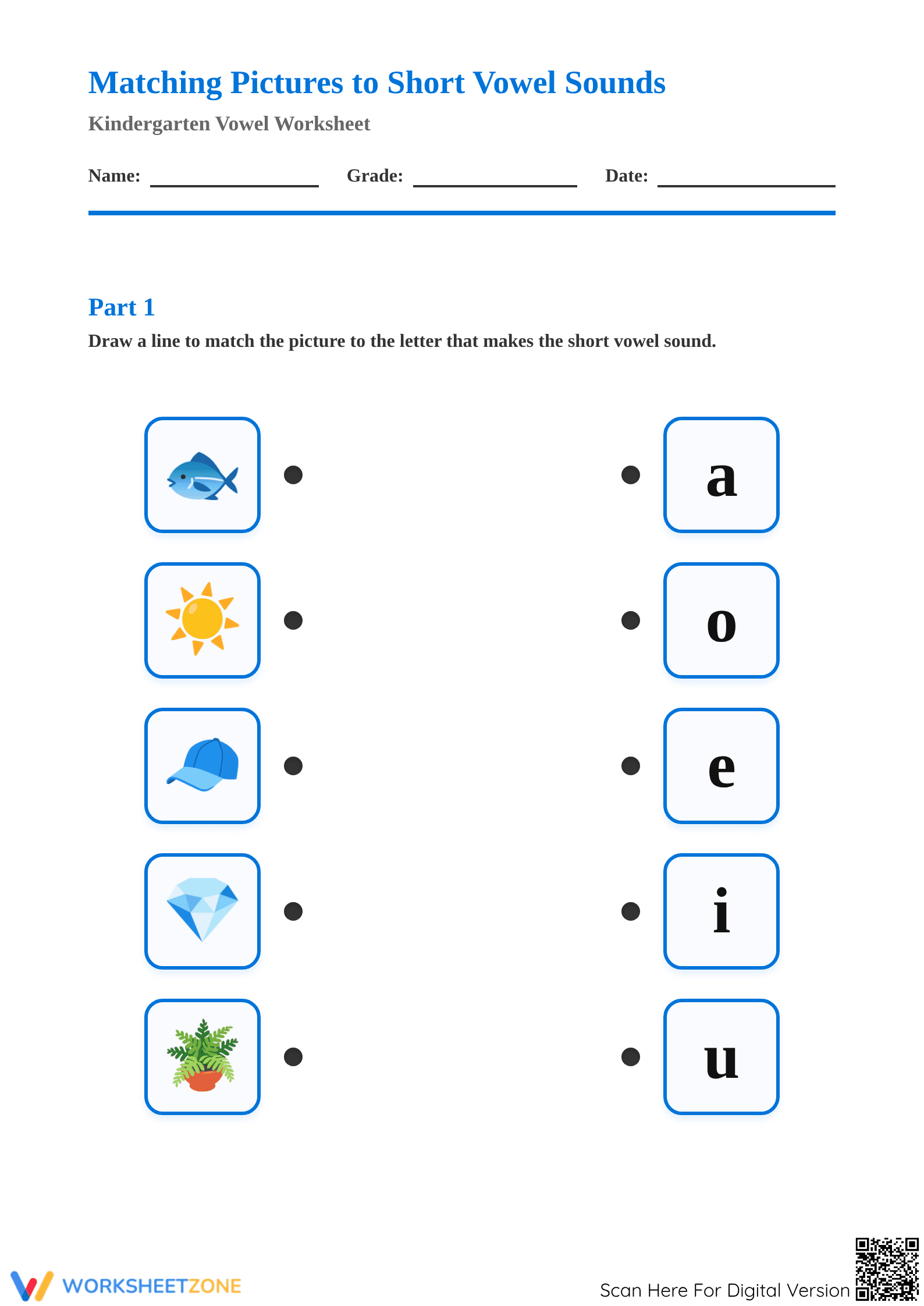
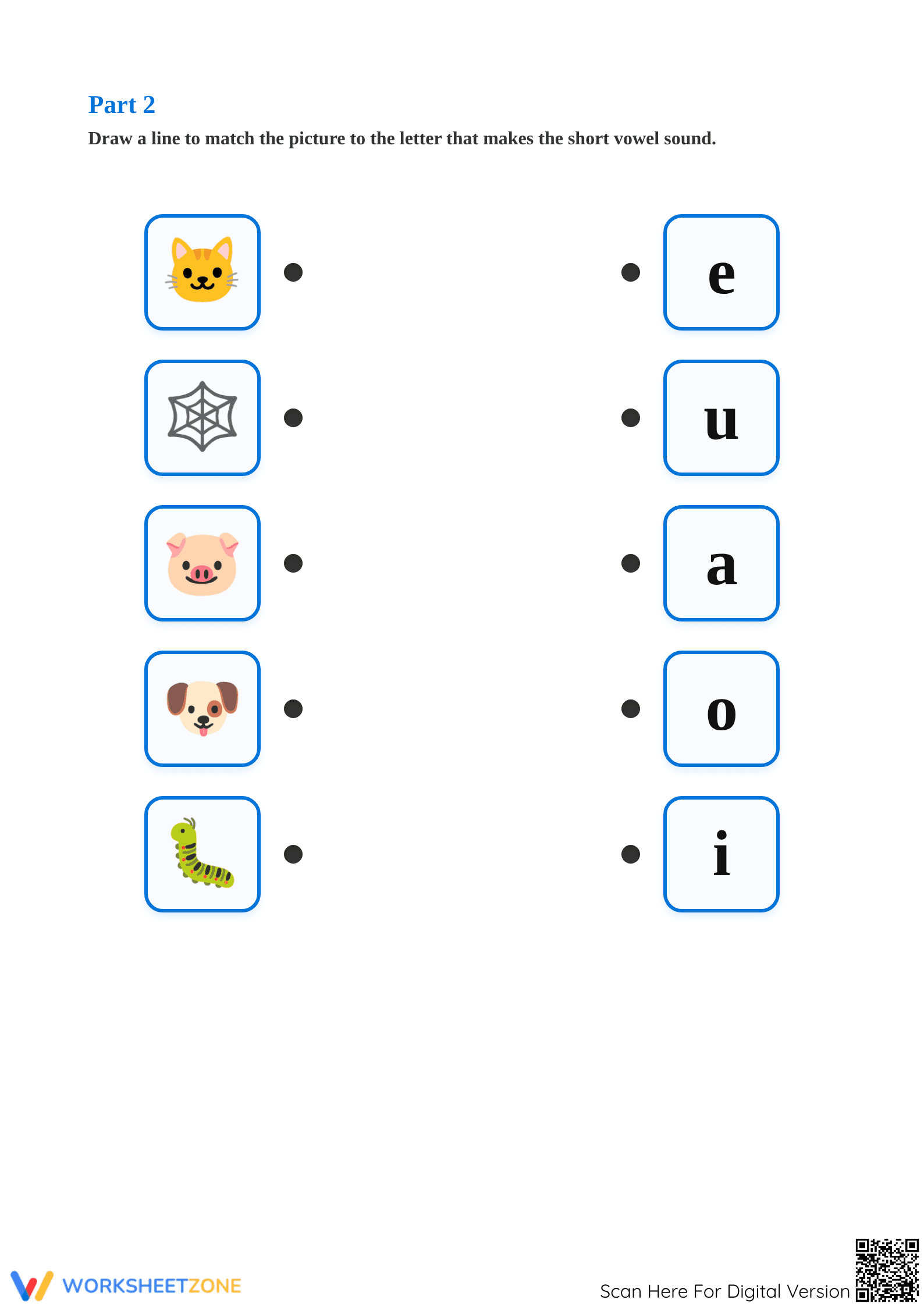
This foundational phonics worksheet helps early readers master short vowel sounds by matching familiar images to their corresponding vowel letters. By connecting visual cues with specific phonemes, students strengthen their decoding skills and build the phonemic awareness necessary for fluent reading and spelling.
At a Glance
- Grade: Kindergarten · Subject: ELA
- Standard:
CCSS.ELA-LITERACY.RF.K.3.B— Associate short sounds with common spellings for vowels- Skill Focus: Short vowel sounds
- Format: 2 pages · 10 problems · Answer key included · PDF
- Best For: Independent practice
- Time: 10–15 minutes
This resource features two pages of clear, engaging matching activities. Students are presented with ten distinct, recognizable images—such as a fish, sun, and cat—and must draw a line connecting each picture to the correct short vowel letter (a, e, i, o, u). The clean layout minimizes visual clutter, allowing young learners to focus entirely on the phonics task. A complete answer key is provided to ensure quick and accurate grading.
- Guided practice: Begin by completing the first matching problem together, emphasizing the medial vowel sound in the spoken word.
- Supported practice: Allow students to work through the next few items while providing verbal prompts to stretch out the sounds.
- Independent practice: Students complete the remaining matching tasks on the second page to demonstrate individual mastery.
This gradual-release approach ensures students build confidence as they transition from guided instruction to independent application.
This worksheet is directly aligned to CCSS.ELA-LITERACY.RF.K.3.B, requiring students to associate the long and short sounds with the common spellings (graphemes) for the five major vowels. By isolating the short vowel sounds in CVC (consonant-vowel-consonant) words, it reinforces core phonics foundations. Both standard codes can be copied directly into lesson plans, IEP goals, or district curriculum mapping tools.
Deploy this worksheet during literacy centers or as a follow-up activity after direct instruction on short vowels. It serves as an excellent formative assessment tool; teachers can observe whether students struggle with specific vowels, such as confusing the short 'e' and 'i' sounds. The straightforward format means students can typically complete the entire two-page activity within 10 to 15 minutes.
This activity is designed primarily for Kindergarten students, though it is also highly effective for Preschoolers ready for advanced phonics or first graders needing targeted intervention. For students requiring extra support, provide a vowel anchor chart with picture cues to reference while they work. It pairs perfectly with hands-on letter tile activities or decodable reading passages.
Developing strong phonemic awareness is a critical milestone in early literacy development. According to Fisher & Frey (2014), targeted phonics practice that connects visual representations to specific phonemes significantly improves decoding automaticity in young readers. This worksheet supports that research by requiring students to isolate and identify medial sounds, directly addressing CCSS.ELA-LITERACY.RF.K.3.B (Associate short sounds with common spellings for vowels). By engaging in this specific matching task, learners bridge the gap between spoken language and written text, reducing cognitive load during future reading tasks. Consistent exposure to these foundational skills ensures that students build the necessary neural pathways for fluent reading and accurate spelling. This resource provides the exact type of structured, focused repetition that evidence-based literacy instruction demands for early childhood education, setting the stage for long-term academic success.


