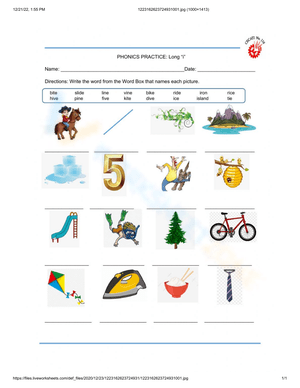
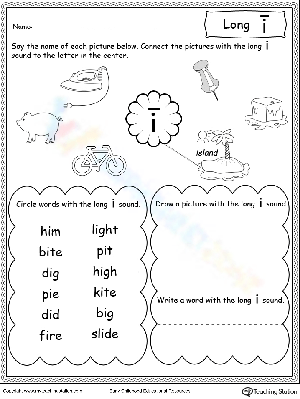
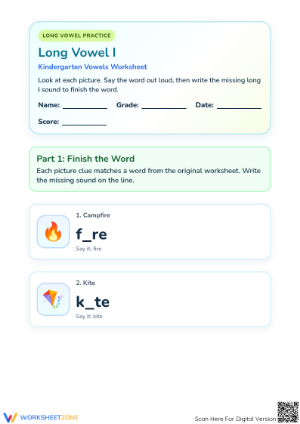
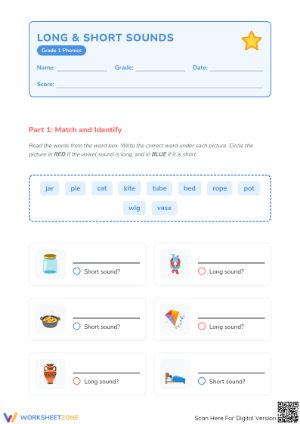
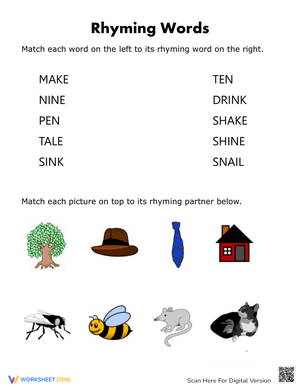
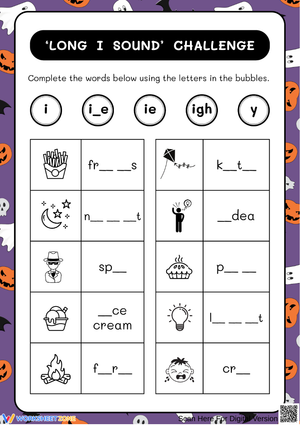
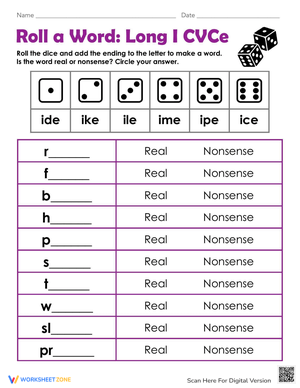
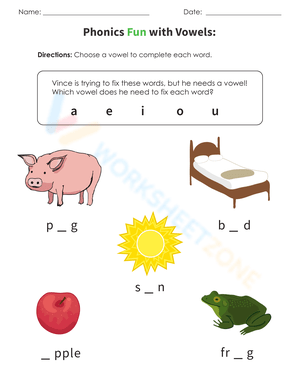
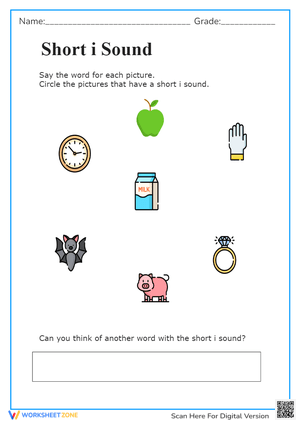
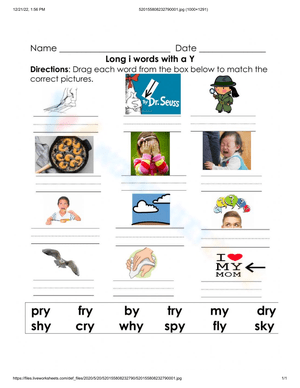
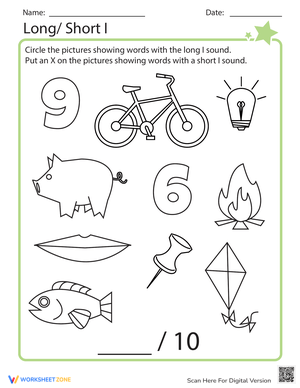
These long i and short i printable worksheets for 1st grade include four activity formats — CVC-to-CVCe transformations, picture-word sorts, color-by-sound grids, and sentence-level underlining tasks — so students encounter the short /ɪ/ and long /aɪ/ distinction repeatedly across different task types rather than drilling one format until engagement drops.
The set targets the two spelling contexts first graders must learn to distinguish: consonant-vowel-consonant words where the single vowel stays short (sit, win, lip) and consonant-vowel-consonant-e words where the final silent e signals a long vowel (site, wine, like). Those two pattern families account for most of the one-syllable /i/ words first graders meet in decodable texts, which is why systematic phonics programs at this grade dedicate several weeks to this contrast before moving on to vowel teams.
The Skills Each Worksheet Targets
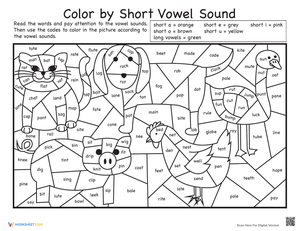
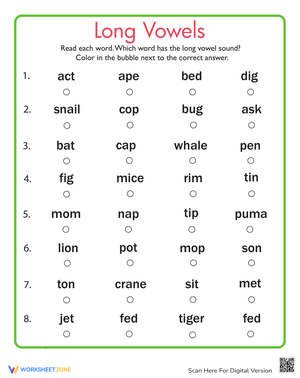
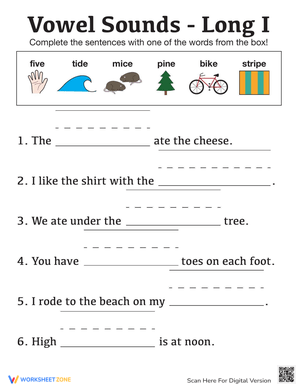
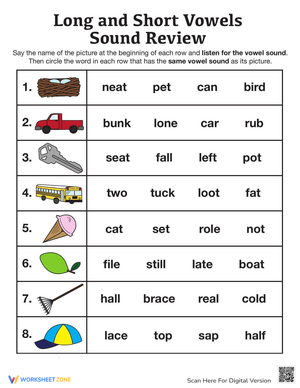
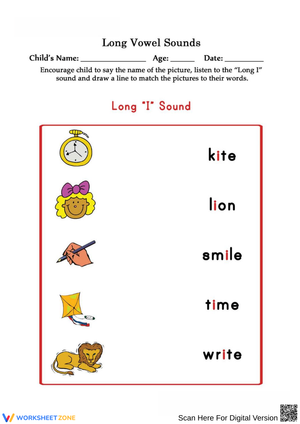
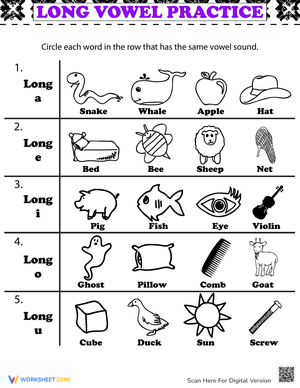
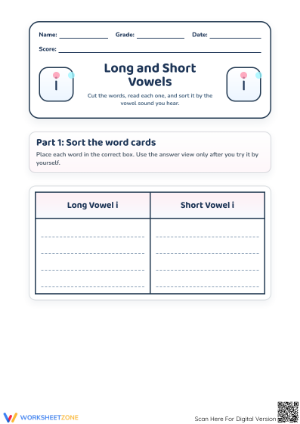
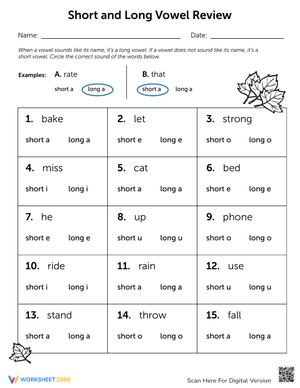
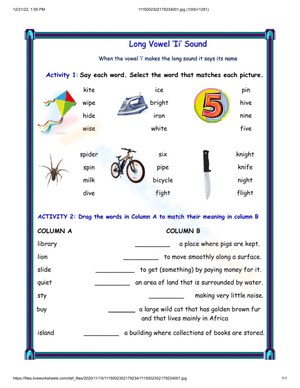
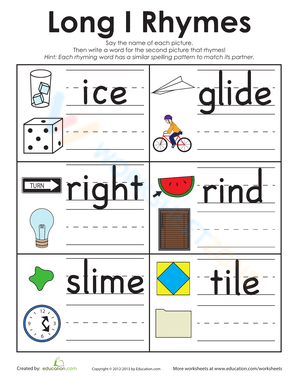
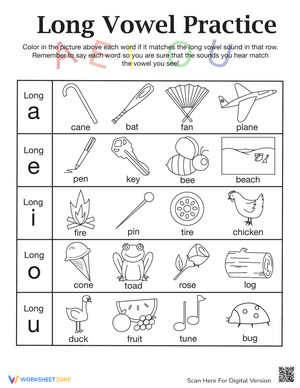
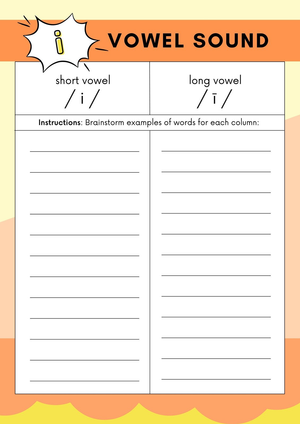
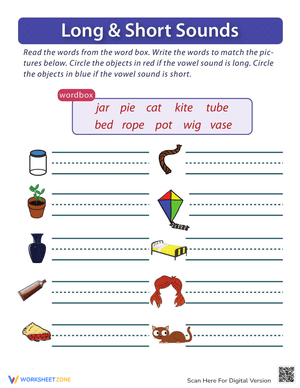
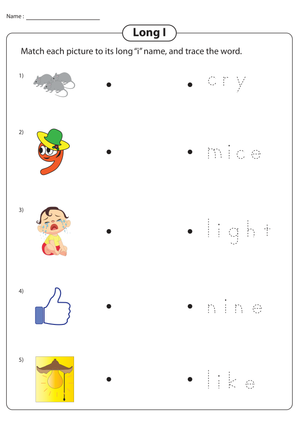
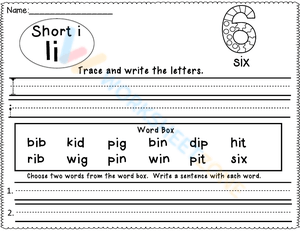
CVC-to-CVCe transformation worksheets ask students to read a short-i word, add a final e, and write the new word — converting fin to fine, kit to kite, hid to hide. The physical act of writing both forms on the same line makes the spelling change visible in a way that a word list alone does not. Sorting worksheets present a column of pictures or words and ask students to mark short /ɪ/ or long /aɪ/ — a faster format well suited to warm-up use. Color-by-sound grids drop words into a picture outline and reveal a hidden image when colored correctly, giving students immediate feedback through the emerging pattern. Sentence worksheets use short, controlled text where students underline all long-i words and circle all short-i words, connecting isolated phonics practice to reading in context.
Mistakes Students Make That Teachers Need to Catch Early
The most persistent error is not mishearing the sounds — most first graders can tell you that bite and bit sound different — but failing to connect the sound contrast to the spelling pattern in their own writing. A student who sorts "kite" correctly into the long-i column will still write kit in a journal entry the same afternoon, because recognizing a pattern during a sorting task and retrieving it during independent production draw on different cognitive processes. Pointing this out during class debrief — "you already know this word, look at what you wrote during phonics" — closes that gap faster than additional practice alone.
A second reliable error appears after the magic-e rule clicks: students begin over-applying it, adding a silent e to CVC short-i words that don't take one — writing sitte, winne, or lippe. This usually means the student has internalized the direction of the rule (e makes the vowel long) but not yet its selectivity (only certain base words become CVCe words). Sorting worksheets that include both real CVCe words and short-i CVC words without long-i partners help students notice which words actually take the silent e, rather than applying it indiscriminately.
Building These Worksheets Into Your Weekly Phonics Routine
The transformation and sorting worksheets work well as a Monday re-entry activity after the weekend gap. Five minutes at the start of word study — before any new instruction — surfaces what students actually retained from the prior week and tells you immediately who needs re-teaching before the lesson moves forward. The color-by-sound worksheet fits a different slot: it runs 10–12 minutes and requires steady concentration, so it belongs in an independent work block while a small group convenes at the reading table. Long i and short i printable worksheets for 1st grade work especially well at literacy stations because the picture-and-color formats give students enough visual support to work without adult supervision, freeing the teacher to run guided reading without fielding repeated questions mid-lesson.
The sentence-level underlining worksheet is the last to introduce in the sequence — not because it demands more skill, but because students need the pattern to feel automatic before identifying it mid-sentence. Saving this one for mid-unit also gives it assessment value: if a student who sorted correctly two weeks ago now struggles to underline long-i words in running text, that tells you the encoding is shallow and needs reinforcement before the unit assessment.
Standard Alignment
These worksheets address two Reading: Foundational Skills standards from the Common Core State Standards for Grade 1. CCSS.ELA-LITERACY.RF.1.2.A requires students to distinguish long from short vowel sounds in spoken single-syllable words; the sorting and color-by-sound worksheets target this standard directly by asking students to classify sound before attending to spelling. CCSS.ELA-LITERACY.RF.1.3.C covers knowing final-e and common vowel team conventions for representing long vowel sounds; the transformation and sentence worksheets address this standard by making the CVCe spelling pattern the explicit object of study. Instructionally, RF.1.2.A is typically introduced first — students need to hear and categorize the sounds in isolation before they can reliably apply the spelling conventions in RF.1.3.C.
Adjusting the Worksheets for a Range of Learners
For students still working at the phonemic awareness level — they hear that sit and site differ but cannot yet connect that difference to print — the picture-sorting worksheets give them a way to participate meaningfully while keeping the visual decoding demands low. Before those students begin, mark the target vowel in each printed word with a highlighter so attention lands on the right letter rather than requiring them to process the whole word from scratch. Pairing these students with a partner for sorting tasks also provides a second opinion without requiring the teacher to be at the table.
Students who have already internalized the CVC and CVCe patterns without difficulty need a different challenge. Long i and short i printable worksheets for 1st grade at a higher tier can extend into the igh pattern (night, high, right) and the ie spelling (pie, tie, lie) — both producing the same vowel sound through different structural rules. A straightforward extension task is to give these students a blank three-column sort (CVCe / igh / ie) and a word bank that mixes all three patterns, asking them to categorize by spelling rather than by sound alone.
Frequently Asked Questions
What order should I use when introducing these worksheets within a phonics unit?
Start with worksheets that address only the short /ɪ/ sound in CVC words — picture sorts and simple word-reading tasks where students are not yet comparing two patterns. Once short /ɪ/ is stable, introduce the silent-e contrast using the CVC-to-CVCe transformation worksheet, which makes the spelling change explicit. Save the color-by-sound and sentence-level worksheets for the middle and end of the unit, when students need practice holding both patterns in mind simultaneously.
How do I handle students who confuse long i with long a when they see a silent e?
This confusion is common and worth addressing directly rather than waiting for it to resolve. The underlying issue is that students have learned "silent e makes the vowel say its name" as a general principle without locking in which vowel they are actually reading. When it surfaces in student work, return to the word on paper, point to the vowel before the consonant cluster, and ask the student to name that specific letter before applying the rule. Brief, immediate correction at the word level — not a re-lesson on the whole concept — is usually enough.
Can these worksheets substitute for explicit phonics instruction, or do they work best after a lesson?
These worksheets are practice tools, not teaching tools. A student encountering the magic-e pattern for the first time needs direct explanation, oral practice, and word-building activities before sitting down with a sorting or transformation worksheet. The worksheets consolidate and extend what has already been taught. Using them as introduction material typically results in students guessing rather than applying a rule — which produces the appearance of practice without the actual cognitive work.
Are there specific words that reliably trip up first graders even after solid instruction?
Hide and hid cause consistent difficulty because both are common, familiar words — unlike many minimal pairs where only one member is a high-frequency word. Pine is difficult because students rarely encounter it in everyday speech and tend to default to pin during oral practice. Long i and short i printable worksheets for 1st grade that include both members of these pairs — rather than only the CVCe form — give teachers a cleaner read on whether students have genuinely internalized the contrast or are relying on word familiarity to guess correctly.












 Interactive Worksheet Maker
 Quiz Maker
 Word Search Maker
 Crossword Puzzle Maker
 Word Scramble Generator
 Sentence Scramble Generator
 Handwriting Worksheet Generator
 Name Tracing Generator
 Fill In The Blank Generator